
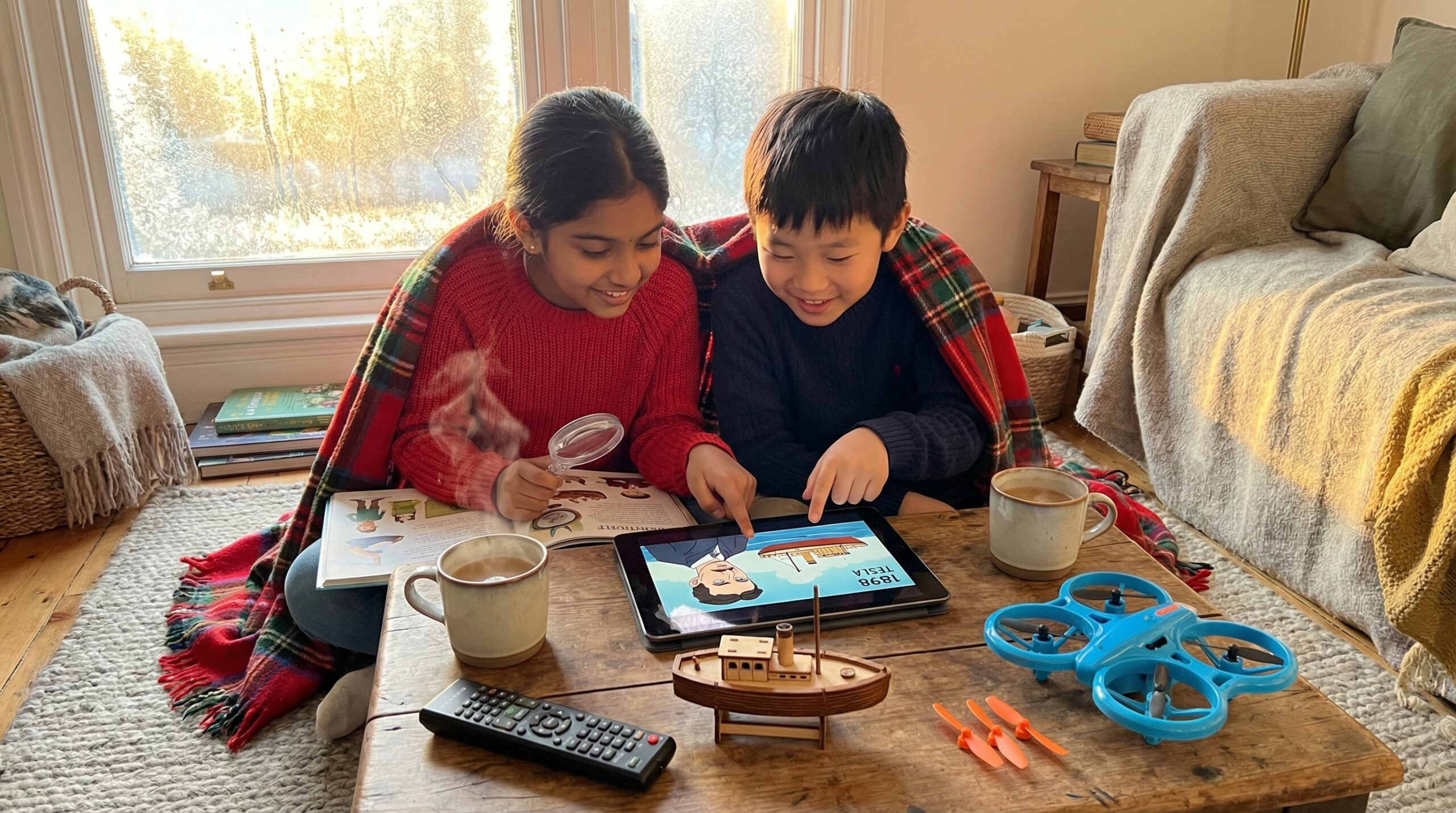
The remote control device sits in every living room and pocket. Today parents and teachers see it as a tiny marvel. It sends a small secret each time you press a button. The receiver listens and then acts. This post explains what a remote control device is and why it delights curious kids. In 2024, the global remote control market was valued at approximately USD 26.4 billion, with unit shipments exceeding 3.1 billion devices worldwide, highlighting the significant economic impact and widespread usage of remote controls in modern society.
Quick history of the remote control device
Wired remotes came first. Then inventors used light beams and photocells. Next came ultrasonic clicks. Infrared won the living room in the 1980s. Later, radio frequency, Bluetooth, and Wi-Fi freed remotes from line of sight. By the end of 2023, wireless remote controls accounted for about 55% of total industrial remote control deployments, indicating a shift in consumer preferences towards wireless technology. Military and hobby uses pushed the tech forward. The idea stayed simple: button, code, action. Yet the story feels a little like magic.
How a remote control device works
A remote control device has a transmitter with buttons, a tiny microcontroller, and a power source. The receiver has a sensor, a decoder, and an actuator. When you press a button, the transmitter encodes a pattern. Then it sends the pattern as infrared light or radio waves. The receiver strips away the carrier and reads the code. If the code matches, the device responds. It happens fast and often feels like listening. In 2024, approximately 62% of new remote control product launches featured connectivity options such as Bluetooth or Wi-Fi, moving beyond traditional infrared (IR) technology, showcasing the evolution of remote control technology and the increasing integration of smart features.
Common signal types
Infrared needs aim because it travels in straight lines. By contrast, RF and Bluetooth usually work through walls. For example, common IR protocols include NEC, RC5, and Sony SIRC. Many car fobs use rolling codes to prevent replay attacks. RF can be jammed, so keep gear updated. Also, smartphone remotes use Wi-Fi for wider range.
Everyday examples and settings
Families meet remote control devices in many forms. TV remotes and universal remotes guide our viewing. Key fobs lock and unlock cars. Garage openers lift doors. RC toys and drone controllers steer play. Industrial remotes manage heavy equipment too. In 2024, the United States remote control device sales were projected at approximately USD 2.8 billion, with unit sales of wireless remote controls exceeding 150 million devices in 2023, reflecting consumer demand and market growth. Small wonder that a tiny gadget can do so much.
Family-friendly ideas
Try simple, supervised experiments to spark curiosity. For example, older kids can use an Arduino with an IR LED to send short codes. Line of sight trials make signals visible to children. Meanwhile, a flashlight and photocell can trigger a paper robot for younger hands. These playful moments invite questions about inventors and inventions.
Safety, care, and upkeep
Keep coin cells out of reach and recycle batteries properly. Check small remotes for choking risks. Teach children not to point remotes at eyes. When tinkering, supervise soldering and power work. If a remote stops working, change batteries, clean contacts, and check the sensor. Small care keeps devices working and reduces waste.
Quick takeaways
- Buttons send coded signals.
- Infrared needs aim; RF and Bluetooth go through walls.
- Rolling codes protect many car remotes.
- Simple family projects can spark curiosity.
Read or listen to a story about Remote Control now: For 3-5 year olds, For 3-5 year olds, For 6-8 year olds, For 8-10 year olds, and For 10-12 year olds.
For more family friendly stories and learning, visit Storypie. Gentle curiosity leads to big discoveries, one tiny remote control device at a time.