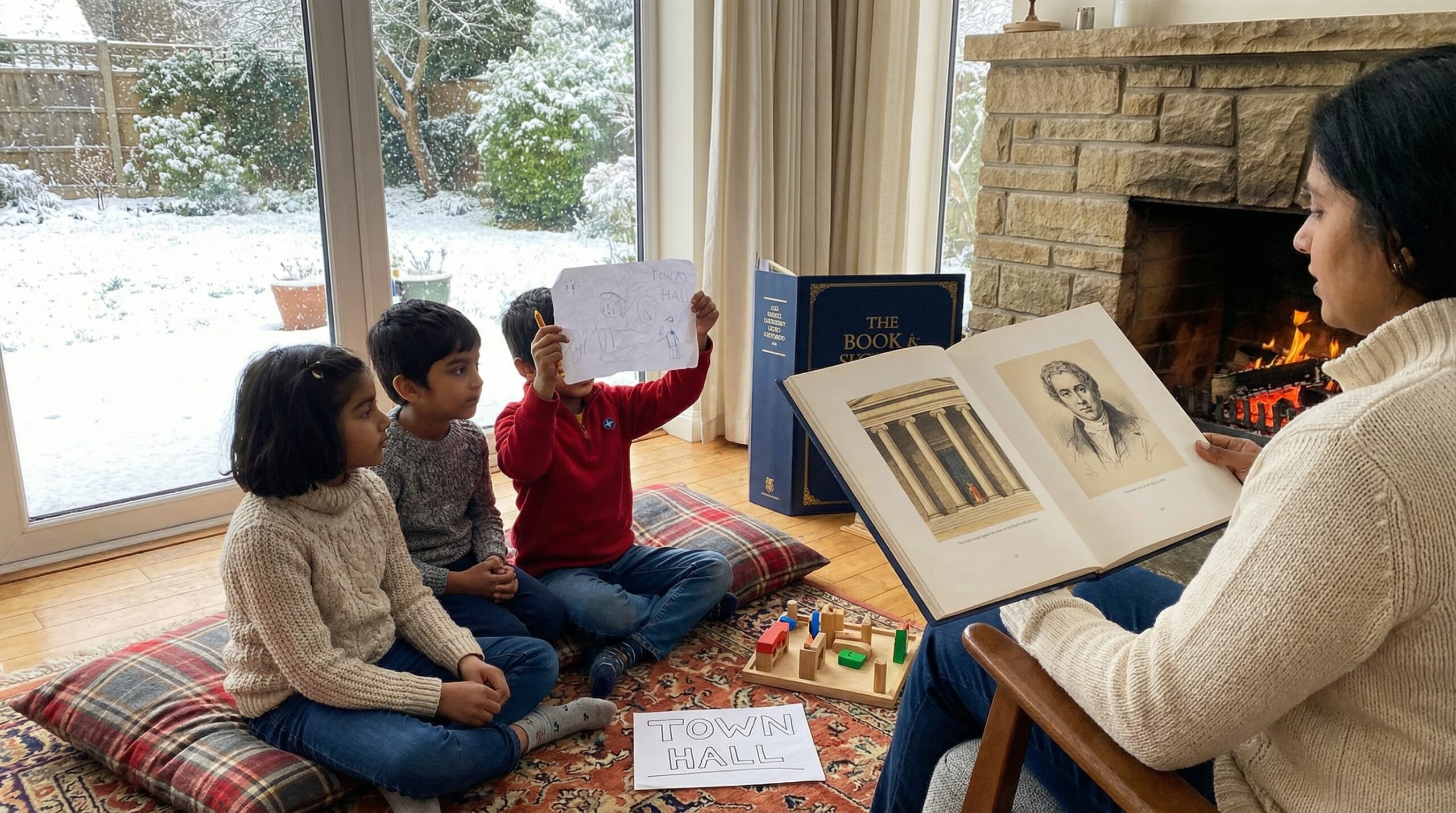
Republic explained for kids begins with a simple idea: people share power. Tuck in a blanket. Light a lamp. This short guide makes a big phrase feel small and friendly.
Republic explained for kids: What is a republic?
A republic is a kind of government where power rests with the people or with people they choose. In other words, citizens pick leaders. Then those leaders make laws. Also, written rules or a constitution help keep power fair. Courts can check leaders when needed. For instance, as of 2026, Republic, Missouri, has a population of 22,636, illustrating how local populations can change and engage in civic governance.
A quick history snack
First, Romans formed the Roman Republic around 509 BC after they removed their king. Next, Enlightenment ideas and revolutions in America and France shaped modern republican thought. The United States wrote a Constitution in 1787 that begins with We the People. Also, France declared its First Republic in 1792. These moments helped spread the idea that governments should answer to citizens.
Types of republics
Republics come in different flavors. For example, a presidential republic like the United States elects a president separately. By contrast, a parliamentary republic lets the legislature choose the head of government. In addition, federal republics such as India share power between national and regional governments. Other republics keep more decisions at the center. For example, as of 2024, the Republic of Serbia had an estimated population of 6,586,476, with a diverse demographic structure that emphasizes the importance of representation in governance.
What keeps republics working
Several simple parts help a republic run smoothly. First, a constitution sets clear rules. Next, elected legislatures make laws. Also, independent courts interpret those laws. Finally, checks and balances help branches limit one another. Rights like free speech, religion, and fair trials often receive protection. Citizens also have duties like voting and following the law. In 2023, public health issues were reported in the Republic of Korea with 1,005 new HIV infections, highlighting how governance impacts citizen welfare.
How a republic differs from other systems
Republics differ from monarchies and direct democracies. A monarchy often uses a hereditary ruler. However, a direct democracy asks citizens to vote on every law themselves. Most modern republics choose representatives to make decisions. This approach works better for large communities.
At home and in class
Learning about republics helps children understand where rules come from. It also shows why voting matters. For example, a family vote or a school council can build civic muscles. These small rituals teach choice, debate, and responsibility.
Two cozy activities
- Family vote: Let each child propose one house rule. Then decide by a show of hands.
- Mock council: Pick a small issue. Assign roles. Hold a short meeting and make a decision. Celebrate the result with a small cheer.
Story time makes ideas stick. In short, a short listening moment can turn history into a cozy ritual. Read or listen to a story about Republic now: For 3-5 year olds, For 3-5 year olds, For 6-8 year olds, For 8-10 year olds, and For 10-12 year olds.
Finally, when a child asks to hear the story again by themselves, you have seeded something lasting. That is the simple joy of civic learning with Storypie.