
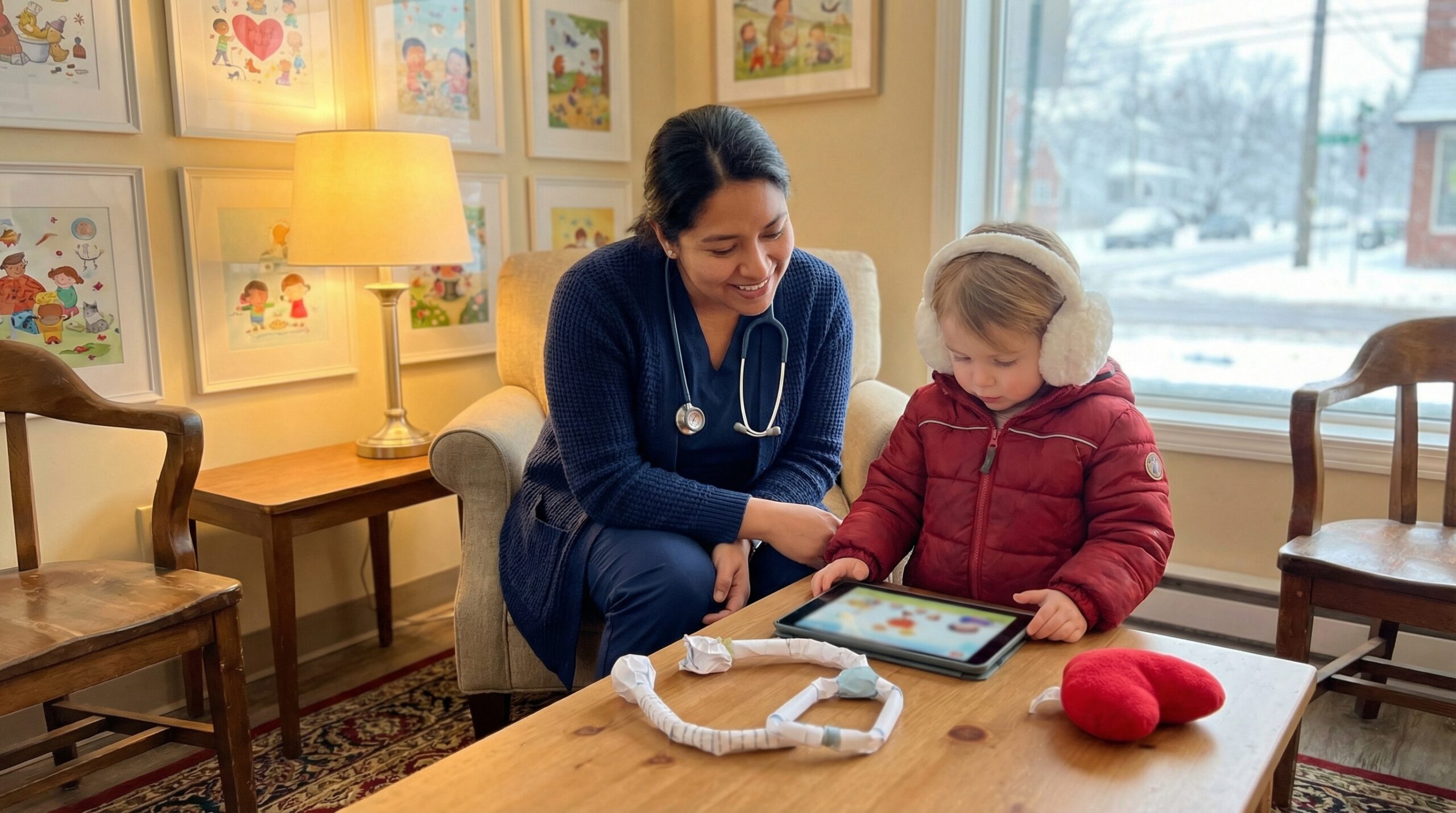
A stethoscope for kids can turn a checkup into a calm, curious moment. Parents and teachers use it to help children feel brave. Also, it opens a tiny world of discovery with a friendly thump.
Stethoscope for Kids: What it Is
A stethoscope is a listening tool clinicians use to hear heartbeats, breathing, and belly sounds. The name comes from Greek words meaning chest and observe. In 1816, René Laennec made the first simple tube to listen more clearly. Later designs grew into the two-eared stethoscope we know today. Today, the global stethoscope market is valued at approximately USD 634.9 million and is projected to reach USD 949.9 million by 2030, indicating the growing demand and importance of this essential healthcare tool.
How a stethoscope works
Modern acoustic stethoscopes have a chestpiece, flexible tubing, binaural metal tubes, and soft earpieces. The chestpiece often features a diaphragm for higher-pitched sounds and a bell for lower-pitched sounds. Tunable diaphragms let listeners change frequency with gentle pressure. Meanwhile, electronic stethoscopes amplify, filter, and even record sounds for teaching and telemedicine. For instance, the U.S. Food and Drug Administration cleared Eko’s AI technology for use with digital stethoscopes in 2024, showcasing advancements that enhance diagnostic capabilities.
Key parts at a glance
- Chestpiece diaphragm and sometimes bell
- Tubing carries sound to the ears
- Binaural tubes and earpieces sit in the clinician’s ears
Common uses and limits
Clinicians use a stethoscope to listen for heart rate, rhythms, murmurs, lung wheezes, crackles, and bowel sounds. It also pairs with blood pressure cuffs. It is an essential low-tech tool. However, it does not replace imaging or lab tests when those are needed. In a recent study, 50% of stethoscope diaphragms were found to be bacterially contaminated at baseline, highlighting the importance of hygiene when using these tools.
Making a stethoscope friendly for children
Pediatric stethoscopes often have smaller chestpieces and soft rims. Many come in bright colors or with fun decorations. These small changes make the tool less scary and more playful.
Try these simple parent-tested ideas:
- Warm the chestpiece in your hand before placing it on the child.
- Call the heartbeat a friendly thump or drum. Children love vivid words.
- Let the child touch the earpieces first to build trust.
Practical tips for parents
Keep checks short. A 1 to 2 minute listening game works best. Role-play doctor at home with a toy or real stethoscope. Bring a favorite toy and praise cooperation. For a calming listen before a checkup, play a short Storypie story.
Read or listen to a story about Stethoscope now: Read or listen to a story about Stethoscope now: For 3-5 year olds, For 6-8 year olds, For 8-10 year olds, and For 10-12 year olds.
Also, get the app for a soothing 6-8 minute stethoscope story before a visit: get the app.
Listen at home activity
Have your child place a stethoscope on a parent’s chest for 30 seconds and count beats. Then try again after a light activity and compare. Draw how the heartbeat feels or record counts in a small chart. This tiny activity builds familiarity and confidence.
Care and common-sense limits
Wipe chestpieces and earpieces with alcohol between uses. Avoid sharing during outbreaks or use single-patient devices. Check tubing for cracks and replace worn earpieces. Remember, auscultation takes practice, and normal sounds sometimes need more tests. In fact, after cleaning with alcohol-based hand sanitizer, contamination on stethoscope diaphragms fell to 0%, emphasizing the need for good hygiene practices.
Finally, the stethoscope is part tool and part symbol of care. Make it friendly, make it playful, and let a little magic help your child feel brave. For more cozy inventions and short calming stories visit Storypie.