
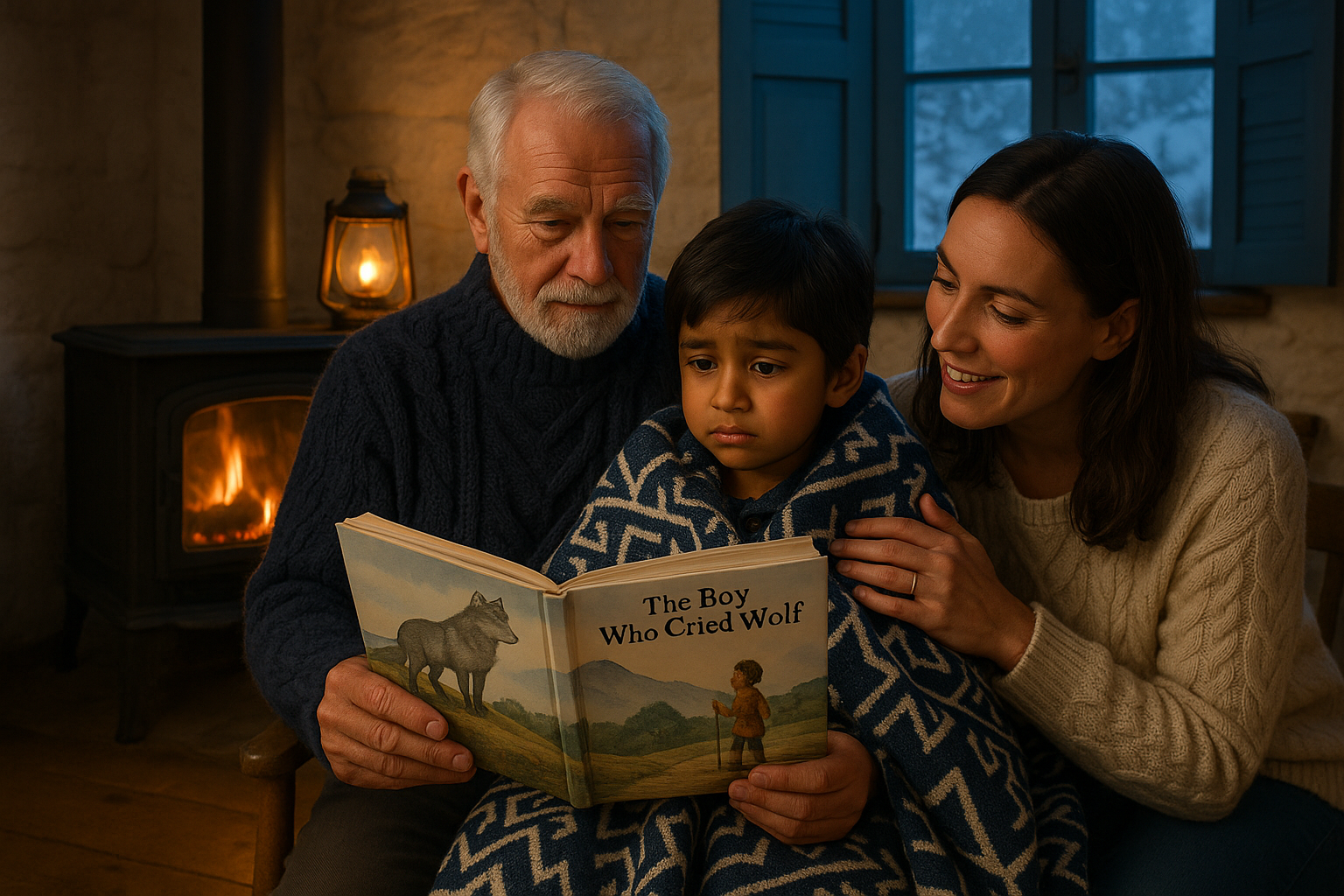
The Boy Who Cried Wolf – Greek is a short Aesop fable about honesty and trust. It feels simple and sharp. Families and teachers love its clear lesson. The story is one of the most famous tales attributed to Aesop and has long been used as a cautionary example about deceit; over time it also gave rise to the common idiom “to cry wolf,” meaning to raise a false alarm or make an untrustworthy warning, which you still hear today according to Interesting Literature.
The Boy Who Cried Wolf – Greek: The Story
A shepherd boy grows bored. Then he cries wolf as a prank. The villagers run to help. At first they laugh. Later, the boy cries wolf again. Finally a real wolf appears. This time no one comes.
Origins and History
The Boy Who Cried Wolf – Greek comes from ancient Greek oral tradition. Aesop is the familiar name attached to many such short moral tales; he is remembered as a Greek storyteller whose fables have been passed down through generations and are still taught today, as noted on Kiddle. Over centuries, writers recorded and reshaped it. For example, Babrius turned some fables into verse. Later Phaedrus carried them into Latin. Thus the tale traveled through medieval Europe and later into picture books and school readers.
Variations and Endings
Versions vary by culture. Sometimes the prankster is a youth. Sometimes a herdsman. The predator may be a wolf or a lion. Endings can be harsher. Other tellings soften the fright for little ears. Yet the core moral stays the same. False alarms erode credibility. Interestingly, some commentary records (summarized on Wikipedia) note that an early 21st-century experiment found children exposed to the fable were, in one study, more prone to lying, a counterintuitive result that researchers have discussed when considering how stories shape behavior.
Why this version feels gentle
Lycomedes’ Storypie recording keeps the tale gentle and clear. It suits cozy afternoons and quiet listening. Because the voice is calm, parents find it easy to use. Moreover, the short format fits active young attention spans.
Quick notes and listening tips
- Keep the moment small and warm. A cushion, soft lamp, and one book make it special.
- Press play on Storypie and let the voice do the rest.
- Praise honest words when you hear them. It matters, even in little ways.
Read or listen to a story about The Boy Who Cried Wolf – Greek now: For 3-5 year olds, For 6-8 year olds, For 8-10 year olds, and For 10-12 year olds.
Also explore the main Storypie site for more recordings and ideas. Visit Storypie for app and listening options.
Tiny final tip: after the story, name one small honest thing your child did that day. Celebrate it. It sticks. It matters. The fable is old, the lesson is evergreen, and the moment you share it can be quietly brilliant.