Polar bear facts for kids start with a cozy voice line: “I met Nanuk on a drifting floe.” I loved chilly animal tales as a child, and I still do. Also, episodes turn facts into calm conversations.
Read or listen to a story about Polar Bear now
Read or listen to a story about Polar Bear now: For 3-5 year olds, For 6-8 year olds, For 8-10 year olds, and For 10-12 year olds.
Polar bear facts for kids: What is a polar bear?
The polar bear is Ursus maritimus. It is a large marine mammal of the Arctic. People often call it Nanuk or Nanuq in Inuit languages. Adult males usually weigh 350 to 700 kilograms. Adult females most often weigh 150 to 300 kilograms. Also, most polar bears live about 20 to 30 years in the wild. As of 2023, the global polar bear population is estimated to be approximately 26,000 individuals, highlighting their conservation status.
How polar bears stay warm
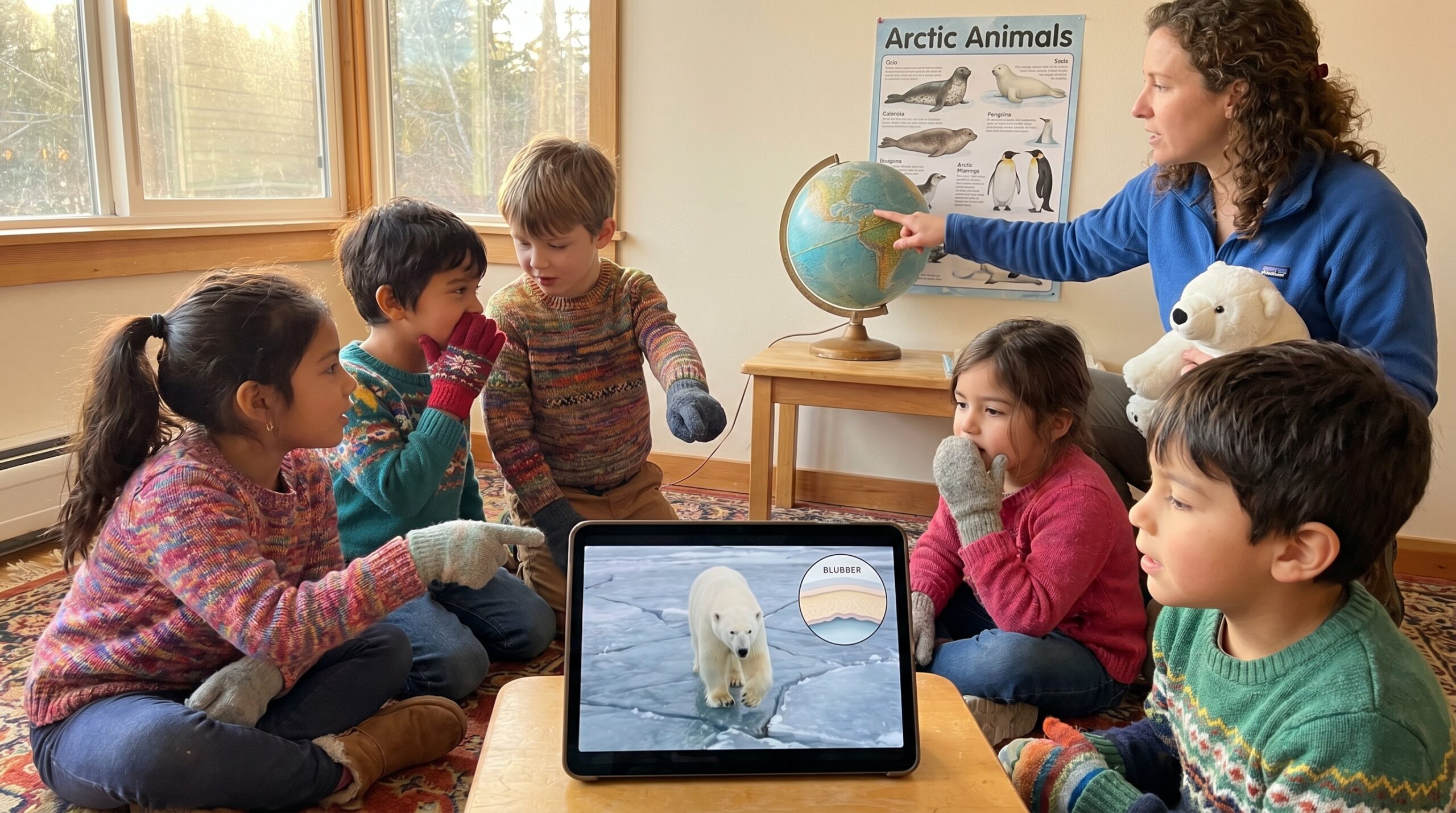
Polar bears look white, yet their hairs are translucent. Their skin under the fur is black. The black skin soaks up sun warmth. Under the hairs they carry thick blubber and dense underfur. For example, blubber can be several centimeters thick.
- Wide paws act like snowshoes on ice.
- Paws also work like paddles when they swim.
- They have a super-sniffing nose. In fact, a polar bear can smell a seal nearly a kilometer away and even through snow.
Hunting and diet
Polar bears mainly hunt seals. They use patient techniques like still hunting at breathing holes. They also stalk seals on ice and sometimes take pups from dens. In addition, they scavenge whale carcasses and eat eggs when needed. Their hunting is clever and very patient.
Babies and family life
Mating happens in spring. Then females delay implantation and prepare a den. They give birth in winter inside the den. Cubs are tiny at birth, often under a kilogram. They stay with their mother for about two years. During that time, cubs learn to hunt and travel. As a result, mothers are incredibly important.
Range, behavior, and threats
Polar bears live across the circumpolar Arctic. You will find them in Canada, Alaska, Greenland, Norway, and Russia. They are mostly solitary and follow the sea ice. The biggest long-term threat is climate change. Arctic September sea-ice extent has declined by about 12.2% per decade, a loss of roughly 3.45 million km2 since 1979. Shrinking sea ice shortens hunting seasons and forces longer swims. Pollution and human-bear conflict also add risk. I was taught to respect Indigenous knowledge that guides safe coexistence. In 2023, the U.S. Fish and Wildlife Service determined that polar bears continue to meet the definition of a threatened species under the Endangered Species Act, underscoring the ongoing conservation challenges faced by these magnificent creatures.
How families can help and wonder
Families can learn together and take small actions. For example, reduce household waste and conserve energy. Also, talk about sea ice and how it shapes Arctic life. Try a simple hands-on demo like a blubber glove to show insulation. Then, play a short Storypie episode like Nanuk the Polar Bear. It can spark calm chats and gentle curiosity after school.
Safety and respect
If you ever visit Arctic places, follow local rules. Never approach a wild bear. Keep distance and follow food storage advice. Finally, enjoy wonder safely. A newborn cub can fit in two hands. Meanwhile a paw acts like a paddle in water. Pick one tiny fact to linger on and share it at dinner.
Ready to listen or read? Read or listen to a story about Polar Bear now. For age-specific episodes try the links above.