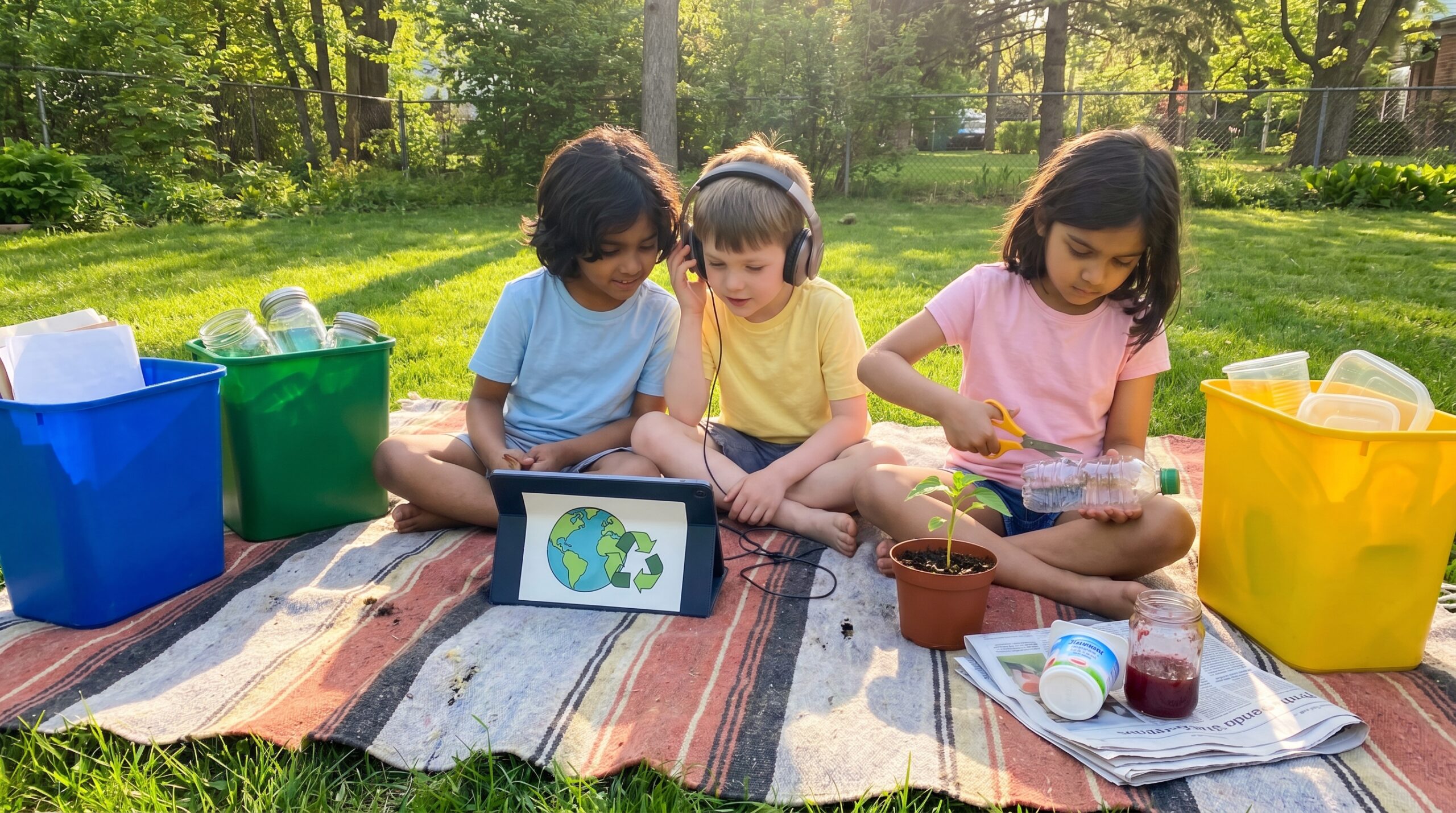
I love how family recycling and environmental stewardship feel like tiny superpowers at home. Family recycling and environmental stewardship spark curiosity. They turn small chores into big habits. Try a 5-minute recycle hunt tonight. You will laugh. You will reuse something. You will teach a habit that sticks.
Why family recycling and environmental stewardship matters
Earth Day began on April 22, 1970. Senator Gaylord Nelson and organizer Denis Hayes helped millions learn why clean air and clean water matter. That movement grew community recycling and new laws. As a result, cities started rethinking trash. For families, recycling teaches care, responsibility, and hope. Recent statistics show that the recycling rate for waste from households in the United Kingdom increased to 44.6% in 2023, up from 44.1% in 2022, illustrating the ongoing improvement in recycling practices in the UK and encouraging families to participate in recycling initiatives according to the UK Department for Environment, Food & Rural Affairs.
How recycling actually works
I explain it like this to my kids: collection, sorting, processing, and rebirth. First, households set out bins. Then trucks bring materials to a material recovery facility. Workers and machines sort like we sort LEGO colors. Clean streams get processed. Paper is pulped. Metal is melted. Glass is crushed. Plastics are shredded and sold to makers who turn them into new things. In 2023, the United States achieved a PET (polyethylene terephthalate) bottle recycling rate of 32.5%, marking the highest level in nearly three decades, showcasing progress in reducing plastic waste according to the National Association for PET Container Resources.
Quick home checklist for family recycling and environmental stewardship
- Paper and cardboard: flatten boxes and remove greasy bits.
- Glass bottles and jars: rinse and recycle lids separately, if required.
- Aluminum and steel cans: real champions. They recycle again and again.
- Plastics: PET #1 and HDPE #2 are commonly accepted. Other resin codes vary.
- Not in the bin: plastic bags, food-soiled pizza boxes, batteries, and electronics.
Contamination and why it matters
A dirty jar or a plastic bag can ruin a whole load. So rinse containers and keep items loose. If a truckload gets contaminated, it may go to landfill. That feels wasteful. Tiny rinses help a lot.
Limits, trends, and hopeful fixes
Not everything labeled recyclable gets recycled locally. Markets, technology, and demand make a difference. China’s 2018 National Sword policy changed global recycling. However, bottle-deposit programs and extended producer responsibility help. Local action and better sorting are making systems stronger. The EU‑27 average rate for preparation for reuse and recycling of municipal waste was 43.3% in 2023, reflecting the collective efforts of EU countries in enhancing recycling rates according to Eurostat.
Other waste streams to know
Compost food scraps when you can. Then take batteries, bulbs, e-waste, and paint to special drop-off sites. These need careful handling. They keep hazardous stuff out of landfills. For instance, between 2014 and 2023, environmental releases of TRI-listed chemicals in the United States decreased by 21%, including a 32% reduction in air releases, underscoring the broader environmental benefits of stewardship practices according to the U.S. Environmental Protection Agency.
Simple family actions to try tonight
- 5-minute recycle hunt: set a timer. Find things to reuse or recycle. Celebrate three finds.
- Make a home sorting station with labeled bins. Use short labels and bright stickers. Kids love it.
- Upcycle craft: jars as pencil pots, cardboard as a rocket. Let kids lead and be proud.
Safety and short talking points
Supervise sharp items and store hazardous stuff out of reach. Share a few simple facts: aluminum can be recycled forever. Food scraps make great compost and help gardens.
Storypie tells Recycling’s story in kid friendly ways. I use Storypie for a late spring morning listen with curious kids. After listening, try tonight’s 5-minute recycle hunt to find items to reuse. Read or listen to a story about Recycling/Environmental Stewardship now: Read or listen to a story about Recycling/Environmental Stewardship now: For 3-5 year olds, For 6-8 year olds, For 8-10 year olds, and For 10-12 year olds.
Try tonight’s hunt. You will laugh, learn, and keep at least one thing for reuse. Small wins add up. Pick one new habit and try it for a week. You got this. Visit Storypie for more kid friendly stories about caring for the planet.