
Introduction
The Snowy Day (book) still feels like a tiny snow globe to me. I remember reading it aloud on a quiet winter afternoon. Ezra Jack Keats created a spare and warm story. It feels simply marvelous for little listeners.
What The Snowy Day (book) is
The Snowy Day (book) was written and illustrated by Ezra Jack Keats. First published on November 5, 1962 by Viking, it stars a child named Peter. He wakes to a city transformed by snow. He makes footprints, a snowball, and little discoveries. The language stays spare. As a result, it works beautifully for read alouds and early vocabulary. Since its release, the book has been in print continuously, showcasing its lasting appeal.
A few facts worth knowing
Keats was born Jacob Ezra Katz in 1916 and later used the name Ezra Jack Keats. He built the book with collage and mixed media. Layered papers and painted marks add real texture. He even used a magazine clipping for inspiration. Also, Keats cited Brooklyn memories and a magazine photo as sparks for Peter and the story. Remarkably, The Snowy Day has been checked out 485,583 times, making it the most borrowed book in the New York Public Library’s 125-year history as of January 2020.
Why The Snowy Day (book) mattered then and now
In 1963 The Snowy Day won the Caldecott Medal for illustration, recognizing it as the most distinguished American picture book for children published in the preceding year. That award marked a major moment. The book mattered because it showed an African American child as a child first. Peter appears joyful and ordinary. The story does not make race the subject. So many readers could finally see themselves in a picture book.
Legacy and reach
Keats returned to Peter in books like Whistle for Willie and Peter’s Chair. The Ezra Jack Keats Foundation still supports diverse children’s books and new illustrators. Libraries and teachers keep The Snowy Day on storytime shelves. Also, art teachers use the book for collage lessons and sensory word practice. Penguin Random House even lists a new ebook edition of The Snowy Day with an on-sale date of October 29, 2024, indicating the book’s continued relevance and adaptation for modern audiences.
How families and classrooms use it
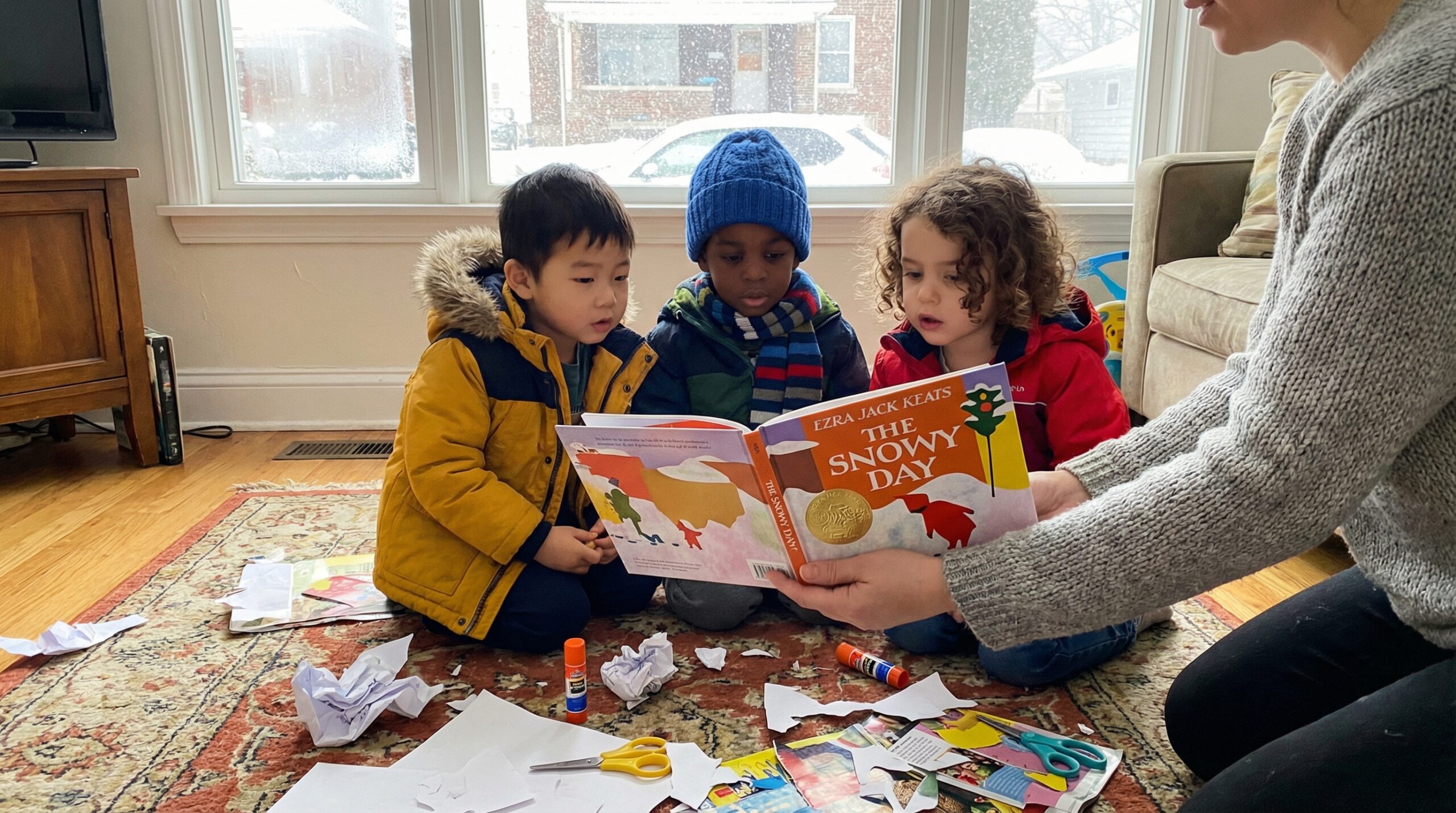
The Snowy Day is short and simple. Therefore, it suits preschool and early elementary children. Educators use it to teach weather and texture words. Parents use it as a gentle prompt for conversation. For example, teachers ask children to describe cold, soft, or crunchy snow.
A simple, practical tip
After a Storypie retell, ask your child to describe a snowy moment they remember or imagine. This quick activity builds sensory vocabulary. Use words like crunchy, powdery, soft, and footprints. It is fast and it works.
Why I come back to it
I return to The Snowy Day (book) because it is small and powerful. It models wonder in the everyday. It shows a city winter through a child’s eyes. Above all, it feels playful, tactile, and timeless. If you want a short read for a snowy afternoon, this one is a warm classic.
Read or listen to a story about The Snowy Day (book) now: For 3-5 year olds, For 6-8 year olds, For 8-10 year olds, and For 10-12 year olds.
Also visit Storypie for more stories and retells.