Simple Steps That Help Kids Thrive
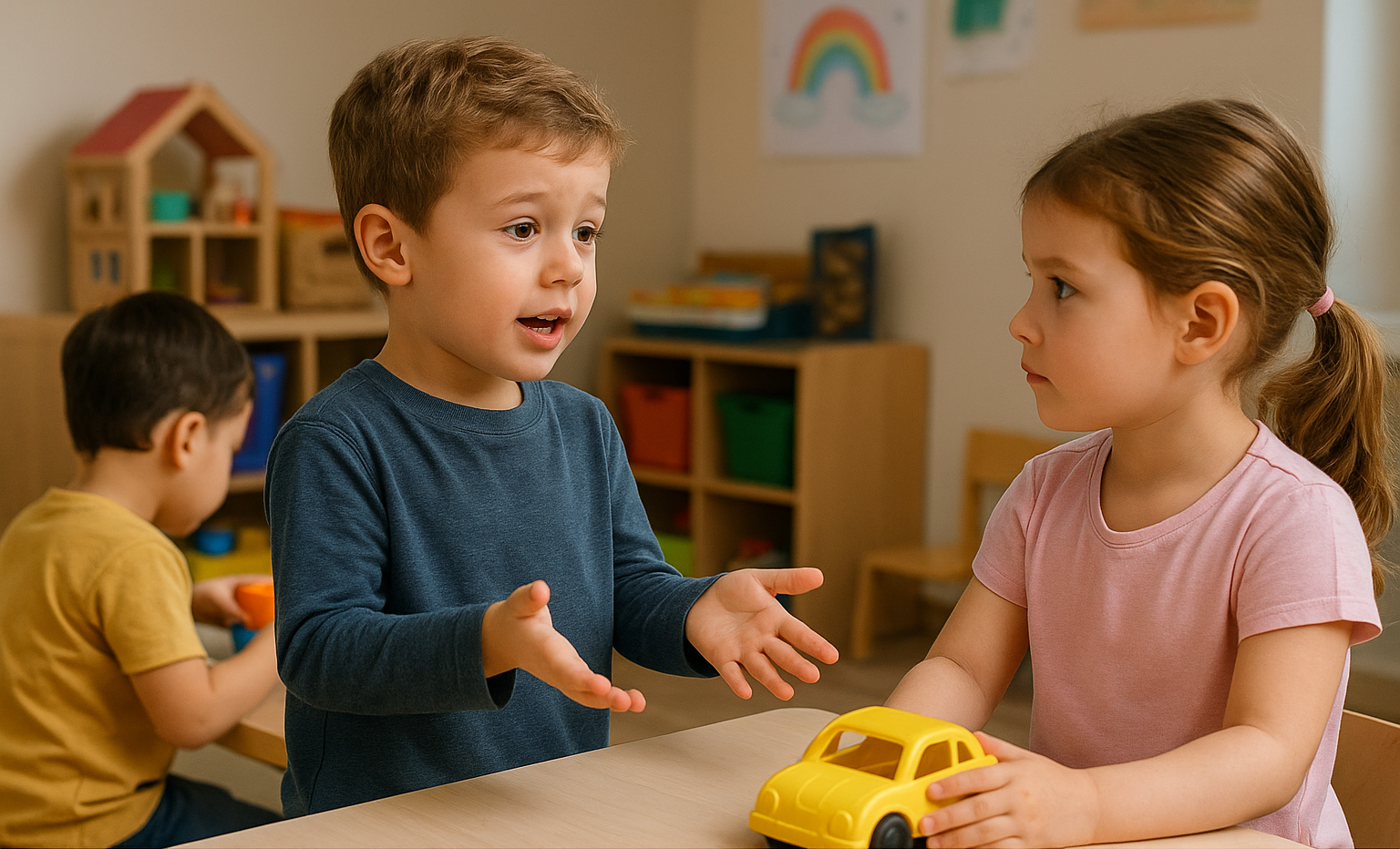
Jimmy sees a toy he wants. He feels excited. He also feels frustrated because someone else is using it. Sometimes he hits instead of asking. Hitting hurts bodies and feelings. Words help. Jimmy is learning to ask nicely and wait for a turn.
What Is a Social Story?
A social story is a short, clear story that teaches a single behavior or event. For example, it can cover taking turns, sharing a toy, asking for help, or staying calm during a tough moment. Most importantly, the child can see themselves in the story. Because of that, the lesson sticks.
Why Social Stories Work
Social stories turn big ideas into simple messages. They also build empathy. When a child identifies with a character, they understand feelings and choices more clearly. Repeating a short theme during the day reinforces the skill. Over time, the habit grows.
Try using memorable phrases like:
- “Space, please.”
- “Kind words only.”
- “Hands are for helping, not hurting.”
Make the Child the Hero
One very effective strategy is to name the main character after the child. For instance, if a student struggles with hitting, write a story that shows them facing the same problem. Then show the character practicing calm breathing, asking for help, and choosing gentle hands. Because the story creates a little distance, the child can process it safely and clearly.
Beyond Special Education
Although teachers often use social stories in special education, they help in general education too. Behavior challenges show up in every classroom. Therefore, every child benefits when a story reflects their emotions, relationships, and growth.
New Tools That Boost Story Power
Today’s tools make social stories more flexible and fun. With Storypie, you can create a short, direct story for a quick lesson. You can also design a superhero scene about staying calm at recess, a bedtime story about sharing, or a fairy tale where characters learn to work together. As a result, the same core skill appears in many forms, which deepens learning and keeps students engaged.
Tips for Parents and Teachers
- Keep it short. Use clear sentences and simple words.
- Focus on one skill. For example, “ask for a turn” or “use gentle hands.”
- Repeat the key phrase. Say it during real moments across the day.
- Practice the steps. Role-play the skill right after the story.
- Celebrate progress. Praise even small wins to build momentum.
Final Thought
Social stories do not need to be short or dry. With the right approach, they become vivid and joyful. More importantly, they help children understand themselves and others—and that lesson lasts.