
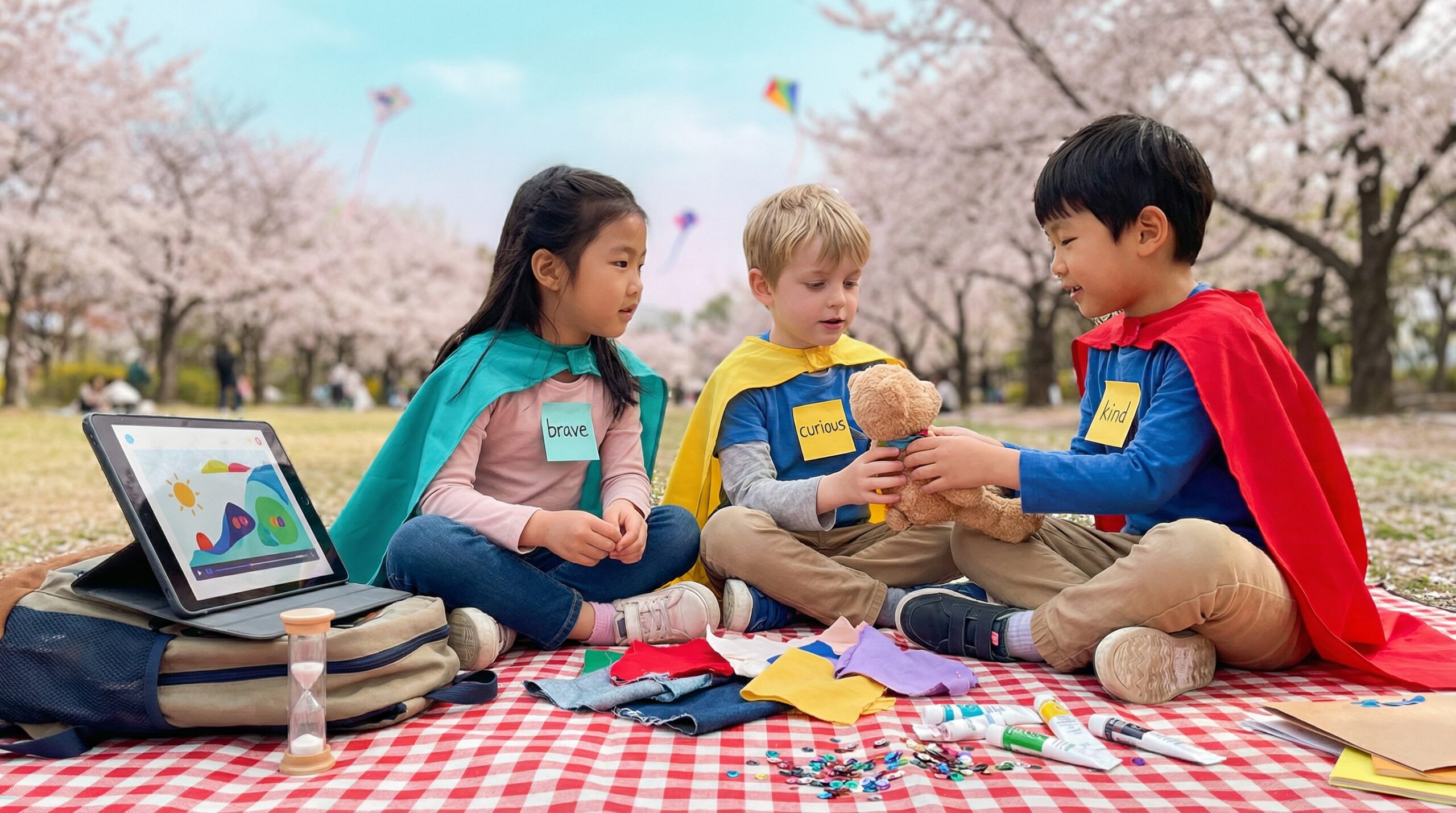
Try the weekend imagination challenge create your own hero. It is a tiny brilliant spark of play that turns a weekend into pure wonder. This short, guided prompt helps children invent a hero in about 15 minutes. Parents and teachers love it for its quick wins and big smiles.
What the weekend imagination challenge is
The weekend imagination challenge create your own hero is a prompt-driven activity. With simple cues, a child picks a name, three strengths, one kind deed, a power or tool, and a costume or symbol. The format stays playful and child-led. Short, timed play keeps attention and removes pressure. This style of play is crucial because, according to a 2025 OECD report, “free play, initiated by children, is at the heart of their development.” Repeat weekly to build habit, confidence, and narrative thinking.
Simple 15-minute plan
Try this plan for one sweet session. It fits a spring morning, a rainy afternoon, or a cozy living room slot.
Step-by-step (0 to 15 minutes)
- 0 to 2 minutes: Warm up with a question. For example, If you were a hero what are you best at?
- 2 to 8 minutes: Pick a name, three strengths, and one kind deed. This 3 strengths plus 1 kind deed prompt is gold for empathy. Research shows that this type of structured creative activity significantly enhances children’s imaginative skills, including drawing innovativeness and storytelling plot richness, as evidenced by a 2025 study involving 300 children aged 4–6.
- 8 to 12 minutes: Choose a power or tool and a costume. Draw or role-play it.
- 12 to 15 minutes: Share briefly and reflect. Ask, What would your hero do today to help someone?
Prompt cards to keep on hand
Make a little stack of cards for quick play. They speed things up and keep the game joyful.
- Hero name
- Three strengths
- One kind deed
- Special power or tool
- Outfit or symbol
- Everyday hobby or job
- Friend or sidekick
- Small weakness to overcome
Ways to adapt by age and ability
Make the weekend imagination challenge create your own hero work for every child. Below are simple tweaks.
- Preschoolers (3 to 5): Use picture choices, single words, and lots of drawing or role-play.
- Early elementary (6 to 8): Add short sentences and a tiny origin idea.
- Older children (9 to 12): Invite backstory, missions, or hero teams. A 2025 three-level meta-analysis found a strong positive link between creative play and creativity, showing that imaginative activities significantly boost creativity in this age group.
- Neurodiverse or nonverbal children: Offer symbols, AAC options, and tactile props.
Materials and safety
No special gear is required. Use paper, crayons, scarves, masks, toy props, or a tablet for voice notes. Supervise physical play and avoid dangerous stunts. When sharing online, blur faces and omit real names.
Why it helps
Short, consistent sessions build vocabulary, sequencing, planning, and empathy. Imaginative play supports executive function and theory of mind. A 2024 study involving 300 teachers and caregivers highlighted the pivotal role of artistic activities in cultivating creative thinking skills during early childhood. Look for richer descriptions, longer focus, and repeated return to favorite characters as informal signs of success.
Keep it fresh and extend the fun
Try seasonal twists like nature powers in spring. Also, extend the ritual by creating a hero team, a tiny mission, or a comic strip. Little repeated rituals create so much delight.
Give it a try with Storypie
Want a gentle nudge or easy prompts? Try Storypie to save and replay ideas. It works well with the weekend imagination challenge create your own hero. Click to get the app and keep the magic rolling.
When you publish, please place the meta description in the HTML head so search engines show the focus phrase weekend imagination challenge create your own hero.
Start small and celebrate wildly. Tiny sparks of play grow into bold stories, kinder choices, and joyful confidence.