
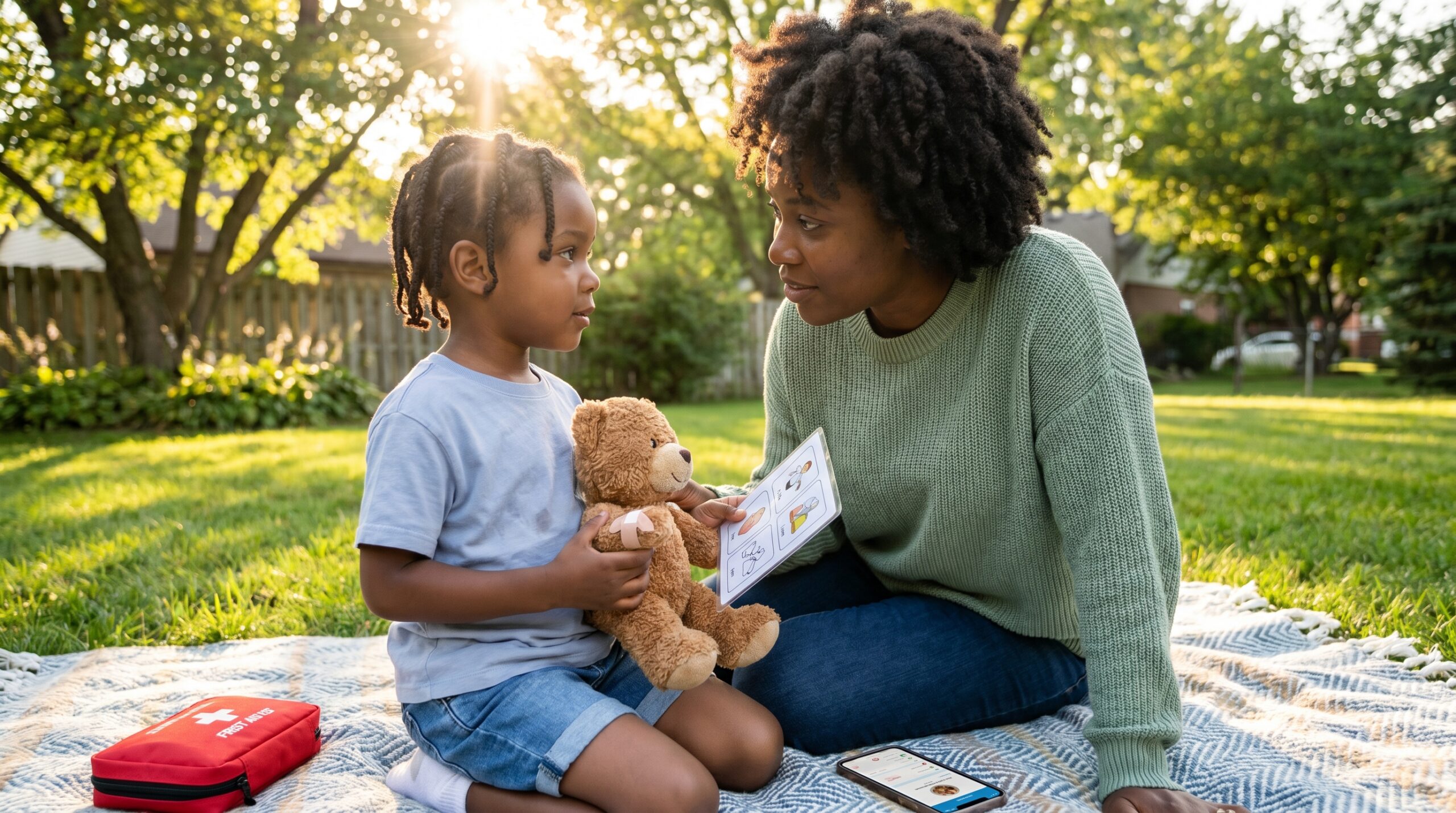
Asking for help for kids is a basic life skill that lowers stress and builds trust. Parents and teachers can model clear words and small steps. Then problems stay small and relationships grow stronger.
Why asking for help matters
When children ask for help early, small problems do not become big ones. Asking for help for kids protects emotional health and speeds learning. Also, it strengthens family and classroom trust. According to CDC data, the percentage of U.S. adults who received any mental health treatment in the past 12 months rose from 19.2% to 23.9% from 2019 to 2023, highlighting the growing recognition of the importance of seeking help.
What it looks like by age
Tiny scenes make the idea real. Use them often. Practice turns awkward moments into brave, tiny wins.
- Toddlers: A two year old tugs your sleeve and points at a stuck boot. Say, “Help me, please,” and sing it as you work together.
- Early elementary (7 year old): Your child is stuck on a spelling word. Ask them to name the problem in one sentence. Then give one clue and praise the asking.
- Tweens and teens: Offer private options. For example, say, “Want to text me what you are stuck on? I can help privately.” This respects privacy and encourages sharing.
Barriers children face
Shame, pride, fear of judgment, unclear vocabulary, and cultural messages can stop a child from asking. Older kids often worry about peers. Name these fears aloud so they feel less scary. Research from KFF shows that 43% of insured adults who reported mental health concerns felt there was a time in the past year when they did not get the mental health treatment they thought they needed, which can inform discussions with children about overcoming barriers to asking for help.
Simple scripts to practice
Short practice makes asking feel natural. Use playful role-play for two minutes each day.
- “Can you help me, please? I do not know how to finish this.”
- “I am stuck on this math step; could you show me one step?”
- “I feel overwhelmed and need to talk. Can we chat later?”
Daily two-minute routine
- Name the problem.
- Say one clear help sentence.
- Say thank you.
Nonverbal signs to watch for
Withdrawal, falling grades, irritability, sleep changes, and repeated failed attempts may mean your child needs help. Track small changes for two weeks to see a pattern.
Scaffolding vs taking over
Offer just enough support for success. Too much solving teaches dependence. Praise the asking itself. Try saying, “I am proud you told me you needed help,” instead of only praising results.
Special considerations
For neurodivergent children, use visuals, cue cards, and social stories. Respect cultural norms while finding ways to normalize safe help-seeking. Teach how to choose who to ask: a trusted adult, teacher, or professional.
When to escalate
If a child shows severe distress, self-harm, or danger to others, get professional help immediately. Contact the school counselor, GP, or mental health services without delay.
Practical next steps
Try a help jar. Have children drop a slip when they need a hand. Use a family phrase each morning. Celebrate quiet, brave moments. Make asking for help ordinary and even a little joyful. During a crisis, it’s crucial to seek help; a recent analysis found that among U.S. adults who reported a past-year mental health crisis, 72.6% sought help, with many reaching out to doctors or therapists and family or friends, as reported in a Health Affairs Scholar analysis.
Read or listen to a story about Asking For Help now: Read or listen to a story about Asking For Help now: For 3-5 year olds, For 6-8 year olds, For 8-10 year olds, and For 10-12 year olds.
Visit Storypie to explore more stories and tools that support asking for help for kids. Small steps build big trust and real confidence.