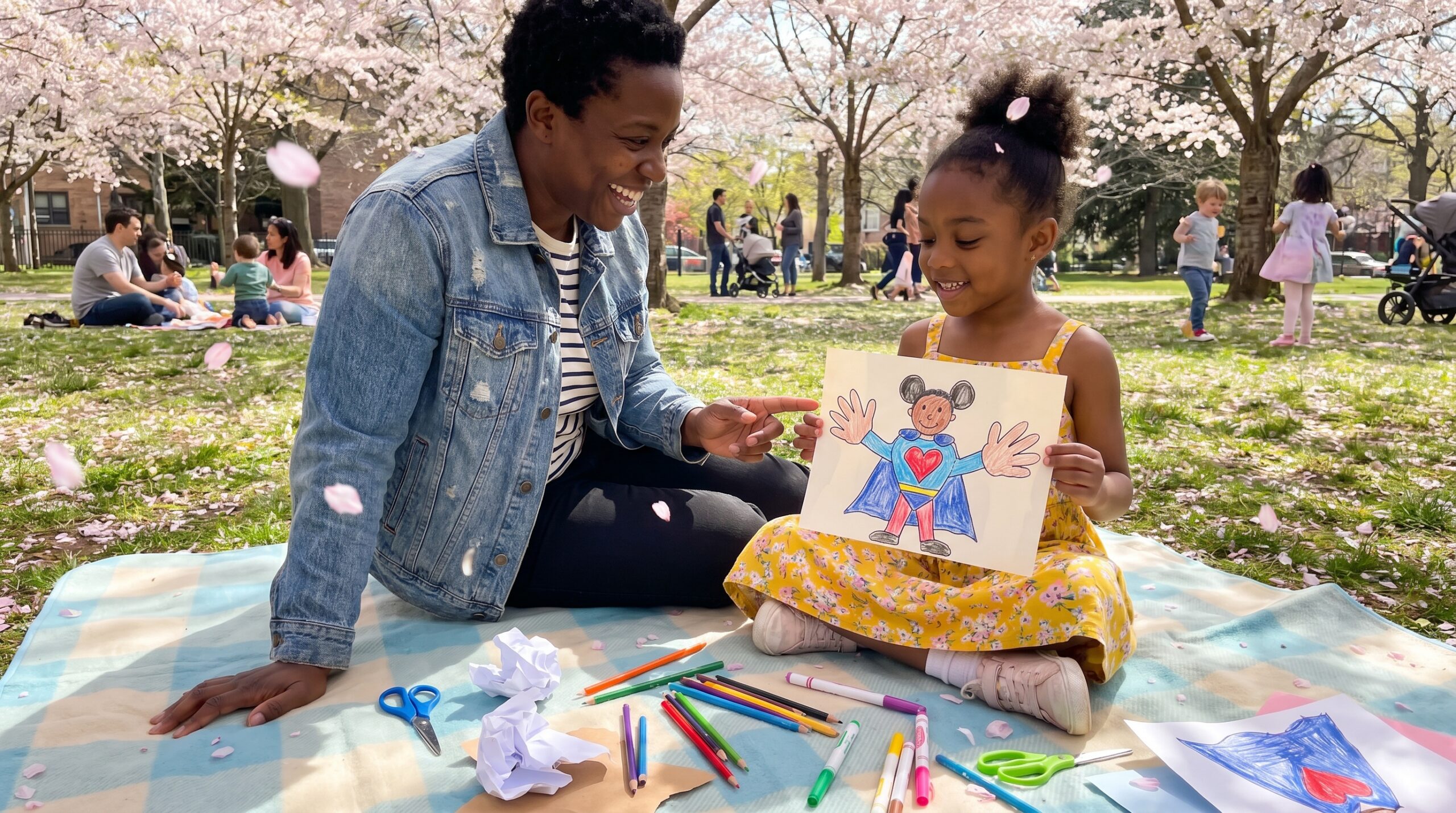
The weekend imagination challenge create your own hero turns slow mornings into tiny storytelling festivals. It is a short, child-led activity that asks kids to invent a hero, name three powers, and show how those powers help others. Playful and simple, it builds empathy and joy. Engaging in creative activities has been shown to significantly reduce feelings of stress or anxiety; in fact, a 2023 survey revealed that 61% of participants reported improvements in overall mental well-being.
What the challenge is
This prompt runs 15 to 45 minutes. First, give a quick intro. Then ask a few guided questions. Finally, draw or act out the hero. Core parts include a hero name, three powers, how those powers help someone, an appearance or prop, and a short mission or values line. Keep the frame short. Let children lead. Watch curiosity grow. A 2025 study found that structured creative activities can lead to measurable improvements in mental health, making this hero creation challenge a valuable experience for children.
How to run it in three steps
1) Warm up (3 to 10 minutes)
Ask for a hero name and one quick power. Use limited choices so decision making stays playful. For example, ask: “Is your hero Sparkle Shield or Captain Kind?” This keeps choices fast and fun.
2) Create (10 to 30 minutes)
Draw the hero, make a mask, or act out a scene. Then ask empathy questions. For example: “Which power helps someone who is sad? How does that look?” These prompts nudge feelings naming and problem solving. Research shows that pretend play supports language and symbolic thought, fostering perspective-taking skills, which are essential in children’s development.
3) Share and extend (5 to 10 minutes)
Tell a tiny mission story or make a kindness plan inspired by the hero. Also, invite siblings or friends to join. Team play builds cooperation and social skills, which are critical for effective interpersonal interactions. In fact, a recent systematic review concluded that regular engagement in arts and creative activities is positively associated with improved mental health and well-being among adolescents.
A short example
My seven year old created Sunbeam Sami. Sami has three powers: calm voice, warm hug, and a tidy breeze that finds lost toys. Sami used the calm voice to help a friend stop crying after a fall. Later, my child named emotions and offered solutions like a big-hearted coach. This simple scene made feelings easier to talk about. A randomized controlled trial showed that guided pretend play significantly enhances narrative development, reinforcing the educational benefits of this challenge.
Developmental benefits
Pretend play supports language and symbolic thought. It also helps perspective taking. Asking how a power helps someone nudges empathy and social problem solving. The challenge grows vocabulary and emotional labeling. In fact, 62% of 15-year-old students across OECD countries reported feeling confident in their ability to come up with creative ideas for school projects, according to PISA 2022 results, reinforcing the value of imaginative activities like creating a hero. It also encourages cooperative play when others join in.
Age friendly tweaks
- Toddlers (2 to 3 years): Use tactile props and one or two concrete powers, like “sharing hands.” Keep the game very short.
- Preschool (4 to 6 years): Draw and act out simple helping scenes. Offer two choices per question.
- School age (7 to 10 years): Add moral questions. Ask, “Why would your hero choose to help? What are their limits?”
Inclusivity, safety, and extras
Invite diverse genders, bodies, cultures, and abilities. Use textured materials for sensory learners. Supervise small parts. Avoid emotionally sensitive prompts. For groups, build a hero team to practice cooperation rather than competition.
Weekend extensions
Turn the hero into a thank you card, a backyard mission, or a short recording. For example, record a tiny story and save it. You can capture characters and clips in the Storypie app to keep them safe and shareable. Try this gentle memento after a busy week.
Try it tonight
Three powers, one drawing, and one small kindness inspired by the hero. It is quick, playful, and quietly powerful. Want to save your child’s character or recording? Create and store stories on Storypie for keepsakes and easy playback.
Instagram caption idea: Storypie: Perfect spring day for a weekend imagination challenge – create a hero with your child. Ask them to name three superpowers and how they help to build empathy.