The weekend imagination challenge create your own hero invites families to spend a cozy afternoon imagining a new champion. It uses a short, playful prompt to spark language, sequencing, and social thinking. Small time, huge wonder.
What the weekend imagination challenge is
This family prompt asks children to invent a hero. Often, the task lasts about ten minutes. It targets creativity and vocabulary. Also, it supports early social-emotional growth. In fact, a 2023 school-based study found that pretend-play training can improve emotion comprehension and reduce aggressive behavior in young children, emphasizing the importance of imaginative play.
Why families try the weekend imagination challenge
Parents and teachers like the challenge because it fits many ages. Pretend play appears around 18 to 24 months. Then it grows in complexity through preschool and early school years. Short, focused tasks avoid bedtime fatigue. So, parents get big wonder from tiny time. Additionally, according to a July 2023 poll by the American Psychiatric Association, 46% of American adults use creative activities to relieve stress or anxiety, highlighting the broad mental health benefits of engaging in creative tasks like this challenge.
Common formats children love
- Quick sketch plus a one-sentence origin.
- Verbal description or a brief tell-aloud.
- Simple role-play with a sock puppet or mask.
- One-page drawing with a caption or catchphrase.
Typical elements of the challenge
Many children include name, power, weakness, mission, costume, sidekick, and home base. Often their heroes carry a moral: help others, heal, or solve puzzles. Encourage nonviolent powers like empathy and shelter-making. These choices highlight creative problem-solving. Research shows that about three quarters of 15-year-old students demonstrated a baseline level of creative-thinking proficiency, according to the OECD PISA assessment, reinforcing the importance of fostering creativity from a young age.
Materials, safety, and accessibility
Families use low-cost supplies: paper, crayons, stickers, fabric scraps, and recycled boxes. For little hands, caregivers supervise small parts. Also, offer sensory-friendly options for children who prefer gentle textures or fewer distractions. Break tasks into tiny steps for attention differences.
Parental role and gentle guidance
Parents usually prompt with curiosity and listen. They celebrate effort over perfection. For example, a parent might add a playful line of their own. This models curiosity, invites longer play, and builds bonding.
Adaptations by age
Toddlers often pick a power and a color. Preschoolers name a mission and a sidekick. Early school-age children add weaknesses, home bases, and short backstories. Encourage diverse heroes of different abilities, skin tones, and problem-solving styles to reflect family values.
A tiny family scene
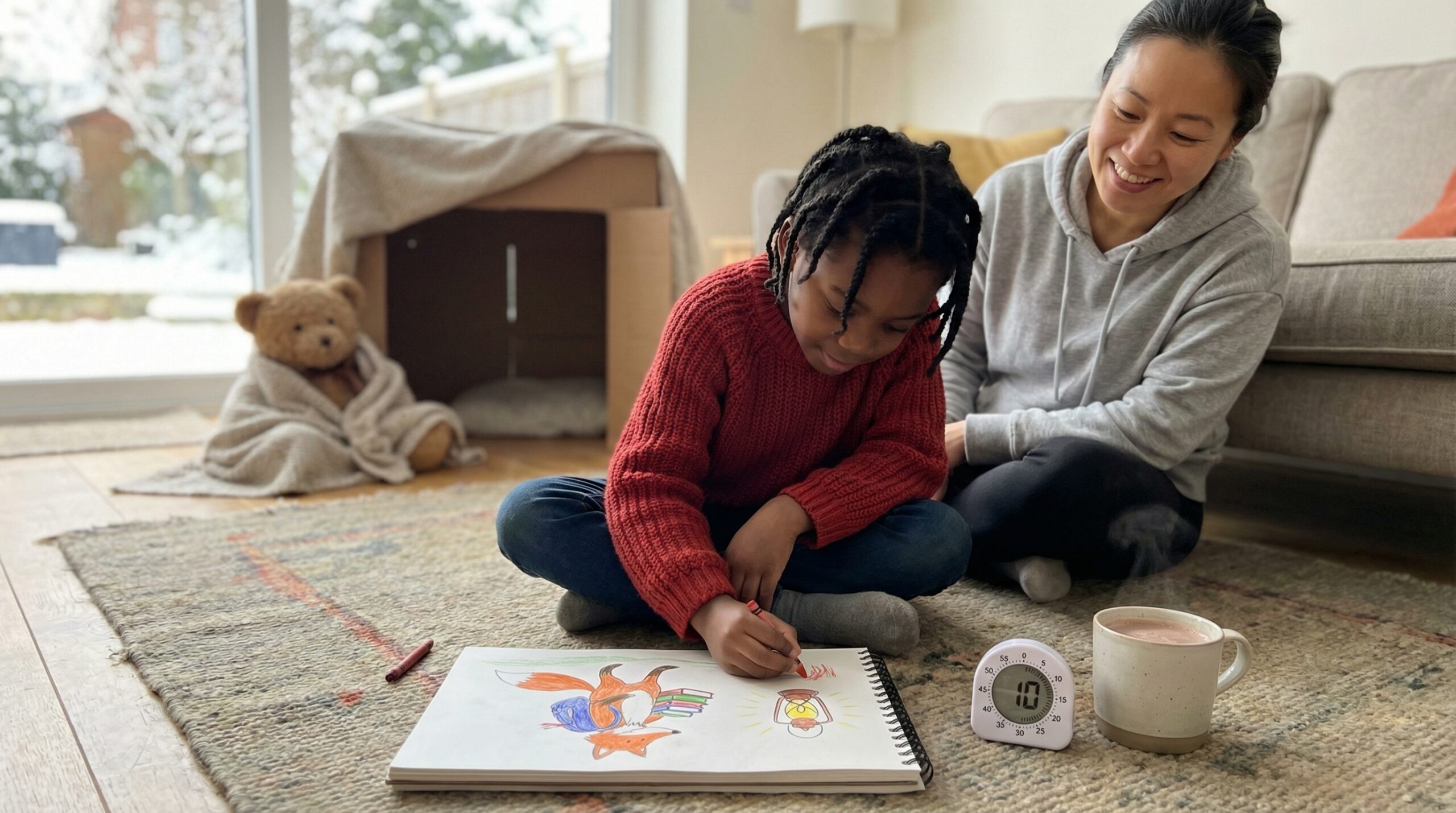
On a snowy afternoon a mother set a kitchen timer for ten minutes. Her five-year-old drew a hero named Patch who mends broken toys with a silver needle. The child narrated a short origin and chose a cardboard box as Patch’s workshop. Then they taped the drawing to the fridge. Pride beamed all evening.
Ways families preserve and share
Keep drawings on a fridge gallery, photograph sketches for a digital album, or record a short audio caption. These little keepsakes reinforce confidence. For families who want a simple toolkit, Storypie stores prompts, audio recordings, and sketches. Try the Storypie app for family-friendly prompts and easy storage.
In short, the weekend imagination challenge create your own hero is a small ritual with big rewards. It fits busy weekends and quiet weeknights. Plus, it sparks empathy, vocabulary, and a love of making stories together. Engaging in creative activities has been shown to improve confidence and reduce anxiety, with a 2023 study indicating that 63% of participants reported enhanced overall mental well-being after engaging in creative tasks, making this challenge beneficial for emotional health as well.