
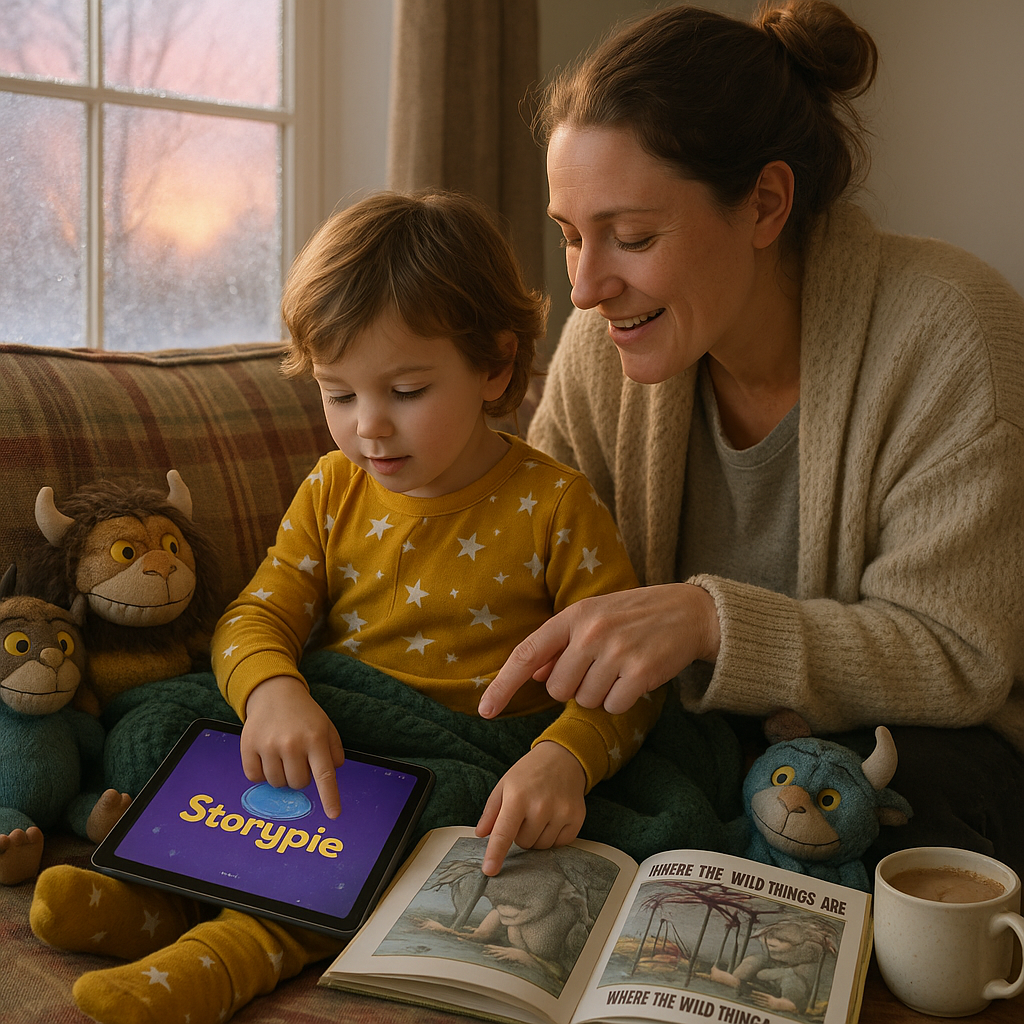
Where the Wild Things Are book arrived in 1963. Maurice Sendak wrote and illustrated it. The picture book won the 1964 Caldecott Medal and still comforts readers today. Parents and teachers call it a tiny miracle for big feelings. Both the publication year and Caldecott recognition are recorded in the Britannica article.
What the book is about
Max puts on a wolf suit and misbehaves. Then his mother sends him to his room. Next, Max sails in his imagination to an island of Wild Things and becomes their king. However, power and fury do not replace home. He returns to find his supper waiting. The story moves with few words and strong images.
Why Where the Wild Things Are book still matters
The book gives children a way to name fierce feelings. Also, it shows those feelings can pass. Pages breathe with ink, watercolor, and charcoal. Finally, the balance of small domestic scenes and huge island spreads feels honest and bold. Research into how readers understand emotion has even used the book: a 2021 peer‑reviewed study assessing emotion recognition worked with 66 children and 60 adults, showing how the illustrations and spare text can support emotion understanding in both young and older readers (2021 study on emotions).
Illustration and style
Sendak kept text spare. He used cinematic spreads and careful page turns. One image can hold a mood. One phrase hits like a steady drumbeat. For readers, the effect is vivid and calm at once.
History and impact
Published in 1963, the book changed how people saw children s anger. It won the Caldecott Medal in 1964. Since then, it has inspired stage work, music, and a 2009 film. By 2009 the book had sold over 19 million copies worldwide, including roughly 10 million copies in the United States, underscoring its wide cultural reach (Wikipedia article). Most editions run about 48 pages and roughly 338 words of text. Today it remains in print and on classroom lists.
Key characteristics
- Author and illustrator: Maurice Sendak
- Publication year: 1963
- Awards: 1964 Caldecott Medal
- Typical length: about 48 pages and ~338 words
- Media: ink, watercolor, charcoal
In short, Where the Wild Things Are book blends quiet domestic moments with wild, textured spreads. It reads like a ritual for many families. Moreover, it gives children language for intense emotions without lecturing.
Read or listen to a story about Where the Wild Things Are (book) now: For 3-5 year olds, For 6-8 year olds, For 8-10 year olds, and For 10-12 year olds.
Finally, the book remains both a tiny masterpiece and a practical tool for families. Read it often. Watch small readers name feelings and return, again and again, to the safety of home.