English

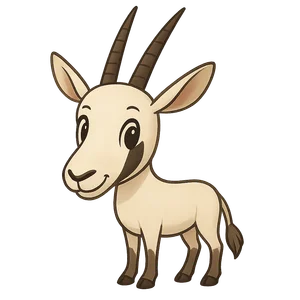
Arabian Oryx
The Arabian Oryx is a species of antelope from the Arabian Peninsula…
Reads at Grades 6–8 Listens at Grades 4–8
Print & create
Answer keys·No prep·Free with an account
28 worksheets · answer keys · full story · quiz · Ages 10-12 · CEFR B2
Plus adds 164,000+ more stories in 27 languages, audio for every one, and printables for all of them.
Just want Arabian Oryx?
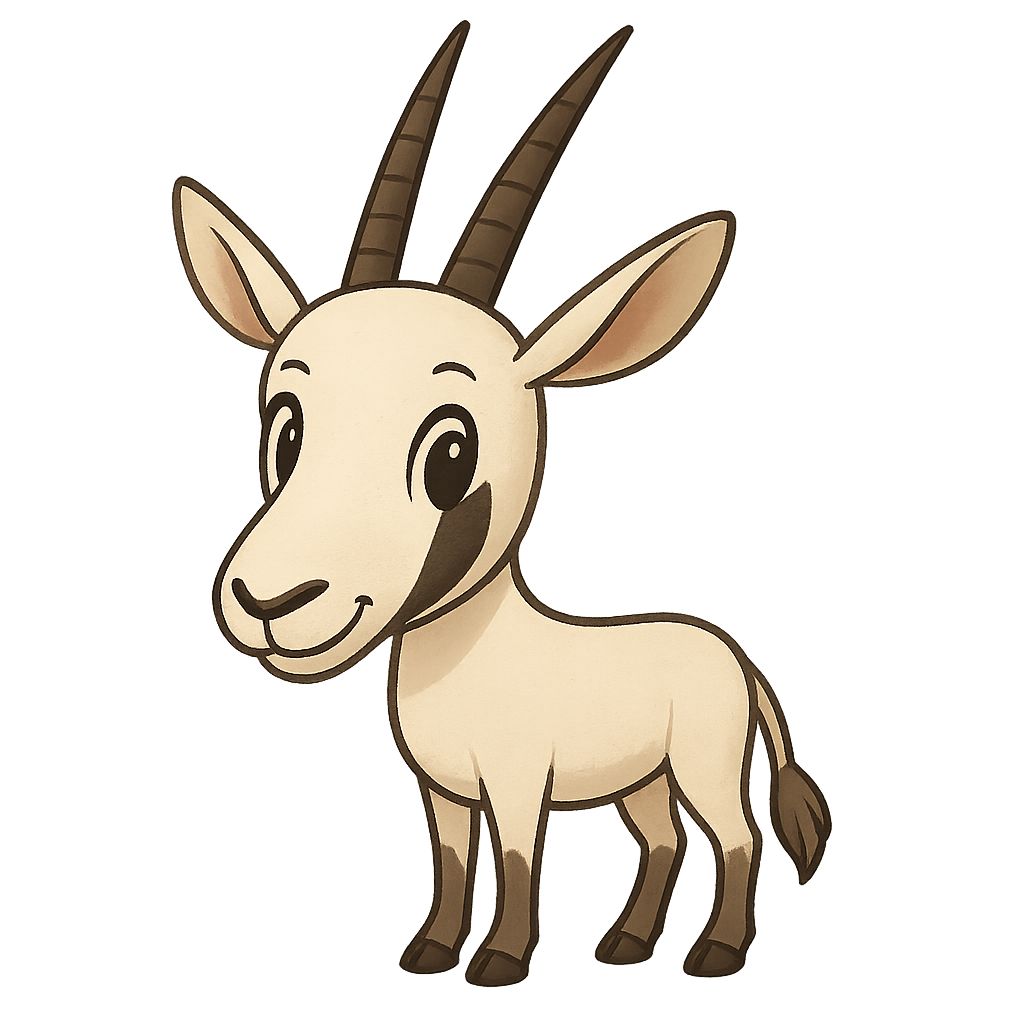
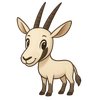
Hello, my name is Arabian Oryx, though some call me the white oryx. My home is the vast, sun-scorched desert of the Arabian Peninsula, a land of shifting sands and rocky plains where the heat can be almost unbearable. To survive here, my kind has some remarkable features. My coat is a brilliant, almost glowing white, which acts like a mirror to reflect the harsh desert sun and keep me cool. My most striking features are my long, straight horns that rise from my head like twin spears. I also have unique dark markings on my face that stand out against my white fur. Life in the desert requires special skills, and I have them. I can go for very long periods without drinking a single drop of water, getting the moisture I need from the plants I eat. Even more amazing, I have an incredible ability to sense rain from many miles away. When I detect a distant storm, I know to travel toward it, seeking out the fresh new plants that will soon sprout from the watered earth. For thousands of years, this was how my ancestors and I lived, in perfect harmony with our extreme environment.
For centuries, we roamed freely across the deserts, our lives dictated by the sun and the search for food. But in the 20th century, our world began to change in ways we could not understand. Humans, who had once hunted us on foot or with camels, now had modern technology on their side. They came into our home in fast-moving cars, carrying powerful weapons. My ancestors had no defense against such speed and force. We could run, but we could not outrun their machines. Our herds, once large and proud, began to shrink at an alarming rate. It was a time of great fear and loss for my kind. The vast desert that had always been our sanctuary became a place of danger. Finally, a terrible day came in 1972. On that day, the very last wild Arabian Oryx was hunted and killed. Our ancient lineage, which had survived the desert for millennia, was gone from the wild. We were officially declared 'Extinct in the Wild.' The only hope for our survival rested on the few of us who lived in the safety of private collections and zoos scattered across the globe.
The Arabian Oryx: A Story of Survival
Hello, my name is Arabian Oryx, though some call me the white oryx. My home is the vast, sun-scorched desert of the Arabian Peninsula, a land of shifting sands and rocky plains where the heat can be almost unbearable. To survive here, my kind has some remarkable features. My coat is a brilliant, almost glowing white, which acts like a mirror to reflect the harsh desert sun and keep me cool. My most striking features are my long, straight horns that rise from my head like twin spears. I also have unique dark markings on my face that stand out against my white fur. Life in the desert requires special skills, and I have them. I can go for very long periods without drinking a single drop of water, getting the moisture I need from the plants I eat. Even more amazing, I have an incredible ability to sense rain from many miles away. When I detect a distant storm, I know to travel toward it, seeking out the fresh new plants that will soon sprout from the watered earth. For thousands of years, this was how my ancestors and I lived, in perfect harmony with our extreme environment.
For centuries, we roamed freely across the deserts, our lives dictated by the sun and the search for food. But in the 20th century, our world began to change in ways we could not understand. Humans, who had once hunted us on foot or with camels, now had modern technology on their side. They came into our home in fast-moving cars, carrying powerful weapons. My ancestors had no defense against such speed and force. We could run, but we could not outrun their machines. Our herds, once large and proud, began to shrink at an alarming rate. It was a time of great fear and loss for my kind. The vast desert that had always been our sanctuary became a place of danger. Finally, a terrible day came in 1972. On that day, the very last wild Arabian Oryx was hunted and killed. Our ancient lineage, which had survived the desert for millennia, was gone from the wild. We were officially declared 'Extinct in the Wild.' The only hope for our survival rested on the few of us who lived in the safety of private collections and zoos scattered across the globe.
Just when it seemed our story was over, a new chapter began, one filled with hope and driven by caring people who refused to let us disappear forever. This incredible rescue mission began in 1962 and was called 'Operation Oryx.' The goal was simple but ambitious: to save my species from total extinction. Conservationists from around the world worked together to gather the few remaining Arabian Oryx from private collections. Three of my ancestors were brought together to form the beginning of a new herd, which was called the 'World Herd.' This small group was our last chance. They were given a safe new home far from the dangers of the desert, at the Phoenix Zoo in Arizona. There, under the watchful care of dedicated humans, the herd began to grow. The hope was that one day, their descendants—my generation—would be strong enough to return to our ancestral homeland.
The years spent in Arizona were crucial. The 'World Herd' thrived, and our numbers slowly but steadily increased. Behind the scenes, conservationists were busy preparing for our return. They worked to create protected reserves in the Arabian Peninsula, safe places where we could live without the threat of hunters. After two decades of careful planning and breeding, the moment everyone had been waiting for finally arrived. In 1982, a small group of my kind was carefully loaded onto an airplane for the long journey back home. We were flown to a protected area in Oman, and for the first time in ten years, the hooves of an Arabian Oryx touched the sands of our native land. It was a monumental day. We had to relearn the ways of the wild, from finding our own food and water to forming the social herds that are so important for our survival. It was a challenge, but we were home, and we were free.
Today, my story continues. Thanks to the tireless work of conservationists, our populations have continued to grow in protected areas across the Arabian Peninsula. A truly incredible milestone was reached on June 16th, 2011. On that day, our official status was upgraded by the International Union for Conservation of Nature. We went from being 'Extinct in the Wild' to 'Vulnerable.' This was the first time in history that a species once declared extinct in the wild had improved so much that its status could be changed. My story is proof that it is never too late to make a difference. It shows what can be achieved when people from all over the world work together to protect nature. We, the Arabian Oryx, are more than just white antelope of the desert; we are a living symbol of hope and a powerful reminder of the delicate balance we all share with our planet.
Wow facts
About
The Arabian Oryx is a species of antelope from the Arabian Peninsula, famous for being the first animal to have its conservation status upgraded from Extinct in the Wild to Vulnerable after a successful captive breeding and reintroduction program.
Take a Quiz
Question 1 of 5
What was the main problem the Arabian Oryx faced in the 20th century, and what was the solution that saved them?
Explore next



Want to do even more?
Go beyond exploring. Unlock tools that turn every story into real learning.

Storypie Plus for families
Full stories, quizzes, and printables. Nights and car rides, sorted.
- Unlimited audio stories
- Create Mode: your child stars in the story
- Offline downloads
- Printable worksheets & coloring pages

Why Storypie for Schools
Students engaged. Prep in seconds. Evenings back to you.
- Worksheets & Quizzes
- Classroom Management
- Formative Assessment
- Custom Curriculum & Lesson Plans
- 27 Languages

Why Storypie for Homeschool
Curriculum done. They'll ask for more. Hours back in your day.
- Worksheet Generator
- First-Person Audio Stories
- Built-in Comprehension Quizzes
- Custom Curriculum & Lesson Plans
- Print & Go Activities