English

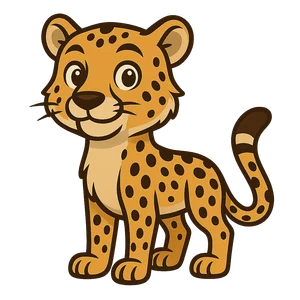
Cheetah
The cheetah (Acinonyx jubatus) is a large cat native to Africa and central Iran…
Reads at Grades 6–8 Listens at Grades 4–8
Print & create
Answer keys·No prep·Free with an account
28 worksheets · answer keys · full story · quiz · Ages 10-12 · CEFR B2
Plus adds 244,000+ more stories in 27 languages, audio for every one, and printables for all of them.
Just want Cheetah?
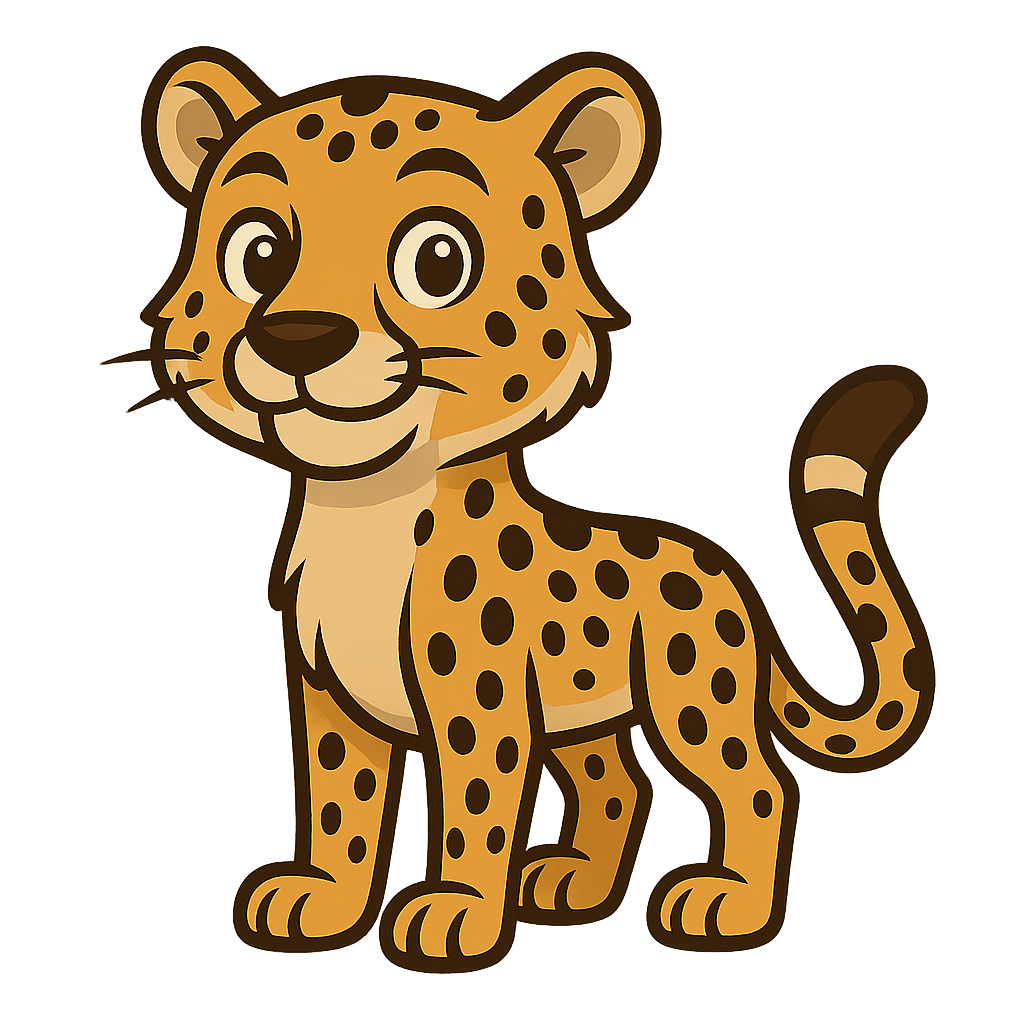
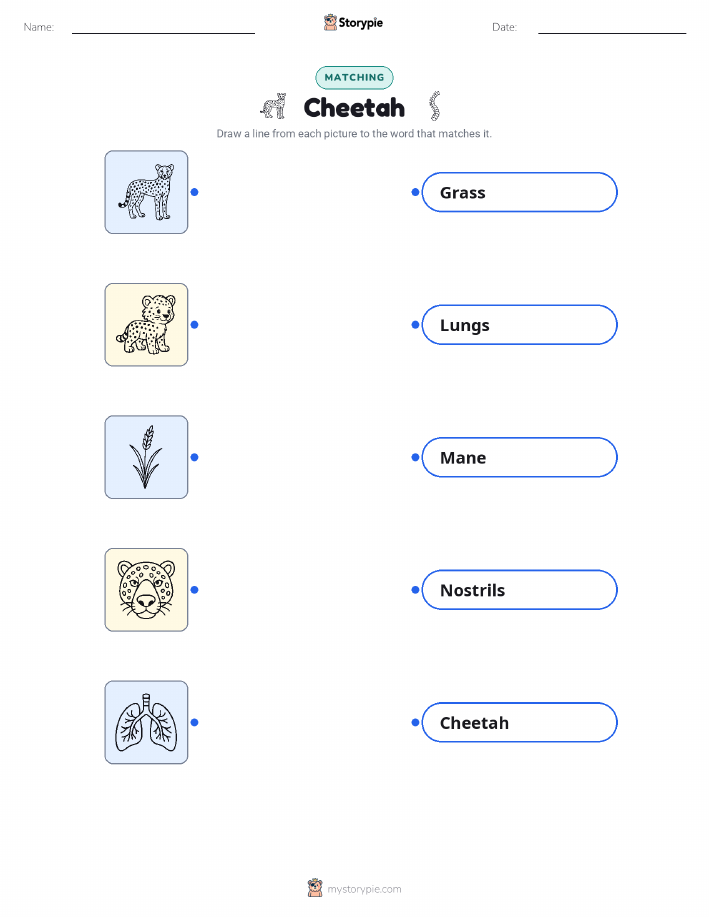
Hello. I am a cheetah, known to many as the fastest runner on land. My name has ancient roots, coming from the Hindi word 'chita,' which means 'spotted one.' It’s a fitting name for my beautiful coat. I was born with my siblings in isolated spots hidden in tall grass or thicker vegetation on the vast African savanna. As a cub, I wasn't just spotted; I had a special, fluffy grey mane running down my back. This wasn't for show—it helped me blend perfectly into the tall, dry grass, hiding me from predators while my mother was away hunting. My kind has been a part of this landscape for a very long time, a flash of gold against the green and brown plains. Even though we have roamed the earth for ages, it was in 1777 that Johann Christian Daniel von Schreber formally described the cheetah species for the world to study.
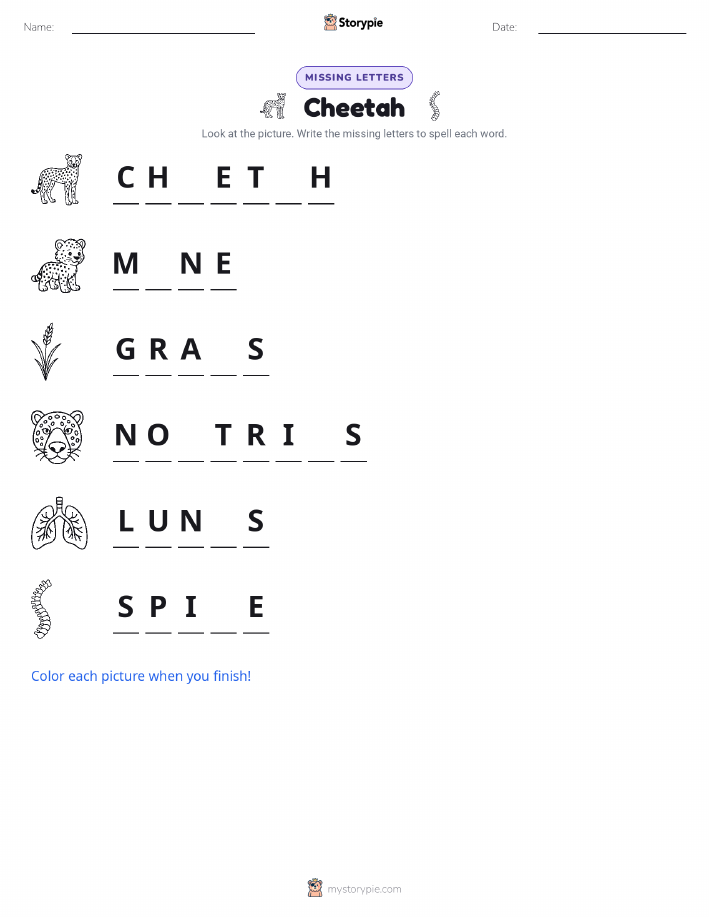
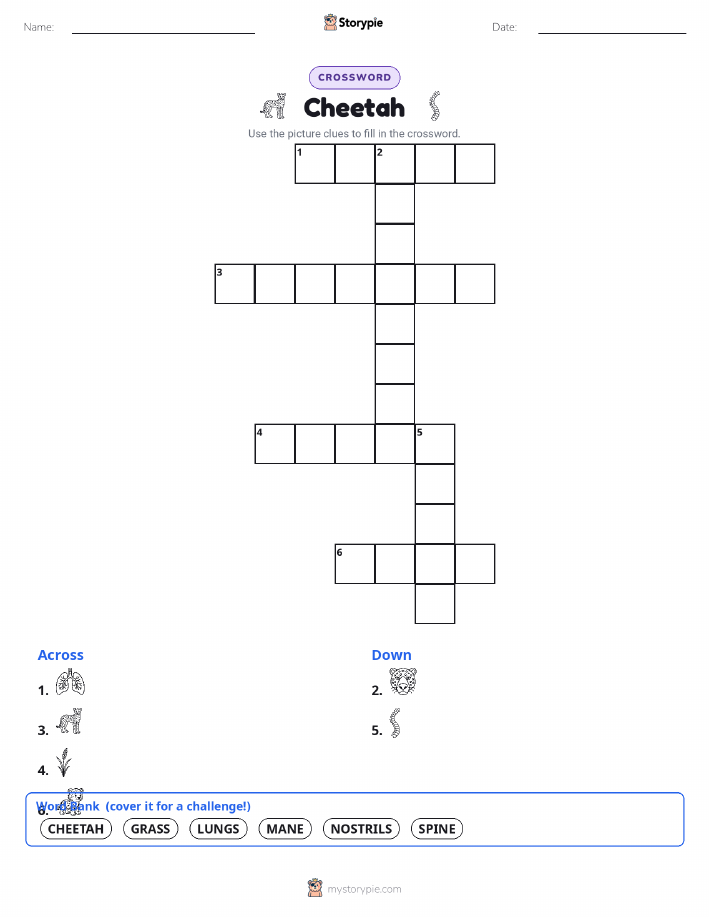
My body is a marvel of natural design, engineered for the chase. Every part of me, from my head to my tail, is built for incredible speed. I have large nostrils and powerful lungs that allow me to gulp in huge amounts of air when I run, fueling my muscles for the burst of acceleration I need. My spine is amazingly flexible, coiling and uncoiling with each stride, which lets me stretch my body to its full length and cover more ground than any other animal. My long, muscular tail is not just for beauty; I use it like a rudder on a boat, swinging it back and forth to keep my balance and make sharp, high-speed turns without tumbling over. Unlike most other cats, my claws don't retract all the way. They stick out slightly, like the spikes on a runner's shoes, digging into the earth to give me a powerful grip as I sprint. And you may have noticed the black 'tear marks' that run from the corners of my eyes down the sides of my nose. They aren't because I'm sad; they are a brilliant adaptation that helps block the sun's glare, allowing me to stay focused on my prey during a hunt.
A Cheetah's Tale: The Spotted Sprinter
Hello. I am a cheetah, known to many as the fastest runner on land. My name has ancient roots, coming from the Hindi word 'chita,' which means 'spotted one.' It’s a fitting name for my beautiful coat. I was born with my siblings in isolated spots hidden in tall grass or thicker vegetation on the vast African savanna. As a cub, I wasn't just spotted; I had a special, fluffy grey mane running down my back. This wasn't for show—it helped me blend perfectly into the tall, dry grass, hiding me from predators while my mother was away hunting. My kind has been a part of this landscape for a very long time, a flash of gold against the green and brown plains. Even though we have roamed the earth for ages, it was in 1777 that Johann Christian Daniel von Schreber formally described the cheetah species for the world to study.
My body is a marvel of natural design, engineered for the chase. Every part of me, from my head to my tail, is built for incredible speed. I have large nostrils and powerful lungs that allow me to gulp in huge amounts of air when I run, fueling my muscles for the burst of acceleration I need. My spine is amazingly flexible, coiling and uncoiling with each stride, which lets me stretch my body to its full length and cover more ground than any other animal. My long, muscular tail is not just for beauty; I use it like a rudder on a boat, swinging it back and forth to keep my balance and make sharp, high-speed turns without tumbling over. Unlike most other cats, my claws don't retract all the way. They stick out slightly, like the spikes on a runner's shoes, digging into the earth to give me a powerful grip as I sprint. And you may have noticed the black 'tear marks' that run from the corners of my eyes down the sides of my nose. They aren't because I'm sad; they are a brilliant adaptation that helps block the sun's glare, allowing me to stay focused on my prey during a hunt.
Life on the plains is a constant cycle of patience and power. A typical day for me often begins with finding a high vantage point, like a termite mound, where I can use my exceptionally keen eyesight to scan the horizon for a meal. When I spot a potential target, like a gazelle, I don't just charge in. My hunting strategy begins with a slow, patient stalk, using every bit of cover to get as close as possible without being seen. Once I am within striking distance, I unleash an explosive burst of speed. The chase is intense and breathtaking, but it is also very short. I cannot maintain my top speed for long, so the entire pursuit is usually over in less than a minute, whether I succeed or fail. My social life changed as I grew up. After leaving our mother at around 18 months of age, my brothers and I formed a team we call a 'coalition.' Hunting together makes us more successful and helps us protect our territory. Our sisters, however, prefer a solitary life, living and hunting on their own.
My story is not just one of speed; it is also one of survival against great odds. My ancestors faced a major event around 10,000 years ago, during the last ice age, that created what scientists call a 'population bottleneck.' So few cheetahs survived that difficult period that today, all of us are very closely related. This lack of genetic diversity can make my species more vulnerable to diseases. We also face many modern challenges. The open grasslands we need to hunt and raise our families are shrinking as they are turned into farms and cities. This habitat loss makes it increasingly difficult to find food and safe places to live. A sad chapter in our history was written in 1952, the year my relatives, the Asiatic cheetahs, were officially declared to have disappeared from the wild in India, a land they had roamed for thousands of years.
Despite these struggles, my story is far from over, and it has a hopeful chapter that is still being written. Many dedicated people around the world are working hard to protect us and our habitats. I am proud to share a great success story from this effort. On September 17th, 2022, a major conservation program called Project Cheetah began. On that day, some of my relatives were carefully moved from Africa and reintroduced to the grasslands of India. This historic event shows that there is real hope for us to return to the lands we once called home. My role in the ecosystem is a vital one. By hunting animals like gazelles, I help keep their herds healthy and strong by removing the weaker individuals, which in turn keeps the entire savanna in balance. My story is one of speed and survival, a story that continues to unfold with every sunrise on the plains.
Wow facts
About
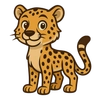
The cheetah (Acinonyx jubatus) is a large cat native to Africa and central Iran, renowned for being the fastest land animal. It is characterized by its slender body, long legs, spotted coat, and distinctive 'tear marks' on its face.
Take a Quiz
Question 1 of 5
What is the main purpose of the black 'tear marks' running down from a cheetah's eyes?
Explore next






Want to do even more?
Go beyond exploring. Unlock tools that turn every story into real learning.

Storypie Plus for families
Full stories, quizzes, and printables. Nights and car rides, sorted.
- Unlimited audio stories
- Create Mode: your child stars in the story
- Offline downloads
- Printable worksheets & coloring pages

Why Storypie for Schools
Students engaged. Prep in seconds. Evenings back to you.
- Worksheets & Quizzes
- Classroom Management
- Formative Assessment
- Custom Curriculum & Lesson Plans
- 27 Languages

Why Storypie for Homeschool
Curriculum done. They'll ask for more. Hours back in your day.
- Worksheet Generator
- First-Person Audio Stories
- Built-in Comprehension Quizzes
- Custom Curriculum & Lesson Plans
- Print & Go Activities