English
 For Schools
 For Homeschool

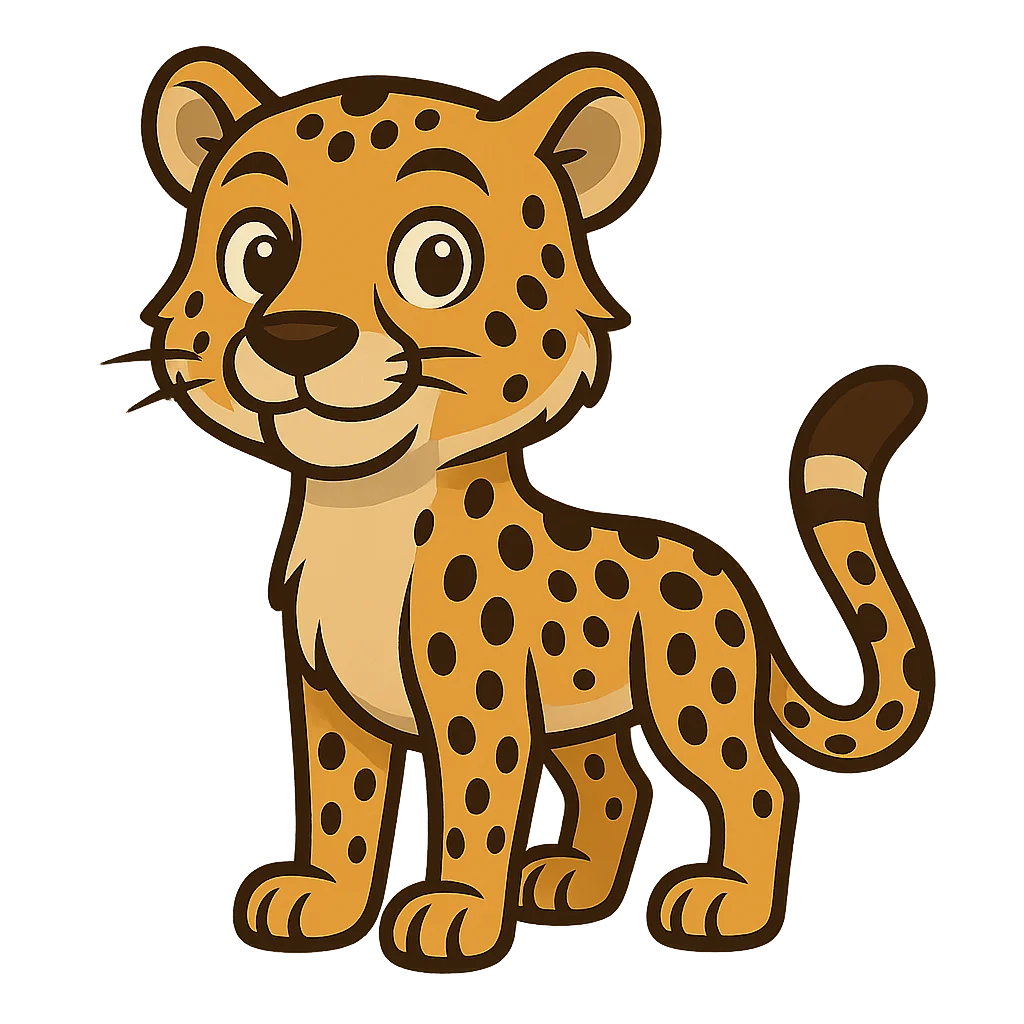
A Cheetah's Tale: The Spotted Sprinter
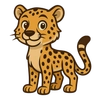
Hello, I’m a cheetah, and I want to tell you my story. I am known as the fastest runner on land, a sprinter of the grassy plains. My name comes from a word in the Hindi language that means 'spotted one,' which is a perfect description of my beautiful coat. I was born in a region where cheetahs are native, such as the African savanna or parts of Asia, a tiny, fuzzy cub with a special fluffy mane running down my back. My brothers, sisters, and I spent our first few weeks hiding deep in the tall, golden grasses. It was our safe place. While we played and tumbled, our mother would hunt for food, her sleek, spotted body disappearing into the landscape. We always knew she’d return, and we’d listen for her soft calls to let us know it was safe to come out.
My body is perfectly built for speed, and everything about me is designed to help me run. My spine is super-flexible, coiling and uncoiling like a spring with every stride, which lets me cover amazing distances in a single bound. To power my sprints, I have very large lungs and a strong heart that pump oxygen through my body when I'm chasing my next meal. My paws are special, too. Unlike other big cats, my claws don't pull all the way in. They stay out just enough to grip the ground like the cleats on a soccer player's shoes, giving me fantastic traction so I don't slip. And my long tail isn't just for show; I use it like a rudder on a boat, swinging it back and forth to help me steer and keep my balance when I make sharp turns at high speed. You might also notice the black lines that run from my eyes down to my mouth. We call these 'tear marks,' and they work just like sunglasses, cutting down the glare from the bright sun so I can keep my eyes on my prey.
Life as a hunter is a life of patience and skill. I spent the first 18 months of my life learning everything from my mother. She taught me how to stalk silently, how to choose the right moment to chase, and how to be successful. We cheetahs hunt during the day, when other predators are often resting. This helps us avoid competition. I love to hunt animals like gazelles and impalas. A chase is an incredible burst of energy, but it leaves me completely exhausted. After I catch my meal, I can't eat it right away. I have to rest, sometimes for half an hour, just to catch my breath. During this time, I must be very careful. Bigger, stronger animals like lions or a clan of hyenas are always watching, and if they see I am tired, they might come and try to steal the dinner I worked so hard to catch. It is a constant challenge, but it is the life I was born to live.
My family, the cheetahs, has a very long history. Our ancestors roamed the plains for thousands of years. We were so respected that ancient people in places like Egypt and Sumeria admired our grace and speed. But things have changed for us. Back in the early 1900s, there were over 100,000 of us living across Africa and Asia. It was a time when the grasslands seemed endless. Today, however, there are fewer than 7,100 of us left in the wild. Our world has become much smaller. The grassy savannas where we live, hunt, and raise our cubs are shrinking as human cities and farms expand. This makes it much harder for us to find food and safe places for our families to grow.
Even with these challenges, my story is one of hope. Many kind people around the world understand our struggle and are working hard to protect us and our homes. They are creating safe areas for us to live and teaching others about why we are so important. In 2022, an exciting project brought some of my cheetah cousins back to India, a country where they had not lived for a very long time. This gives me hope for our future. As a predator, I have a very important job. By hunting, I help keep the herds of gazelles and other animals healthy and strong, which keeps the entire savanna in balance. When people help protect cheetahs, they are not just saving the 'spotted one'; they are helping our whole ecosystem thrive for years to come.
Activities
Take a Quiz
Test what you learned with a fun quiz!
Get creative with colors!
Print a coloring book page of this topic.