English

Dragonfly (Green Darner)
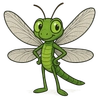
The Green Darner (Anax junius) is a large, migratory dragonfly species native to North America…
Reads at Grades 6–8 Listens at Grades 4–8
Print & create
Answer keys·No prep·Free with an account
28 worksheets · answer keys · full story · quiz · Ages 10-12 · CEFR B2
Plus adds 244,000+ more stories in 27 languages, audio for every one, and printables for all of them.
Just want Dragonfly (Green Darner)?
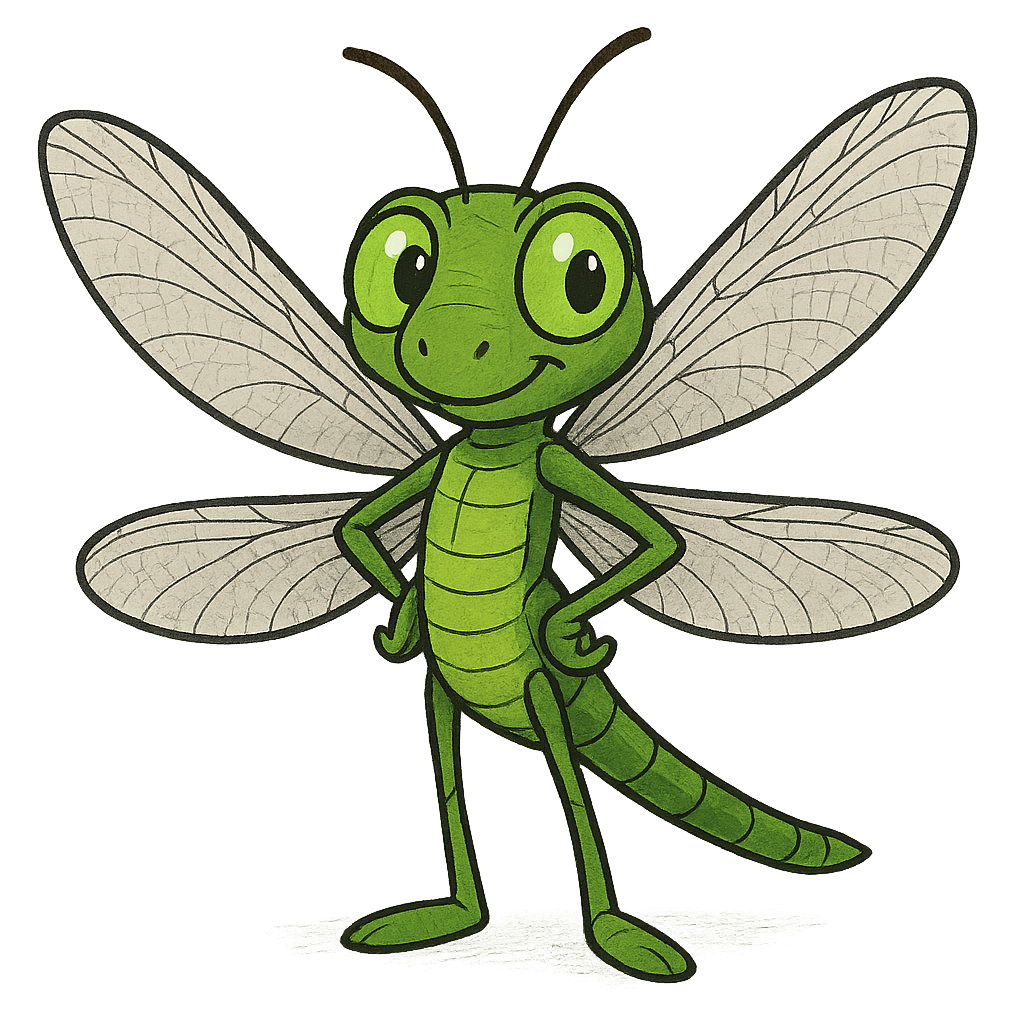
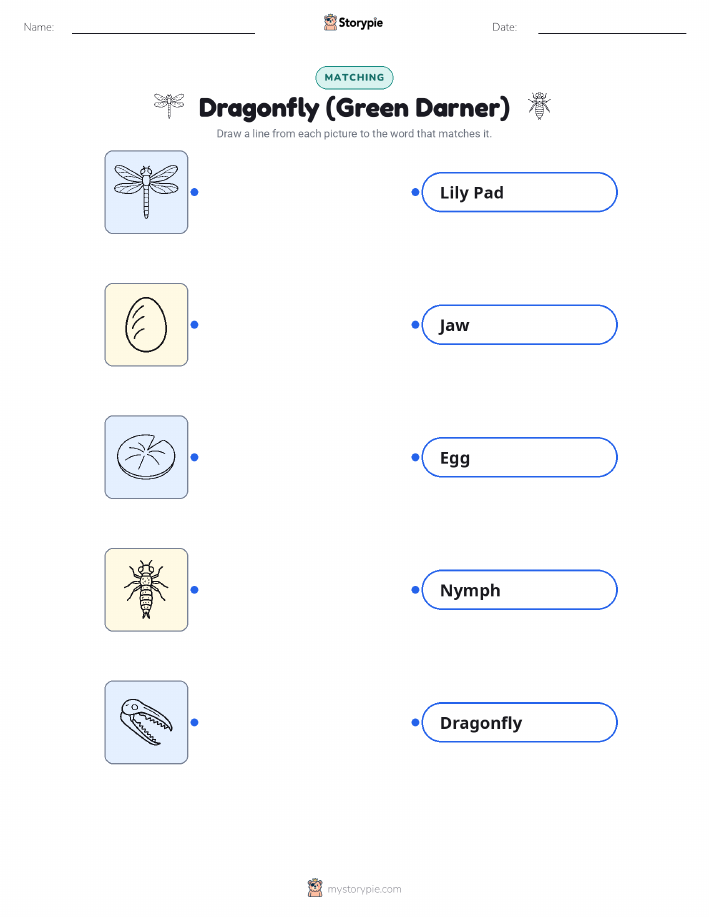
Hello! I am a Green Darner dragonfly, and you might know me for my bright colors and acrobatic flight. But my story doesn’t begin in the sky; it starts in the quiet, hidden world of a freshwater pond. I began my life as a tiny egg, carefully attached to the stem of a water plant. When I hatched, I wasn't a flyer at all. I was a nymph, sometimes called a naiad, and I spent many months as a formidable hunter crawling along the muddy bottom. My world was entirely underwater. While I didn't have wings yet, I possessed a secret weapon perfect for my environment: a lightning-fast, extendable lower jaw. I could shoot it out in a flash to snatch unsuspecting tadpoles and mosquito larvae. As I grew larger and stronger, I had to shed my tough outer skin, my exoskeleton, more than ten times in a process called molting.
After spending nearly a year beneath the water's surface, a powerful instinct began to stir within me. It was a feeling I couldn't ignore—a signal that it was time for the greatest change of my life. Following this urge, I laboriously climbed out of the pond, making my way up the sturdy stalk of a cattail until I was firmly above the water. Gripping the stalk tightly, I took what felt like a deep breath. A strange pressure built along my back until my exoskeleton split open. Slowly and carefully, I pulled my new, transformed body out of my old nymph skin, leaving it behind like an empty shell. My four wings were crumpled and soft, not at all ready for flight. I had to patiently pump fluid into them, watching as they expanded into the glassy, intricate structures you see today. I then had to wait for several hours as they hardened in the sun, preparing me for the moment I would leave my watery world behind forever and take my very first flight.
The Incredible Journey of the Green Darner Dragonfly
Hello! I am a Green Darner dragonfly, and you might know me for my bright colors and acrobatic flight. But my story doesn’t begin in the sky; it starts in the quiet, hidden world of a freshwater pond. I began my life as a tiny egg, carefully attached to the stem of a water plant. When I hatched, I wasn't a flyer at all. I was a nymph, sometimes called a naiad, and I spent many months as a formidable hunter crawling along the muddy bottom. My world was entirely underwater. While I didn't have wings yet, I possessed a secret weapon perfect for my environment: a lightning-fast, extendable lower jaw. I could shoot it out in a flash to snatch unsuspecting tadpoles and mosquito larvae. As I grew larger and stronger, I had to shed my tough outer skin, my exoskeleton, more than ten times in a process called molting.
After spending nearly a year beneath the water's surface, a powerful instinct began to stir within me. It was a feeling I couldn't ignore—a signal that it was time for the greatest change of my life. Following this urge, I laboriously climbed out of the pond, making my way up the sturdy stalk of a cattail until I was firmly above the water. Gripping the stalk tightly, I took what felt like a deep breath. A strange pressure built along my back until my exoskeleton split open. Slowly and carefully, I pulled my new, transformed body out of my old nymph skin, leaving it behind like an empty shell. My four wings were crumpled and soft, not at all ready for flight. I had to patiently pump fluid into them, watching as they expanded into the glassy, intricate structures you see today. I then had to wait for several hours as they hardened in the sun, preparing me for the moment I would leave my watery world behind forever and take my very first flight.
Launching into the air for the first time was a moment of pure freedom. The world looked entirely different from above, a vast and open space I was built to master. My body was perfectly designed for this new life in the sky. My enormous compound eyes, which are made of thousands of tiny lenses, allowed me to see in almost every direction at once, making me an expert at spotting both prey and predators. My bright green thorax held the powerful muscles for my wings, and my long, sleek abdomen, which is a brilliant blue, helped me balance. My two pairs of wings were remarkable; they could beat independently, which meant I could hover in one spot like a helicopter, fly backward, and make sharp, sudden turns. This skill made me a highly efficient hunter, and my favorite meals are a variety of flying insects, including mosquitoes, flies, gnats, moths, butterflies, mayflies, damselflies, and other smaller dragonflies, which I snatch right out of the air. By eating these insects, I am a great help to humans. My kind has been around for a very long time. In fact, it was the scientist Dru Drury who first scientifically described my species, Anax junius, way back in 1773.
As the warmth of a summer like the one in 2023 began to fade, a new instinct took hold, just as powerful as the one that drove me from the water. It was an undeniable pull to travel. Unlike many other insects you might see, my family, the Green Darners, are known for being long-distance migrants. I was born in the north, but my destiny was to fly south. I joined thousands of other Green Darners, and together we formed a great, shimmering swarm that journeyed for hundreds of miles. We weren't just wandering aimlessly; we were following an ancient path that our ancestors have traveled for countless generations. Ours is a multi-generational migration. The generation before me, my parents' generation, flew north in the spring to lay the eggs that would become me. Now, it was my generation's turn to fly south. Scientists only recently confirmed the true scale of our travels. In the early 2000s, they used amazing technology to track us, proving just how far we fly on our epic journey across the continent.
My life as a flying adult may only last for a few months, but my incredible journey is a vital part of a much larger story that connects seasons and generations. By making the long flight south, I ensure that my children will have the right start in life. They will then begin the journey north again the following spring, continuing our family’s great cycle of life. We are more than just beautiful insects; we are a living sign of a healthy world. The clean ponds and marshes we need to begin our lives are essential for countless other creatures, too. So, the next time you are near a lake or a pond on a sunny day, look for me. Watch as I patrol the air with strength and grace, and remember the incredible, continent-spanning journey that brought me there. My story is written on the wind, a timeless tale of transformation and endless travel.
Wow facts
About
The Green Darner (Anax junius) is a large, migratory dragonfly species native to North America, known for its bright green thorax, blue abdomen (in males), and its remarkable multi-generational migration.
Take a Quiz
Question 1 of 5
What is the main purpose of the Green Darner's long migration south?
Explore next





Want to do even more?
Go beyond exploring. Unlock tools that turn every story into real learning.

Storypie Plus for families
Full stories, quizzes, and printables. Nights and car rides, sorted.
- Unlimited audio stories
- Create Mode: your child stars in the story
- Offline downloads
- Printable worksheets & coloring pages

Why Storypie for Schools
Students engaged. Prep in seconds. Evenings back to you.
- Worksheets & Quizzes
- Classroom Management
- Formative Assessment
- Custom Curriculum & Lesson Plans
- 27 Languages

Why Storypie for Homeschool
Curriculum done. They'll ask for more. Hours back in your day.
- Worksheet Generator
- First-Person Audio Stories
- Built-in Comprehension Quizzes
- Custom Curriculum & Lesson Plans
- Print & Go Activities