English

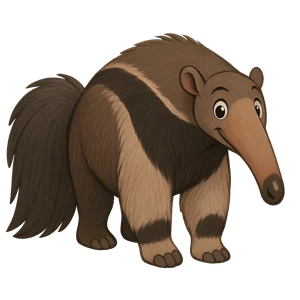
Giant Anteater
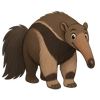
The Giant Anteater is the largest of the four anteater species, native to Central and South America.
Reads at Grades 3–5 Listens at Grades 1–5
Print & create
Answer keys·No prep·Free with an account
28 worksheets · answer keys · full story · quiz · Ages 8-10 · CEFR B1
Plus adds 164,000+ more stories in 27 languages, audio for every one, and printables for all of them.
Just want Giant Anteater?
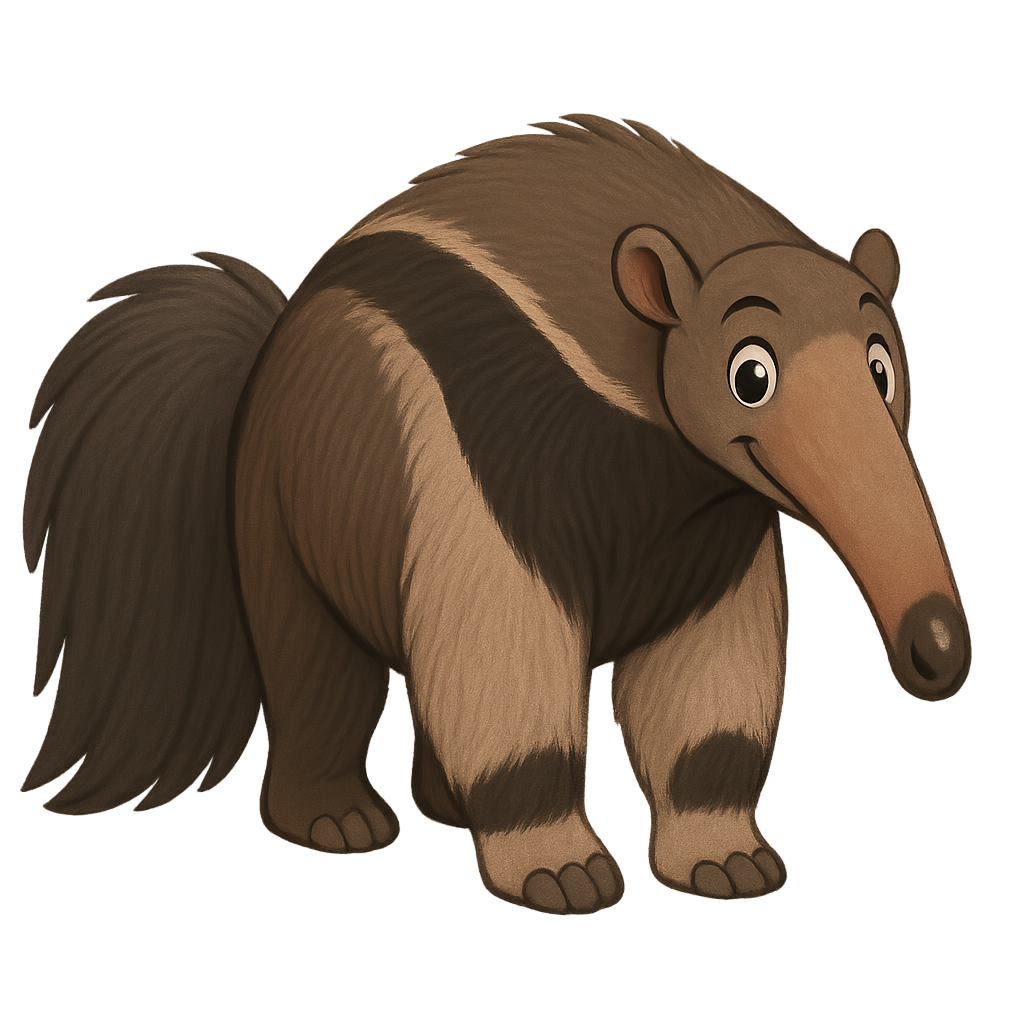
Hello! You can call me a Giant Anteater, though some people call me an Ant Bear. I have a very special look that you can’t miss. My snout is incredibly long, perfect for sniffing out my next meal. My tail is so big and bushy that I often use it as a cozy blanket when I sleep. And you can’t forget my claws. they are giant and powerful, especially the ones on my front feet. A long time ago, in the year 1758, a scientist named Carl Linnaeus gave my species its scientific name, *Myrmecophaga tridactyla*. It’s a fancy way of saying “ant-eater with three fingers.” I make my home in the warm grasslands and lush forests of Central and South America, where there are plenty of tasty insects to find.
My days are mostly spent on my own, wandering through my territory in search of food. I don't have very good eyesight, so I rely on my nose to guide me. My sense of smell is about 40 times more powerful than a human's, so I can sniff out an ant or termite nest from far away. When I find a big termite mound, my adventure truly begins. I use my strong front claws to rip a hole in the side of the hard, earthy structure. Then, it's time for my most amazing tool to get to work: my tongue. It is nearly two feet long and covered in sticky saliva. I can flick it in and out of the nest up to 150 times a minute, slurping up thousands of insects with every move. On a very busy day, I can eat up to 30,000 insects. But I am always careful. I never destroy the entire nest, because that means I can come back another day for another meal. It's important to make sure my food source lasts.
A Giant Anteater's Tale
Hello! You can call me a Giant Anteater, though some people call me an Ant Bear. I have a very special look that you can’t miss. My snout is incredibly long, perfect for sniffing out my next meal. My tail is so big and bushy that I often use it as a cozy blanket when I sleep. And you can’t forget my claws. they are giant and powerful, especially the ones on my front feet. A long time ago, in the year 1758, a scientist named Carl Linnaeus gave my species its scientific name, Myrmecophaga tridactyla. It’s a fancy way of saying “ant-eater with three fingers.” I make my home in the warm grasslands and lush forests of Central and South America, where there are plenty of tasty insects to find.
My days are mostly spent on my own, wandering through my territory in search of food. I don't have very good eyesight, so I rely on my nose to guide me. My sense of smell is about 40 times more powerful than a human's, so I can sniff out an ant or termite nest from far away. When I find a big termite mound, my adventure truly begins. I use my strong front claws to rip a hole in the side of the hard, earthy structure. Then, it's time for my most amazing tool to get to work: my tongue. It is nearly two feet long and covered in sticky saliva. I can flick it in and out of the nest up to 150 times a minute, slurping up thousands of insects with every move. On a very busy day, I can eat up to 30,000 insects. But I am always careful. I never destroy the entire nest, because that means I can come back another day for another meal. It's important to make sure my food source lasts.
My life started out as a tiny pup, and the very first thing I did was climb onto my mother’s back for safety. I spent almost my entire first year riding there, clinging to her fur as she walked through the grasslands. It was the safest place to be, protecting me from predators like jaguars and pumas that might see a small pup as an easy meal. My striped fur lined up perfectly with my mother’s, creating a clever camouflage that made me almost invisible to others. While I was riding on her back, I learned everything I needed to know about being a Giant Anteater. She taught me how to find food and how to be careful. By the time I was two years old, I was big and strong enough to leave her side and start exploring the world on my own.
Even though my life in the grasslands is amazing, my kind has faced new challenges in recent times. During the 20th and 21st centuries, our homes have started to get smaller. Humans have cleared away parts of the forests and grasslands for farming, and big fires have also destroyed some of our habitat. Another danger we now face are busy roads that cut through our territories. Crossing them to find food can be very risky. Because our homes are shrinking and we face these new dangers, humans who study animals listed my species as 'Vulnerable' in the year 2010. This was an important step, as it meant people were starting to understand that we need help to survive.
Legacy & Remembering
Even with these challenges, my job in the ecosystem is very important. By eating tens of thousands of ants and termites every single day, I help keep their populations in check. This keeps the grasslands and forests balanced and healthy for all the other plants and animals that live here. You could say I’m a natural pest controller. My story is a reminder of the role every animal plays. I am hopeful that as more people learn about us and help protect our homes, we Giant Anteaters can continue doing our important work for many, many years to come.
Wow facts
About
The Giant Anteater is the largest of the four anteater species, native to Central and South America. It is known for its extremely long snout, powerful claws, and a diet consisting almost exclusively of ants and termites.
Take a Quiz
Question 1 of 5
In the story, what does the word 'Vulnerable' mean when describing the Giant Anteaters in 2010?
Explore next


Want to do even more?
Go beyond exploring. Unlock tools that turn every story into real learning.

Storypie Plus for families
Full stories, quizzes, and printables. Nights and car rides, sorted.
- Unlimited audio stories
- Create Mode: your child stars in the story
- Offline downloads
- Printable worksheets & coloring pages

Why Storypie for Schools
Students engaged. Prep in seconds. Evenings back to you.
- Worksheets & Quizzes
- Classroom Management
- Formative Assessment
- Custom Curriculum & Lesson Plans
- 27 Languages

Why Storypie for Homeschool
Curriculum done. They'll ask for more. Hours back in your day.
- Worksheet Generator
- First-Person Audio Stories
- Built-in Comprehension Quizzes
- Custom Curriculum & Lesson Plans
- Print & Go Activities