English

Krill
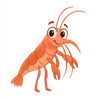
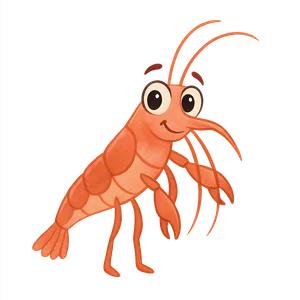
Krill are small, shrimp-like crustaceans found in all the world's oceans.
Reads at Grades 6–8 Listens at Grades 4–8
Print & create
Answer keys·No prep·Free with an account
28 worksheets · answer keys · full story · quiz · Ages 10-12 · CEFR B2
Plus adds 244,000+ more stories in 27 languages, audio for every one, and printables for all of them.
Just want Krill?
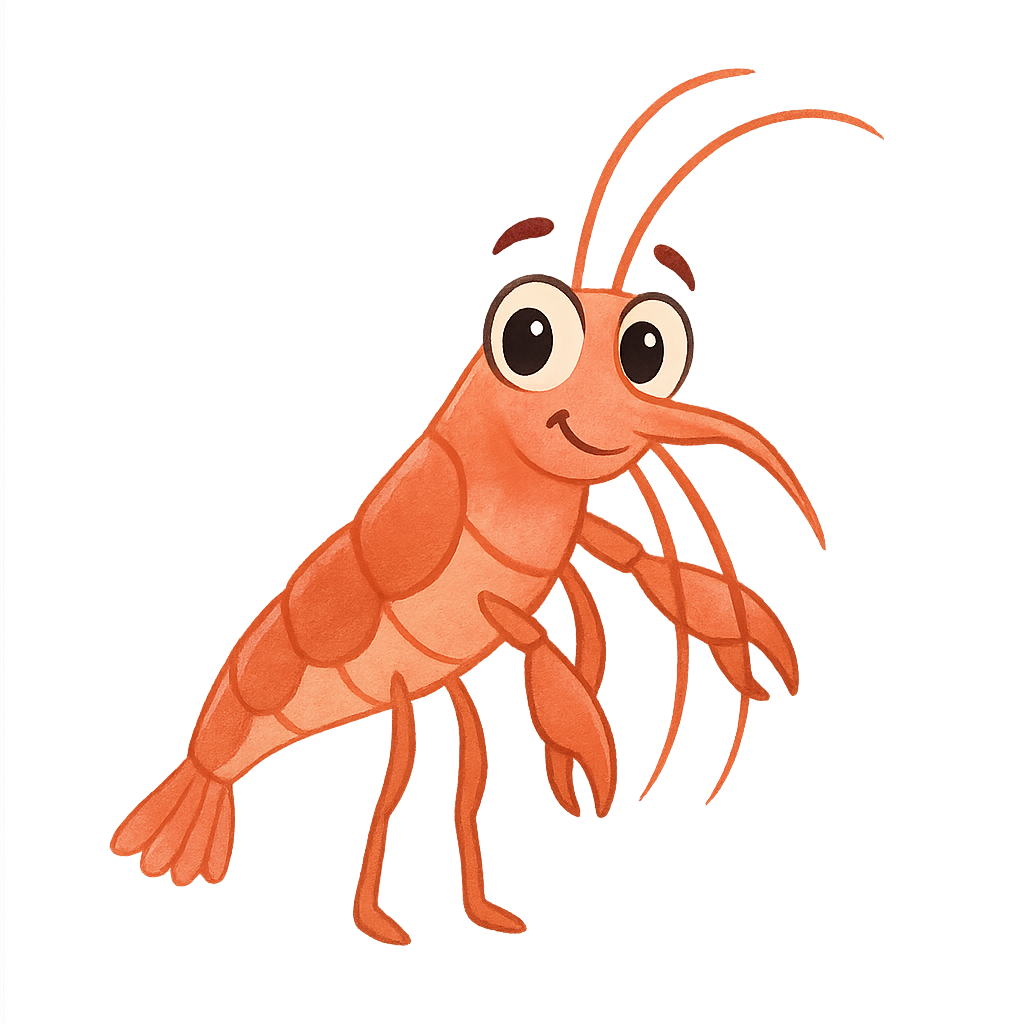
Hello! You might not recognize me, but I am one of the most important animals in the entire ocean. My name is Krill. Although I look a bit like a shrimp, I am a tiny crustacean, and my home is in the vast, icy waters of the Southern Ocean surrounding Antarctica. My entire existence began as a minuscule egg, sinking over 2,000 meters into the profound darkness of the cold abyss. It was a silent, lonely start to life. Once I hatched from my egg, I was not yet the krill you might imagine. I had to undertake a long and challenging journey back toward the sunlit surface waters. During this ascent, I transformed through several different larval stages, changing my shape and growing with each molt. This early part of my life is crucial for my species' survival, as it spreads us out across the ocean. The pressure at those depths is immense, and the cold is constant, but it is the place where my life must begin. As I slowly made my way upward, I fed on tiny particles drifting in the water, gaining strength for each new transformation. It was a remarkable adventure that I completed before I even truly looked like myself.
As an adult, I have learned that there is safety, and power, in numbers. I never travel alone; instead, I live my entire life as part of a huge, swirling, and constantly moving group called a swarm. When I describe our swarms as huge, I am not exaggerating. Some of them contain billions of individuals like me, forming a living cloud that can stretch for kilometers across the ocean. These swarms are so dense and vast that they are visible from space, appearing as a pinkish-red patch on the surface of the blue water. We move together as one, a shimmering, unified mass navigating the currents. My body is mostly transparent, which helps me hide from predators, and it’s covered by a hard outer shell called an exoskeleton. If you could look at me closely, you might even see the contents of my stomach, which often glows green from the countless tiny plants I eat. This brings me to one of my most fascinating abilities: bioluminescence. I have special organs along my body called photophores that allow me to produce my own light. This light is a beautiful blue-green glow, and we believe it serves a vital purpose. In the often-dark waters of the ocean, we use this light to communicate with one another, helping us to stay together in our massive swarms.
My Life as an Antarctic Krill
Hello! You might not recognize me, but I am one of the most important animals in the entire ocean. My name is Krill. Although I look a bit like a shrimp, I am a tiny crustacean, and my home is in the vast, icy waters of the Southern Ocean surrounding Antarctica. My entire existence began as a minuscule egg, sinking over 2,000 meters into the profound darkness of the cold abyss. It was a silent, lonely start to life. Once I hatched from my egg, I was not yet the krill you might imagine. I had to undertake a long and challenging journey back toward the sunlit surface waters. During this ascent, I transformed through several different larval stages, changing my shape and growing with each molt. This early part of my life is crucial for my species' survival, as it spreads us out across the ocean. The pressure at those depths is immense, and the cold is constant, but it is the place where my life must begin. As I slowly made my way upward, I fed on tiny particles drifting in the water, gaining strength for each new transformation. It was a remarkable adventure that I completed before I even truly looked like myself.
As an adult, I have learned that there is safety, and power, in numbers. I never travel alone; instead, I live my entire life as part of a huge, swirling, and constantly moving group called a swarm. When I describe our swarms as huge, I am not exaggerating. Some of them contain billions of individuals like me, forming a living cloud that can stretch for kilometers across the ocean. These swarms are so dense and vast that they are visible from space, appearing as a pinkish-red patch on the surface of the blue water. We move together as one, a shimmering, unified mass navigating the currents. My body is mostly transparent, which helps me hide from predators, and it’s covered by a hard outer shell called an exoskeleton. If you could look at me closely, you might even see the contents of my stomach, which often glows green from the countless tiny plants I eat. This brings me to one of my most fascinating abilities: bioluminescence. I have special organs along my body called photophores that allow me to produce my own light. This light is a beautiful blue-green glow, and we believe it serves a vital purpose. In the often-dark waters of the ocean, we use this light to communicate with one another, helping us to stay together in our massive swarms.
Though I am small, my role in the Antarctic is enormous. I am the main course on the menu for nearly every large animal in my ecosystem. My own diet is very specific; I eat phytoplankton, which are microscopic, plant-like organisms that float in the sunlit layers of the ocean. To catch them, I use a special filtering basket that I form with my front legs, swimming through the water and straining out my food. Because there are so many of us, we convert the energy from these tiny plants into a food source substantial enough to support the giants of the sea. Blue whales, the largest animals that have ever lived on Earth, depend almost entirely on us for their food. A single blue whale can consume up to four tons of my family and friends in a single day. But they are not the only ones. Humpback whales also feed on us, as do crabeater seals, Adélie penguins, and a vast number of fish and seabirds. My existence is what allows their existence. We are what is known as a keystone species. This means that the entire Antarctic food web is built upon our population. If we were to disappear, the entire ecosystem would face collapse.
My world, though it feels remote and pristine, is not untouched by human activity. Beginning in the 1970s, humans developed an interest in us, and large-scale commercial fishing for krill began. We are harvested from the ocean for several reasons, including the production of omega-3 supplements for human health and as a protein-rich food for farmed fish. To address concerns about overfishing, an international group was formed. This organization, the Commission for the Conservation of Antarctic Marine Living Resources, or CCAMLR, was established on August 7th, 1980, and its regulations came into force in 1982. CCAMLR's job is to set careful, science-based limits on how many of us can be caught each year to ensure the ecosystem remains healthy. However, an even greater challenge now threatens my home: climate change. The sea ice that forms around Antarctica each winter is shrinking. This ice is critically important for me because it is the primary habitat where my food, the phytoplankton, grows. Less ice means less food for me and my swarm, which in turn means less food for every animal that eats us.
My story is about more than just being a meal for others; it's about the health of the Southern Ocean and, in a larger sense, the entire planet. My swarm and I play a significant role in the global carbon cycle. When we consume phytoplankton, we are eating organisms that have absorbed carbon dioxide from the atmosphere. We then package that carbon into our bodies and our waste. When we shed our exoskeletons or when our waste pellets sink to the deep ocean floor, that carbon is locked away for centuries. It cannot return to the atmosphere to contribute to the warming of the planet. I typically live for about five to ten years. During my lifetime, my swarm and I will have supported generations of whales, penguins, and seals. Protecting me and my icy home is about more than just saving a single species; it means protecting one of the most unique and important ecosystems on Earth. We may be small, but together, our impact is truly mighty.
Wow facts
About
Krill are small, shrimp-like crustaceans found in all the world's oceans. As a keystone species, particularly Antarctic krill, they are a critical food source for whales, seals, penguins, and other marine animals.
Take a Quiz
Question 1 of 5
Based on the story, why are krill described as a 'keystone species'?
Explore next



Want to do even more?
Go beyond exploring. Unlock tools that turn every story into real learning.

Storypie Plus for families
Full stories, quizzes, and printables. Nights and car rides, sorted.
- Unlimited audio stories
- Create Mode: your child stars in the story
- Offline downloads
- Printable worksheets & coloring pages

Why Storypie for Schools
Students engaged. Prep in seconds. Evenings back to you.
- Worksheets & Quizzes
- Classroom Management
- Formative Assessment
- Custom Curriculum & Lesson Plans
- 27 Languages

Why Storypie for Homeschool
Curriculum done. They'll ask for more. Hours back in your day.
- Worksheet Generator
- First-Person Audio Stories
- Built-in Comprehension Quizzes
- Custom Curriculum & Lesson Plans
- Print & Go Activities