English

Llama
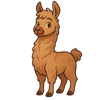
The llama (Lama glama) is a domesticated South American camelid…
Reads at Grades 6–8 Listens at Grades 4–8
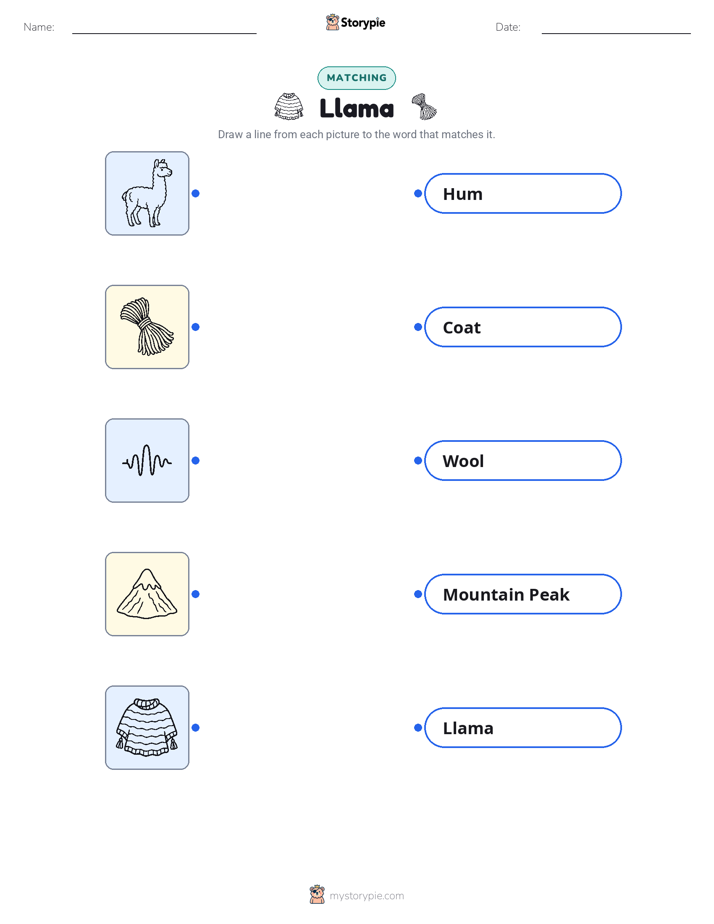
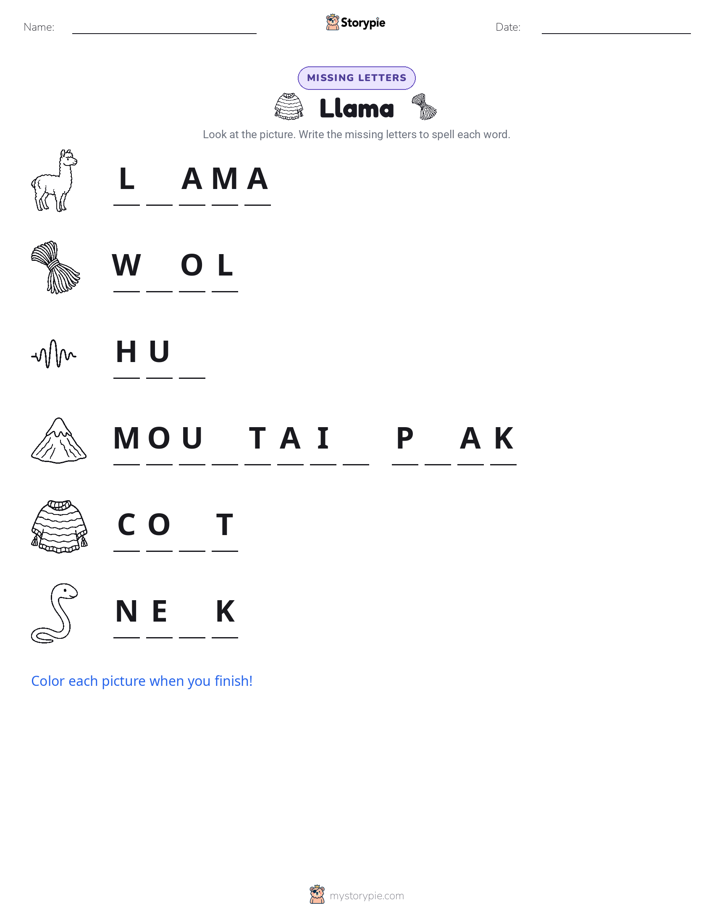
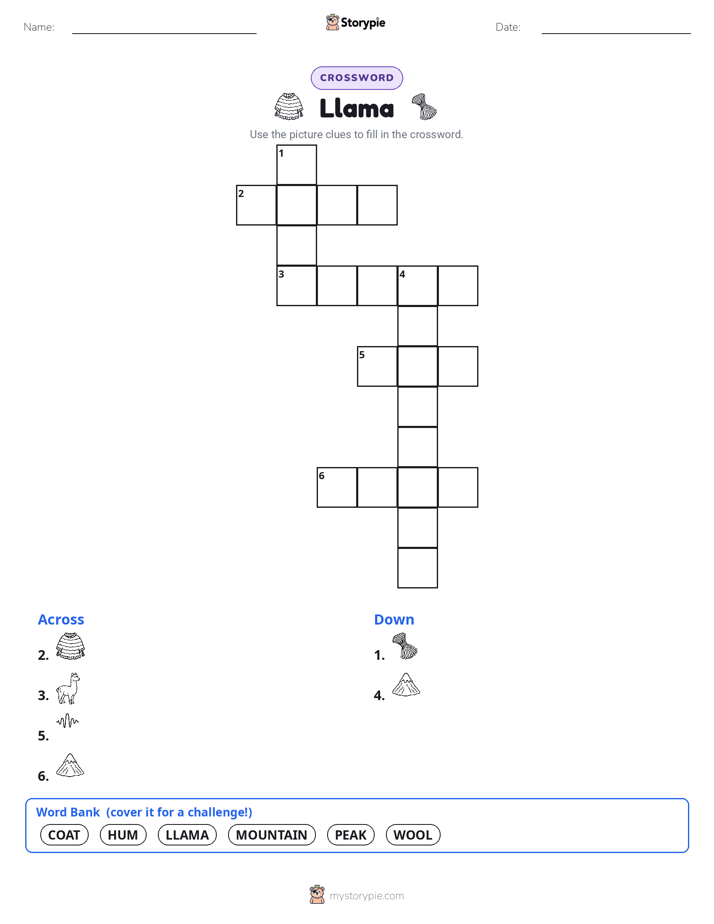
Print & create
Answer keys·No prep·Free with an account
28 worksheets · answer keys · full story · quiz · Ages 10-12 · CEFR B2
Plus adds 164,000+ more stories in 27 languages, audio for every one, and printables for all of them.
Just want Llama?
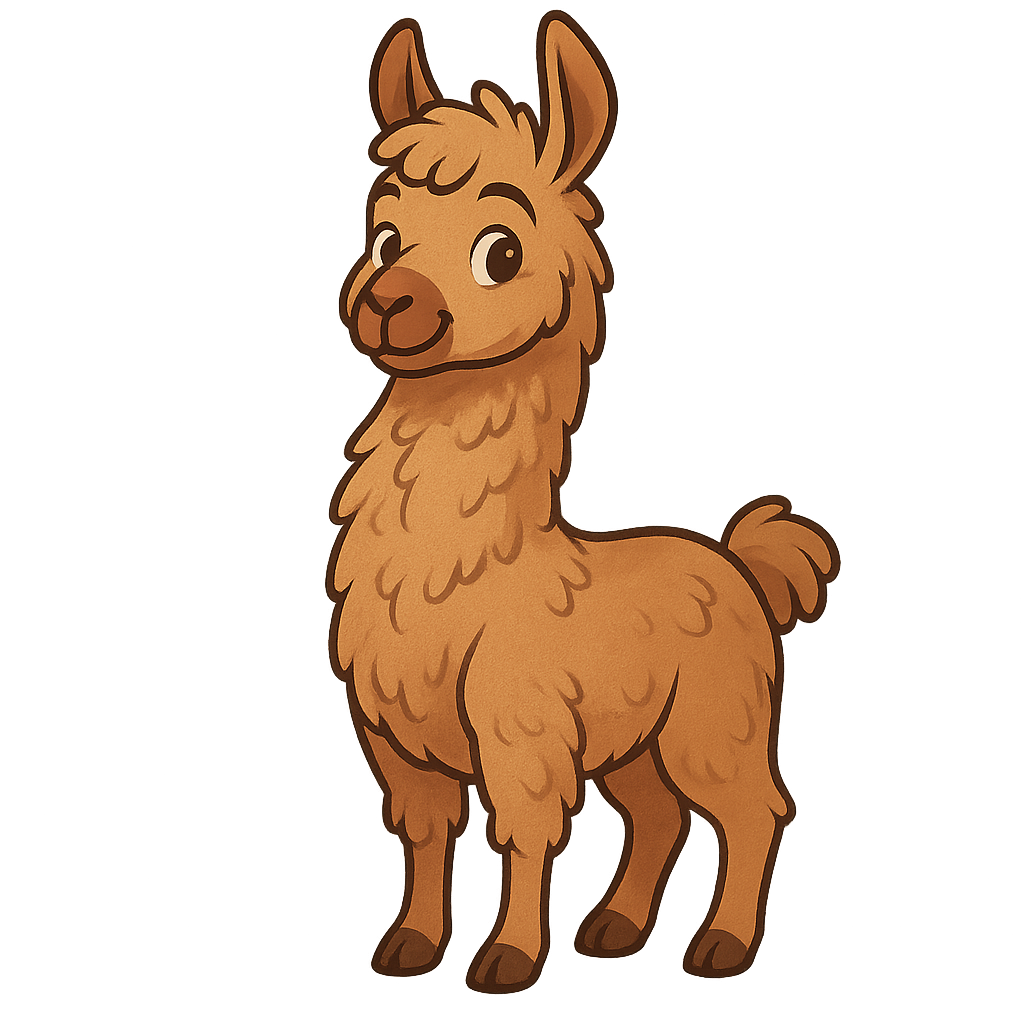
My name is a soft hum on the wind, a sound that echoes across the high peaks. I am a llama, and my home is here, in the Andes Mountains of South America. The air is thin and crisp, a feeling I know well as it filters through my thick, woolly coat. My long neck allows me to see far across the rocky slopes and grassy plateaus. I live with my family in a herd, and we speak to each other not with loud calls, but with gentle hums that carry messages of contentment, curiosity, or warning. We are creatures of the highlands, built for this altitude and this ancient landscape. My life is one of quiet purpose, moving with my herd across the vast, open spaces under the wide sky.
My story, however, did not begin with me. It began thousands of years ago with my wild ancestors, the guanacos. They were graceful, swift, and perfectly adapted to these mountains, roaming freely where I now walk. Around 4500 BCE, a great change began. The early people of the Andes observed my ancestors, noticing their strength, their calm nature, and their ability to thrive in this challenging environment. They saw potential in these gentle animals. Over many generations, they began a slow and patient process of domestication. It was not a capture, but a partnership. Humans offered protection and care, and in return, my ancestors offered their strength and their fleece. This bond, formed in the ancient past, would shape the history of the entire region and define the future for my kind.
The greatest chapter for my species was our time with the Inca Empire, which flourished across these mountains from the 1400s until 1533 CE. During this era, we were the backbone of their civilization. The Inca built thousands of miles of incredible roads, and we were the ones who traveled them. I can imagine my ancestors, forming long caravans, their backs laden with precious cargo. They carried colorful textiles woven from our own wool, potatoes and quinoa from the fertile valleys, and even silver mined from the mountains. We were more than just pack animals; we were essential to the life of the empire. Our warm wool was spun into clothing that protected people from the mountain cold. Even our dung was valuable, collected and dried to be used as fuel for fires where trees were scarce. In every part of daily life, from trade to warmth, my kind played a vital role.
The Llama's Tale: A Journey Through the Andes
My name is a soft hum on the wind, a sound that echoes across the high peaks. I am a llama, and my home is here, in the Andes Mountains of South America. The air is thin and crisp, a feeling I know well as it filters through my thick, woolly coat. My long neck allows me to see far across the rocky slopes and grassy plateaus. I live with my family in a herd, and we speak to each other not with loud calls, but with gentle hums that carry messages of contentment, curiosity, or warning. We are creatures of the highlands, built for this altitude and this ancient landscape. My life is one of quiet purpose, moving with my herd across the vast, open spaces under the wide sky.
My story, however, did not begin with me. It began thousands of years ago with my wild ancestors, the guanacos. They were graceful, swift, and perfectly adapted to these mountains, roaming freely where I now walk. Around 4500 BCE, a great change began. The early people of the Andes observed my ancestors, noticing their strength, their calm nature, and their ability to thrive in this challenging environment. They saw potential in these gentle animals. Over many generations, they began a slow and patient process of domestication. It was not a capture, but a partnership. Humans offered protection and care, and in return, my ancestors offered their strength and their fleece. This bond, formed in the ancient past, would shape the history of the entire region and define the future for my kind.
The greatest chapter for my species was our time with the Inca Empire, which flourished across these mountains from the 1400s until 1533 CE. During this era, we were the backbone of their civilization. The Inca built thousands of miles of incredible roads, and we were the ones who traveled them. I can imagine my ancestors, forming long caravans, their backs laden with precious cargo. They carried colorful textiles woven from our own wool, potatoes and quinoa from the fertile valleys, and even silver mined from the mountains. We were more than just pack animals; we were essential to the life of the empire. Our warm wool was spun into clothing that protected people from the mountain cold. Even our dung was valuable, collected and dried to be used as fuel for fires where trees were scarce. In every part of daily life, from trade to warmth, my kind played a vital role.
A time of great and difficult change arrived in the 1500s. Ships came from across the ocean, bringing Spanish conquistadors to these lands. They did not come alone; they brought animals that were new to this continent, such as horses, mules, and sheep. These newcomers were strong and began to take over the jobs my ancestors had done for centuries. Horses and mules could carry heavier loads, and sheep produced a different kind of wool. Slowly, the great llama caravans that had once crisscrossed the empire became less common. The central role we had played for thousands of years began to fade. It was a difficult period for my species, and as our importance diminished, our numbers became much smaller throughout the Andes.
Today, my life is a blend of the old ways and the new. I still help people, carrying supplies along steep mountain trails that vehicles cannot reach, just as my ancestors did. But I have found new purposes as well. Many of us now serve as gentle but effective guards for flocks of sheep, using our calm presence and sharp eyes to watch for predators. I have also become a friend to the many tourists who visit my mountain home, their cameras clicking as they admire my calm demeanor. My species has shown its resilience. We survived the great changes of the past and have found our place in the modern world. Our special bond with the people of the Andes continues, a partnership thousands of years old. As I graze on the high-altitude grasslands, I help maintain this fragile ecosystem, ensuring it remains healthy for generations to come.
Wow facts
About
The llama (Lama glama) is a domesticated South American camelid, widely used by Andean cultures for thousands of years as a pack animal and for its meat and fiber.
Take a Quiz
Question 1 of 5
Summarize the role of the llama during the Inca Empire, based on the story.
Explore next




Want to do even more?
Go beyond exploring. Unlock tools that turn every story into real learning.

Storypie Plus for families
Full stories, quizzes, and printables. Nights and car rides, sorted.
- Unlimited audio stories
- Create Mode: your child stars in the story
- Offline downloads
- Printable worksheets & coloring pages

Why Storypie for Schools
Students engaged. Prep in seconds. Evenings back to you.
- Worksheets & Quizzes
- Classroom Management
- Formative Assessment
- Custom Curriculum & Lesson Plans
- 27 Languages

Why Storypie for Homeschool
Curriculum done. They'll ask for more. Hours back in your day.
- Worksheet Generator
- First-Person Audio Stories
- Built-in Comprehension Quizzes
- Custom Curriculum & Lesson Plans
- Print & Go Activities