English

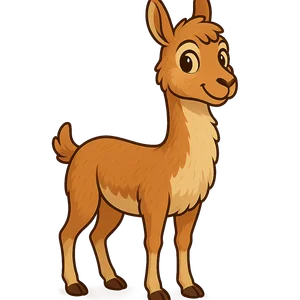
Vicuña
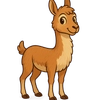
The vicuña is a wild South American camelid living in the high alpine areas of the Andes.
Reads at Grades 3–5 Listens at Grades 1–5
Print & create
Answer keys·No prep·Free with an account
28 worksheets · answer keys · full story · quiz · Ages 8-10 · CEFR B1
Plus adds 164,000+ more stories in 27 languages, audio for every one, and printables for all of them.
Just want Vicuña?
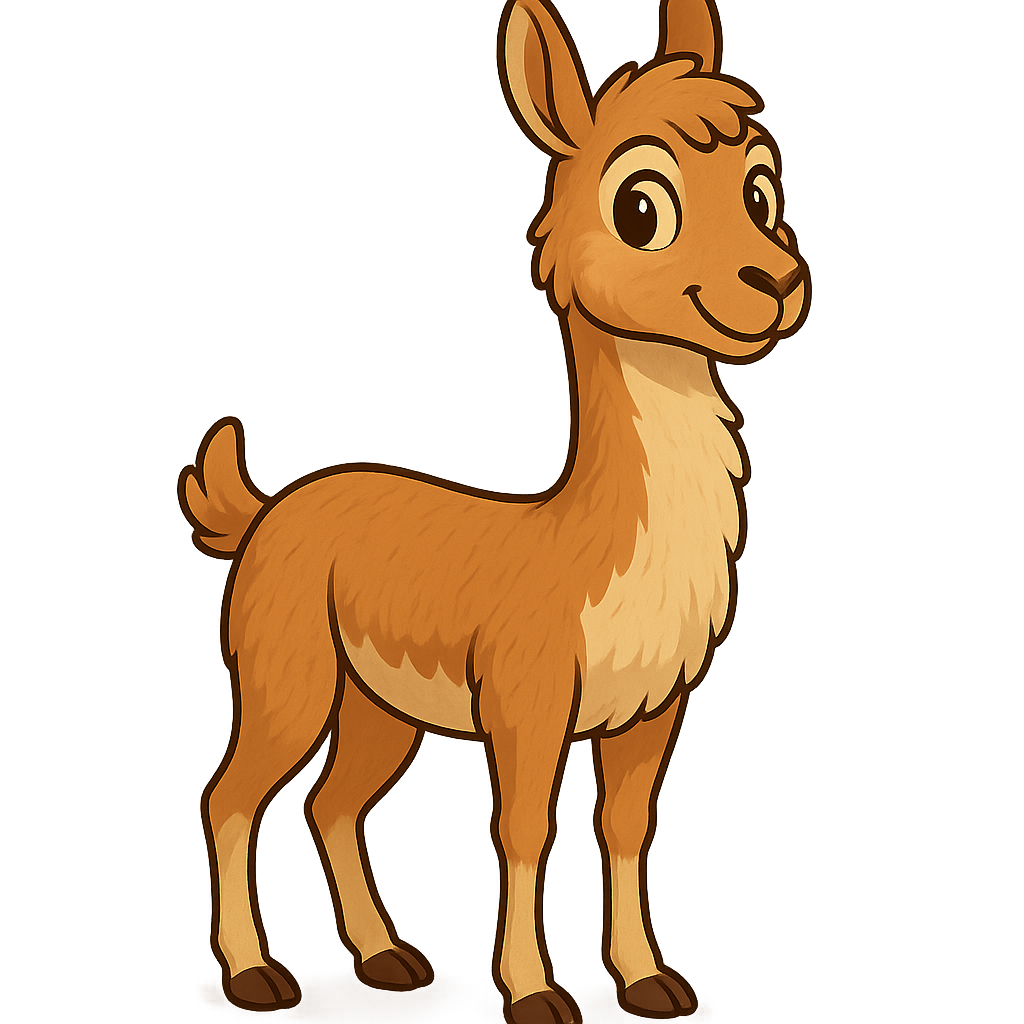
Hello! I am a vicuña, a wild cousin of the llama. My home is high in the Andes Mountains, where the wind blows strong and the air is very thin. It is a beautiful place, with bright sunshine and wide-open spaces. I live with my family group, and we spend our days grazing on the tough grasses that grow here. It might surprise you to learn that my teeth are special because they never stop growing. This helps me chew the wiry plants that other animals can't eat. The mountains can be very cold, especially at night, but I have a secret to staying warm. I am covered in one of the softest, finest coats of wool in the world. This thick, cozy fleece keeps me perfectly comfortable in my high-altitude home.
My family has a very special history that goes back a long time. Before the 1500s, during the time of the great Inca Empire, my ancestors were considered sacred animals. The Inca people treated us with great respect and called our wool the 'fiber of the gods.' They held a special ceremony called the 'chaccu,' which was a wonderful tradition. Instead of hunting us, large groups of people would gently guide us into a gathering place. There, they would carefully give us a haircut to collect our amazing wool. Once the shearing was done, they would set us free to return to the mountains, completely unharmed. Because we were so revered, only Inca royalty was allowed to wear clothing made from my soft, warm wool.
Sadly, this time of respect did not last forever. After new people arrived in the Andes around the 1500s, the careful ways of the Inca were forgotten. People began to see our valuable wool as something to be taken, and they started to hunt us. For hundreds of years, my species suffered greatly. Our numbers got smaller and smaller as the hunting continued without stopping. It was a very difficult time for us. By the 1960s, we were in great danger of disappearing completely. There were only about 6,000 of us left in the entire world, and our future looked very uncertain.
The Vicuña's Comeback Story
Hello! I am a vicuña, a wild cousin of the llama. My home is high in the Andes Mountains, where the wind blows strong and the air is very thin. It is a beautiful place, with bright sunshine and wide-open spaces. I live with my family group, and we spend our days grazing on the tough grasses that grow here. It might surprise you to learn that my teeth are special because they never stop growing. This helps me chew the wiry plants that other animals can't eat. The mountains can be very cold, especially at night, but I have a secret to staying warm. I am covered in one of the softest, finest coats of wool in the world. This thick, cozy fleece keeps me perfectly comfortable in my high-altitude home.
My family has a very special history that goes back a long time. Before the 1500s, during the time of the great Inca Empire, my ancestors were considered sacred animals. The Inca people treated us with great respect and called our wool the 'fiber of the gods.' They held a special ceremony called the 'chaccu,' which was a wonderful tradition. Instead of hunting us, large groups of people would gently guide us into a gathering place. There, they would carefully give us a haircut to collect our amazing wool. Once the shearing was done, they would set us free to return to the mountains, completely unharmed. Because we were so revered, only Inca royalty was allowed to wear clothing made from my soft, warm wool.
Sadly, this time of respect did not last forever. After new people arrived in the Andes around the 1500s, the careful ways of the Inca were forgotten. People began to see our valuable wool as something to be taken, and they started to hunt us. For hundreds of years, my species suffered greatly. Our numbers got smaller and smaller as the hunting continued without stopping. It was a very difficult time for us. By the 1960s, we were in great danger of disappearing completely. There were only about 6,000 of us left in the entire world, and our future looked very uncertain.
Just when it seemed like we might be lost forever, people realized they had to act quickly to save us. A big rescue effort began. In 1967, a special protected area called the Pampa Galeras National Vicuña Reserve was created in Peru. This gave us a safe place to live and raise our families without fear. Then, an even bigger step was taken. On March 3rd, 1973, many countries from around the world signed an important agreement called CITES. This agreement made it illegal to buy or sell my wool internationally. This was a huge turning point because it stopped the main reason for the hunting and gave us the chance we needed to recover.
Thanks to all that hard work, our future is now bright and full of hope. Our population has grown strong again, and there are many thousands of us living in the Andes today. The best part is that people have brought back the ancient Inca tradition of the 'chaccu.' Now, local communities can once again gather us, safely shear our wool, and release us. This helps the communities earn money to support their families, and it gives them a reason to continue protecting us. I am proud to be a symbol of the Andes and a happy story of how people and animals can work together to help each other thrive.
Wow facts
About
The vicuña is a wild South American camelid living in the high alpine areas of the Andes. It is known for producing extremely fine wool and is a symbol of ongoing conservation efforts.
Take a Quiz
Question 1 of 5
The story says the vicuña's wool was called the 'fiber of the gods.' What does this phrase suggest about how the Inca people viewed vicuñas?
Explore next

Want to do even more?
Go beyond exploring. Unlock tools that turn every story into real learning.

Storypie Plus for families
Full stories, quizzes, and printables. Nights and car rides, sorted.
- Unlimited audio stories
- Create Mode: your child stars in the story
- Offline downloads
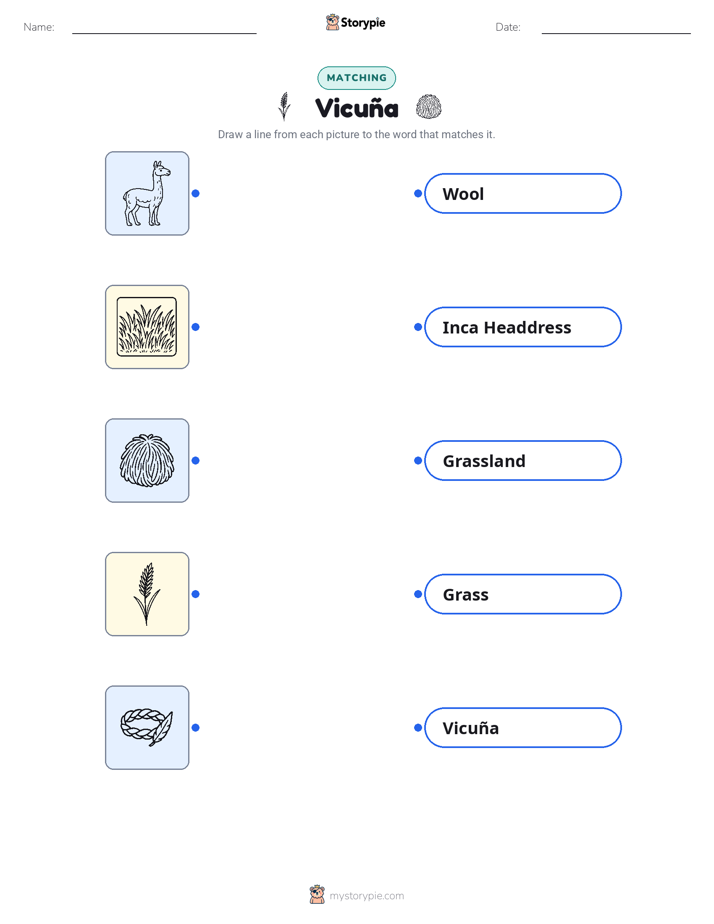
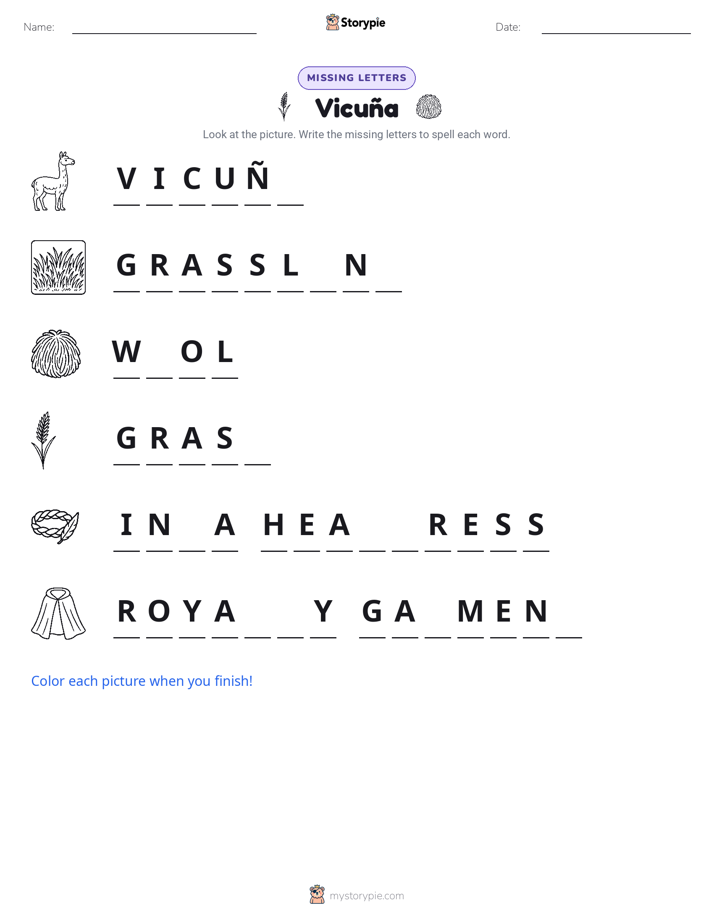
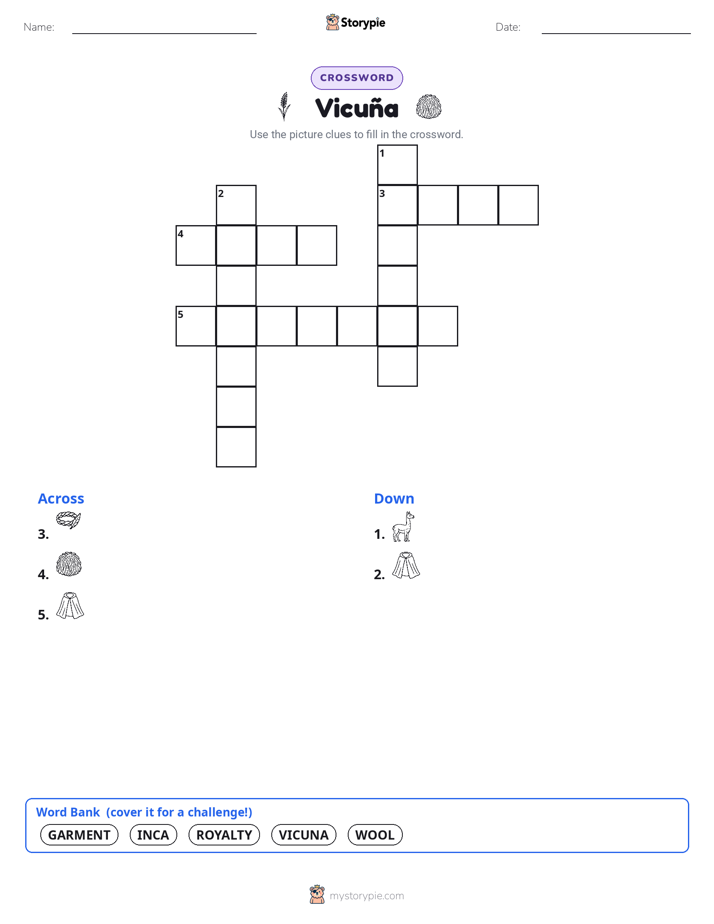
- Printable worksheets & coloring pages

Why Storypie for Schools
Students engaged. Prep in seconds. Evenings back to you.
- Worksheets & Quizzes
- Classroom Management
- Formative Assessment
- Custom Curriculum & Lesson Plans
- 27 Languages

Why Storypie for Homeschool
Curriculum done. They'll ask for more. Hours back in your day.
- Worksheet Generator
- First-Person Audio Stories
- Built-in Comprehension Quizzes
- Custom Curriculum & Lesson Plans
- Print & Go Activities