English

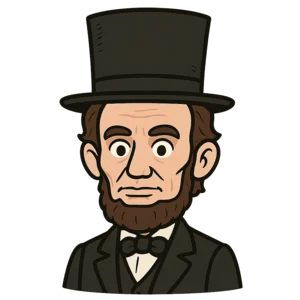
Abraham Lincoln
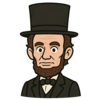
Abraham Lincoln was the 16th President of the United States who led the nation through the American Civil War…
Reads at Grades 6–8 Listens at Grades 4–8
Print & create
Answer keys·No prep·Free with an account
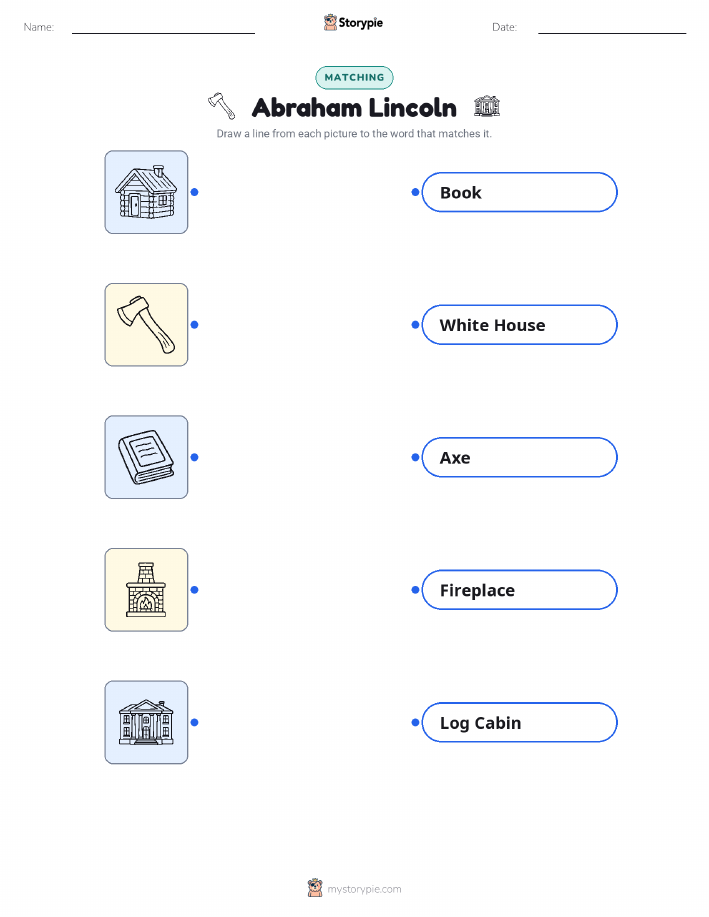
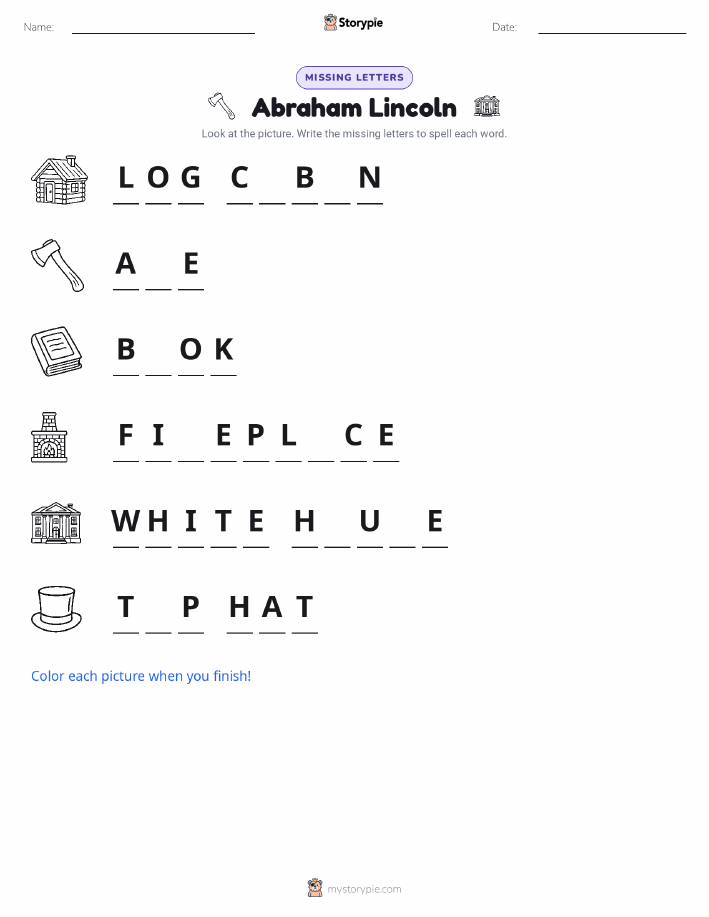
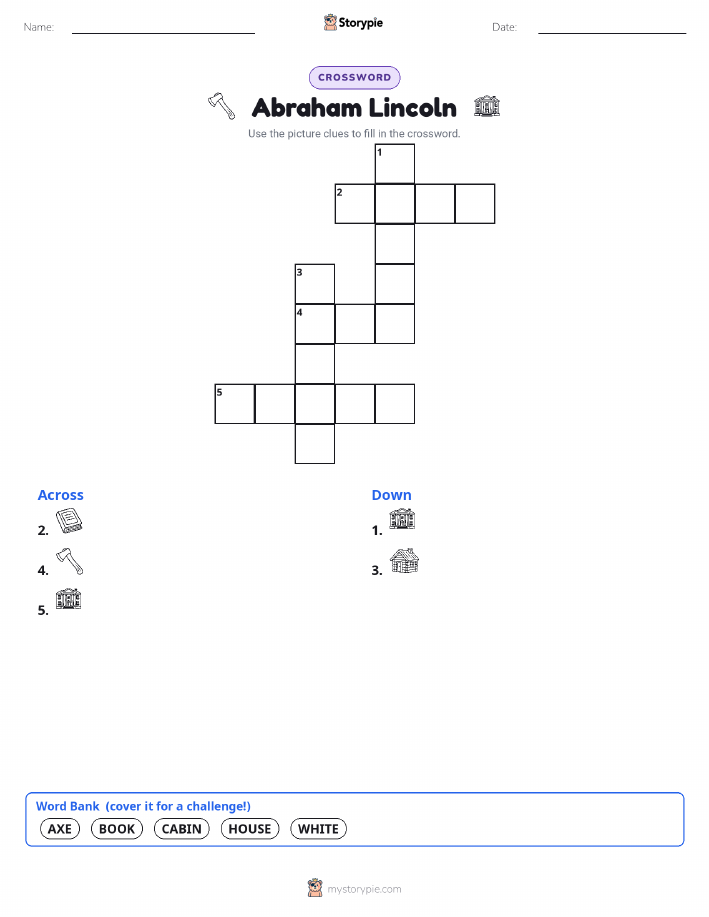
28 worksheets · answer keys · full story · quiz · Ages 10-12 · CEFR B2
Plus adds 244,000+ more stories in 27 languages, audio for every one, and printables for all of them.
Just want Abraham Lincoln?
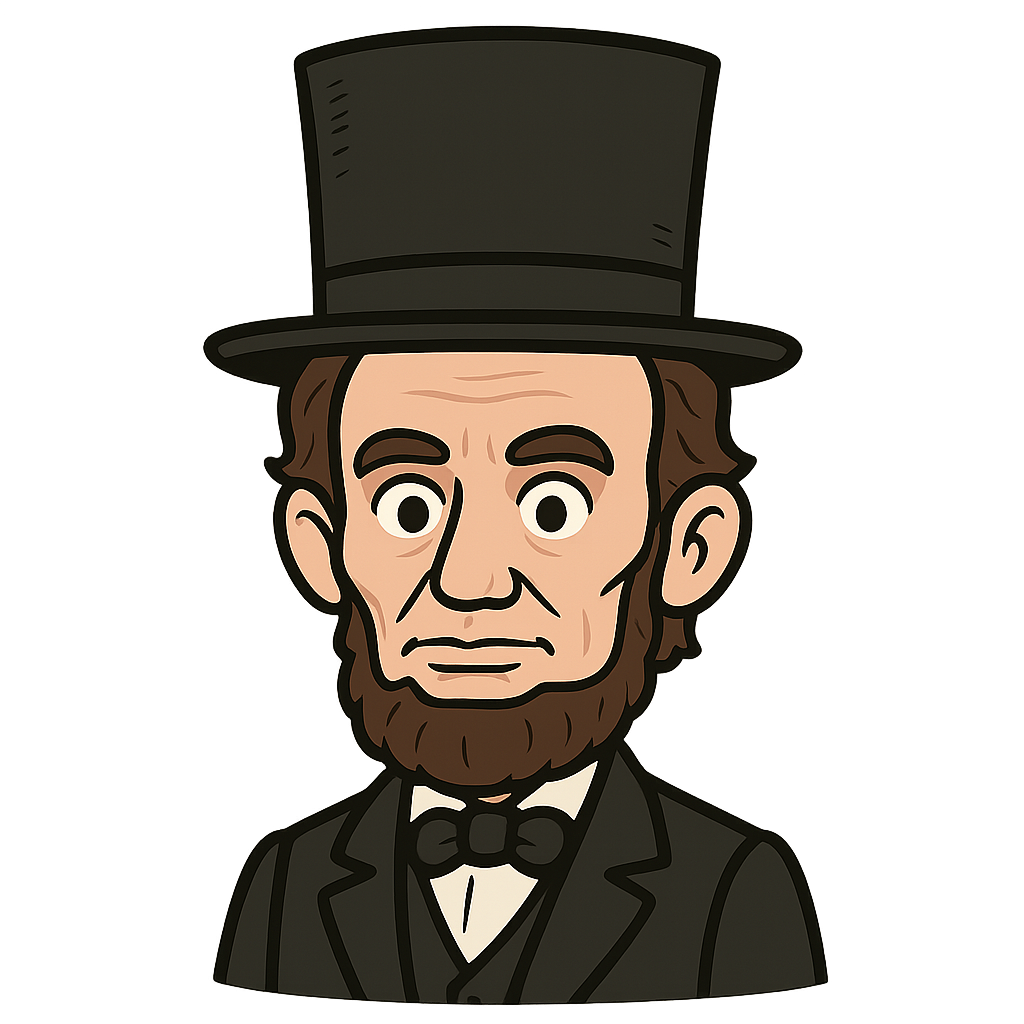
My name is Abraham Lincoln, and though you may know me as the 16th President of the United States, my story began far from the grand halls of Washington. I was born in a humble, one-room log cabin in the wilderness of Kentucky on February 12, 1809. Life on the frontier was not easy. My father, Thomas, was a farmer and carpenter, and from a young age, my sister Sarah and I were expected to help with the daily chores. We cleared land, planted crops, and split logs for fences. The work was hard and the days were long, but in those quiet moments after the sun went down, I discovered my greatest passion: reading. We didn't have many books—the Bible, a spelling book, maybe a few others—but I read them over and over by the flickering light of the fireplace. I practiced my letters on a wooden shovel with a piece of charcoal, scraping it clean when I ran out of room. When I was just nine years old, a terrible sadness fell upon our family. My dear mother, Nancy, passed away. It felt as though the light had gone out of our little cabin. A year later, my father remarried a kind widow named Sarah Bush Johnston. My new stepmother was a blessing. She brought warmth, order, and books into our home. She saw the hunger for knowledge in my eyes and encouraged me every step of the way, telling me that education was the key to a better life. I never forgot her kindness.
As I grew into a young man, I knew I wanted more than a life of farming. My journey truly began when I moved to the small village of New Salem, Illinois, in 1831. It was there that I began to find my own path. I tried my hand at many things. I worked as a shopkeeper, though I wasn't very good at it and my business eventually failed. I served as the local postmaster, which gave me the chance to read all the newspapers that came through town. I even served as a captain in the state militia during the Black Hawk War in 1832, though I never saw any fighting. Through all these experiences, I felt a pull toward something greater: the law. The law seemed to be about reason, justice, and fairness—ideas that mattered deeply to me. I couldn't afford to attend a formal law school, so I borrowed books from a lawyer in a nearby town and studied day and night. The language was complex, but I was determined. Finally, in 1836, I passed the examination and became a lawyer. My interest in justice also led me into politics. I believed that good laws could improve people's lives. In 1834, I was elected to the Illinois state legislature, where I spoke out against injustice. It was during this time, in the city of Springfield, that I met a clever and spirited young woman named Mary Todd. We fell in love and were married in 1842. Mary believed in my abilities more than anyone, and her ambition fueled my own.
Abraham Lincoln: A Voice for Freedom
My name is Abraham Lincoln, and though you may know me as the 16th President of the United States, my story began far from the grand halls of Washington. I was born in a humble, one-room log cabin in the wilderness of Kentucky on February 12, 1809. Life on the frontier was not easy. My father, Thomas, was a farmer and carpenter, and from a young age, my sister Sarah and I were expected to help with the daily chores. We cleared land, planted crops, and split logs for fences. The work was hard and the days were long, but in those quiet moments after the sun went down, I discovered my greatest passion: reading. We didn't have many books—the Bible, a spelling book, maybe a few others—but I read them over and over by the flickering light of the fireplace. I practiced my letters on a wooden shovel with a piece of charcoal, scraping it clean when I ran out of room. When I was just nine years old, a terrible sadness fell upon our family. My dear mother, Nancy, passed away. It felt as though the light had gone out of our little cabin. A year later, my father remarried a kind widow named Sarah Bush Johnston. My new stepmother was a blessing. She brought warmth, order, and books into our home. She saw the hunger for knowledge in my eyes and encouraged me every step of the way, telling me that education was the key to a better life. I never forgot her kindness.
As I grew into a young man, I knew I wanted more than a life of farming. My journey truly began when I moved to the small village of New Salem, Illinois, in 1831. It was there that I began to find my own path. I tried my hand at many things. I worked as a shopkeeper, though I wasn't very good at it and my business eventually failed. I served as the local postmaster, which gave me the chance to read all the newspapers that came through town. I even served as a captain in the state militia during the Black Hawk War in 1832, though I never saw any fighting. Through all these experiences, I felt a pull toward something greater: the law. The law seemed to be about reason, justice, and fairness—ideas that mattered deeply to me. I couldn't afford to attend a formal law school, so I borrowed books from a lawyer in a nearby town and studied day and night. The language was complex, but I was determined. Finally, in 1836, I passed the examination and became a lawyer. My interest in justice also led me into politics. I believed that good laws could improve people's lives. In 1834, I was elected to the Illinois state legislature, where I spoke out against injustice. It was during this time, in the city of Springfield, that I met a clever and spirited young woman named Mary Todd. We fell in love and were married in 1842. Mary believed in my abilities more than anyone, and her ambition fueled my own.
While I was building my career and family, a dark shadow was growing over our nation. The United States was deeply and bitterly divided over the issue of slavery. In the South, the economy depended on the labor of millions of enslaved African Americans who were treated as property, not people. In the North, more and more people believed that slavery was a moral wrong that should not be allowed to spread. I believed with all my heart that the principles of our country, that 'all men are created equal,' could not survive alongside the institution of slavery. I often said that 'a house divided against itself cannot stand.' I believed our nation could not endure permanently half slave and half free. This conviction became the center of my political life. In 1858, I ran for the U.S. Senate against a powerful politician named Stephen Douglas. We traveled across Illinois, holding a series of famous debates. While he argued that each new territory should decide for itself whether to allow slavery, I argued that we had a moral duty to prevent it from spreading further. I lost that Senate election, but the debates made me known throughout the country. Two years later, in 1860, my new Republican Party nominated me to run for president. The country was at a breaking point. When I was elected, the southern states saw it as a threat to their way of life. Before I even took office, seven of them seceded, or broke away, from the United States. In April 1861, the Civil War began. The weight on my shoulders felt heavier than any man could bear.
My primary goal during the war was to preserve the Union—to keep our great country together. But as the fighting dragged on, I knew I had to do more. The war was not just about territory; it was about the very soul of America. I became convinced that the Union could not be truly saved without ending the evil of slavery. On January 1, 1863, I issued the Emancipation Proclamation. It declared that all enslaved people in the Confederate states were 'thenceforward, and forever free.' It was a turning point in the war and in our nation's history, transforming the conflict into a fight for human freedom. Later that year, in November 1863, I was asked to give a few remarks at the dedication of a soldiers' cemetery at Gettysburg, the site of a terrible battle. In my short speech, I spoke of a 'new birth of freedom' and prayed that our government 'of the people, by the people, for the people, shall not perish from the earth.' After four long and bloody years, the war finally ended in the spring of 1865. My heart was full of hope for the future. I wanted to heal the nation's wounds 'with malice toward none, with charity for all.' But I would not live to see that healing. Just days after the war's end, on April 15, 1865, my life was cut short by an assassin's bullet. My work was left unfinished, but the ideals I fought for—equality, liberty, and a united nation—live on. It is my greatest hope that every generation will continue the work of ensuring that our government is, and always will be, for all the people.
Wow facts
About
Abraham Lincoln was the 16th President of the United States who led the nation through the American Civil War and signed the Emancipation Proclamation, ending slavery.
Take a Quiz
Question 1 of 5
What is the main theme or lesson of Abraham Lincoln's life story?
Explore next

Want to do even more?
Go beyond exploring. Unlock tools that turn every story into real learning.

Storypie Plus for families
Full stories, quizzes, and printables. Nights and car rides, sorted.
- Unlimited audio stories
- Create Mode: your child stars in the story
- Offline downloads
- Printable worksheets & coloring pages

Why Storypie for Schools
Students engaged. Prep in seconds. Evenings back to you.
- Worksheets & Quizzes
- Classroom Management
- Formative Assessment
- Custom Curriculum & Lesson Plans
- 27 Languages

Why Storypie for Homeschool
Curriculum done. They'll ask for more. Hours back in your day.
- Worksheet Generator
- First-Person Audio Stories
- Built-in Comprehension Quizzes
- Custom Curriculum & Lesson Plans
- Print & Go Activities