English

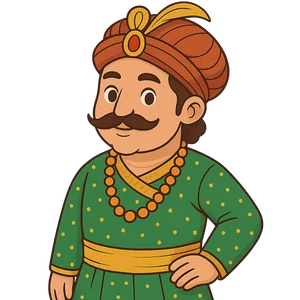
Akbar the Great
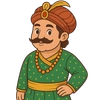
Akbar the Great was the third Mughal emperor, who reigned from 1556 to 1605.
Reads at Grades 6–8 Listens at Grades 4–8
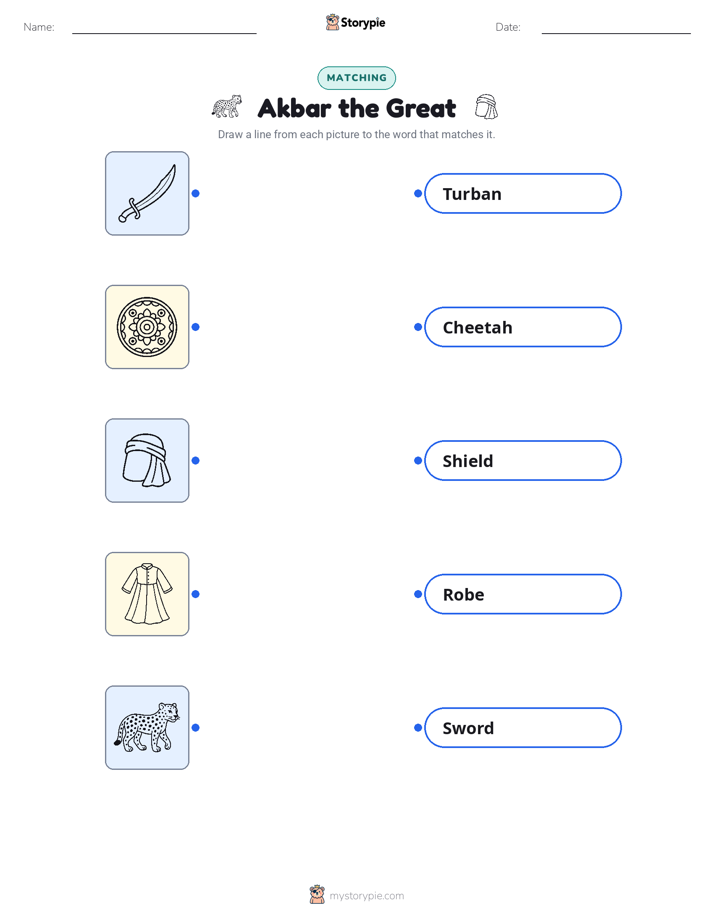
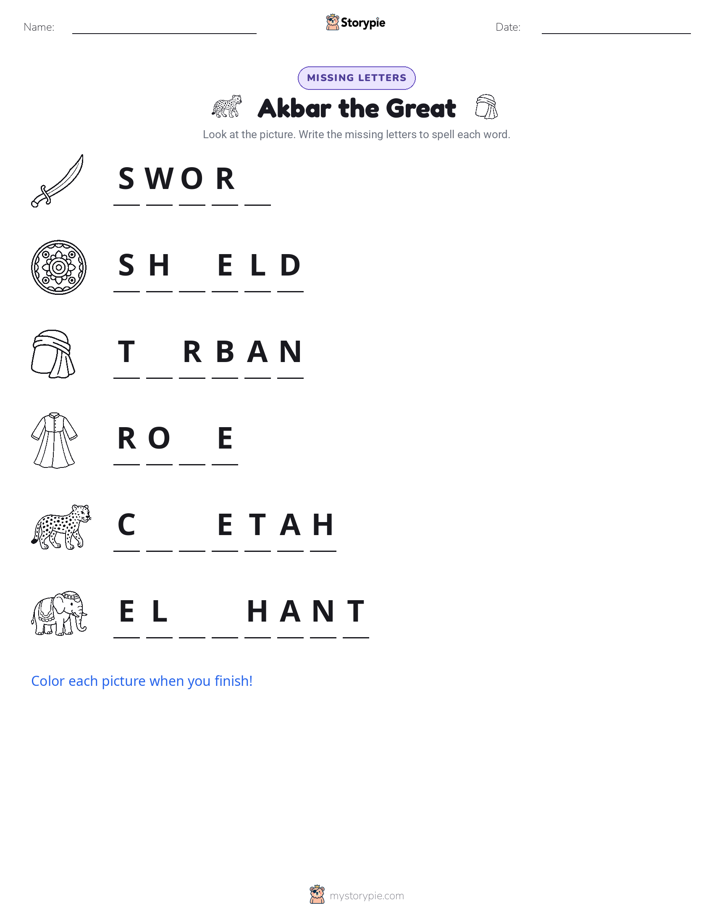
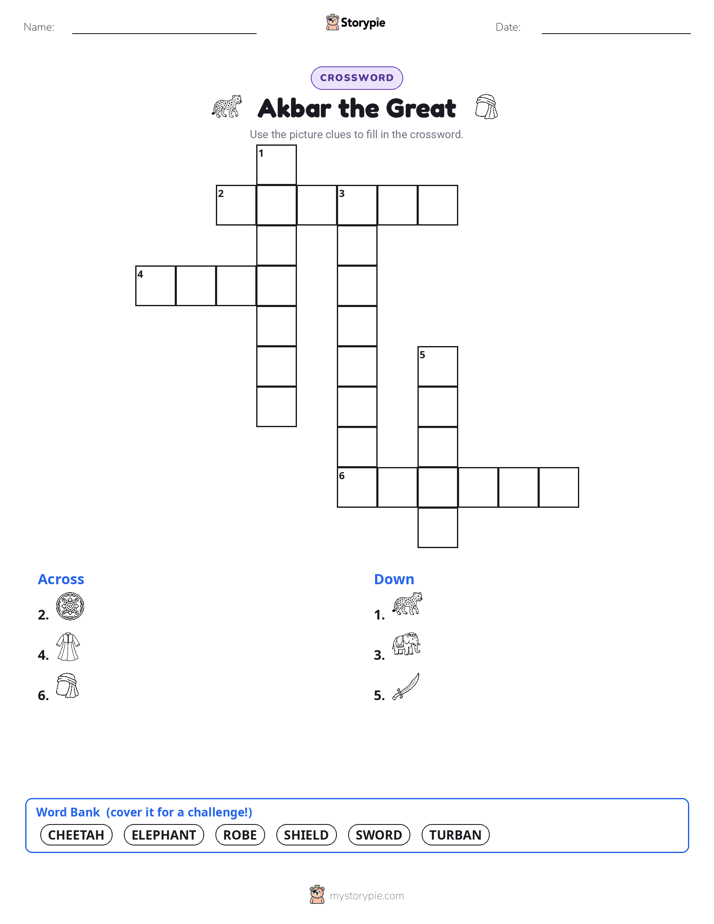
Print & create
Answer keys·No prep·Free with an account
28 worksheets · answer keys · full story · quiz · Ages 10-12 · CEFR B2
Plus adds 208,000+ more stories in 27 languages, audio for every one, and printables for all of them.
Just want Akbar the Great?
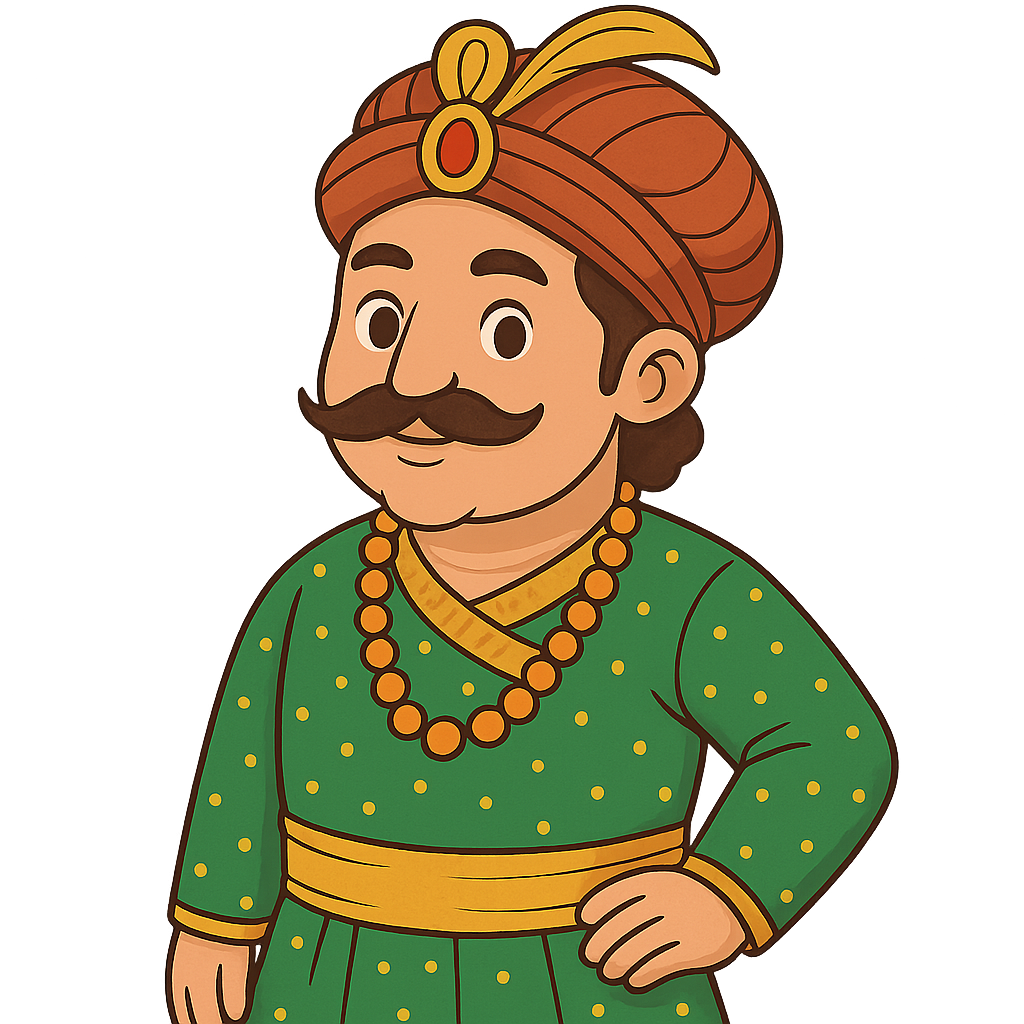
My name is Jalal-ud-din Muhammad Akbar, and I became known as one of the greatest emperors of the Mughal Empire in India. My story begins not in a grand palace, but in a desert fortress. I was born on October 15th, 1542, in Umerkot, while my father, Emperor Humayun, was in exile, having lost his kingdom. Because my family was constantly on the move to stay safe, I never had formal schooling and never learned to read or write. However, my mind was always eager to learn. I developed an incredible memory and would have scholars read to me for hours. While I listened to discussions about history, religion, and philosophy, I also spent my youth mastering the skills of a warrior. I became an expert hunter, skilled at training animals like cheetahs and elephants, and a strong rider. These experiences in the outdoors taught me to be observant, patient, and decisive—qualities that would one day help me lead an empire.
My life changed forever in 1556. My father had recently reclaimed his throne, but he died in a sudden accident. At just thirteen years old, I was declared the new Mughal emperor. The empire was unstable, and powerful enemies saw a chance to take control from a young boy. Thankfully, I had a wise and loyal regent named Bairam Khan to guide me. My leadership was tested almost immediately. A powerful army challenged my rule, and we met them at the Second Battle of Panipat on November 5th, 1556. It was a fierce and difficult fight, but we were victorious. This crucial victory secured my claim to the throne and marked the true beginning of my long reign as emperor.
Akbar the Great: A Prince of India
My name is Jalal-ud-din Muhammad Akbar, and I became known as one of the greatest emperors of the Mughal Empire in India. My story begins not in a grand palace, but in a desert fortress. I was born on October 15th, 1542, in Umerkot, while my father, Emperor Humayun, was in exile, having lost his kingdom. Because my family was constantly on the move to stay safe, I never had formal schooling and never learned to read or write. However, my mind was always eager to learn. I developed an incredible memory and would have scholars read to me for hours. While I listened to discussions about history, religion, and philosophy, I also spent my youth mastering the skills of a warrior. I became an expert hunter, skilled at training animals like cheetahs and elephants, and a strong rider. These experiences in the outdoors taught me to be observant, patient, and decisive—qualities that would one day help me lead an empire.
My life changed forever in 1556. My father had recently reclaimed his throne, but he died in a sudden accident. At just thirteen years old, I was declared the new Mughal emperor. The empire was unstable, and powerful enemies saw a chance to take control from a young boy. Thankfully, I had a wise and loyal regent named Bairam Khan to guide me. My leadership was tested almost immediately. A powerful army challenged my rule, and we met them at the Second Battle of Panipat on November 5th, 1556. It was a fierce and difficult fight, but we were victorious. This crucial victory secured my claim to the throne and marked the true beginning of my long reign as emperor.
With my throne secure, I set out to build a great and lasting empire. Beginning in the late 1550s, I spent decades leading my armies in military campaigns to expand Mughal territory. My goal was to unite the many different kingdoms of the Indian subcontinent under one rule. I was a determined commander, but I learned that conquest alone was not enough to build a strong empire. I developed a unique strategy that blended military power with diplomacy. After defeating a kingdom, I would often offer an alliance to its ruler. I would allow the local kings to keep their lands and titles as long as they accepted me as their emperor. This approach turned former enemies into loyal allies, helping to create a more unified and stable realm that stretched across most of India.
Expanding my empire was important, but I knew that true strength came from a government that was fair and efficient for all its people. I wanted to create a system where everyone, whether they were a noble in my court or a farmer in a village, felt they were treated justly. I introduced a series of administrative reforms to make the government run smoothly. One of the most important was the Mansabdari system, which organized the nobles and military commanders into a clear hierarchy. However, my most significant reform came in 1564 when I decided to abolish the 'jizya.' This was a special tax that only non-Muslims had to pay. By getting rid of it, I sent a powerful message that I considered all of my subjects—Hindus, Muslims, and people of other faiths—to be equal citizens of the empire.
My interest in different cultures extended to a deep curiosity about religion and philosophy. I believed that wisdom could be found in many different traditions, and I wanted to understand them all. In 1575, I ordered the construction of a special building in my new capital city, Fatehpur Sikri. It was called the Ibadat Khana, or the House of Worship. I invited scholars, priests, and holy men from many different religions to come and debate their beliefs. Muslims, Hindus, Christians, Jains, and Zoroastrians all gathered to discuss their ideas. I would listen for hours, learning from their arguments and perspectives. These discussions reinforced my belief that no single religion held all the answers. Around 1582, inspired by these conversations, I began to share my own spiritual ideas, which became known as Din-i Ilahi, or 'The Religion of God,' focusing on shared virtues like honesty, piety, and kindness.
Beyond matters of state and spirit, I had a great passion for art, architecture, and knowledge. In the 1570s, I commissioned the building of an entirely new capital city, Fatehpur Sikri, which was filled with magnificent palaces, mosques, and public halls made from red sandstone. It became a symbol of Mughal power and creativity. Even though I could not read, I treasured books and collected a vast library containing over 24,000 handwritten manuscripts, which were read to me every day. My court was a vibrant center of culture, and I surrounded myself with the most brilliant minds of the time. These advisors were known as my 'Navaratnas,' or Nine Jewels. They included people like the clever and witty Birbal, who was my trusted advisor, and the legendary musician Tansen, whose music filled my court with beauty.
I reigned for nearly 50 years, and my life came to a peaceful end on October 27th, 1605. I lived to be 63 years old. I hope I am remembered not just for the vast empire I built, but for the ideas of unity and tolerance I tried to promote. My dream was to create a society where people from different backgrounds and beliefs could live together in peace and mutual respect. The strong, central government and the policies of fairness I established helped the Mughal Empire flourish for generations, shaping the course of Indian history for centuries to come.
Wow facts
About
Akbar the Great was the third Mughal emperor, who reigned from 1556 to 1605. He is renowned for expanding the Mughal Empire to include most of the Indian subcontinent and for his policies of religious tolerance and administrative reform.
Take a Quiz
Question 1 of 5
In your own words, retell the events that led to Akbar becoming the emperor at a young age.
Explore next





Want to do even more?
Go beyond exploring. Unlock tools that turn every story into real learning.

Storypie Plus for families
Full stories, quizzes, and printables. Nights and car rides, sorted.
- Unlimited audio stories
- Create Mode: your child stars in the story
- Offline downloads
- Printable worksheets & coloring pages

Why Storypie for Schools
Students engaged. Prep in seconds. Evenings back to you.
- Worksheets & Quizzes
- Classroom Management
- Formative Assessment
- Custom Curriculum & Lesson Plans
- 27 Languages

Why Storypie for Homeschool
Curriculum done. They'll ask for more. Hours back in your day.
- Worksheet Generator
- First-Person Audio Stories
- Built-in Comprehension Quizzes
- Custom Curriculum & Lesson Plans
- Print & Go Activities