English

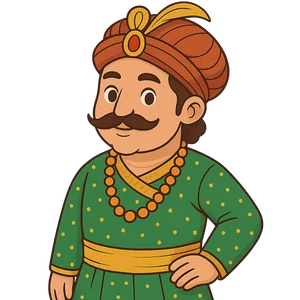
Akbar the Great
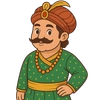
Akbar the Great was the third Mughal emperor, who reigned from 1556 to 1605.
Reads at Grades 3–5 Listens at Grades 1–5
Print & create
Answer keys·No prep·Free with an account
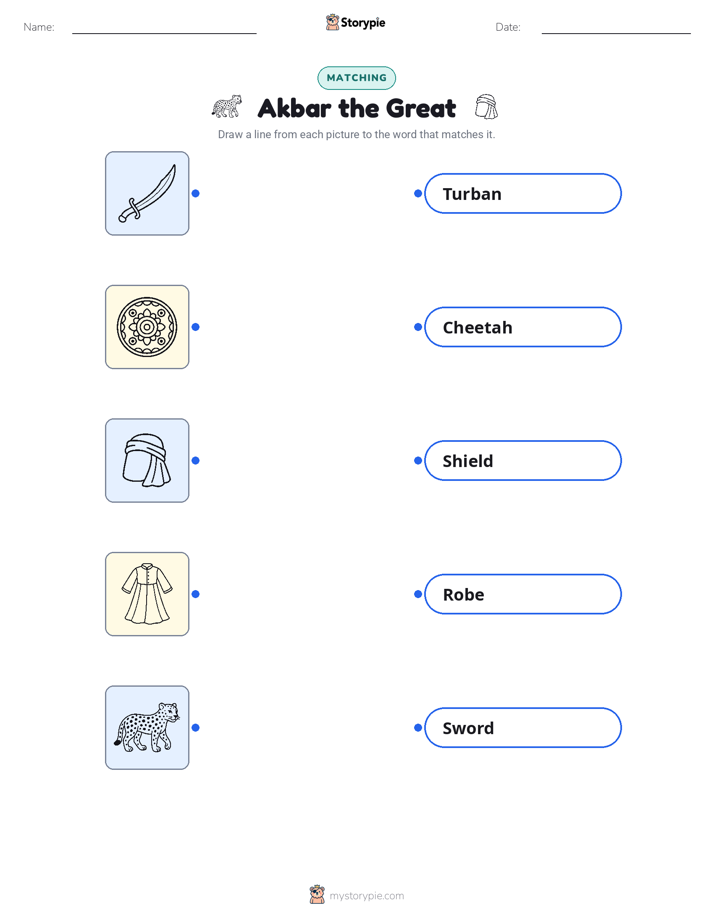
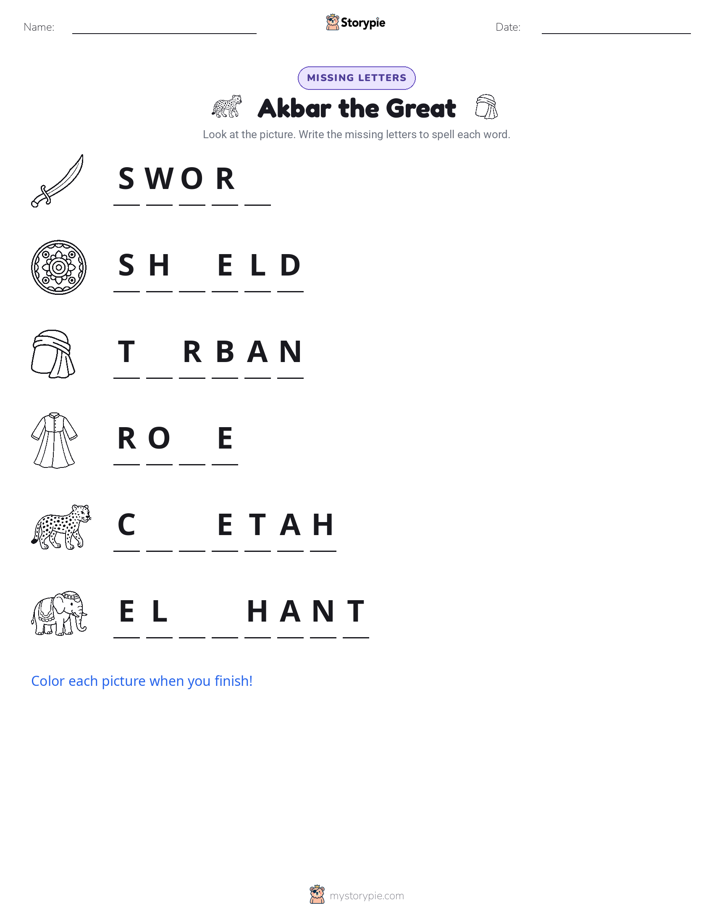
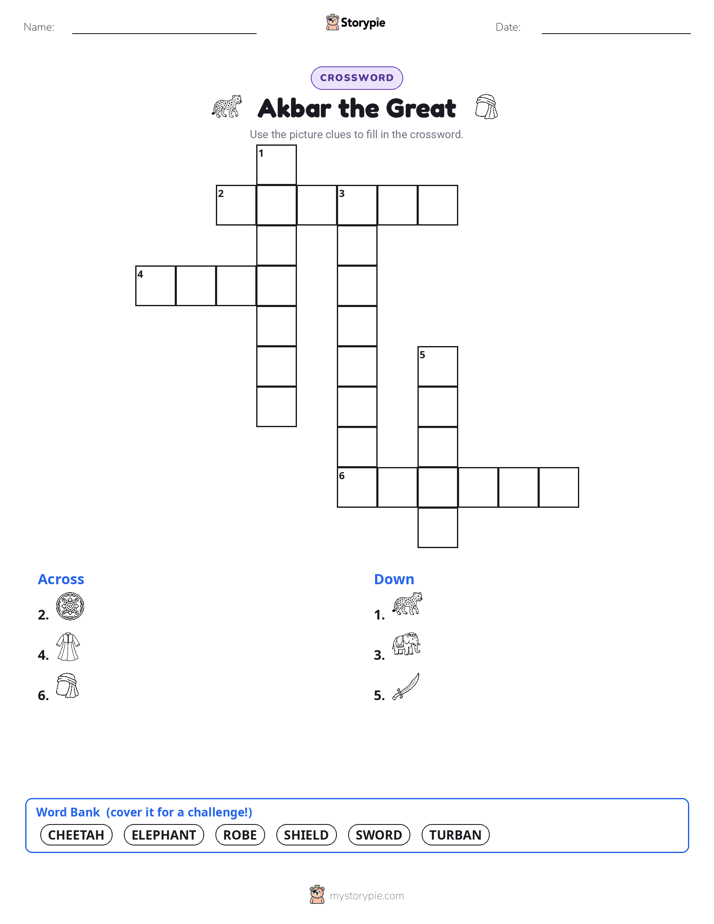
28 worksheets · answer keys · full story · quiz · Ages 8-10 · CEFR B1
Plus adds 208,000+ more stories in 27 languages, audio for every one, and printables for all of them.
Just want Akbar the Great?
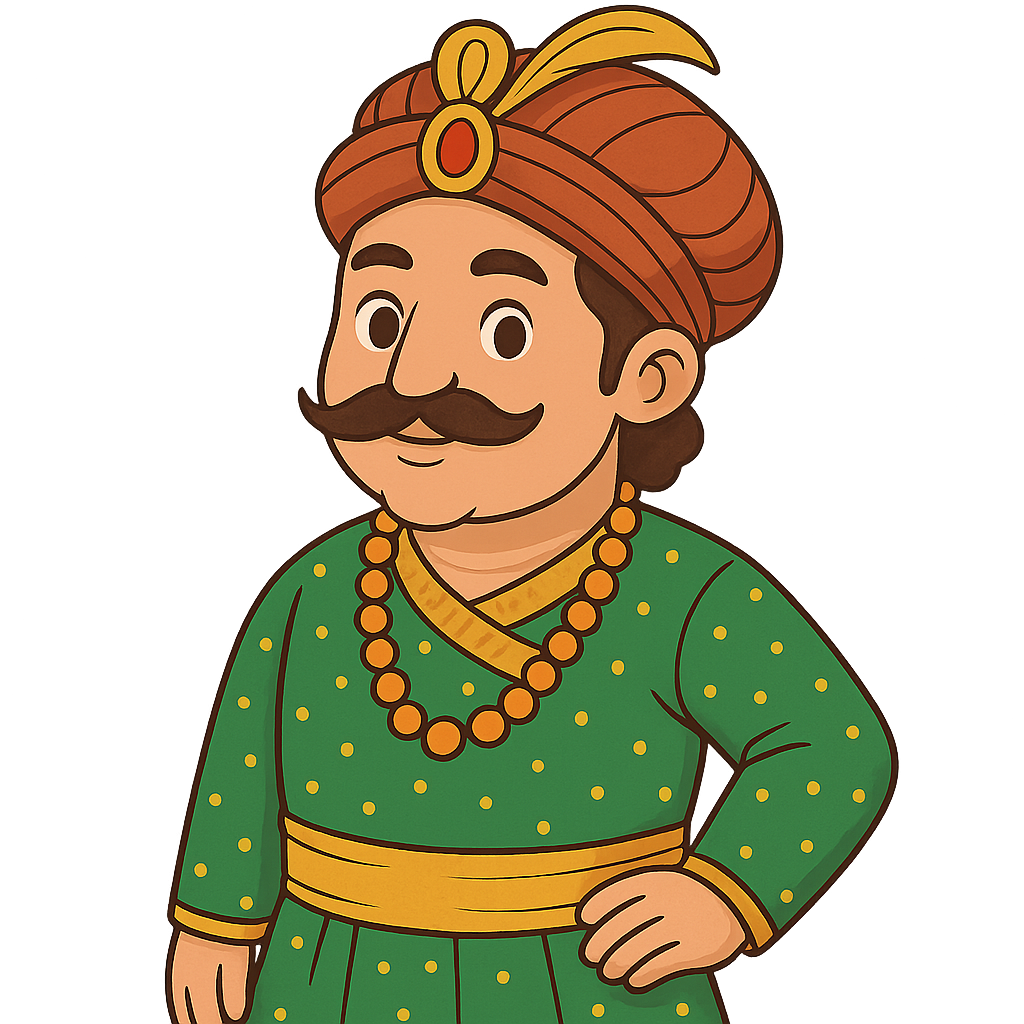
Hello, my name is Jalal-ud-din Muhammad Akbar, and I want to tell you my story. My beginning was not what you might expect for a prince. I was born on October 15th, 1542, not in a grand palace with soft beds and servants, but in a strong desert fort in a place called Umerkot. My father was Emperor Humayun, but at the time of my birth, he had temporarily lost his kingdom. We were in exile, which means we were living away from our home. Because of our difficult situation, my childhood was very different from other princes. Instead of spending my days inside with books learning to read and write, I spent my time outdoors. I learned how to hunt with great skill, how to ride powerful horses, and how to fight. I was being trained to be a strong warrior, ready for whatever challenges life might bring.
Life changed very suddenly for me. In the year 1556, my father, Emperor Humayun, passed away. I was only 13 years old, but it was my duty to take his place. Just like that, I became the new Mughal Emperor. Being so young, I was lucky to have a wise and loyal general named Bairam Khan by my side. He helped me make important decisions and guided me as I learned to rule. That same year, 1556, was a true test of my leadership. I faced a huge challenge at the Second Battle of Panipat. It was a difficult fight, but we had a great victory. Winning this battle was very important because it secured my place on the throne. It showed everyone, friends and enemies alike, that even though I was young, I was a true and capable leader for the Mughal Empire.
Akbar the Great
Hello, my name is Jalal-ud-din Muhammad Akbar, and I want to tell you my story. My beginning was not what you might expect for a prince. I was born on October 15th, 1542, not in a grand palace with soft beds and servants, but in a strong desert fort in a place called Umerkot. My father was Emperor Humayun, but at the time of my birth, he had temporarily lost his kingdom. We were in exile, which means we were living away from our home. Because of our difficult situation, my childhood was very different from other princes. Instead of spending my days inside with books learning to read and write, I spent my time outdoors. I learned how to hunt with great skill, how to ride powerful horses, and how to fight. I was being trained to be a strong warrior, ready for whatever challenges life might bring.
Life changed very suddenly for me. In the year 1556, my father, Emperor Humayun, passed away. I was only 13 years old, but it was my duty to take his place. Just like that, I became the new Mughal Emperor. Being so young, I was lucky to have a wise and loyal general named Bairam Khan by my side. He helped me make important decisions and guided me as I learned to rule. That same year, 1556, was a true test of my leadership. I faced a huge challenge at the Second Battle of Panipat. It was a difficult fight, but we had a great victory. Winning this battle was very important because it secured my place on the throne. It showed everyone, friends and enemies alike, that even though I was young, I was a true and capable leader for the Mughal Empire.
As I grew older, my vision for the empire became clear. Of course, I wanted to expand our lands and make the Mughal Empire stronger, but I had an even bigger dream. My empire was home to people of many different backgrounds and beliefs, and I wanted to unite them all. I strongly believed in religious freedom, which meant that everyone should be able to practice their own faith without fear. I invited scholars from many religions—Hindus, Christians, Jains, and others—to my court. I loved listening to them discuss their ideas and learn from each other. To show my commitment to this idea of unity, I decided to build a brand new capital city. Around the year 1569, we began constructing Fatehpur Sikri. It was designed to be a beautiful and magnificent city, a symbol of a kingdom where different cultures could come together and create something wonderful.
Even though I never learned how to read or write myself, I had a deep love for knowledge and beauty. My curiosity was endless. I collected a huge library filled with over 24,000 books, each one handwritten and precious. I would have scholars and courtiers read them aloud to me, and I would listen for hours, learning about history, science, and poetry from around the world. I also wanted my court to be a place where art could flourish. I supported talented artists who painted incredible pictures, architects who designed breathtaking buildings, and musicians whose songs filled the halls of my palaces. This time became known as a golden age for Mughal art. In 1582, I also shared a personal spiritual idea I called Din-i Ilahi. It was not a new religion, but a way to encourage people to focus on the good values we all share, like honesty, kindness, and peace.
My reign as emperor lasted for almost 50 years, a very long time to lead my people. I lived to be 63 years old and passed away in the year 1605. When people look back on my life, I hope they remember me as 'Akbar the Great.' But I hope that name is not just because I ruled over a large empire. My greatest wish is to be remembered for my effort to create a place where people from all backgrounds and beliefs were treated with respect and could live together in peace.
Wow facts
About
Akbar the Great was the third Mughal emperor, who reigned from 1556 to 1605. He is renowned for expanding the Mughal Empire to include most of the Indian subcontinent and for his policies of religious tolerance and administrative reform.
Take a Quiz
Question 1 of 5
Why was Akbar's childhood different from that of most other princes?
Explore next




Want to do even more?
Go beyond exploring. Unlock tools that turn every story into real learning.

Storypie Plus for families
Full stories, quizzes, and printables. Nights and car rides, sorted.
- Unlimited audio stories
- Create Mode: your child stars in the story
- Offline downloads
- Printable worksheets & coloring pages

Why Storypie for Schools
Students engaged. Prep in seconds. Evenings back to you.
- Worksheets & Quizzes
- Classroom Management
- Formative Assessment
- Custom Curriculum & Lesson Plans
- 27 Languages

Why Storypie for Homeschool
Curriculum done. They'll ask for more. Hours back in your day.
- Worksheet Generator
- First-Person Audio Stories
- Built-in Comprehension Quizzes
- Custom Curriculum & Lesson Plans
- Print & Go Activities