English

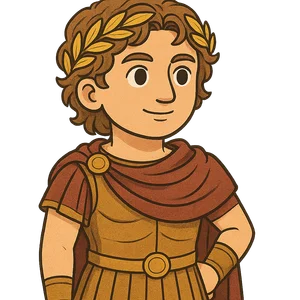
Alexander the Great and the Hellenistic Age
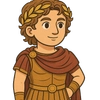
Alexander III of Macedon, known as Alexander the Great…
Reads at Grades 6–8 Listens at Grades 4–8
Print & create
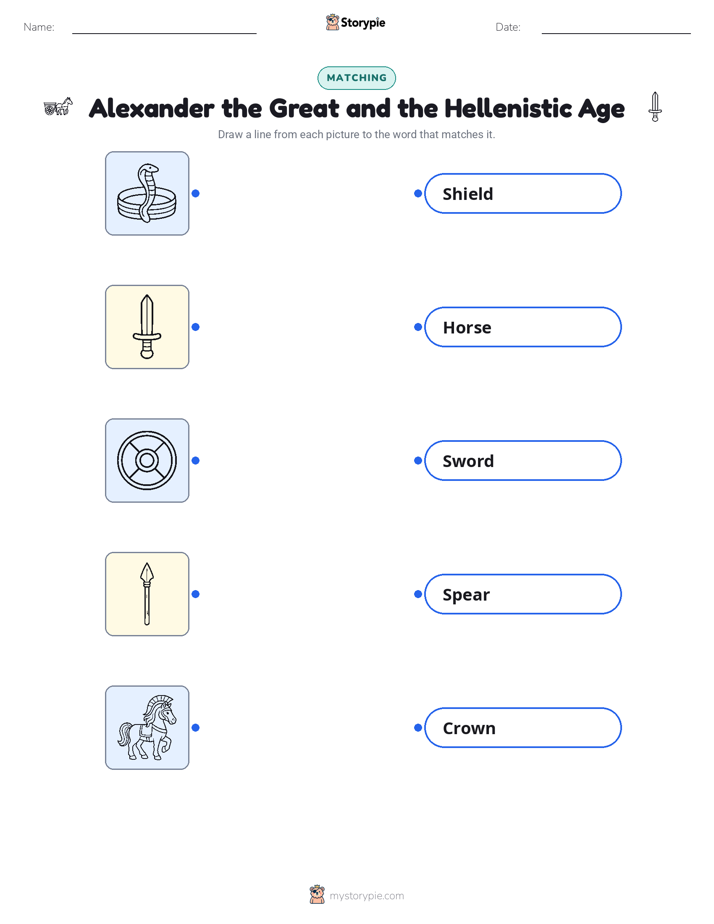
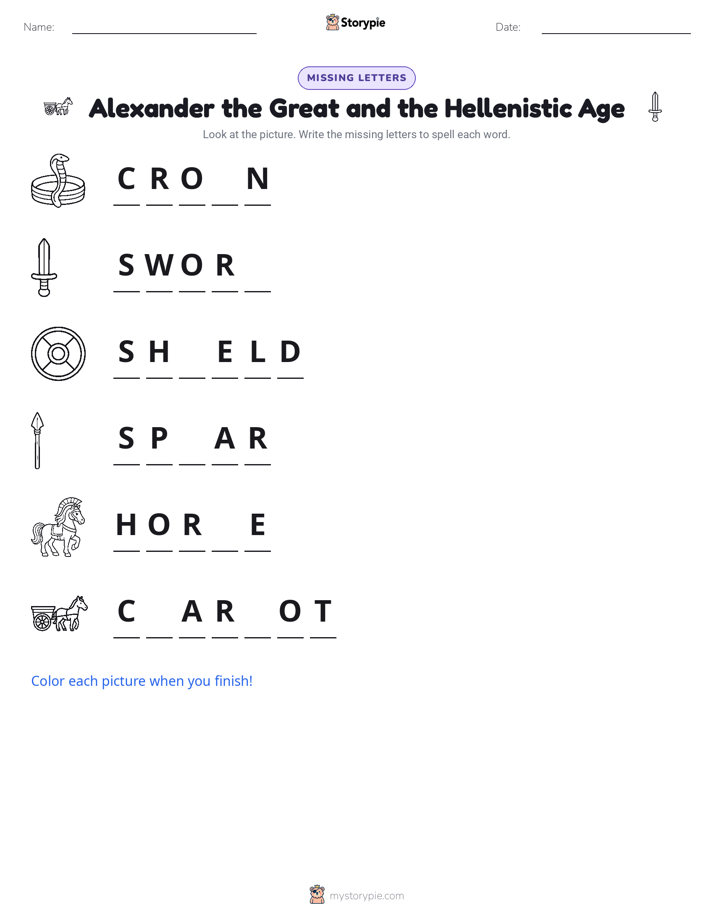
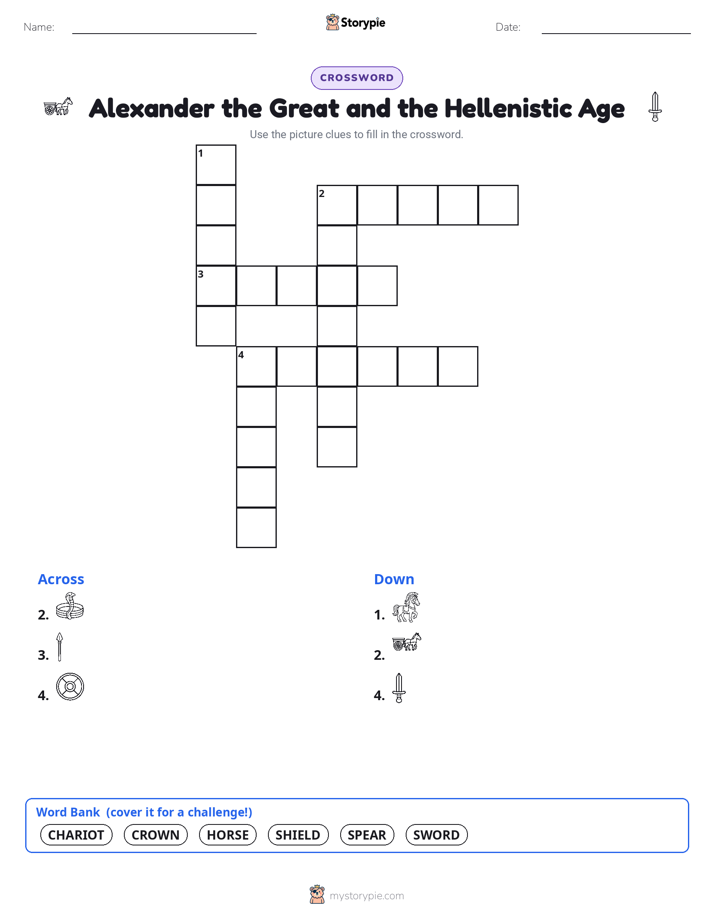
Answer keys·No prep·Free with an account
28 worksheets · answer keys · full story · quiz · Ages 10-12 · CEFR B2
Plus adds 244,000+ more stories in 27 languages, audio for every one, and printables for all of them.
Just want Alexander the Great and the Hellenistic Age?
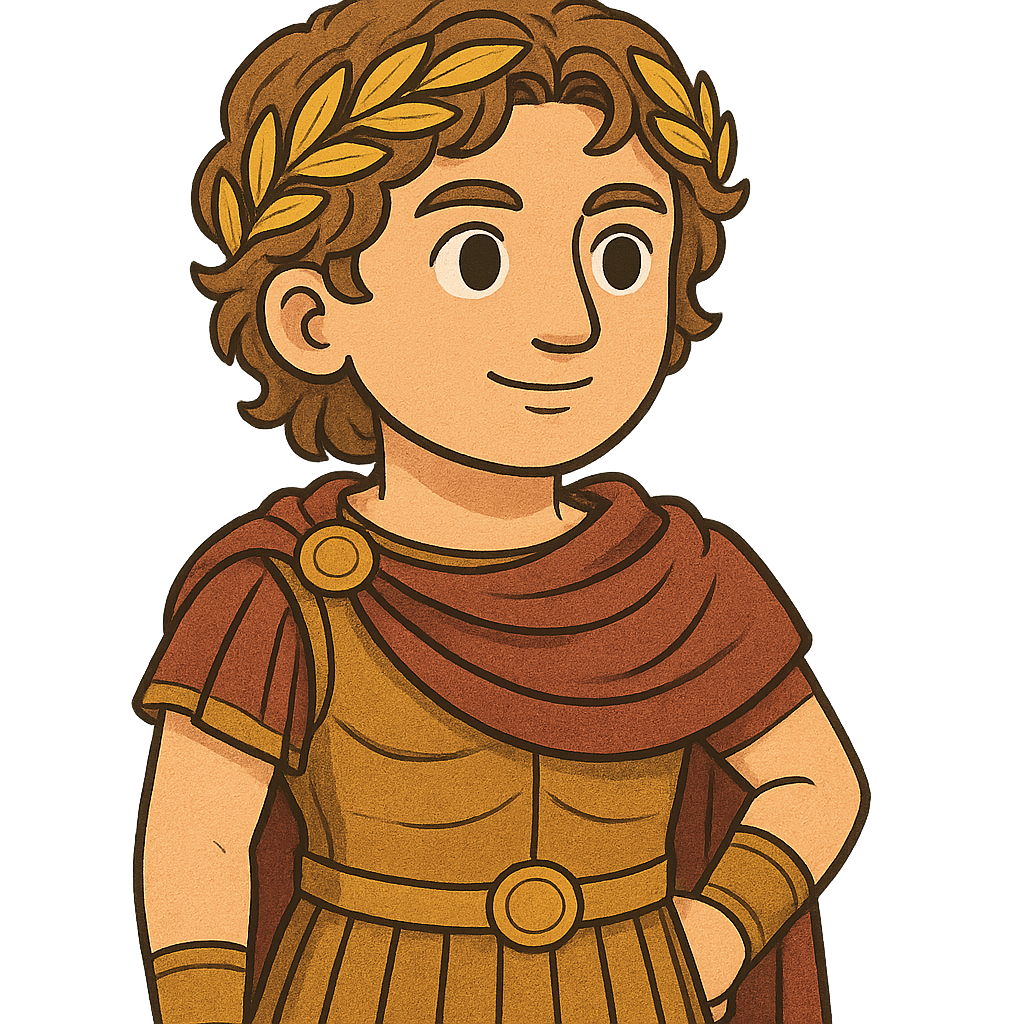
My name is Alexander, and I am known to history as Alexander the Great. My story begins in a kingdom called Macedon, where I was born in the capital city of Pella on July 20th, 356 BCE. My father was the powerful King Philip II, a brilliant military commander, and my mother was the proud Queen Olympias. I grew up in a world of politics, strategy, and ambition. When I was 13 years old, my father hired one of the greatest thinkers in all of history to be my teacher: the philosopher Aristotle. He taught me about medicine, science, philosophy, and politics, igniting in me a deep curiosity about the world and all its wonders. It was also during my youth that I proved my cleverness and courage. A wild and magnificent horse named Bucephalus was brought to my father, but no one could tame him. I noticed the horse was afraid of his own shadow, so I turned him toward the sun and calmly mounted him. From that day on, Bucephalus was my loyal companion on all my greatest journeys.
My life changed suddenly and tragically in 336 BCE. When I was just 20 years old, my father was assassinated, and I became the king of Macedon. My kingdom was far from secure. Many of the powerful Greek city-states that my father had united saw a young king as a sign of weakness. They rebelled, hoping to break free from Macedonian rule. I knew I had to act with speed and force to prove them wrong. I swiftly marched my army south, quelling the rebellions and securing my position as the leader of the Greeks. With my kingdom united behind me, I turned my eyes to a grand ambition I inherited from my father: to lead a combined Greek army into Asia to challenge the vast and powerful Persian Empire, which was the largest empire the world had ever seen at the time.
Alexander the Great: My Journey to the Edge of the World
My name is Alexander, and I am known to history as Alexander the Great. My story begins in a kingdom called Macedon, where I was born in the capital city of Pella on July 20th, 356 BCE. My father was the powerful King Philip II, a brilliant military commander, and my mother was the proud Queen Olympias. I grew up in a world of politics, strategy, and ambition. When I was 13 years old, my father hired one of the greatest thinkers in all of history to be my teacher: the philosopher Aristotle. He taught me about medicine, science, philosophy, and politics, igniting in me a deep curiosity about the world and all its wonders. It was also during my youth that I proved my cleverness and courage. A wild and magnificent horse named Bucephalus was brought to my father, but no one could tame him. I noticed the horse was afraid of his own shadow, so I turned him toward the sun and calmly mounted him. From that day on, Bucephalus was my loyal companion on all my greatest journeys.
My life changed suddenly and tragically in 336 BCE. When I was just 20 years old, my father was assassinated, and I became the king of Macedon. My kingdom was far from secure. Many of the powerful Greek city-states that my father had united saw a young king as a sign of weakness. They rebelled, hoping to break free from Macedonian rule. I knew I had to act with speed and force to prove them wrong. I swiftly marched my army south, quelling the rebellions and securing my position as the leader of the Greeks. With my kingdom united behind me, I turned my eyes to a grand ambition I inherited from my father: to lead a combined Greek army into Asia to challenge the vast and powerful Persian Empire, which was the largest empire the world had ever seen at the time.
In the spring of 334 BCE, I led my army of Macedonians and Greeks across the Hellespont, the narrow strait of water separating Europe from Asia. This was the beginning of my great campaign. We soon met a Persian army at the Battle of the Granicus River, and though we were outnumbered, my strategies led us to a decisive first victory. As we moved deeper into Persian territory, we came to the city of Gordium. There, I was faced with a famous puzzle: the Gordian Knot. An ancient legend said that whoever could untie this impossibly tangled knot would become the ruler of all of Asia. Instead of trying to find an end to the rope, I simply drew my sword and sliced it in half. In 333 BCE, we faced our greatest challenge yet at the Battle of Issus. The Persian King, Darius III, led a massive army against my much smaller force. Through careful planning and a bold cavalry charge, we achieved a stunning victory, and Darius himself was forced to flee.
After our victory at Issus, I marched my army south along the coast. We faced incredible resistance at the island city of Tyre, which took us seven long months to conquer. From there, we continued to Egypt in 332 BCE. The Egyptian people, who had been living under Persian rule, did not see me as a conqueror. Instead, they welcomed me as a liberator and crowned me as their pharaoh. It was there, at the mouth of the Nile River, that I founded a city that would become one of the most important in the ancient world. I named it Alexandria in 331 BCE, designing it to be a great center for learning, culture, and trade. My vision was not just to conquer but to create something new by blending the best of Greek and Eastern cultures. Later that year, my army met Darius III for one final, decisive battle at Gaugamela. My victory was complete, and I became the undisputed ruler of the entire Persian Empire.
Even with Persia under my control, my journey was not over. I was determined to march to the very edge of the known world. I led my army further east, across harsh deserts and over the towering mountains of what is now Afghanistan and Pakistan. We faced new challenges and fought against fierce warriors who defended their homelands. In 326 BCE, we reached the plains of India. There, we fought one of the most difficult battles of my entire campaign at the Hydaspes River. We faced King Porus, who commanded a fearsome army that included soldiers riding atop war elephants. We were victorious, but the battle took a heavy toll. After so many years of constant marching and fighting, my loyal soldiers were exhausted and homesick. They pleaded with me to turn back. It was a difficult decision, but I listened to my men. We began the long and dangerous journey home, part of my army sailing by sea while the rest, including myself, marched through a treacherous desert.
We eventually returned to the city of Babylon, which I had decided to make the capital of my new, vast empire. My mind was already filled with plans for the future, including a new expedition to explore Arabia. But my plans were never realized. In June of 323 BCE, I fell ill with a terrible fever, and my strength quickly faded. I lived to be 32 years old. Although my life was short, the world was forever changed by my journey. The empire I created stretched from Greece to India, connecting the cultures of the East and West like never before. My conquests spread Greek language, art, and ideas across this vast territory, creating a new era that historians now call the Hellenistic Age. The many cities I founded, especially Alexandria in Egypt, became beacons of knowledge and learning that shone for centuries, keeping the flame of discovery alive long after I was gone.
Wow facts
About
Alexander III of Macedon, known as Alexander the Great, was a king who created one of the largest empires of the ancient world by the age of thirty. His conquests spread Greek culture across Asia and North Africa, initiating the Hellenistic period.
Take a Quiz
Question 1 of 5
What was the name of the new era created by Alexander's conquests that blended Greek and Eastern cultures?
Explore next


Want to do even more?
Go beyond exploring. Unlock tools that turn every story into real learning.

Storypie Plus for families
Full stories, quizzes, and printables. Nights and car rides, sorted.
- Unlimited audio stories
- Create Mode: your child stars in the story
- Offline downloads
- Printable worksheets & coloring pages

Why Storypie for Schools
Students engaged. Prep in seconds. Evenings back to you.
- Worksheets & Quizzes
- Classroom Management
- Formative Assessment
- Custom Curriculum & Lesson Plans
- 27 Languages

Why Storypie for Homeschool
Curriculum done. They'll ask for more. Hours back in your day.
- Worksheet Generator
- First-Person Audio Stories
- Built-in Comprehension Quizzes
- Custom Curriculum & Lesson Plans
- Print & Go Activities