

 English


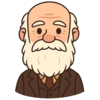
Alfred Russel Wallace
Alfred Russel Wallace was a British naturalist, explorer…
Reads at Grades 6–8 Listens at Grades 4–8
Alfred Russel Wallace: A Journey of Discovery
Hello there. My name is Alfred Russel Wallace, and my life was a grand adventure driven by a deep love for the natural world. I was born on January 8th, 1823, in a small village in Wales. My family did not have a lot of money, which meant my formal education had to end when I was just 14 years old. I went to work as a surveyor with my older brother, a job that took me all across the countryside. While it was hard work, it had a wonderful benefit: I was always outdoors. It was during these years that I developed a passion for collecting insects, especially beetles. I spent my free time reading books about natural history and dreaming of traveling to faraway lands to see the incredible diversity of life for myself. My curiosity about the world grew with every new beetle I found and every book I read.
By 1848, my dream of becoming a naturalist and explorer was too strong to ignore. My friend, another budding naturalist named Henry Walter Bates, and I decided to embark on the adventure of a lifetime. We sailed across the Atlantic Ocean to the vast Amazon rainforest in South America. Our mission was to collect specimens of plants and animals to sell to museums and collectors back in England. But more importantly, we hoped to find clues that would help answer one of science's biggest questions: how do new species come into being? For four years, I traveled through jungles, paddled up rivers, and marveled at creatures I had only ever read about. The work was difficult and often dangerous. The greatest hardship, however, came on my journey home in 1852. The ship I was on, the 'Helen,' caught fire in the middle of the ocean. I lost almost everything—my thousands of specimens, my drawings, and my journals. For 10 long days, I drifted in a small lifeboat with the rest of the crew before we were finally rescued. It was a devastating loss, but it did not extinguish my passion for exploration.
After returning to England, I immediately began planning my next expedition. In 1854, I set sail for the Malay Archipelago, a chain of thousands of islands between Southeast Asia and Australia. This journey would last for eight years, until 1862. It was an incredibly productive time for me. I traveled to islands that few Europeans had ever seen, collecting an astonishing number of specimens—over 125,000 in total, including thousands of species new to science. As I traveled from island to island, I noticed something peculiar about the animals. The animals on the western islands were similar to those in Asia, while the animals on the eastern islands resembled those from Australia. I realized I had discovered an invisible boundary line, which is now called the 'Wallace Line,' separating these two different biological regions. Then, in 1858, while suffering from a high fever on the island of Ternate, an idea struck me with incredible clarity. I realized that species change over time because individuals with traits best suited to their environment are more likely to survive and have offspring. This process would ensure that helpful traits were passed on, gradually changing a species over generations. I had discovered the mechanism of evolution: natural selection.
Excited by my breakthrough, I quickly wrote an essay outlining my theory of natural selection. I knew I needed to share it with someone who would understand its importance. I decided to send it to a famous and respected naturalist back in England, a man named Charles Darwin. I sent the letter in 1858, having no idea the effect it would have. It turned out that Mr. Darwin had been developing the very same theory for nearly 20 years but had never published it. My letter prompted him to finally go public. Our friends, wanting to ensure we both received credit, arranged for my essay and some of Mr. Darwin's writings to be read together at a meeting of the Linnean Society of London on July 1st, 1858. This was the first time the theory of evolution by natural selection was presented to the world. After finally returning to England in 1862, I spent years studying my collections and writing. In 1869, I published my most famous book, 'The Malay Archipelago,' which described my travels and discoveries.
In my later years, I continued to write and think not only about science but also about social issues that were important to me. I was proud of my work and the contributions I had made. In 1908, I received one of my country's highest honors, the Order of Merit, which was a wonderful recognition of my life's work. I lived to be 90 years old, a long life filled with adventure, hardship, and incredible discovery. Today, I am remembered as the co-discoverer of the theory of evolution by natural selection and as the 'father of biogeography' for my work on how species are distributed around the globe. My story shows that you don't need a formal education or a wealthy family to make a difference; all you need is curiosity, perseverance, and a passion for understanding the world around you.
Wow facts
About
Alfred Russel Wallace was a British naturalist, explorer, and biologist who independently conceived the theory of evolution through natural selection. His work alongside Charles Darwin changed the course of biology.
Take a Quiz
Question 1 of 5
What major disaster happened to Alfred Russel Wallace on his way home from the Amazon in 1852?
Explore next




Want to do even more?
Go beyond exploring. Unlock tools that turn every story into real learning.

Storypie Plus for families
Full stories, quizzes, and printables. Nights and car rides, sorted.
- Unlimited audio stories
- Create Mode: your child stars in the story
- Offline downloads
- Printable worksheets & coloring pages

Why Storypie for Schools
Students engaged. Prep in seconds. Evenings back to you.
- Worksheets & Quizzes
- Classroom Management
- Formative Assessment
- Custom Curriculum & Lesson Plans
- 27 Languages

Why Storypie for Homeschool
Curriculum done. They'll ask for more. Hours back in your day.
- Worksheet Generator
- First-Person Audio Stories
- Built-in Comprehension Quizzes
- Custom Curriculum & Lesson Plans
- Print & Go Activities

