English

Alfred Vail
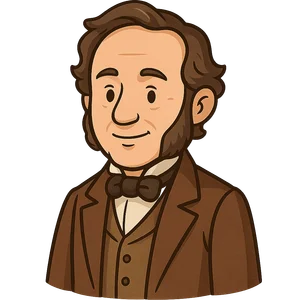
Alfred Vail was an American machinist and inventor who made significant contributions to the development of…
Reads at Grades 3–5 Listens at Grades 1–5
Print & create
Answer keys·No prep·Free with an account
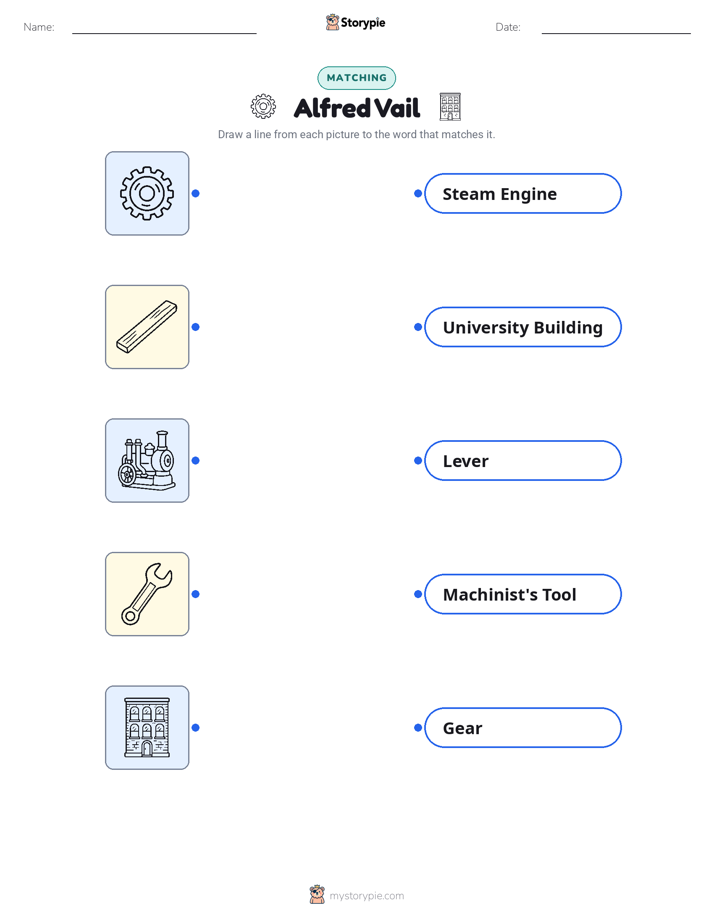
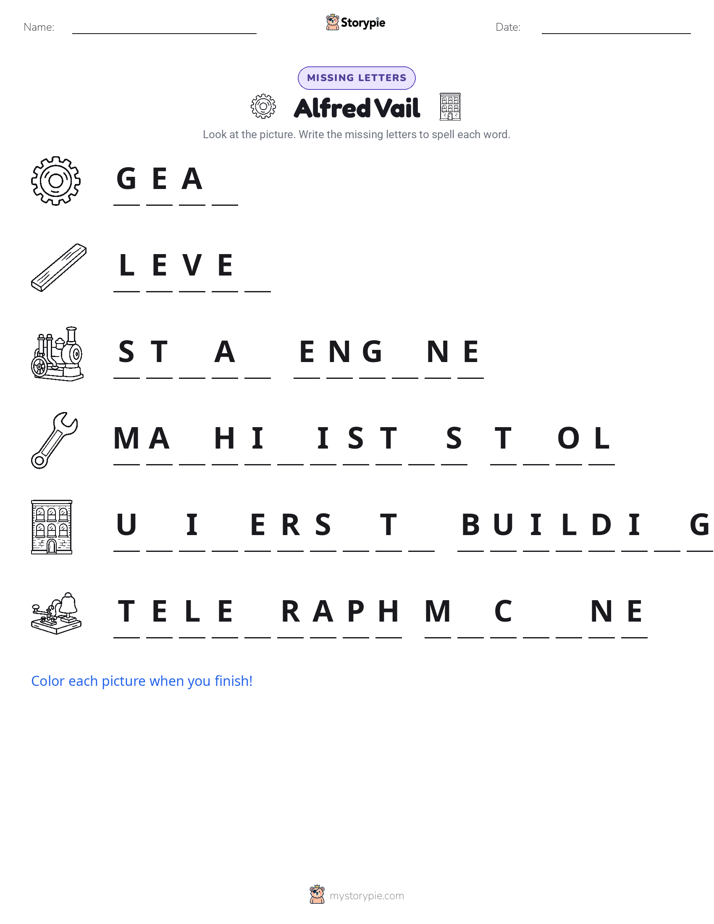
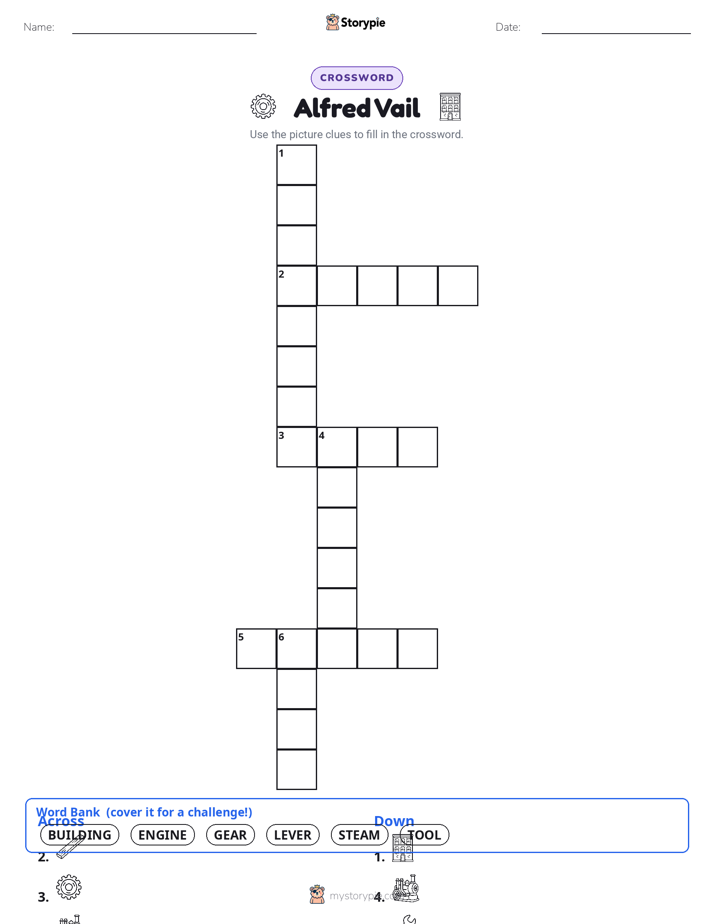
28 worksheets · answer keys · full story · quiz · Ages 8-10 · CEFR B1
Plus adds 244,000+ more stories in 27 languages, audio for every one, and printables for all of them.
Just want Alfred Vail?
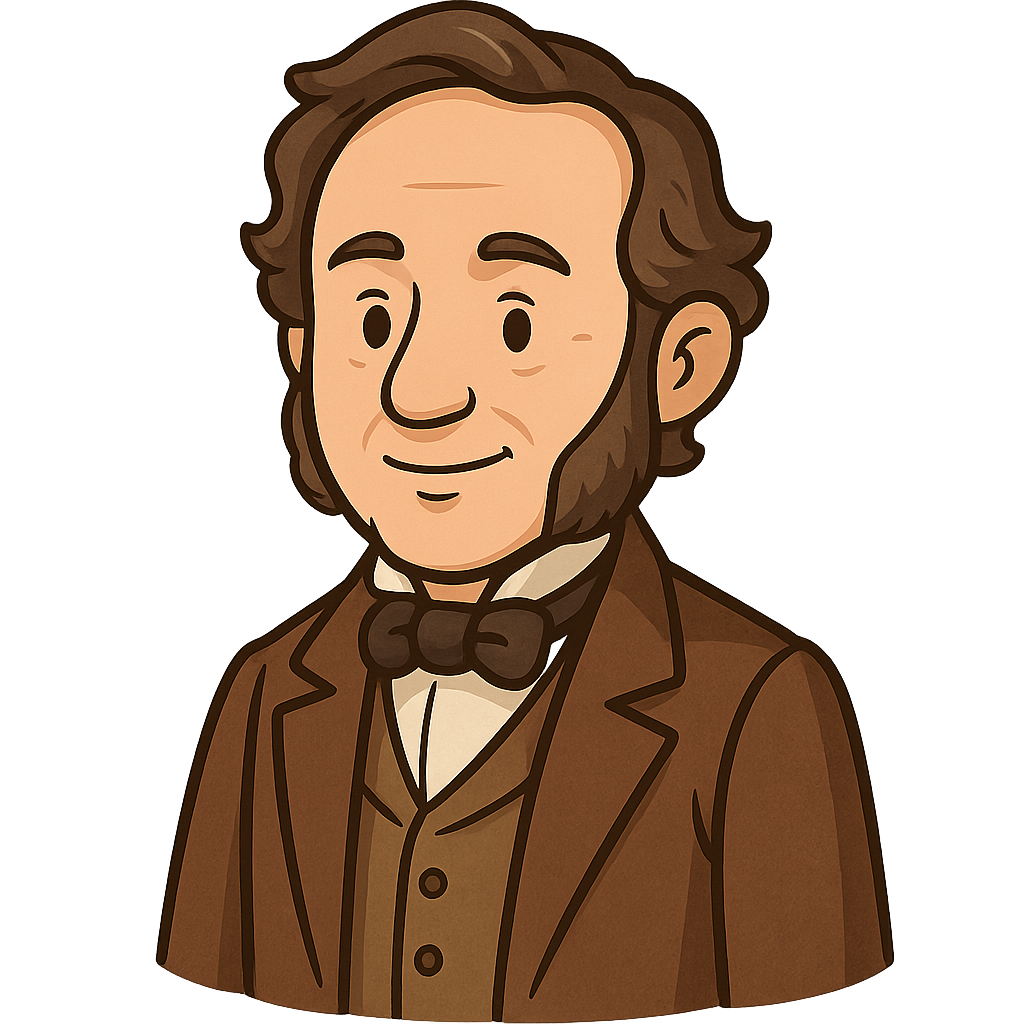
Hello! My name is Alfred Vail, and I want to tell you about how my love for machines helped change the world. I was born on September 25th, 1807, in Morristown, New Jersey. My father owned the Speedwell Ironworks, a busy place filled with the clang of hammers and the roar of furnaces. The air always smelled of hot metal and smoke. I spent my childhood there, fascinated by how all the gears, levers, and pulleys worked together to create powerful machines. I would watch for hours, learning how each part played a role. I knew that one day, I wanted to build amazing things, too, using my own hands and ideas.
After I grew up and went to college at New York University, I saw something that sparked my imagination. On September 2nd, 1837, a professor named Samuel F. B. Morse showed our class his invention: the telegraph. His idea was to send messages through a wire using electricity. It was an incredible concept, but his machine was clumsy and didn't work very well. The signals were weak and difficult to read. Even so, I saw its amazing potential! I knew that with the right tools and a better design, it could connect the world. I introduced myself to Professor Morse and made him a deal. I told him I would use my family's ironworks and my own money to help him build a better telegraph if he would make me his partner. To my delight, he agreed!
Back at the Speedwell Ironworks, we got to work right away. I saw that Professor Morse's design needed a lot of improvements to be practical. Using my experience with machines, I created a much simpler device, called a 'key,' for tapping out the electrical signals. I also designed a receiver that could print the signals onto a moving strip of paper, so we would have a record of the message. Most importantly, I helped develop the system of dots and dashes that became known as Morse Code. It was a simple and clever way to represent every letter of the alphabet with a unique pattern. On January 6th, 1838, we held our first public demonstration. We sent a message across two miles of wire strung around the factory. It worked perfectly!
Alfred Vail: The Man Behind the Code
Hello! My name is Alfred Vail, and I want to tell you about how my love for machines helped change the world. I was born on September 25th, 1807, in Morristown, New Jersey. My father owned the Speedwell Ironworks, a busy place filled with the clang of hammers and the roar of furnaces. The air always smelled of hot metal and smoke. I spent my childhood there, fascinated by how all the gears, levers, and pulleys worked together to create powerful machines. I would watch for hours, learning how each part played a role. I knew that one day, I wanted to build amazing things, too, using my own hands and ideas.
After I grew up and went to college at New York University, I saw something that sparked my imagination. On September 2nd, 1837, a professor named Samuel F. B. Morse showed our class his invention: the telegraph. His idea was to send messages through a wire using electricity. It was an incredible concept, but his machine was clumsy and didn't work very well. The signals were weak and difficult to read. Even so, I saw its amazing potential! I knew that with the right tools and a better design, it could connect the world. I introduced myself to Professor Morse and made him a deal. I told him I would use my family's ironworks and my own money to help him build a better telegraph if he would make me his partner. To my delight, he agreed!
Back at the Speedwell Ironworks, we got to work right away. I saw that Professor Morse's design needed a lot of improvements to be practical. Using my experience with machines, I created a much simpler device, called a 'key,' for tapping out the electrical signals. I also designed a receiver that could print the signals onto a moving strip of paper, so we would have a record of the message. Most importantly, I helped develop the system of dots and dashes that became known as Morse Code. It was a simple and clever way to represent every letter of the alphabet with a unique pattern. On January 6th, 1838, we held our first public demonstration. We sent a message across two miles of wire strung around the factory. It worked perfectly!
It took a few more years of hard work, but we finally convinced the U.S. government to fund a telegraph line from Washington, D.C., to Baltimore, Maryland—a distance of nearly 40 miles! This was our chance to prove that our invention could work over a long distance. The big day was May 24th, 1844. Professor Morse sat in the Supreme Court chamber in Washington and tapped out the first official long-distance message: 'What hath God wrought?' I was waiting in Baltimore, listening carefully. I received the message perfectly, the clicking sounds spelling out each letter. To prove it had worked, I immediately tapped it right back to him. In that moment, the world of communication changed forever.
I spent many more years working to improve the telegraph. While Professor Morse is more famous for the invention, I was always very proud of my contributions. My skill with machines and my work on the code helped turn his idea into a reality that connected people across great distances for the first time in history. I lived to be 51 years old. My work on the telegraph paved the way for the telephone, the radio, and even the internet you use today. It all started with a boy who loved figuring out how things worked.
Wow facts
About
Alfred Vail was an American machinist and inventor who made significant contributions to the development of the telegraph and was instrumental in creating the dot-and-dash system of Morse code.
Take a Quiz
Question 1 of 5
According to the story, what was the first official long-distance message sent by telegraph on May 24th, 1844?
Explore next




Want to do even more?
Go beyond exploring. Unlock tools that turn every story into real learning.

Storypie Plus for families
Full stories, quizzes, and printables. Nights and car rides, sorted.
- Unlimited audio stories
- Create Mode: your child stars in the story
- Offline downloads
- Printable worksheets & coloring pages

Why Storypie for Schools
Students engaged. Prep in seconds. Evenings back to you.
- Worksheets & Quizzes
- Classroom Management
- Formative Assessment
- Custom Curriculum & Lesson Plans
- 27 Languages

Why Storypie for Homeschool
Curriculum done. They'll ask for more. Hours back in your day.
- Worksheet Generator
- First-Person Audio Stories
- Built-in Comprehension Quizzes
- Custom Curriculum & Lesson Plans
- Print & Go Activities