English

Morse Code
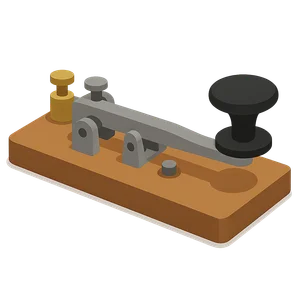
Morse Code is a method used in telecommunication to encode text characters as standardized sequences of two…
Reads at Grades 3–5 Listens at Grades 1–5
Print & create
Answer keys·No prep·Free with an account
28 worksheets · answer keys · full story · quiz · Ages 8-10 · CEFR B1
Plus adds 102,000+ more stories in 27 languages, audio for every one, and printables for all of them.
Just want Morse Code?
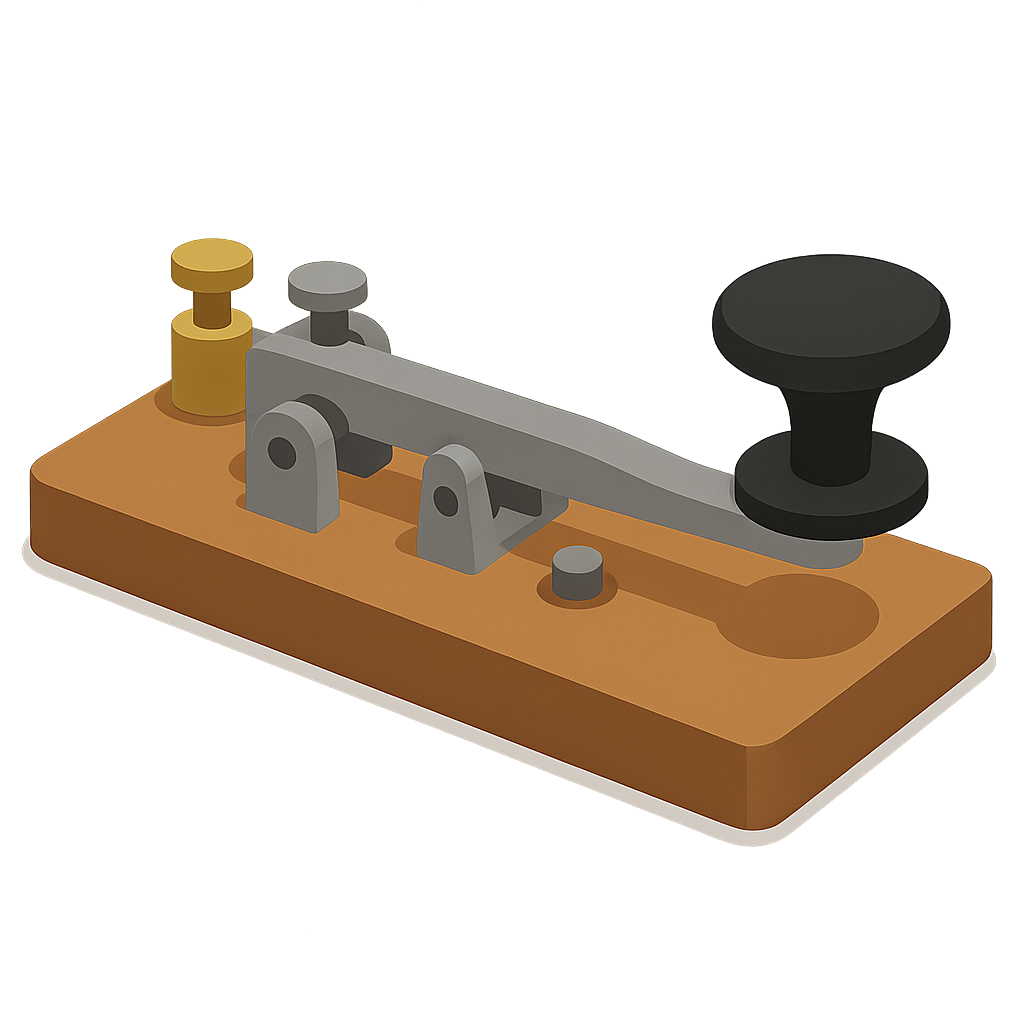
Hello there. You might not recognize me at first, but you hear my descendants every day in the pings and buzzes of your phones. I am Morse Code, a special language made not of letters, but of sounds. I speak in short beeps, which we call 'dots,' and long beeps, which we call 'dashes.' Before I came along, sending a message to someone far away was a very slow process. It could take days, or even weeks. People wrote letters that had to be carried by riders on horseback or by ships sailing across vast oceans. Imagine waiting that long for important news. I was created to fix that problem. My purpose was to let words fly across wires as quickly as a flash of lightning, closing the distance between people with a simple tap-tap-tap.
My story really begins with an artist, a painter named Samuel Morse. In 1832, he was on a long ship journey, sailing home across the Atlantic Ocean. During the trip, he overheard other passengers talking about a fascinating new discovery called the electromagnet. As he listened, a spark of an idea ignited in his mind. What if he could use electricity and magnets to send signals over a wire? This idea became deeply personal for him. You see, years earlier, he had received a letter telling him that his wife was very sick. But the letter traveled so slowly that by the time he rushed home, it was too late. He was heartbroken. This sad memory motivated him, making him determined to create a way for people to communicate instantly. He wanted to make sure no one else would have to wait anxiously for news that could change their lives.
The Story of Morse Code
Hello there. You might not recognize me at first, but you hear my descendants every day in the pings and buzzes of your phones. I am Morse Code, a special language made not of letters, but of sounds. I speak in short beeps, which we call 'dots,' and long beeps, which we call 'dashes.' Before I came along, sending a message to someone far away was a very slow process. It could take days, or even weeks. People wrote letters that had to be carried by riders on horseback or by ships sailing across vast oceans. Imagine waiting that long for important news. I was created to fix that problem. My purpose was to let words fly across wires as quickly as a flash of lightning, closing the distance between people with a simple tap-tap-tap.
My story really begins with an artist, a painter named Samuel Morse. In 1832, he was on a long ship journey, sailing home across the Atlantic Ocean. During the trip, he overheard other passengers talking about a fascinating new discovery called the electromagnet. As he listened, a spark of an idea ignited in his mind. What if he could use electricity and magnets to send signals over a wire? This idea became deeply personal for him. You see, years earlier, he had received a letter telling him that his wife was very sick. But the letter traveled so slowly that by the time he rushed home, it was too late. He was heartbroken. This sad memory motivated him, making him determined to create a way for people to communicate instantly. He wanted to make sure no one else would have to wait anxiously for news that could change their lives.
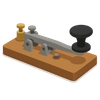
Now, an idea as big as me needs a team, and Samuel Morse didn't work alone. He was a brilliant painter, but he needed help with the science and mechanics. He found a wonderful partner in a scientist named Leonard Gale, who knew all about electricity and helped make the signals strong enough to travel long distances. Then there was Alfred Vail, a clever and skillful mechanic. Alfred was the one who truly helped shape me into the simple, efficient language I am today. He studied the English language and had a brilliant realization: the letters that are used most often, like 'E' and 'T,' should have the shortest codes. That is why the code for 'E' is just a single dot. It was a genius move that made sending messages much faster. Together, this team built the machine that would be my voice. It was called the telegraph, and it was designed to tap out my dots and dashes and send them zipping across a wire.
Our biggest test came on a very important day: May 24th, 1844. By then, a telegraph line had been built between Washington, D.C., and Baltimore, Maryland. It was time for my first official public demonstration. Samuel Morse sat at the telegraph machine in the U.S. Capitol building in Washington, while Alfred Vail waited at the other end in Baltimore, miles away. A crowd of important people had gathered, all whispering and wondering if this strange new invention would actually work. With everyone watching, Samuel carefully tapped out a message. The electrical pulses raced along the wire almost instantly. In Baltimore, Alfred received it and sent it back to prove it was correct. The message was from the Bible: 'What hath God wrought?'. It was a way of saying, 'Look at this amazing thing that has been created.'. It was a perfect success. In that moment, the world of communication changed forever.
After that famous day, I got very busy. Suddenly, news that used to take weeks to cross the country could arrive in just a few minutes. I helped make railroads safer by allowing train stations to communicate about schedules and delays. Businesses in different cities could make deals and share information faster than ever before. I didn't just stay on land, either. Giant cables were laid on the ocean floor, and my dots and dashes traveled under the sea, connecting whole continents. I went to work on ships, too, and I created one of the most famous signals of all time: SOS. That's dot-dot-dot, dash-dash-dash, dot-dot-dot. It's a universal call for help, and it saved many lives, including some from the sinking of the Titanic. Even though you now have the internet and smartphones, I haven't completely retired. Pilots and amateur radio operators still use me. I am the great-grandparent of every text, email, and digital message you send today, proving that a simple idea of dots and dashes truly can connect the world.
Wow facts
About
Morse Code is a method used in telecommunication to encode text characters as standardized sequences of two different signal durations, called dots and dashes. It is named for Samuel F. B. Morse, a co-inventor of the telegraph.
Take a Quiz
Question 1 of 5
The story says Samuel Morse was 'motivated' to create a faster way to communicate. What does 'motivated' mean in this context?
Explore next



Want to do even more?
Go beyond exploring. Unlock tools that turn every story into real learning.

Storypie Plus for families
Full stories, quizzes, and printables. Nights and car rides, sorted.
- Unlimited audio stories
- Create Mode: your child stars in the story
- Offline downloads
- Printable worksheets & coloring pages

Why Storypie for Schools
Students engaged. Prep in seconds. Evenings back to you.
- Worksheets & Quizzes
- Classroom Management
- Formative Assessment
- Custom Curriculum & Lesson Plans
- 27 Languages

Why Storypie for Homeschool
Curriculum done. They'll ask for more. Hours back in your day.
- Worksheet Generator
- First-Person Audio Stories
- Built-in Comprehension Quizzes
- Custom Curriculum & Lesson Plans
- Print & Go Activities