English

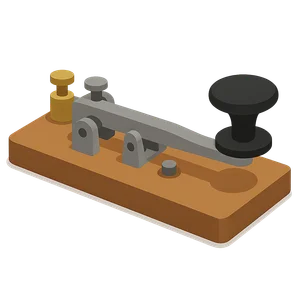
Morse Code
Morse Code is a method used in telecommunication to encode text characters as standardized sequences of two…
Reads at Grades 6–8 Listens at Grades 4–8
Print & create
Answer keys·No prep·Free with an account
28 worksheets · answer keys · full story · quiz · Ages 10-12 · CEFR B2
Plus adds 102,000+ more stories in 27 languages, audio for every one, and printables for all of them.
Just want Morse Code?
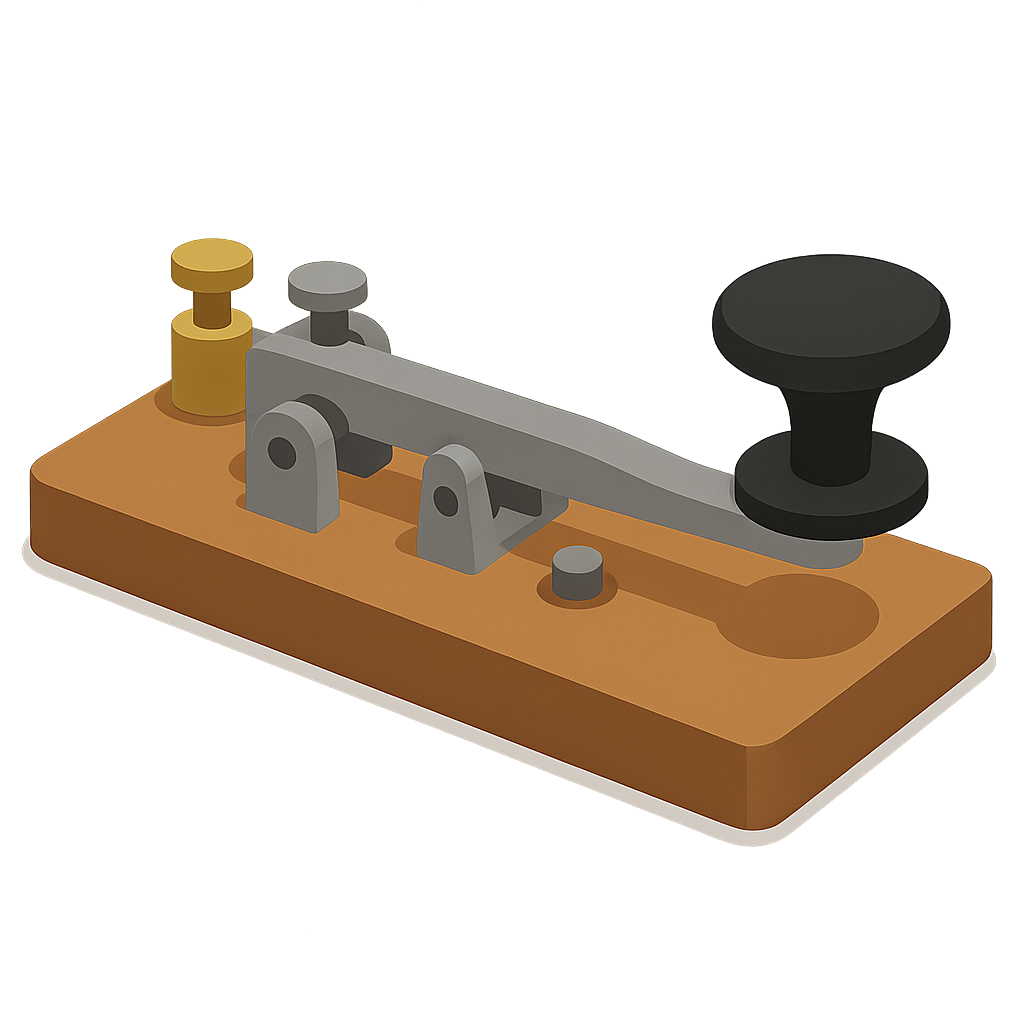
I am a language you cannot speak with your mouth or write with a pen. I am a language of sound, of silence, of electricity. I am Morse Code. Before I was born, the world was a very large and quiet place. News traveled at the speed of a galloping horse or a wind-filled sail, which meant a message could take days, weeks, or even months to cross a country or an ocean. A letter held the weight of old news by the time it arrived. My story begins not with an inventor in a lab, but with an artist and a moment of deep sorrow. My main creator, Samuel F. B. Morse, was a talented painter. In 1825, while he was away from home painting a portrait, he received a letter delivered by a tired horseman. The letter told him his beloved wife was gravely ill. He rushed home, but by the time he arrived, she had already been buried. The message had been too slow. That heartbreak planted a seed in his mind: there had to be a way for news to travel as fast as a thought, as fast as lightning itself. He was determined to bridge the vast distances that kept people from one another in times of need.
Samuel Morse's artistic spirit was full of vision, but turning that vision into reality required a different kind of skill. During the 1830s, he put down his paintbrushes and picked up wires, batteries, and magnets. His studio transformed from a place of color and canvas to a workshop humming with electrical experiments. But he was not alone on this journey. He was clever enough to know he needed help. He found a brilliant partner in Leonard Gale, a science professor who understood the power of electromagnets and helped Samuel strengthen the electrical signal so it could travel over long distances. Then came Alfred Vail, a young, skilled mechanic whose family owned an ironworks. Alfred was a practical genius who helped build and perfect the telegraph machines. He looked at the clunky early designs and made them smaller, more reliable, and easier to use. Together, we took shape. I am what you would call a binary code. That sounds complicated, but it's simple: I use just two states, an 'on' and an 'off,' like a light switch. A short electrical pulse creates a 'dot' (or 'dit'), and a longer one creates a 'dash' (or 'dah'). Every letter of the alphabet, every number, and every piece of punctuation was given its own unique pattern of dits and dahs. It was Alfred Vail who had one of my most brilliant ideas. He visited a local printing press and counted how many of each letter type they had. He reasoned that the most common letters in English should have the simplest codes. That is why the letter 'E,' the most used of all, is just a single dot. This insight made sending messages with me incredibly efficient and fast.
My Life in Dots and Dashes
I am a language you cannot speak with your mouth or write with a pen. I am a language of sound, of silence, of electricity. I am Morse Code. Before I was born, the world was a very large and quiet place. News traveled at the speed of a galloping horse or a wind-filled sail, which meant a message could take days, weeks, or even months to cross a country or an ocean. A letter held the weight of old news by the time it arrived. My story begins not with an inventor in a lab, but with an artist and a moment of deep sorrow. My main creator, Samuel F. B. Morse, was a talented painter. In 1825, while he was away from home painting a portrait, he received a letter delivered by a tired horseman. The letter told him his beloved wife was gravely ill. He rushed home, but by the time he arrived, she had already been buried. The message had been too slow. That heartbreak planted a seed in his mind: there had to be a way for news to travel as fast as a thought, as fast as lightning itself. He was determined to bridge the vast distances that kept people from one another in times of need.
Samuel Morse's artistic spirit was full of vision, but turning that vision into reality required a different kind of skill. During the 1830s, he put down his paintbrushes and picked up wires, batteries, and magnets. His studio transformed from a place of color and canvas to a workshop humming with electrical experiments. But he was not alone on this journey. He was clever enough to know he needed help. He found a brilliant partner in Leonard Gale, a science professor who understood the power of electromagnets and helped Samuel strengthen the electrical signal so it could travel over long distances. Then came Alfred Vail, a young, skilled mechanic whose family owned an ironworks. Alfred was a practical genius who helped build and perfect the telegraph machines. He looked at the clunky early designs and made them smaller, more reliable, and easier to use. Together, we took shape. I am what you would call a binary code. That sounds complicated, but it's simple: I use just two states, an 'on' and an 'off,' like a light switch. A short electrical pulse creates a 'dot' (or 'dit'), and a longer one creates a 'dash' (or 'dah'). Every letter of the alphabet, every number, and every piece of punctuation was given its own unique pattern of dits and dahs. It was Alfred Vail who had one of my most brilliant ideas. He visited a local printing press and counted how many of each letter type they had. He reasoned that the most common letters in English should have the simplest codes. That is why the letter 'E,' the most used of all, is just a single dot. This insight made sending messages with me incredibly efficient and fast.
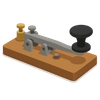
For years, we were a secret language shared between just a few inventors in a workshop. But Samuel Morse knew I was destined to change the world, and he fought to show everyone what I could do. After many challenges, he finally convinced the U.S. Congress to fund an experimental telegraph line. The stage was set for my grand debut on May 24th, 1844. Imagine the scene: Samuel Morse stood in the grand chamber of the U.S. Supreme Court in Washington, D.C., his hand resting on a small brass key. Forty miles away, in a Baltimore railroad station, Alfred Vail waited by a receiving device. A crowd of important people gathered, skeptical and curious. They watched as Morse began to tap the key, sending electrical pulses surging down the iron wire. Click. Click-click-click. Click. He tapped out a message chosen from the Bible: 'What hath God wrought?' For a few tense moments, there was silence. Then, the clicking sound came back from the receiver as Vail tapped the exact same message back, almost instantly. A wave of astonishment swept through the room. It was like magic. A message had traveled 40 miles in a matter of seconds. That single message was a thunderclap that announced a new era of communication. Soon, telegraph wires were being strung up across the country, following railroad tracks and connecting cities that had once been days apart. In 1858, an even bigger miracle occurred: the first transatlantic cable was laid across the ocean floor, connecting North America and Europe. For the first time, continents could speak to each other in minutes.
My clicks and beeps echoed across the globe, shrinking the world with every message I carried. Newspapers could report on events from the other side of the country on the very same day they happened. Businesses could manage their operations across vast distances. I helped run the new railroads safely and on time. I even became a hero on the high seas. When a ship was in trouble, it could send out my universal distress signal, SOS (...---...), a call for help that could be heard by anyone listening. Of course, the world of invention never stands still. Eventually, new voices came along—the telephone, which could carry a human voice, and later, the internet, which could carry almost anything. My daily use in sending telegrams faded away. But my story did not end. I am still here, a proud ancestor of the digital world you live in. Amateur radio operators still use me to chat with people around the globe. Pilots and air traffic controllers use me as a reliable backup. Most importantly, my fundamental idea—a binary code of on and off signals—is the great-great-grandfather of all modern technology. The ones and zeros that run your computer, your smartphone, and your video games are my direct descendants. I was the first spark, the first digital heartbeat that proved information could travel at the speed of light, connecting all of humanity in a way the world had never dreamed was possible.
Wow facts
About
Morse Code is a method used in telecommunication to encode text characters as standardized sequences of two different signal durations, called dots and dashes. It is named for Samuel F. B. Morse, a co-inventor of the telegraph.
Take a Quiz
Question 1 of 5
Retell the main events of Morse Code's creation, starting with Samuel Morse's motivation and ending with the first public demonstration.
Explore next




Want to do even more?
Go beyond exploring. Unlock tools that turn every story into real learning.

Storypie Plus for families
Full stories, quizzes, and printables. Nights and car rides, sorted.
- Unlimited audio stories
- Create Mode: your child stars in the story
- Offline downloads
- Printable worksheets & coloring pages

Why Storypie for Schools
Students engaged. Prep in seconds. Evenings back to you.
- Worksheets & Quizzes
- Classroom Management
- Formative Assessment
- Custom Curriculum & Lesson Plans
- 27 Languages

Why Storypie for Homeschool
Curriculum done. They'll ask for more. Hours back in your day.
- Worksheet Generator
- First-Person Audio Stories
- Built-in Comprehension Quizzes
- Custom Curriculum & Lesson Plans
- Print & Go Activities