English

Alfred Vail
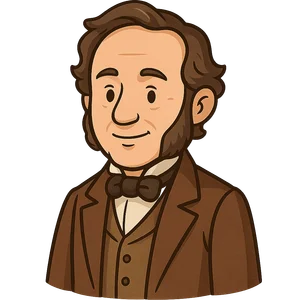
Alfred Vail was an American machinist and inventor who made significant contributions to the development of…
Reads at Grades 6–8 Listens at Grades 4–8
Print & create
Answer keys·No prep·Free with an account
28 worksheets · answer keys · full story · quiz · Ages 10-12 · CEFR B2
Plus adds 244,000+ more stories in 27 languages, audio for every one, and printables for all of them.
Just want Alfred Vail?
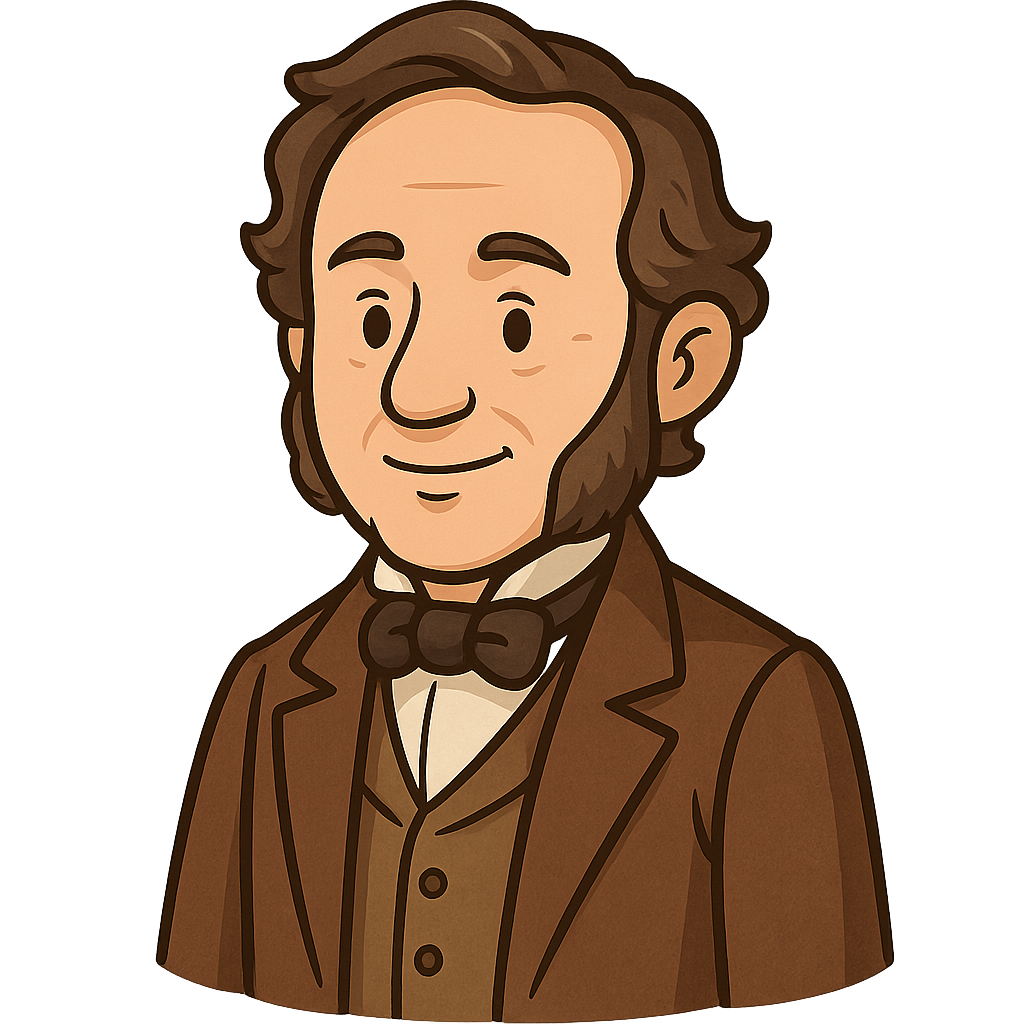
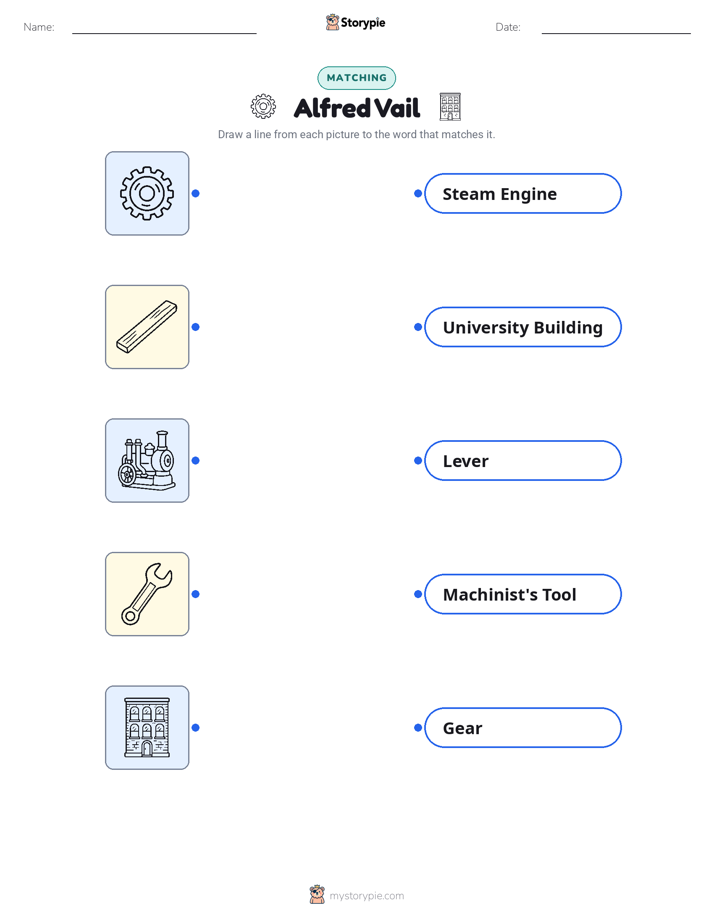
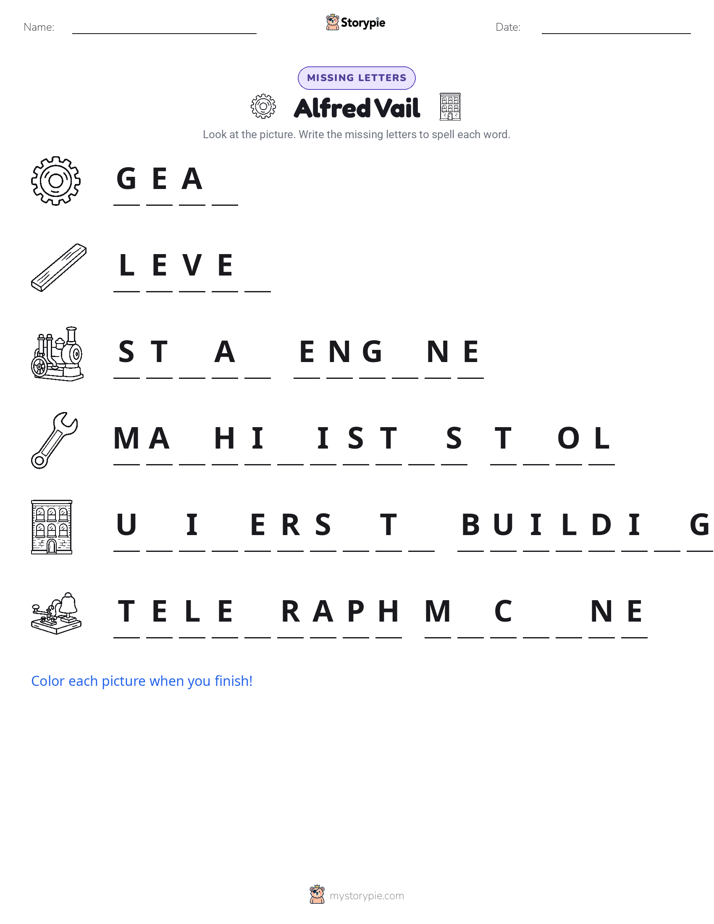
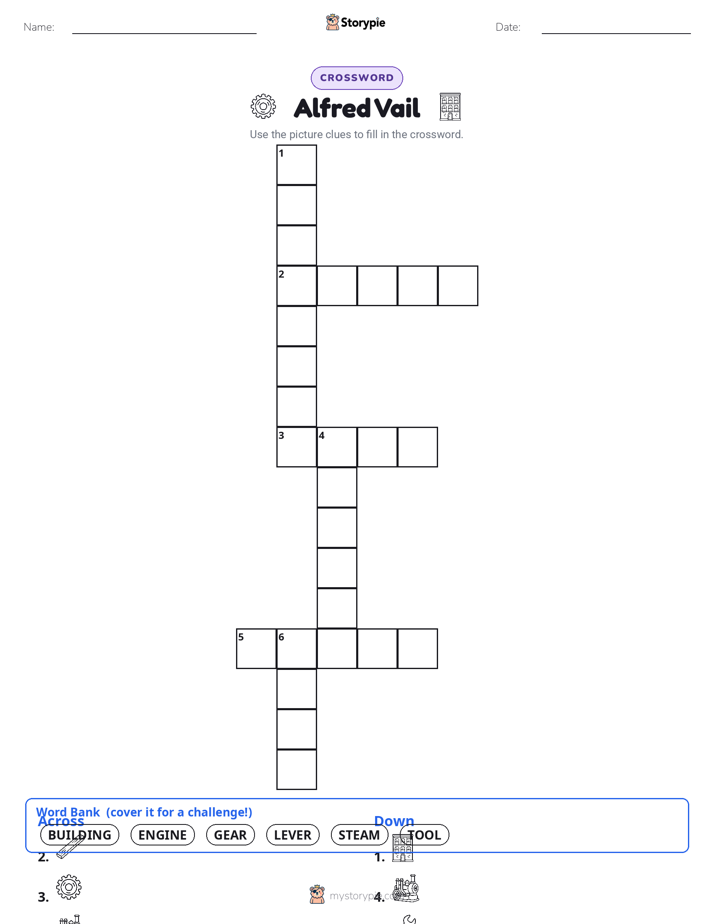
Hello! My name is Alfred Vail, and I helped change the way the world communicates. I was born on September 25th, 1807, in Morristown, New Jersey. My world was filled with the sounds of innovation. My father, Stephen Vail, owned the Speedwell Iron Works, a bustling factory full of clanging hammers and hissing steam engines. Growing up there was like living in a giant workshop. I was completely captivated by the way gears, levers, and engines all worked in harmony. It wasn't long before I learned the trade myself and became a skilled machinist, able to build and fix complex machinery.
Even though I had a natural talent for mechanics, I initially chose a different path for my life. In 1832, I enrolled at the University of the City of New York with the goal of becoming a minister. I dedicated myself to my studies and successfully graduated in 1836. However, my health was not strong enough to handle the demands of that career. It was a difficult realization, but it led me back to my first true passion: invention and mechanics. Returning to the world of machines felt like coming home, and I knew it was where I was meant to be.
Everything changed for me on September 2nd, 1837. On that day, I witnessed a demonstration by a man named Samuel F. B. Morse. He had invented a device he called the telegraph, which used electricity to send messages over a wire. The idea was brilliant, but the machine itself was large and clunky. I saw its incredible potential to connect the world, but I also knew it needed significant improvements. I immediately approached Mr. Morse and proposed a partnership. I offered my mechanical skills and my family's financial resources to perfect his invention. In return, I would receive a share in the telegraph's future success.
Alfred Vail: The Mind Behind the Machine
Hello! My name is Alfred Vail, and I helped change the way the world communicates. I was born on September 25th, 1807, in Morristown, New Jersey. My world was filled with the sounds of innovation. My father, Stephen Vail, owned the Speedwell Iron Works, a bustling factory full of clanging hammers and hissing steam engines. Growing up there was like living in a giant workshop. I was completely captivated by the way gears, levers, and engines all worked in harmony. It wasn't long before I learned the trade myself and became a skilled machinist, able to build and fix complex machinery.
Even though I had a natural talent for mechanics, I initially chose a different path for my life. In 1832, I enrolled at the University of the City of New York with the goal of becoming a minister. I dedicated myself to my studies and successfully graduated in 1836. However, my health was not strong enough to handle the demands of that career. It was a difficult realization, but it led me back to my first true passion: invention and mechanics. Returning to the world of machines felt like coming home, and I knew it was where I was meant to be.
Everything changed for me on September 2nd, 1837. On that day, I witnessed a demonstration by a man named Samuel F. B. Morse. He had invented a device he called the telegraph, which used electricity to send messages over a wire. The idea was brilliant, but the machine itself was large and clunky. I saw its incredible potential to connect the world, but I also knew it needed significant improvements. I immediately approached Mr. Morse and proposed a partnership. I offered my mechanical skills and my family's financial resources to perfect his invention. In return, I would receive a share in the telegraph's future success.
We set up a workshop at my father's Speedwell Iron Works, and I began the challenge of transforming the telegraph. I completely redesigned Mr. Morse's bulky prototype, making it much smaller, more practical, and more efficient. One of my key improvements was a simple sending key, which a person could easily tap with their finger to transmit signals. I also developed a receiver that could automatically print the incoming signals as dots and dashes onto a moving strip of paper. To make this system work, we created a special alphabet of these dots and dashes that became known as Morse Code. Our hard work paid off, and on January 6th, 1838, we held the first public demonstration of our improved machine. We successfully sent the message, 'A patient waiter is no loser,' proving our invention worked.
Despite our success, convincing the public and the government of the telegraph's importance was a long and difficult process. Finally, in 1843, our persistence was rewarded when the United States Congress granted us the funds to build an experimental telegraph line. The line stretched 40 miles from Washington, D.C., to Baltimore, Maryland. On May 24th, 1844, we gathered to send the first official public message. Using our code, the historic words, chosen from the Bible, traveled across the wire almost instantly: 'What hath God wrought!' In that moment, communication changed forever. For the first time in history, people in distant cities could share news in minutes instead of waiting days for a letter to arrive.
After the telegraph became a success, I eventually stepped away from the industry. I often felt that my crucial contributions to the machine's design and function were overlooked in favor of others. To set the record straight and explain the technology I helped create, I wrote a book in 1845 describing how the American Electro Magnetic Telegraph worked. I lived to be 51 years old. Though my name may not be as famous as Samuel Morse's, my mechanical improvements and the code we developed were essential to making the telegraph a reality. My work helped lay the groundwork for a connected world, leading to the telephones, radios, and even the internet that you use today.
Wow facts
About
Alfred Vail was an American machinist and inventor who made significant contributions to the development of the telegraph and was instrumental in creating the dot-and-dash system of Morse code.
Take a Quiz
Question 1 of 5
Based on the story, describe the main steps Alfred Vail took to improve the telegraph after partnering with Samuel Morse.
Explore next




Want to do even more?
Go beyond exploring. Unlock tools that turn every story into real learning.

Storypie Plus for families
Full stories, quizzes, and printables. Nights and car rides, sorted.
- Unlimited audio stories
- Create Mode: your child stars in the story
- Offline downloads
- Printable worksheets & coloring pages

Why Storypie for Schools
Students engaged. Prep in seconds. Evenings back to you.
- Worksheets & Quizzes
- Classroom Management
- Formative Assessment
- Custom Curriculum & Lesson Plans
- 27 Languages

Why Storypie for Homeschool
Curriculum done. They'll ask for more. Hours back in your day.
- Worksheet Generator
- First-Person Audio Stories
- Built-in Comprehension Quizzes
- Custom Curriculum & Lesson Plans
- Print & Go Activities