English

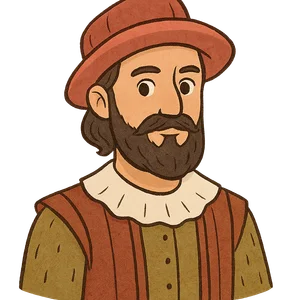
Alvar Nunez Cabeza de Vaca
A 16th-century Spanish explorer of the New World, one of four survivors of the Narváez expedition…
Reads at Grades 6–8 Listens at Grades 4–8
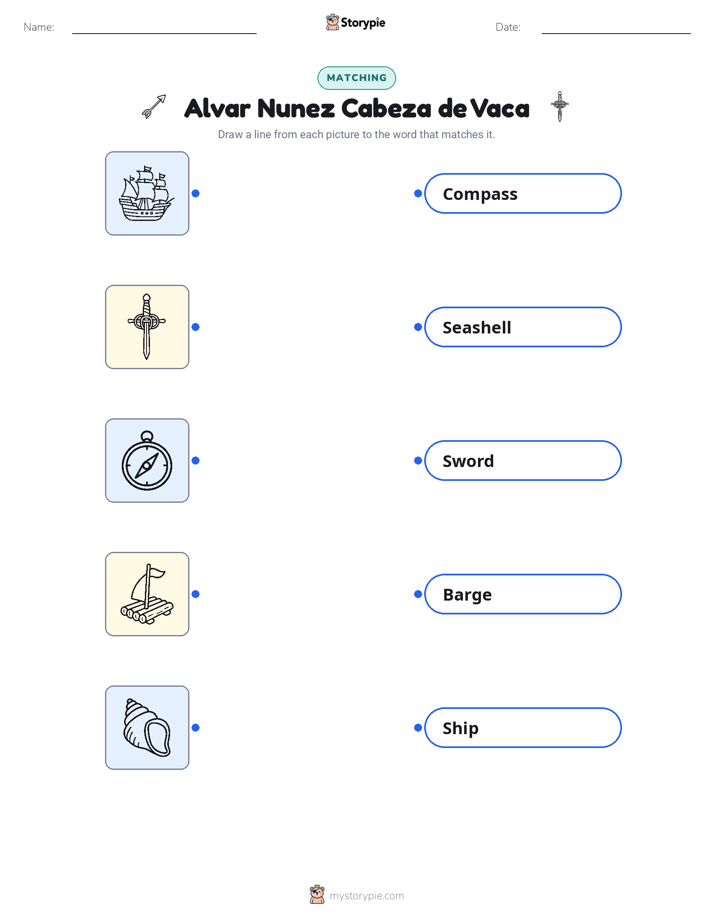
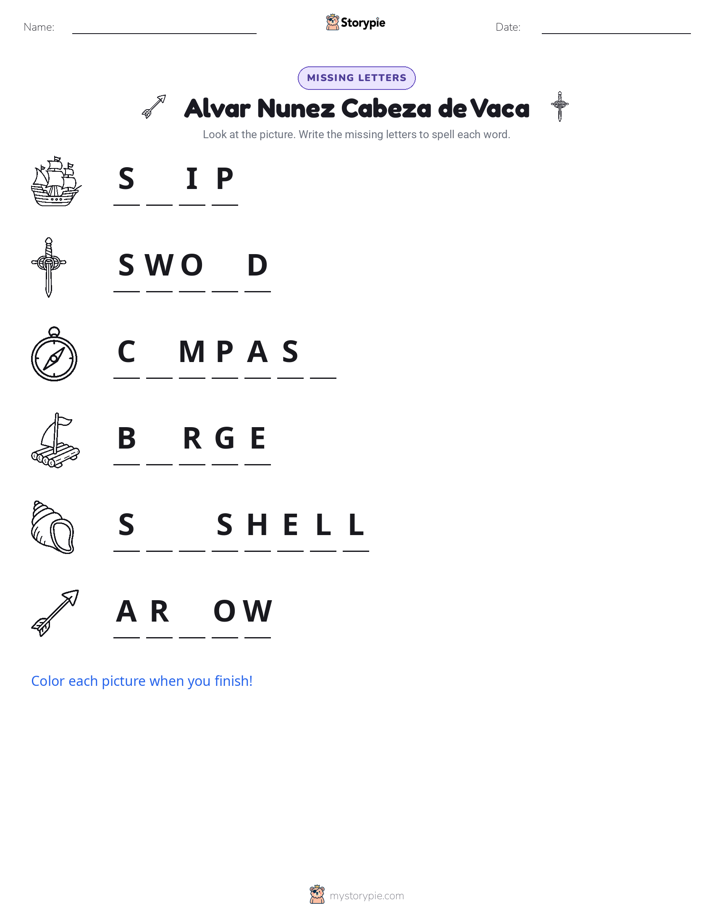
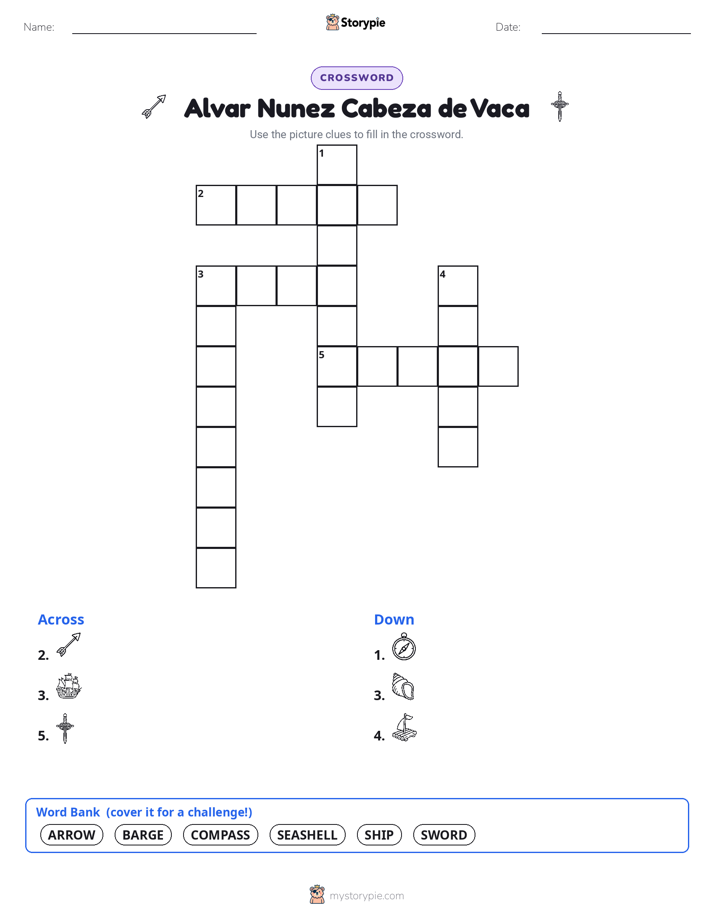
Print & create
Answer keys·No prep·Free with an account
28 worksheets · answer keys · full story · quiz · Ages 10-12 · CEFR B2
Plus adds 244,000+ more stories in 27 languages, audio for every one, and printables for all of them.
Just want Alvar Nunez Cabeza de Vaca?
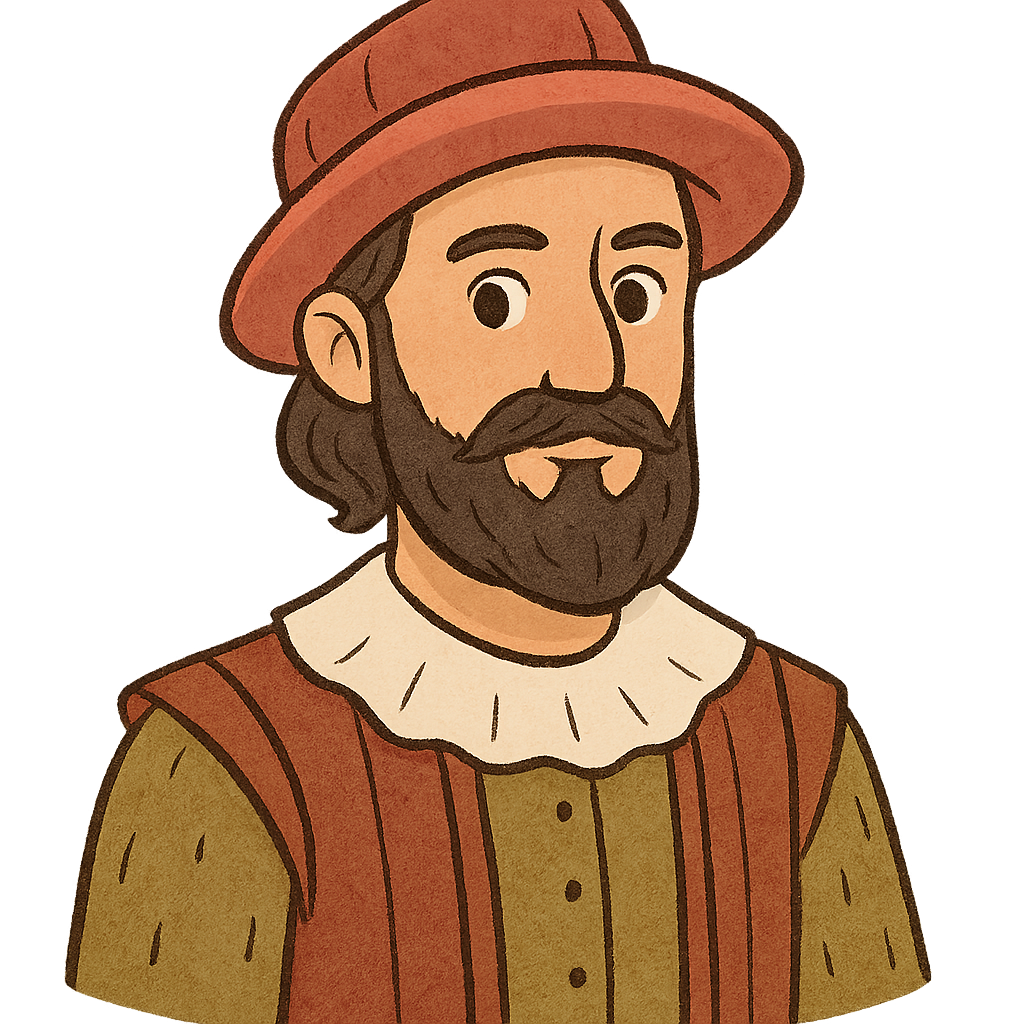
Hello! My name is Álvar Núñez Cabeza de Vaca. I want to tell you the story of my incredible journey. I was born in Spain around the year 1490 into a noble family. Adventure was in my blood! My grandfather, Pedro de Vera, had explored the Canary Islands, and I grew up hearing stories of faraway lands. I dreamed that one day I, too, would sail across the ocean and see the New World for myself. I studied and trained, waiting for the right opportunity to begin my own great adventure for the crown of Spain.
My chance came in 1527. On June 17th of that year, I set sail as the treasurer and second-in-command of a large expedition led by a man named Pánfilo de Narváez. Our mission was to explore and establish a colony in a land called La Florida, which is now part of the United States. We had five ships and about 600 men. The excitement was buzzing in the air. We were going to claim new lands, find riches, and bring glory to Spain. We had no idea of the incredible challenges and disasters that were waiting for us across the vast Atlantic Ocean.
Our troubles began almost immediately. A powerful hurricane struck us near Cuba, sinking some of our ships. When we finally landed in Florida in April of 1528, our leader, Narváez, made a terrible decision. He split our group, sending the ships along the coast while the rest of us, about 300 men, marched inland. We quickly became lost. We faced hunger, strange diseases, and frightening battles with the native people who lived there. Desperate, we ate our own horses and built five flimsy barges, hoping to sail along the coast of the Gulf of Mexico to a Spanish settlement. It was our only hope for survival.
Álvar Núñez Cabeza de Vaca
Hello! My name is Álvar Núñez Cabeza de Vaca. I want to tell you the story of my incredible journey. I was born in Spain around the year 1490 into a noble family. Adventure was in my blood! My grandfather, Pedro de Vera, had explored the Canary Islands, and I grew up hearing stories of faraway lands. I dreamed that one day I, too, would sail across the ocean and see the New World for myself. I studied and trained, waiting for the right opportunity to begin my own great adventure for the crown of Spain.
My chance came in 1527. On June 17th of that year, I set sail as the treasurer and second-in-command of a large expedition led by a man named Pánfilo de Narváez. Our mission was to explore and establish a colony in a land called La Florida, which is now part of the United States. We had five ships and about 600 men. The excitement was buzzing in the air. We were going to claim new lands, find riches, and bring glory to Spain. We had no idea of the incredible challenges and disasters that were waiting for us across the vast Atlantic Ocean.
Our troubles began almost immediately. A powerful hurricane struck us near Cuba, sinking some of our ships. When we finally landed in Florida in April of 1528, our leader, Narváez, made a terrible decision. He split our group, sending the ships along the coast while the rest of us, about 300 men, marched inland. We quickly became lost. We faced hunger, strange diseases, and frightening battles with the native people who lived there. Desperate, we ate our own horses and built five flimsy barges, hoping to sail along the coast of the Gulf of Mexico to a Spanish settlement. It was our only hope for survival.
Our desperate plan failed. In November 1528, a violent storm smashed our barges to pieces near an island off the coast of what is now Texas. Most of my companions drowned in the waves. I was thrown onto the shore, cold, hungry, and with almost nothing. I was one of only about 80 men who survived the shipwrecks. We were found by the local Karankawa people. We were weak and helpless, and for the first time, I was not a conqueror, but a captive and a guest, completely dependent on the kindness of strangers in a land I did not understand.
The next few years were the hardest of my life. Many of the other survivors died from sickness and starvation. I learned to live as the native people did. To survive and have some freedom, I became a trader, walking for miles to exchange seashells and other coastal goods for things from inland tribes. I was eventually reunited with three other survivors: Alonso del Castillo Maldonado, Andrés Dorantes de Carranza, and his enslaved African companion, a clever man named Estebanico. Together, we gained a reputation as healers. We would say our Christian prayers over the sick, and many people recovered. We were passed from tribe to tribe, not as captives, but as respected medicine men.
Around 1534, my three companions and I decided to do the impossible: walk west until we reached Mexico, the nearest Spanish settlement. We had no map and no idea how far it was. For nearly two years, we walked across thousands of miles of deserts, mountains, and plains. We journeyed through lands now known as Texas, New Mexico, and Arizona. Hundreds of native people followed us on our journey, guiding us and providing us with food. I learned so much about their different cultures and their deep connection to the land. I was no longer seeing them as savages, but as people, with families, beliefs, and complex societies.
Finally, in the spring of 1536, we saw something unbelievable: Spanish horsemen. We had made it! But my joy was mixed with sadness. These men were slave-hunters, and they were capturing the very people who had helped us survive. I was horrified by their cruelty. I argued with them, trying to protect the natives who had trusted me. My journey had changed me deeply. We were taken to Mexico City, where the Spanish officials could hardly believe our story of surviving for eight long years.
I returned to Spain in 1537 and wrote a book about my experiences, which was published in 1542. It was called La Relación, or 'The Account.' I wanted the King to know about the vast lands of North America and to understand that the native people should be treated with respect, not cruelty. A few years later, in 1540, I was made governor of a territory in South America. I tried to put my new beliefs into practice and protect the local tribes, but this angered the other Spanish colonists who wanted to enslave them. They arrested me in 1544 and sent me back to Spain in chains.
Though my time as a governor ended badly, I was eventually cleared of the false charges against me. I never returned to the Americas, but I never forgot what I learned there. I lived to be about 69 years old, passing away around 1559. My story began as one of conquest, but it became one of survival, understanding, and transformation. My book, La Relación, gave Europeans their first real glimpse into the lives of the people of North America. I am remembered not for the gold I failed to find, but for the incredible journey that changed my heart and showed me the shared humanity in all people.
Wow facts
About
A 16th-century Spanish explorer of the New World, one of four survivors of the Narváez expedition, who journeyed for eight years across parts of the American Southwest, including areas that are now Texas, and possibly New Mexico and Arizona. He documented his experiences in the book La Relación.
Take a Quiz
Question 1 of 5
What was the main way Cabeza de Vaca's perspective changed during his eight years in North America?
Explore next





Want to do even more?
Go beyond exploring. Unlock tools that turn every story into real learning.

Storypie Plus for families
Full stories, quizzes, and printables. Nights and car rides, sorted.
- Unlimited audio stories
- Create Mode: your child stars in the story
- Offline downloads
- Printable worksheets & coloring pages

Why Storypie for Schools
Students engaged. Prep in seconds. Evenings back to you.
- Worksheets & Quizzes
- Classroom Management
- Formative Assessment
- Custom Curriculum & Lesson Plans
- 27 Languages

Why Storypie for Homeschool
Curriculum done. They'll ask for more. Hours back in your day.
- Worksheet Generator
- First-Person Audio Stories
- Built-in Comprehension Quizzes
- Custom Curriculum & Lesson Plans
- Print & Go Activities