English

Annie Easley
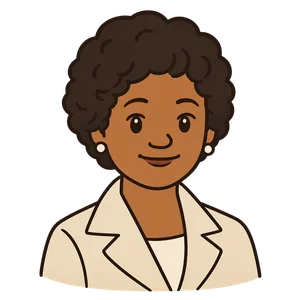
Annie Easley was an African American computer scientist, mathematician…
Reads at Grades 6–8 Listens at Grades 4–8
Print & create
Answer keys·No prep·Free with an account
28 worksheets · answer keys · full story · quiz · Ages 10-12 · CEFR B2
Plus adds 290,000+ more stories in 27 languages, audio for every one, and printables for all of them.
Just want Annie Easley?

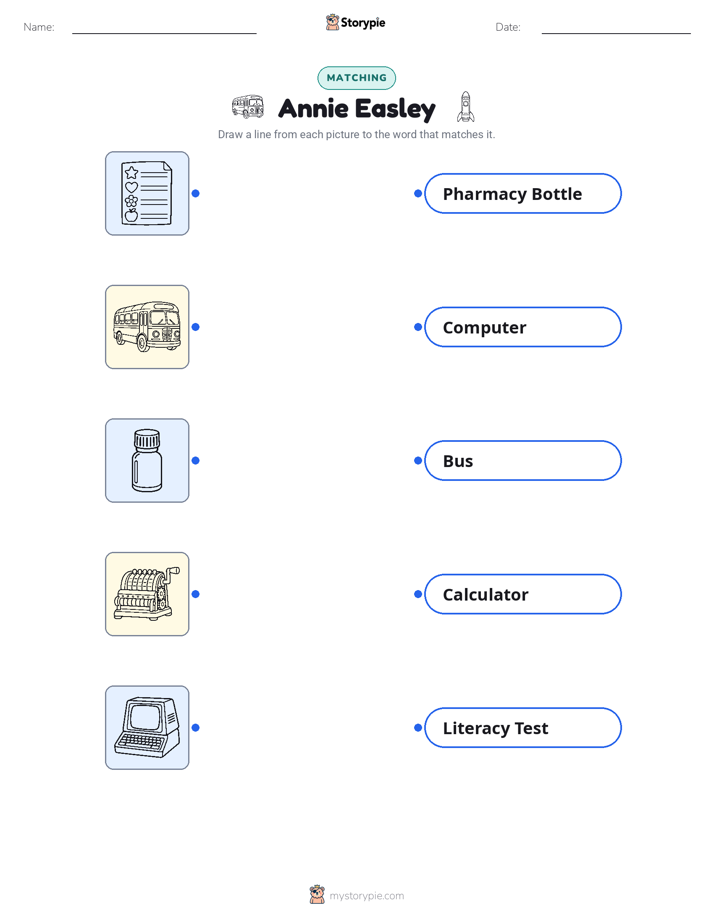
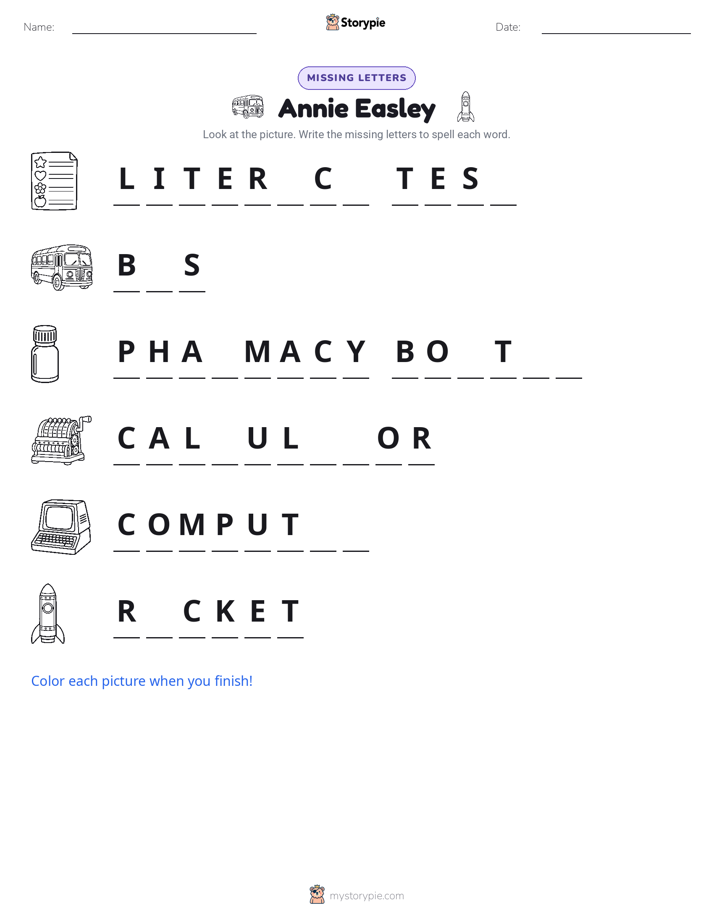
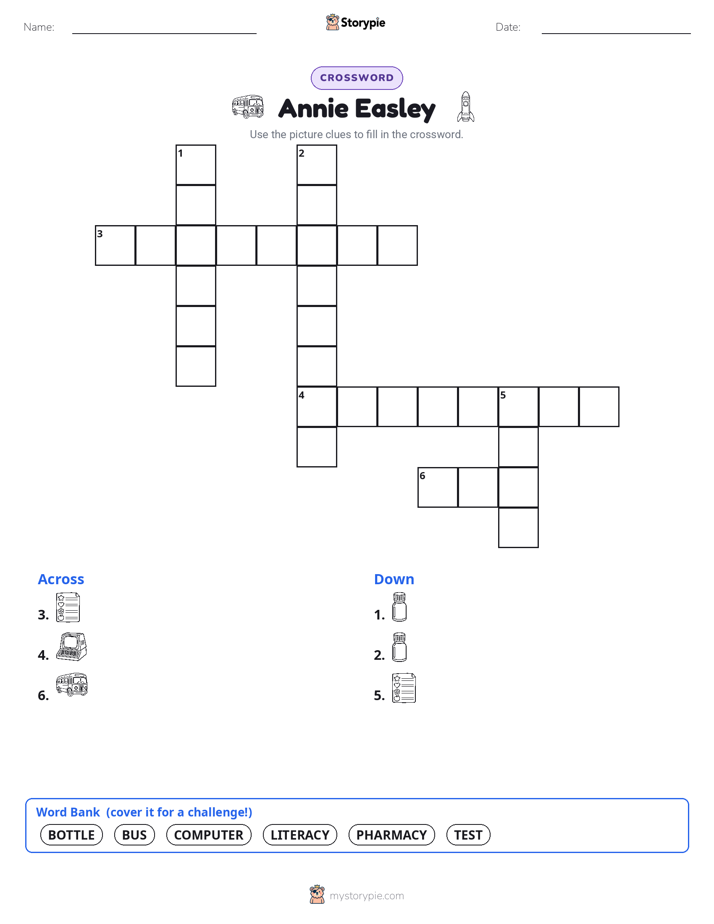
Hello! My name is Annie Easley. I was born on April 23rd, 1933, in Birmingham, Alabama, during a time of great change and challenge in the United States. My mother was my greatest inspiration. She always told me that I could be anything I wanted to be, as long as I was willing to work hard for it. Her words became the foundation of my life. I grew up in the era of segregation, a system of unfair laws and rules designed to keep Black people and white people separate in schools, on buses, and in many other parts of life. This system created enormous obstacles for African Americans. I faced one of these obstacles personally when I prepared to register to vote. My mother helped me study for a literacy test, which was a difficult exam used to prevent many Black citizens from voting. I was determined not to be stopped. I studied hard, passed the test, and earned my right to vote. That experience was very important to me; it proved that education was a powerful key that could unlock doors that others tried to close.
I originally planned to work in healthcare and began studying pharmacy in college. Life, however, often has its own plans. After I got married, I moved to Cleveland, Ohio, in 1954. When I looked for a way to continue my studies, I discovered that the local pharmacy school had recently closed. I needed to find a new career path. One day in 1955, a headline in the local newspaper caught my eye. It was an article about a government agency called the National Advisory Committee for Aeronautics, or NACA. The article described the fascinating work they were doing and mentioned they were looking for people with strong math skills to work as “human computers.” These were not machines, but people—mostly women—who performed the complex mathematical calculations that engineers needed to design and test new aircraft. I had always been good at math, so I decided to apply. Just two weeks later, I was hired! It was a thrilling moment. When I started, I was one of only a few African Americans working there, but I was excited for the challenge and ready to contribute.
Annie Easley: Reaching for the Stars
Hello! My name is Annie Easley. I was born on April 23rd, 1933, in Birmingham, Alabama, during a time of great change and challenge in the United States. My mother was my greatest inspiration. She always told me that I could be anything I wanted to be, as long as I was willing to work hard for it. Her words became the foundation of my life. I grew up in the era of segregation, a system of unfair laws and rules designed to keep Black people and white people separate in schools, on buses, and in many other parts of life. This system created enormous obstacles for African Americans. I faced one of these obstacles personally when I prepared to register to vote. My mother helped me study for a literacy test, which was a difficult exam used to prevent many Black citizens from voting. I was determined not to be stopped. I studied hard, passed the test, and earned my right to vote. That experience was very important to me; it proved that education was a powerful key that could unlock doors that others tried to close.
I originally planned to work in healthcare and began studying pharmacy in college. Life, however, often has its own plans. After I got married, I moved to Cleveland, Ohio, in 1954. When I looked for a way to continue my studies, I discovered that the local pharmacy school had recently closed. I needed to find a new career path. One day in 1955, a headline in the local newspaper caught my eye. It was an article about a government agency called the National Advisory Committee for Aeronautics, or NACA. The article described the fascinating work they were doing and mentioned they were looking for people with strong math skills to work as “human computers.” These were not machines, but people—mostly women—who performed the complex mathematical calculations that engineers needed to design and test new aircraft. I had always been good at math, so I decided to apply. Just two weeks later, I was hired! It was a thrilling moment. When I started, I was one of only a few African Americans working there, but I was excited for the challenge and ready to contribute.
My career began just as the world was entering the Space Age. In 1958, the agency where I worked, NACA, was transformed into a new organization you have probably heard of: the National Aeronautics and Space Administration, or NASA. Our mission shifted from airplanes to the stars, and my job evolved right along with it. Powerful mechanical computers were becoming more common, and they could perform calculations much faster than any person. The role of the “human computer” was disappearing. Instead of seeing this as an obstacle, I saw it as an opportunity to learn something new. I taught myself how to program these new machines, learning early computer languages like Fortran. My skills led me to one of the most exciting projects of my career: the Centaur rocket. The Centaur was a high-energy upper-stage rocket, which means it was like a powerful second engine that would fire in space to send missions far from Earth. I wrote computer code for its energy conversion systems, which was essential for powering the rocket. The work I did on the Centaur program was vital for launching satellites and probes, including the famous Cassini probe that traveled all the way to Saturn.
While I was deeply passionate about my work and proud to be part of America's space program, the journey was not always smooth. As an African American woman in a field dominated by white men, I faced discrimination. There were times I was overlooked or treated unfairly simply because of my race and gender. But I remembered my mother’s words and refused to let these challenges stop me from pursuing my goals. I knew that education was still my most powerful tool for advancement. While working a full-time job at NASA, I enrolled in classes at Cleveland State University. It took a great deal of perseverance, but in 1977, I proudly earned my bachelor’s degree in mathematics. My experiences also motivated me to help others who faced similar struggles. I became an Equal Employment Opportunity counselor at NASA. In this role, I helped investigate complaints of discrimination and worked to ensure that everyone at the agency had a fair chance to succeed, no matter their background. I wanted to help make the path a little easier and a lot fairer for all the talented people who would come after me.
After a fulfilling 34-year career contributing to aeronautics and space exploration, I retired from NASA in 1989. I lived to be 78 years old, and I spent my life trying to prove that with determination and hard work, anyone can break down barriers. My work on the Centaur rocket is still a part of probes and satellites flying through the vastness of space, a reminder of what we can achieve when we aim high. I hope my story inspires you to stay curious, to never stop learning, and to use your unique talents to reach for your own stars. The dream of a more equal and just world is a mission we can all continue to work on together, right here on Earth.
Wow facts
About
Annie Easley was an African American computer scientist, mathematician, and rocket scientist who was a pioneer at NASA. She developed software for the Centaur rocket stage and championed equal opportunity in STEM fields.
Take a Quiz
Question 1 of 5
In your own words, describe Annie Easley's journey from her original career plan to her final role at NASA.
Explore next






Want to do even more?
Go beyond exploring. Unlock tools that turn every story into real learning.

Storypie Plus for families
Full stories, quizzes, and printables. Nights and car rides, sorted.
- Unlimited audio stories
- Create Mode: your child stars in the story
- Offline downloads
- Printable worksheets & coloring pages

Why Storypie for Schools
Students engaged. Prep in seconds. Evenings back to you.
- Worksheets & Quizzes
- Classroom Management
- Formative Assessment
- Custom Curriculum & Lesson Plans
- 27 Languages

Why Storypie for Homeschool
Curriculum done. They'll ask for more. Hours back in your day.
- Worksheet Generator
- First-Person Audio Stories
- Built-in Comprehension Quizzes
- Custom Curriculum & Lesson Plans
- Print & Go Activities