English

Antoni Gaudí
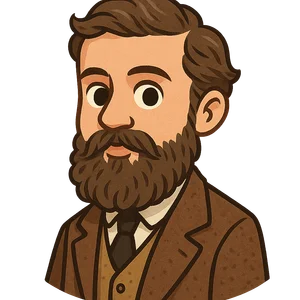
Antoni Gaudí was a Spanish architect from Catalonia, famous for his unique style inspired by nature.
Reads at Grades 3–5 Listens at Grades 1–5
Print & create
Answer keys·No prep·Free with an account
28 worksheets · answer keys · full story · quiz · Ages 8-10 · CEFR B1
Plus adds 280,000+ more stories in 27 languages, audio for every one, and printables for all of them.
Just want Antoni Gaudí?
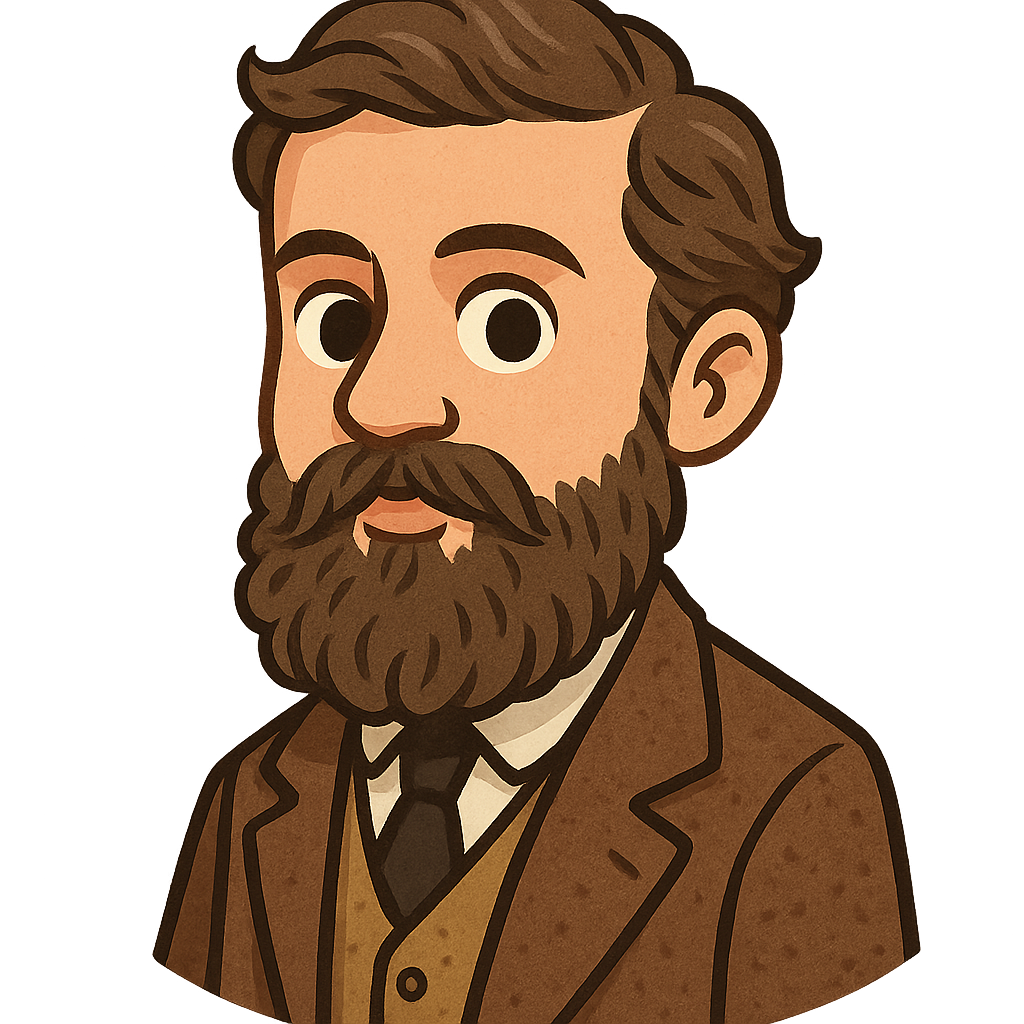
Hello, my name is Antoni Gaudí, and I was an architect who saw the world a little differently. I was born on June 25th, 1852, in a beautiful part of Spain called Catalonia. When I was a boy, I was often sick, which meant I couldn't always run and play games with the other children. While they were racing around, I spent my time sitting quietly outside, watching the world around me. I studied the amazing shapes I found in nature. I saw the perfect, gentle swirl of a snail's shell and the way tree branches reached up toward the sun, almost like arms. I looked closely at the soft, curved petals of a flower. From my careful observations, I learned a wonderful secret: nature almost never uses perfectly straight lines.
When I was old enough, I moved to the big city of Barcelona in 1869 to follow my biggest dream: to study architecture, which is the art of designing buildings. In school, I learned all the rules for how to design strong and useful buildings, but my head was filled with the curves and patterns I remembered from nature. When I finally graduated in 1878, the head of the school, a man named Elies Rogent, said something very funny about me. He asked, 'Have we given this degree to a madman or a genius? Only time will tell.' I wasn't mad at all. I was determined to show everyone that my ideas were just different. I dreamed of creating buildings that didn't look like stiff boxes but instead looked as if they grew right out of the earth, full of flowing curves, sparkling colors, and warm light.
Antoni Gaudí: Building with Nature
Hello, my name is Antoni Gaudí, and I was an architect who saw the world a little differently. I was born on June 25th, 1852, in a beautiful part of Spain called Catalonia. When I was a boy, I was often sick, which meant I couldn't always run and play games with the other children. While they were racing around, I spent my time sitting quietly outside, watching the world around me. I studied the amazing shapes I found in nature. I saw the perfect, gentle swirl of a snail's shell and the way tree branches reached up toward the sun, almost like arms. I looked closely at the soft, curved petals of a flower. From my careful observations, I learned a wonderful secret: nature almost never uses perfectly straight lines.
When I was old enough, I moved to the big city of Barcelona in 1869 to follow my biggest dream: to study architecture, which is the art of designing buildings. In school, I learned all the rules for how to design strong and useful buildings, but my head was filled with the curves and patterns I remembered from nature. When I finally graduated in 1878, the head of the school, a man named Elies Rogent, said something very funny about me. He asked, 'Have we given this degree to a madman or a genius? Only time will tell.' I wasn't mad at all. I was determined to show everyone that my ideas were just different. I dreamed of creating buildings that didn't look like stiff boxes but instead looked as if they grew right out of the earth, full of flowing curves, sparkling colors, and warm light.
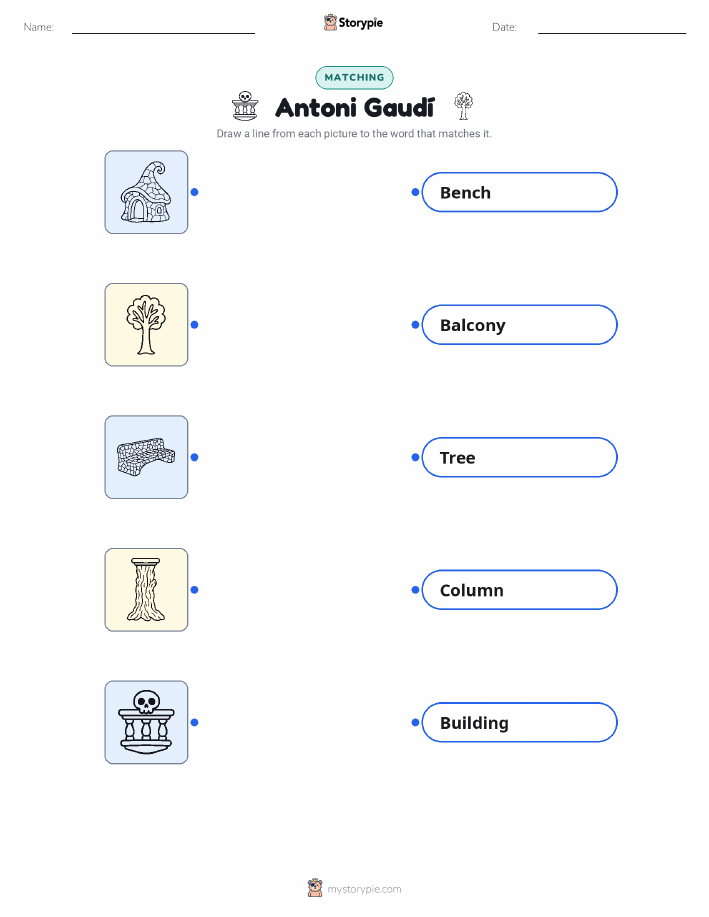
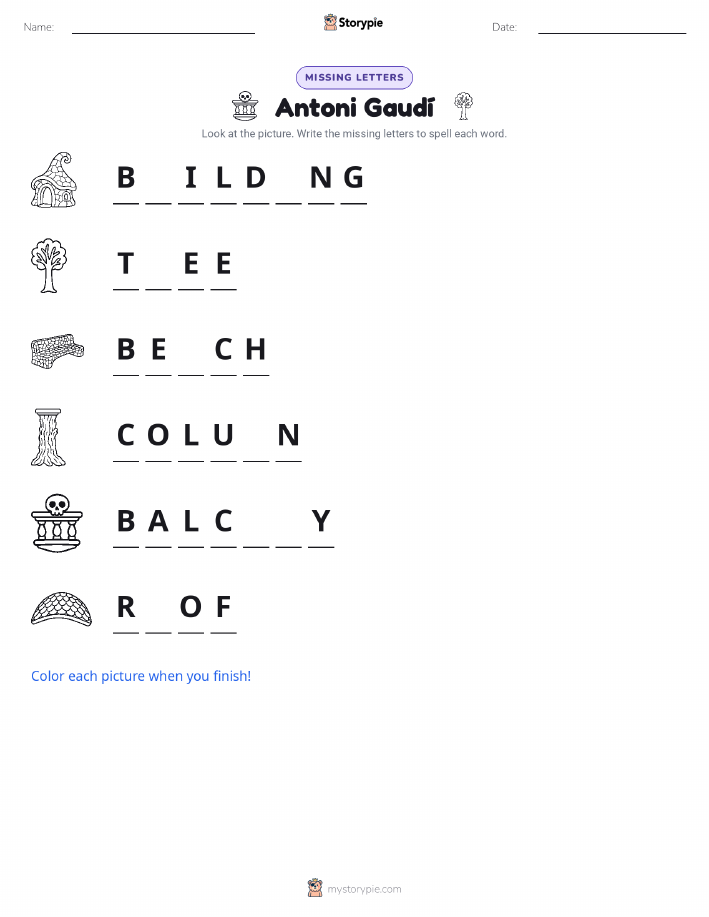
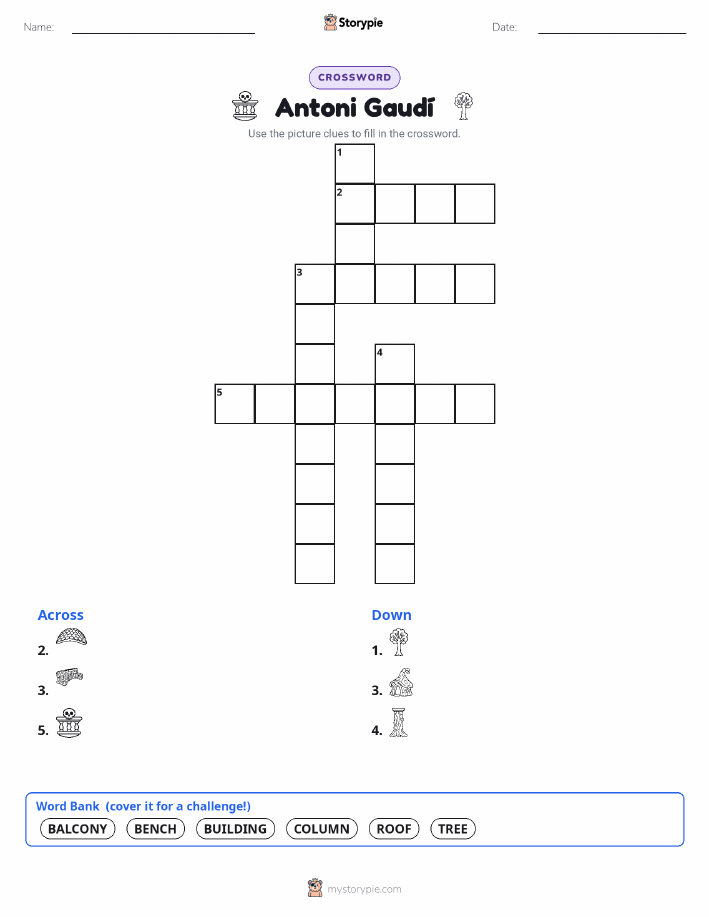
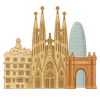
My unusual ideas needed someone who believed in them, and I was lucky to meet a kind man named Eusebi Güell. He became my good friend and supported my work, which allowed me to build some of my most famous creations. In 1900, I began designing Park Güell, which wasn't just a normal park but a magical garden city. One of its most famous parts is a long, wavy bench that looks like a sea serpent, covered in thousands of pieces of sparkly broken tiles. After that, I designed some amazing houses. In 1904, I worked on a building called Casa Batlló, which has a roof shaped like the back of a colorful dragon and balconies that look like masks. A couple of years later, in 1906, I designed Casa Milà. Its stone walls ripple and wave so much that people in the city gave it a nickname: 'La Pedrera,' which means 'The Stone Quarry.'
Of all my projects, there was one that was the most important to me. It was a giant church called the Sagrada Família, or the Holy Family. I took over the project in 1883 and worked on it for the rest of my life. I didn't want the inside of this church to be dark and gloomy. Instead, my plan was to make it feel like you were walking through a peaceful, sunlit forest. I designed towering columns that branch out near the ceiling, just like trees reaching for the sky. Light would pour in through colorful windows, making it feel like sunshine filtering through leaves. I knew this church was such a huge and detailed project that I would never see it finished in my lifetime. It was my special gift to the world, and I dedicated my final years to its design.
My life ended after an accident in the city of Barcelona in 1926. I lived to be 73 years old. Today, my colorful, curvy buildings are loved by people all over the world, and millions of visitors come to Barcelona every year just to see them. My greatest dream, the Sagrada Família, is still being built, growing taller and more beautiful every year. It shows everyone that beautiful ideas can continue to grow and inspire people long after you're gone.
Wow facts
About
Antoni Gaudí was a Spanish architect from Catalonia, famous for his unique style inspired by nature. He was the leading figure of the Catalan Modernisme movement, and his most famous work is the still-uncompleted church, La Sagrada Família, in Barcelona.
Take a Quiz
Question 1 of 5
Why did Gaudí spend so much time observing nature when he was a child?
Explore next

Want to do even more?
Go beyond exploring. Unlock tools that turn every story into real learning.

Storypie Plus for families
Full stories, quizzes, and printables. Nights and car rides, sorted.
- Unlimited audio stories
- Create Mode: your child stars in the story
- Offline downloads
- Printable worksheets & coloring pages

Why Storypie for Schools
Students engaged. Prep in seconds. Evenings back to you.
- Worksheets & Quizzes
- Classroom Management
- Formative Assessment
- Custom Curriculum & Lesson Plans
- 27 Languages

Why Storypie for Homeschool
Curriculum done. They'll ask for more. Hours back in your day.
- Worksheet Generator
- First-Person Audio Stories
- Built-in Comprehension Quizzes
- Custom Curriculum & Lesson Plans
- Print & Go Activities