English


Antoni Gaudí
Antoni Gaudí was a Spanish architect from Catalonia, famous for his unique style inspired by nature.
Reads at Grades 6–8 Listens at Grades 4–8
Print & create
Answer keys·No prep·Free with an account
28 worksheets · answer keys · full story · quiz · Ages 10-12 · CEFR B2
Plus adds 280,000+ more stories in 27 languages, audio for every one, and printables for all of them.
Just want Antoni Gaudí?
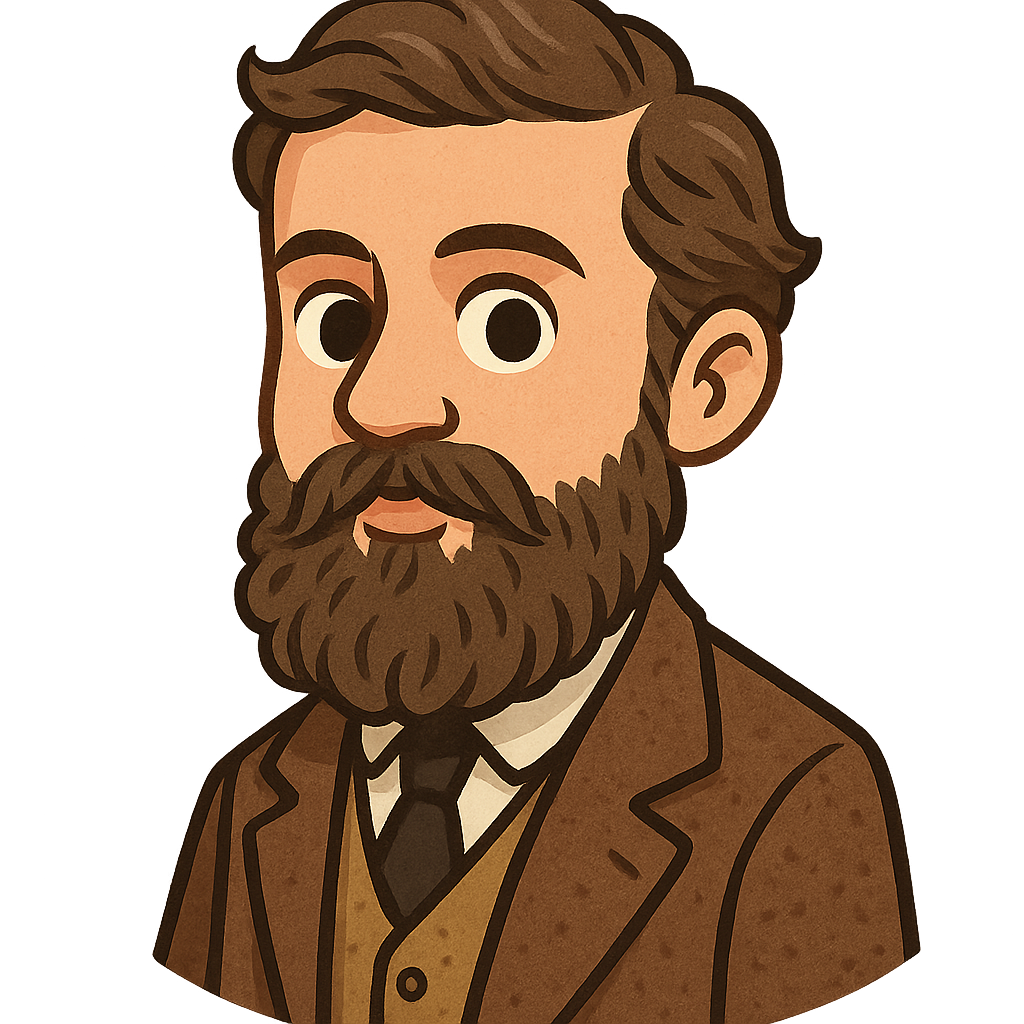
Hello, I am Antoni Gaudí, an architect from a region in Spain called Catalonia. I was born on June 25th, 1852, and from my earliest days, I was fascinated by the world around me. While other children might have been drawn to simple wooden blocks, my greatest inspiration was nature itself. I would spend hours looking at the way a tree branch curved towards the sky, how a mountain range rolled across the horizon, or how clouds drifted in soft, wonderful shapes. I realized something very important: nature almost never uses straight lines. This simple but powerful observation became the guiding principle for my entire life. I wanted to create buildings that felt as alive and natural as the world I loved so much, and this idea would shape every wall, roof, and window I ever designed.
When I was old enough, I knew I had to learn the official rules of building before I could begin to create my own. In 1869, I moved to the busy city of Barcelona to study architecture. It was an exciting time, but my ideas were not always understood. My professors were used to straight lines, perfect angles, and traditional designs. My drawings, full of curves and shapes inspired by plants and animals, often seemed strange to them. I was confident in my vision, though, and I believed that buildings could be both functional and beautiful, like sculptures you could live in. When I finally earned my degree in 1878, the director of the school made a famous comment. He said, 'We have given this academic title to a fool or a genius. Time will show.' I heard his words not as an insult, but as a challenge. I was determined to spend my life proving that I was a genius who simply saw the world in a different way.
Antoni Gaudí: Architect of Nature
Hello, I am Antoni Gaudí, an architect from a region in Spain called Catalonia. I was born on June 25th, 1852, and from my earliest days, I was fascinated by the world around me. While other children might have been drawn to simple wooden blocks, my greatest inspiration was nature itself. I would spend hours looking at the way a tree branch curved towards the sky, how a mountain range rolled across the horizon, or how clouds drifted in soft, wonderful shapes. I realized something very important: nature almost never uses straight lines. This simple but powerful observation became the guiding principle for my entire life. I wanted to create buildings that felt as alive and natural as the world I loved so much, and this idea would shape every wall, roof, and window I ever designed.
When I was old enough, I knew I had to learn the official rules of building before I could begin to create my own. In 1869, I moved to the busy city of Barcelona to study architecture. It was an exciting time, but my ideas were not always understood. My professors were used to straight lines, perfect angles, and traditional designs. My drawings, full of curves and shapes inspired by plants and animals, often seemed strange to them. I was confident in my vision, though, and I believed that buildings could be both functional and beautiful, like sculptures you could live in. When I finally earned my degree in 1878, the director of the school made a famous comment. He said, 'We have given this academic title to a fool or a genius. Time will show.' I heard his words not as an insult, but as a challenge. I was determined to spend my life proving that I was a genius who simply saw the world in a different way.
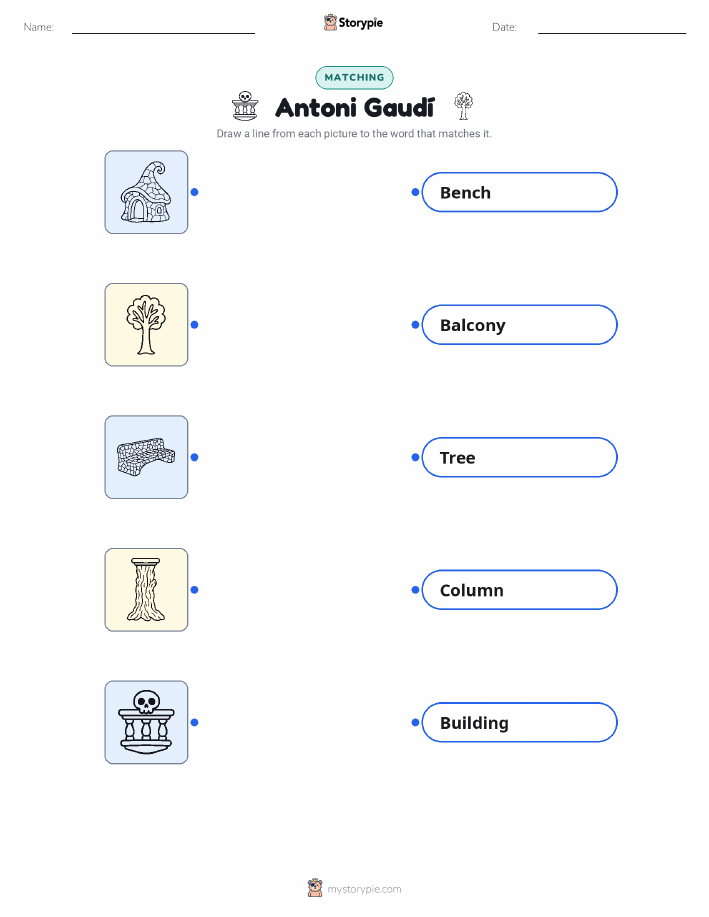
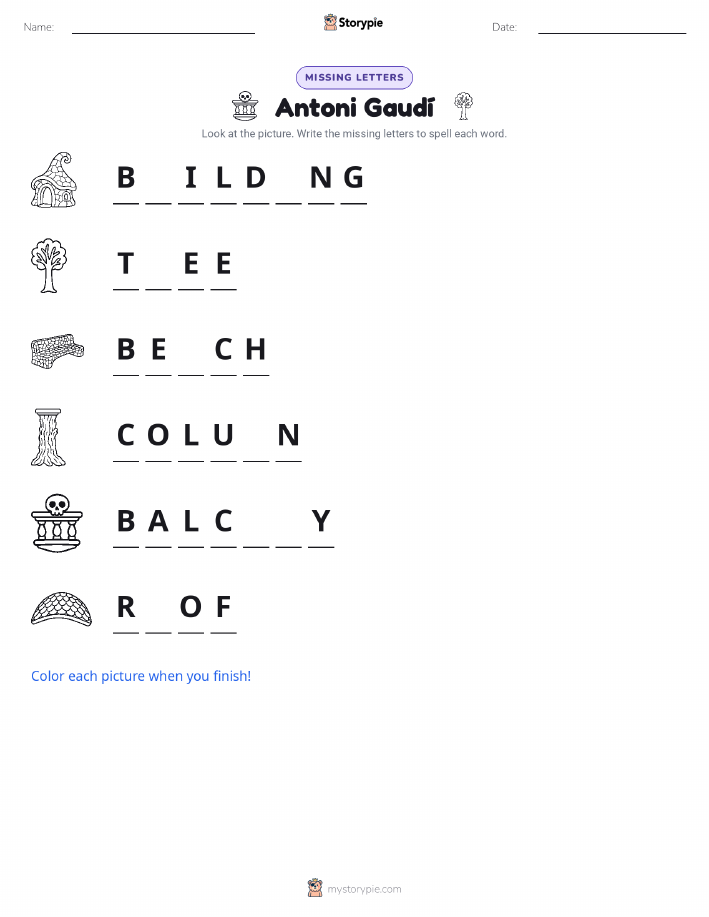
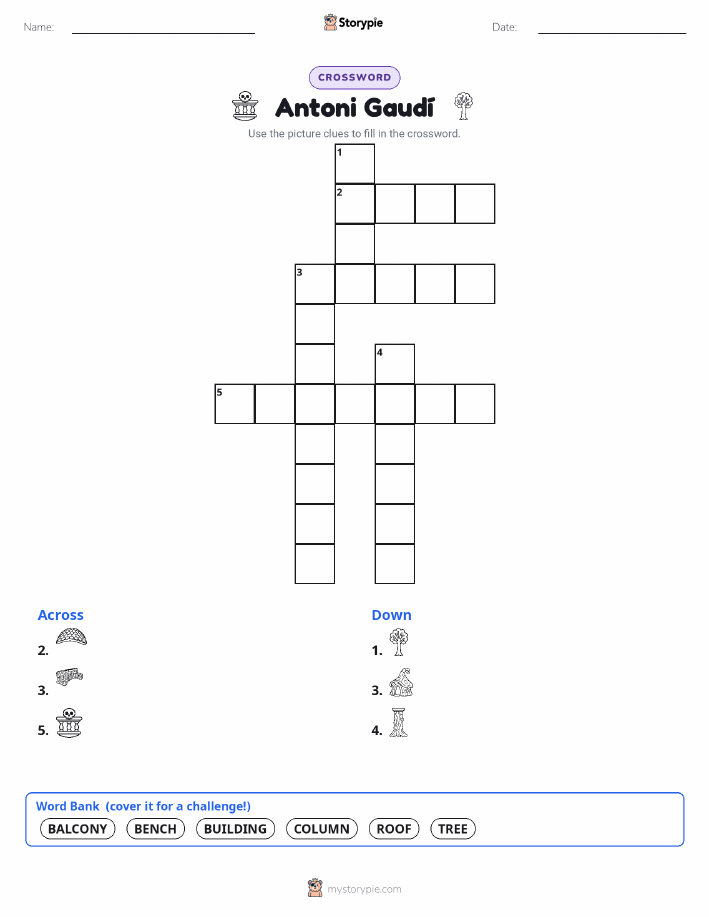
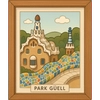
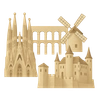
An artist with big ideas needs a supporter who shares their vision, and I found mine in a wealthy businessman named Eusebi Güell. Mr. Güell became more than just a client; he was a true friend who believed in my wildest ideas and gave me the artistic freedom to bring them to life. This was a perfect time for our partnership, as a new art movement called Catalan Modernisme was sweeping through Barcelona. It celebrated creativity, craftsmanship, and inspiration from nature—everything I believed in. For Mr. Güell, I designed one of my most joyful creations, Park Güell, which I worked on between 1900 and 1914. It was designed to be a magical public space. I created long, winding benches that snaked like a serpent, covering them in a mosaic of colorful broken tiles. This technique, called trencadís, allowed me to cover curved surfaces with vibrant patterns. I also designed columns that looked like massive tree trunks, making you feel as though you were walking through a stone forest.
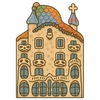
My work with Mr. Güell gave me the confidence to transform the city of Barcelona with my unique style. I wanted to design houses that didn't just provide shelter but also sparked the imagination. Between 1904 and 1906, I was asked to renovate a building that became known as Casa Batlló. I redesigned its front to look like it was made of bones and skulls, with balconies that resembled masks. The roof was covered in shimmering tiles, arching like the powerful back of a great dragon. A few years later, from 1906 to 1912, I built a new apartment building called Casa Milà. It quickly earned the nickname 'La Pedrera,' which means 'The Stone Quarry,' because its exterior was made of undulating stone that looked like a cliff face carved by the wind and sea. Inside, there were no two rooms shaped exactly alike, and the entire structure was built without a single straight wall on its facade.
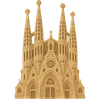
Of all my projects, one became my life's greatest passion: the Basílica de la Sagrada Família. I became the chief architect for this magnificent church in 1883 and dedicated the next 40 years of my life to its creation. It was more than just a building to me; it was my spiritual mission. I wanted it to be a 'cathedral for the poor,' a place where everyone could feel the wonder of creation. My design was inspired by a forest. I designed the interior columns to branch out near the ceiling, just like trees reaching for the sunlight. The light would filter through stained-glass windows, casting colorful patterns on the floor as if you were standing in a sun-dappled wood. I knew a project this grand would not be completed in my lifetime. So, I created detailed plans and three-dimensional models, trusting that future generations of architects and craftspeople would be able to continue my work exactly as I had envisioned it.
My life was devoted to my work. On June 7th, 1926, while taking my daily walk, I was struck by a city tram. Because I always dressed in simple, worn clothes, nobody recognized me as the famous architect of Barcelona. I lived to be 73 years old. My final resting place is in the crypt of my beloved Sagrada Família, the church that I poured my heart into. Today, many of my buildings, including Park Güell and Casa Milà, are celebrated as UNESCO World Heritage sites. Every year, people from all over the world travel to Barcelona to see the magical world I dreamed into existence, a world where buildings breathe and nature and architecture become one.
Wow facts
About
Antoni Gaudí was a Spanish architect from Catalonia, famous for his unique style inspired by nature. He was the leading figure of the Catalan Modernisme movement, and his most famous work is the still-uncompleted church, La Sagrada Família, in Barcelona.
Take a Quiz
Question 1 of 5
Based on the story, how would you summarize my architectural style?
Explore next

Want to do even more?
Go beyond exploring. Unlock tools that turn every story into real learning.

Storypie Plus for families
Full stories, quizzes, and printables. Nights and car rides, sorted.
- Unlimited audio stories
- Create Mode: your child stars in the story
- Offline downloads
- Printable worksheets & coloring pages

Why Storypie for Schools
Students engaged. Prep in seconds. Evenings back to you.
- Worksheets & Quizzes
- Classroom Management
- Formative Assessment
- Custom Curriculum & Lesson Plans
- 27 Languages

Why Storypie for Homeschool
Curriculum done. They'll ask for more. Hours back in your day.
- Worksheet Generator
- First-Person Audio Stories
- Built-in Comprehension Quizzes
- Custom Curriculum & Lesson Plans
- Print & Go Activities