English

Antonie van Leeuwenhoek
A Dutch scientist and businessman, known as the "Father of Microbiology…
Reads at Grades K-2 Listens at K–3
Print & create
Answer keys·No prep·Free with an account
28 worksheets · answer keys · full story · quiz · Ages 6-8 · CEFR A2
Plus adds 164,000+ more stories in 27 languages, audio for every one, and printables for all of them.
Just want Antonie van Leeuwenhoek?
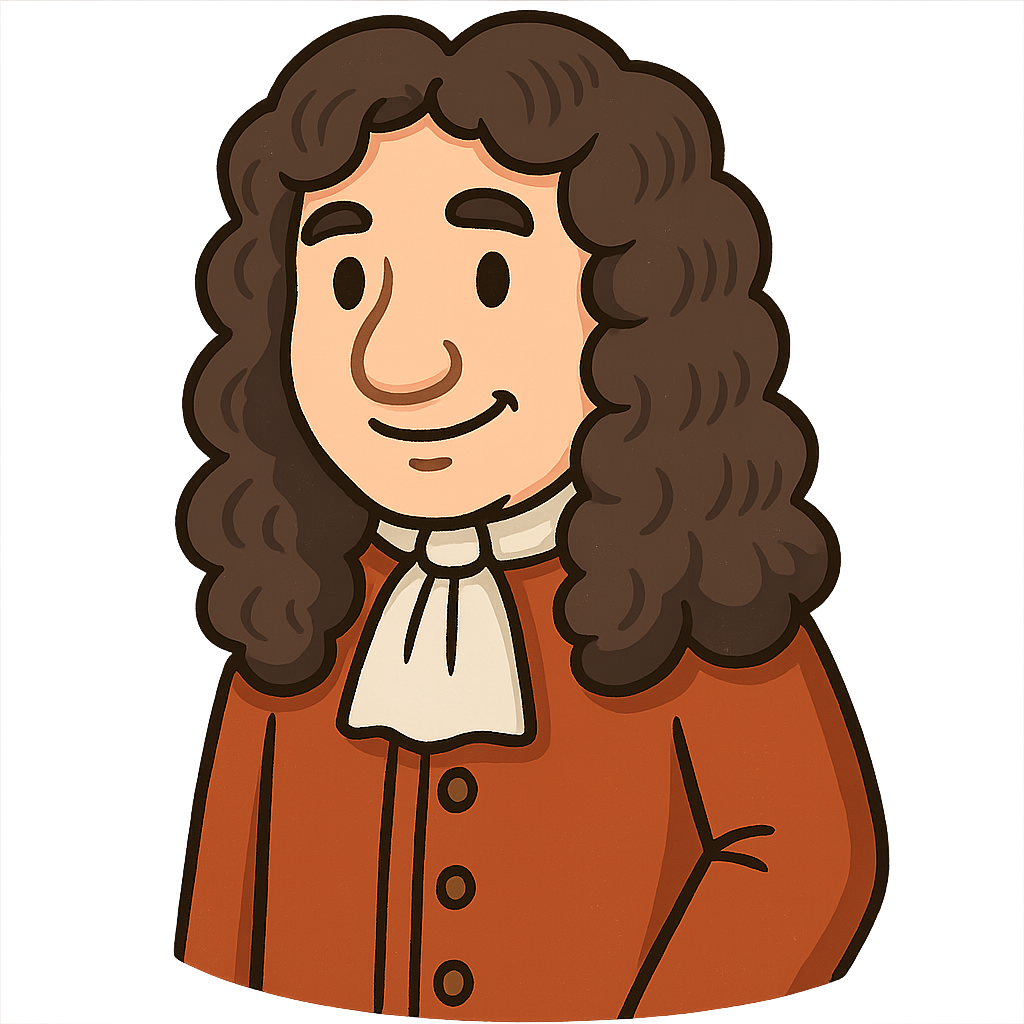
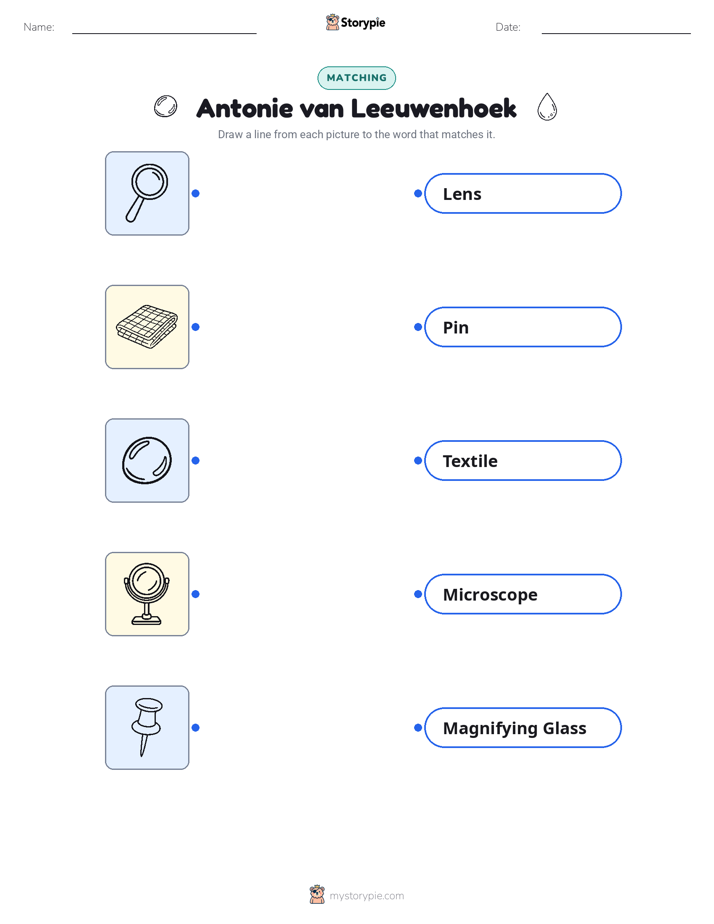
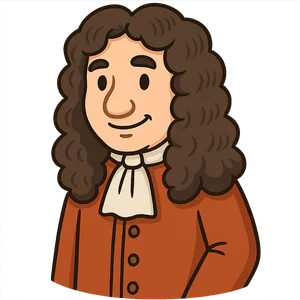
Hello! My name is Antonie van Leeuwenhoek, and I want to tell you about the amazing, tiny world I discovered. I was born in a town called Delft in the Netherlands, way back on October 24th, 1632. When I grew up, I became a draper, which is someone who sells cloth. My job was to make sure the cloth was high quality, so I used a magnifying glass to look very closely at the tiny threads. The more I looked, the more curious I became. I wondered what else I could see if I could just make things look even bigger. That little magnifying glass started me on a very big adventure to see a world no one had ever seen before.
My curiosity pushed me to learn something new. I decided to teach myself how to make my own magnifying glasses. These weren't just any magnifying glasses; they were very powerful. I would take a small piece of glass and carefully grind it and polish it into a tiny, curved lens. It was hard work, but I got very good at it. I made hundreds of these special lenses and built simple microscopes to hold them. A microscope is like a super-powered magnifying glass. It was so exciting! I would put all sorts of things under my lenses to see them up close. I looked at the eye of a fly, the sting of a bee, and even a single drop of water. I was seeing a secret, hidden world right in front of me.
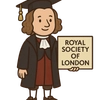
One day in 1676, I had the biggest surprise of my life. I put a drop of water from a nearby pond under one of my best microscopes. When I looked through the lens, I couldn't believe my eyes! The water was full of tiny creatures swimming and darting all around. They were so small you could never see them with just your eyes. I was amazed and called them 'animalcules,' which is a fancy word for 'little animals.' I knew I had to share what I found. I wrote many long letters to a group of very smart people in London called the Royal Society. I described everything I saw in great detail. They had never heard of anything like it and were very impressed with my discoveries.
Antonie van Leeuwenhoek: A Tiny, Hidden World
Hello! My name is Antonie van Leeuwenhoek, and I want to tell you about the amazing, tiny world I discovered. I was born in a town called Delft in the Netherlands, way back on October 24th, 1632. When I grew up, I became a draper, which is someone who sells cloth. My job was to make sure the cloth was high quality, so I used a magnifying glass to look very closely at the tiny threads. The more I looked, the more curious I became. I wondered what else I could see if I could just make things look even bigger. That little magnifying glass started me on a very big adventure to see a world no one had ever seen before.
My curiosity pushed me to learn something new. I decided to teach myself how to make my own magnifying glasses. These weren't just any magnifying glasses; they were very powerful. I would take a small piece of glass and carefully grind it and polish it into a tiny, curved lens. It was hard work, but I got very good at it. I made hundreds of these special lenses and built simple microscopes to hold them. A microscope is like a super-powered magnifying glass. It was so exciting! I would put all sorts of things under my lenses to see them up close. I looked at the eye of a fly, the sting of a bee, and even a single drop of water. I was seeing a secret, hidden world right in front of me.
One day in 1676, I had the biggest surprise of my life. I put a drop of water from a nearby pond under one of my best microscopes. When I looked through the lens, I couldn't believe my eyes! The water was full of tiny creatures swimming and darting all around. They were so small you could never see them with just your eyes. I was amazed and called them 'animalcules,' which is a fancy word for 'little animals.' I knew I had to share what I found. I wrote many long letters to a group of very smart people in London called the Royal Society. I described everything I saw in great detail. They had never heard of anything like it and were very impressed with my discoveries.
I spent the rest of my life looking through my microscopes and exploring the tiny world all around us. I lived to be 90 years old, and my curiosity never faded. Because I was the first person to see and describe bacteria and other microscopic life, people today call me the 'Father of Microbiology.' My work opened up a whole new part of science. The things I discovered help doctors and scientists understand how we get sick and how we can stay healthy. It all started with a simple magnifying glass and a lot of curiosity.
Wow facts
About
A Dutch scientist and businessman, known as the "Father of Microbiology," who was the first to observe and describe single-celled organisms, which he referred to as "little animals" in Dutch.
Take a Quiz
Question 1 of 4
What job did I have where I used a magnifying glass to look at threads?
Explore next

Want to do even more?
Go beyond exploring. Unlock tools that turn every story into real learning.

Storypie Plus for families
Full stories, quizzes, and printables. Nights and car rides, sorted.
- Unlimited audio stories
- Create Mode: your child stars in the story
- Offline downloads
- Printable worksheets & coloring pages

Why Storypie for Schools
Students engaged. Prep in seconds. Evenings back to you.
- Worksheets & Quizzes
- Classroom Management
- Formative Assessment
- Custom Curriculum & Lesson Plans
- 27 Languages

Why Storypie for Homeschool
Curriculum done. They'll ask for more. Hours back in your day.
- Worksheet Generator
- First-Person Audio Stories
- Built-in Comprehension Quizzes
- Custom Curriculum & Lesson Plans
- Print & Go Activities