English

Antonie van Leeuwenhoek
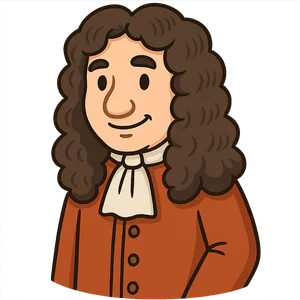
A Dutch scientist and businessman, known as the "Father of Microbiology…
Reads at Grades 3–5 Listens at Grades 1–5
Print & create
Answer keys·No prep·Free with an account
28 worksheets · answer keys · full story · quiz · Ages 8-10 · CEFR B1
Plus adds 164,000+ more stories in 27 languages, audio for every one, and printables for all of them.
Just want Antonie van Leeuwenhoek?
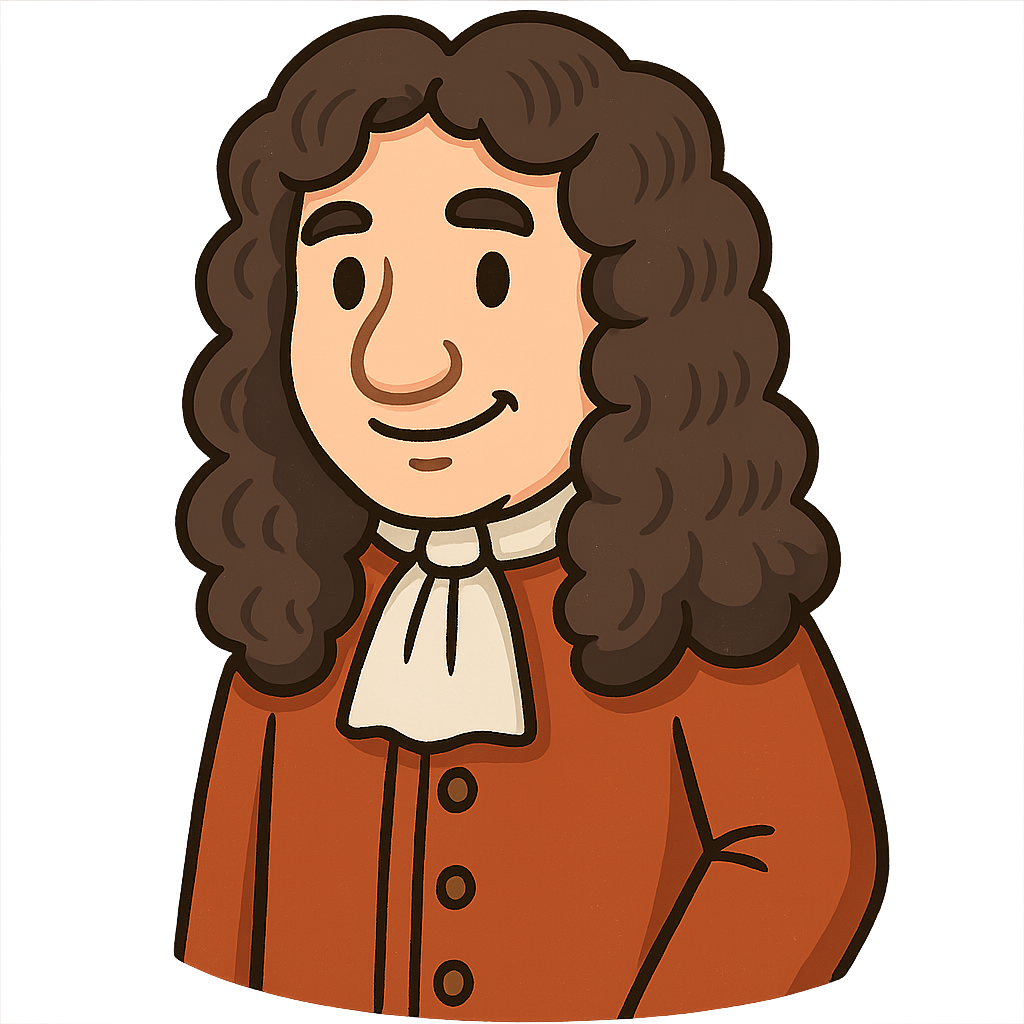
Hello! My name is Antonie van Leeuwenhoek, and I want to tell you about the tiny, secret world I discovered. I was born on October 24th, 1632, in a lovely city called Delft in the Netherlands. My father was a basket maker, but he passed away when I was just a boy. I didn’t go to a university like many famous scientists. Instead, when I was sixteen, around the year 1648, I moved to the big city of Amsterdam to become an apprentice in a draper's shop. That’s a fancy word for a person who sells cloth. I learned all about fabrics and how to run a business. In 1654, I moved back to my hometown of Delft to open my very own shop.
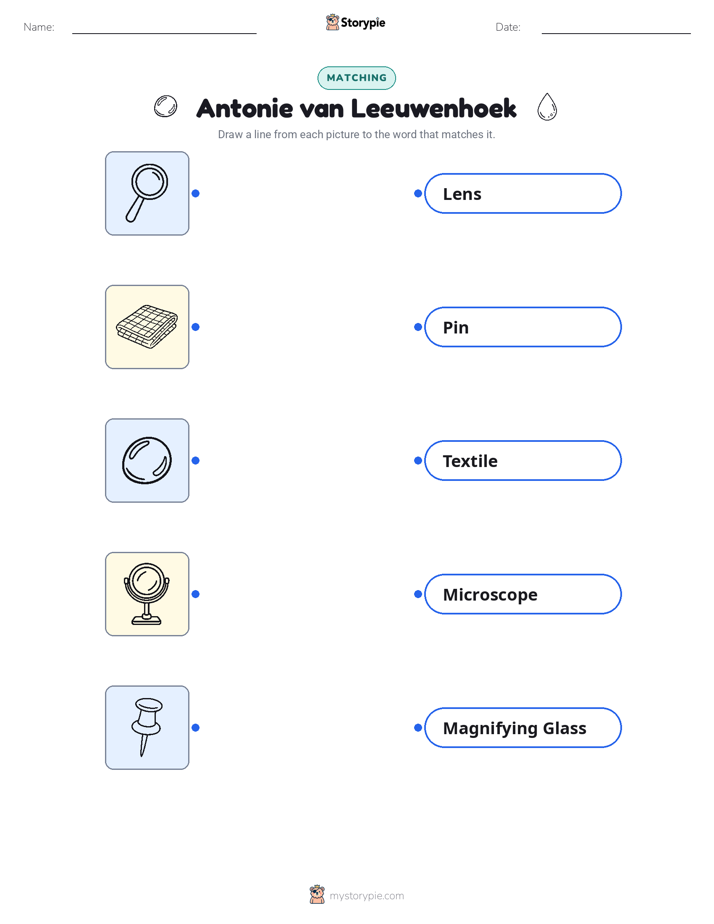
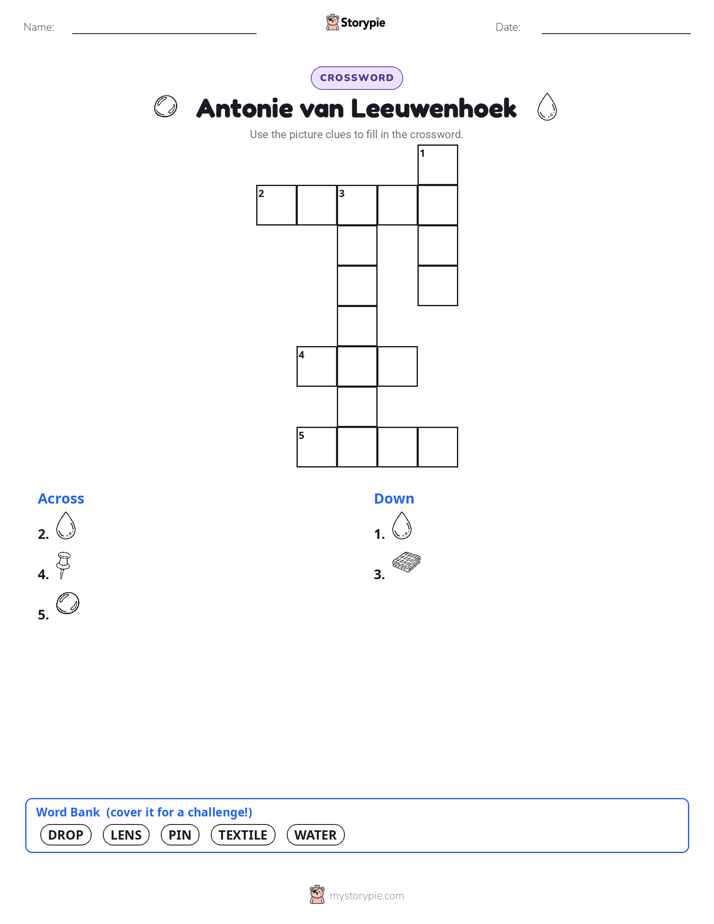
My job as a draper required me to look very closely at the threads in cloth to check their quality. I used magnifying glasses for this, and I became completely fascinated by them. I thought to myself, 'Could I make a better one?' So, I taught myself a new skill: lens grinding. I would take a tiny piece of glass and carefully grind and polish it for hours and hours until it was perfectly curved. My microscopes were very simple, just one powerful little lens mounted in a metal plate, but they were mighty! Some of my lenses could make things look over 200 times bigger than they really were. I made hundreds of them during my life, each one a little window into an unseen world.
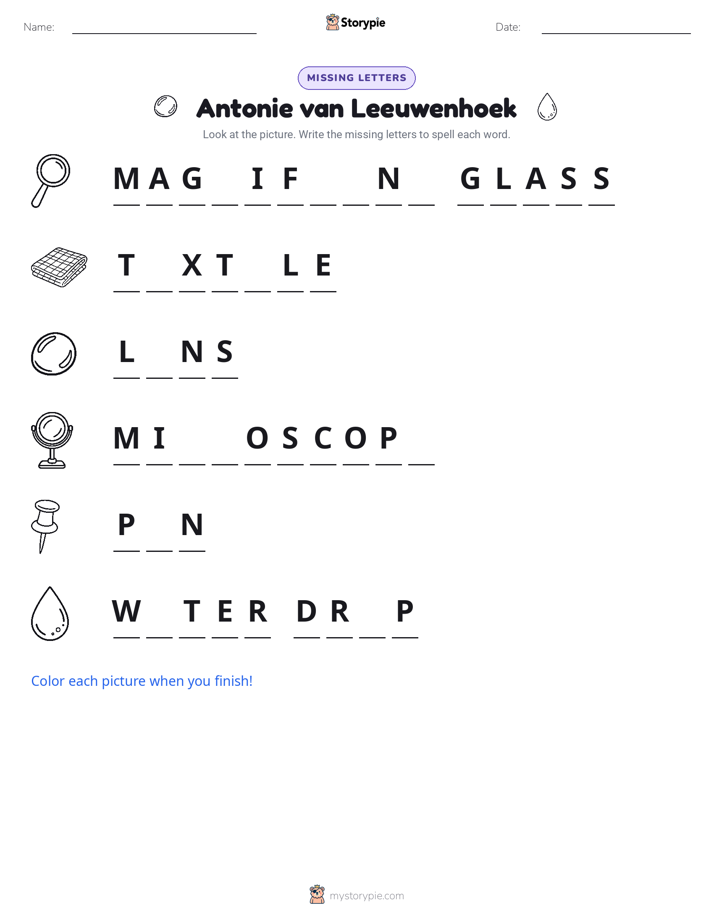
With my powerful new 'eyes,' I looked at everything I could find. I examined the sting of a bee, the head of a fly, and even the water from a puddle. One day, in 1674, I took a single drop of water from a lake and put it under my lens. I couldn't believe what I saw! The water was teeming with tiny creatures, swimming and darting about. They were alive! I called them my 'animalcules,' which means 'little animals.' A few years later, in 1677, I decided to look at the gunk I scraped from between my own teeth. And guess what? I found even more, even tinier, animalcules living there! Today, you know them as bacteria. I was the very first person in the world to see these microscopic beings.
Antonie van Leeuwenhoek: Discoverer of a Tiny World
Hello! My name is Antonie van Leeuwenhoek, and I want to tell you about the tiny, secret world I discovered. I was born on October 24th, 1632, in a lovely city called Delft in the Netherlands. My father was a basket maker, but he passed away when I was just a boy. I didn’t go to a university like many famous scientists. Instead, when I was sixteen, around the year 1648, I moved to the big city of Amsterdam to become an apprentice in a draper's shop. That’s a fancy word for a person who sells cloth. I learned all about fabrics and how to run a business. In 1654, I moved back to my hometown of Delft to open my very own shop.
My job as a draper required me to look very closely at the threads in cloth to check their quality. I used magnifying glasses for this, and I became completely fascinated by them. I thought to myself, 'Could I make a better one?' So, I taught myself a new skill: lens grinding. I would take a tiny piece of glass and carefully grind and polish it for hours and hours until it was perfectly curved. My microscopes were very simple, just one powerful little lens mounted in a metal plate, but they were mighty! Some of my lenses could make things look over 200 times bigger than they really were. I made hundreds of them during my life, each one a little window into an unseen world.
With my powerful new 'eyes,' I looked at everything I could find. I examined the sting of a bee, the head of a fly, and even the water from a puddle. One day, in 1674, I took a single drop of water from a lake and put it under my lens. I couldn't believe what I saw! The water was teeming with tiny creatures, swimming and darting about. They were alive! I called them my 'animalcules,' which means 'little animals.' A few years later, in 1677, I decided to look at the gunk I scraped from between my own teeth. And guess what? I found even more, even tinier, animalcules living there! Today, you know them as bacteria. I was the very first person in the world to see these microscopic beings.
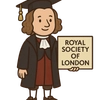
Seeing this secret world wasn't enough; I had to tell people about it! I wasn't a very good artist, so I hired an illustrator to draw everything I saw through my lenses. Starting in 1673, I began writing long letters to a famous group of scientists in England called the Royal Society of London. I described the animalcules in the water, the red cells that make up our blood, and so many other amazing things. At first, some of the scientists had a hard time believing me. Could there really be a world of invisible creatures? But I sent more letters and more proof, and eventually, they knew I was telling the truth. In 1680, they made me a member of their society, which was a great honor.
I never stopped looking through my microscopes. My curiosity about the tiny world around us lasted my entire life. I lived to be 90 years old, passing away in my beloved city of Delft on August 26th, 1723. People today call me the 'Father of Microbiology.' My discoveries opened up a whole new branch of science and showed us that even in a single drop of water, there is a universe of life waiting to be explored. So next time you see a puddle, just imagine the tiny animalcules swimming around inside!
Wow facts
About
A Dutch scientist and businessman, known as the "Father of Microbiology," who was the first to observe and describe single-celled organisms, which he referred to as "little animals" in Dutch.
Take a Quiz
Question 1 of 5
In the story, I call the tiny creatures I discovered 'animalcules.' What does that word mean?
Explore next


Want to do even more?
Go beyond exploring. Unlock tools that turn every story into real learning.

Storypie Plus for families
Full stories, quizzes, and printables. Nights and car rides, sorted.
- Unlimited audio stories
- Create Mode: your child stars in the story
- Offline downloads
- Printable worksheets & coloring pages

Why Storypie for Schools
Students engaged. Prep in seconds. Evenings back to you.
- Worksheets & Quizzes
- Classroom Management
- Formative Assessment
- Custom Curriculum & Lesson Plans
- 27 Languages

Why Storypie for Homeschool
Curriculum done. They'll ask for more. Hours back in your day.
- Worksheet Generator
- First-Person Audio Stories
- Built-in Comprehension Quizzes
- Custom Curriculum & Lesson Plans
- Print & Go Activities