English

Antonie van Leeuwenhoek
A Dutch scientist and businessman, known as the "Father of Microbiology…
Reads at Grades 6–8 Listens at Grades 4–8
Print & create
Answer keys·No prep·Free with an account
28 worksheets · answer keys · full story · quiz · Ages 10-12 · CEFR B2
Plus adds 164,000+ more stories in 27 languages, audio for every one, and printables for all of them.
Just want Antonie van Leeuwenhoek?
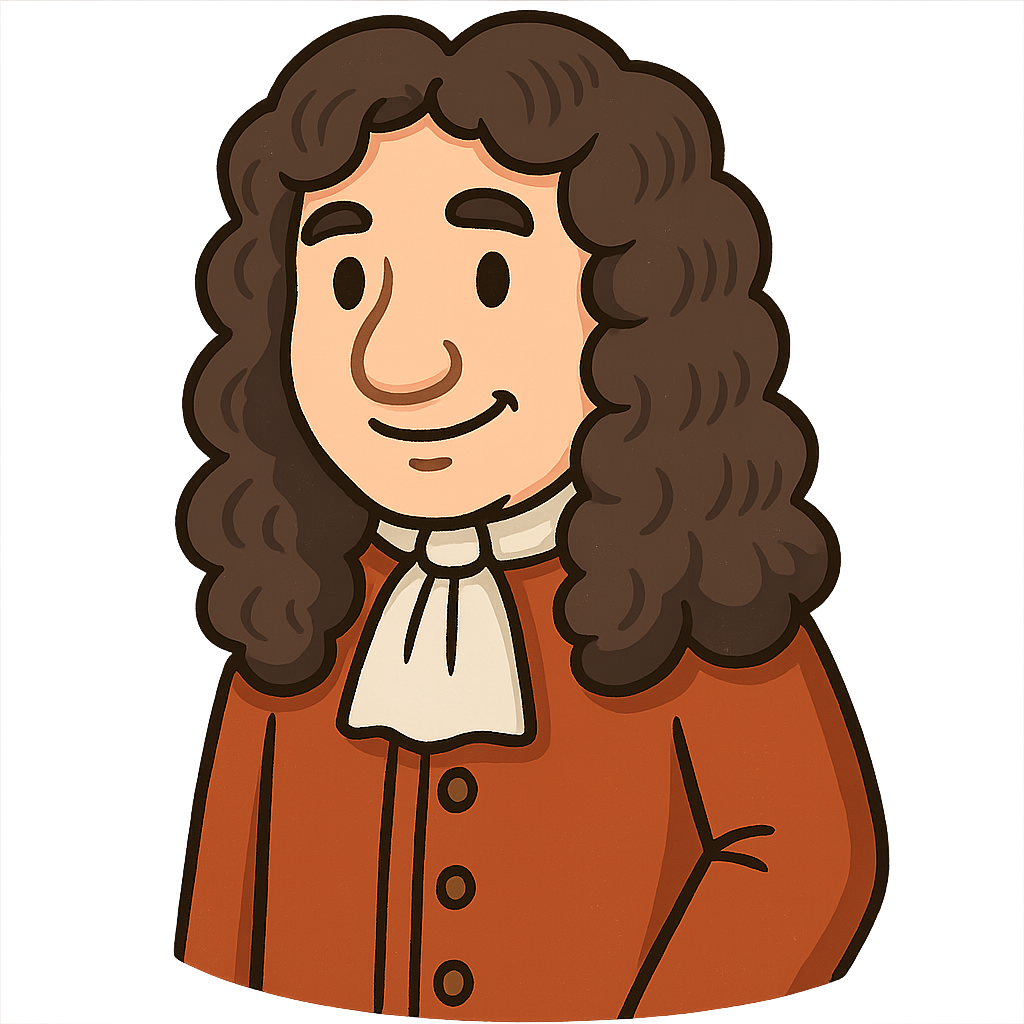
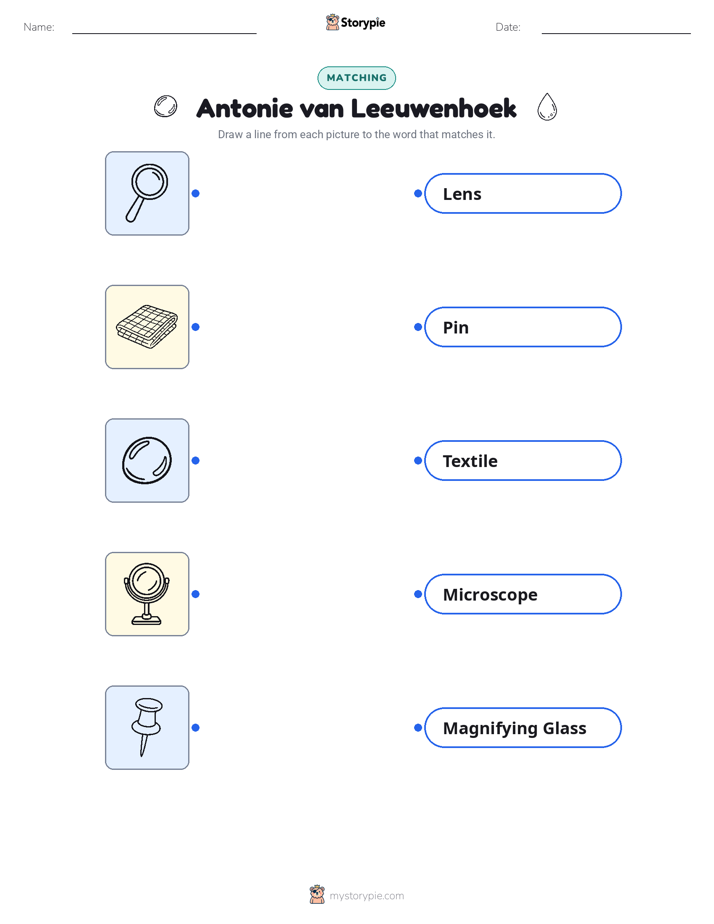
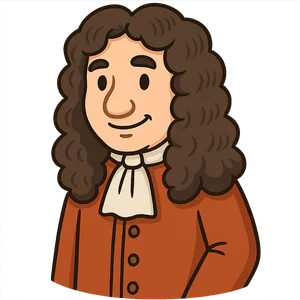
Hello, my name is Antonie van Leeuwenhoek, and I want to tell you about my life in the bustling city of Delft in the Netherlands. I was born here on October 24th, 1632, a time of great trade and exploration. But I wasn't a famous professor or a wealthy nobleman. I was a draper, a merchant who sold fine cloth and textiles to the people of my city. My work required a keen eye for detail. To make sure the threads in the fabrics were of the highest quality, I used small magnifying glasses. Holding these lenses up to the cloth, I could inspect every tiny fiber. This simple tool, used every day in my trade, sparked a tremendous curiosity within me. I began to wonder what else I could see if I could just make things appear a little bigger. This curiosity about the unseen world became the passion of my life, leading me far beyond the threads of my draper shop and into a world no one had ever imagined existed.
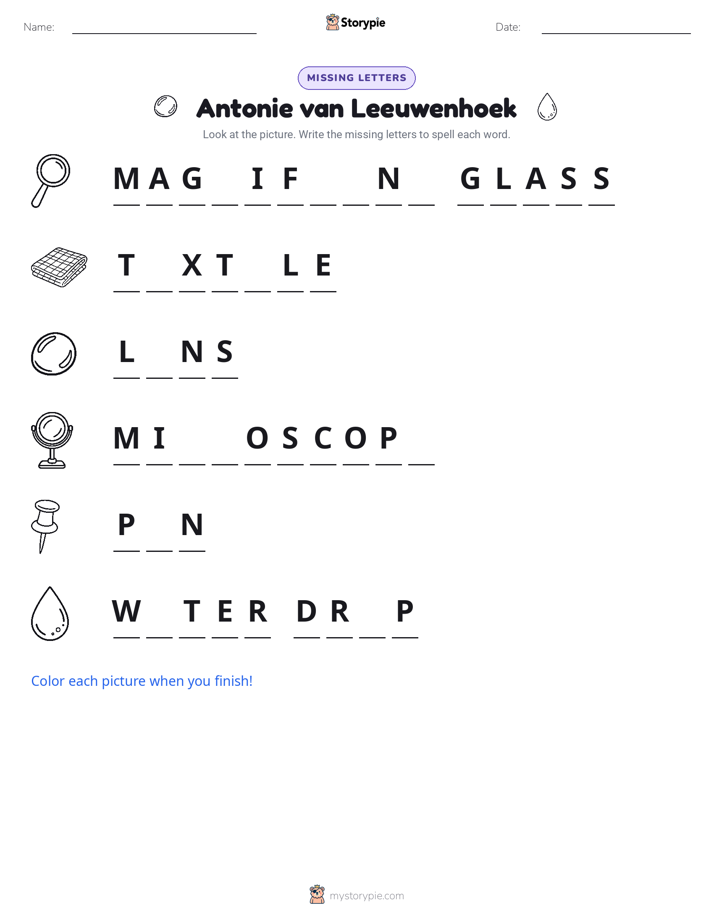
My fascination with magnifying glasses soon grew into a unique hobby. Instead of buying lenses, I decided to make my own. This was not an easy task. I spent countless hours in my workshop, carefully grinding and polishing tiny pieces of glass. It was a painstaking process that required immense patience and a steady hand. I shaped lenses so small that some were no bigger than the head of a pin. Then, I mounted each one into a small metal plate, usually made of brass or silver, creating my own special microscopes. While other scientists in the 1670s were using complex microscopes with multiple lenses, mine were very simple, with just a single, powerful lens. But because of the skill I developed in grinding them, my simple devices were far more powerful. They could magnify objects more than 200 times their actual size. Over my lifetime, I crafted hundreds of these 'seeing glasses,' but I always kept my methods for making the very best lenses a complete secret.
Antonie van Leeuwenhoek: The Father of Microbiology
Hello, my name is Antonie van Leeuwenhoek, and I want to tell you about my life in the bustling city of Delft in the Netherlands. I was born here on October 24th, 1632, a time of great trade and exploration. But I wasn't a famous professor or a wealthy nobleman. I was a draper, a merchant who sold fine cloth and textiles to the people of my city. My work required a keen eye for detail. To make sure the threads in the fabrics were of the highest quality, I used small magnifying glasses. Holding these lenses up to the cloth, I could inspect every tiny fiber. This simple tool, used every day in my trade, sparked a tremendous curiosity within me. I began to wonder what else I could see if I could just make things appear a little bigger. This curiosity about the unseen world became the passion of my life, leading me far beyond the threads of my draper shop and into a world no one had ever imagined existed.
My fascination with magnifying glasses soon grew into a unique hobby. Instead of buying lenses, I decided to make my own. This was not an easy task. I spent countless hours in my workshop, carefully grinding and polishing tiny pieces of glass. It was a painstaking process that required immense patience and a steady hand. I shaped lenses so small that some were no bigger than the head of a pin. Then, I mounted each one into a small metal plate, usually made of brass or silver, creating my own special microscopes. While other scientists in the 1670s were using complex microscopes with multiple lenses, mine were very simple, with just a single, powerful lens. But because of the skill I developed in grinding them, my simple devices were far more powerful. They could magnify objects more than 200 times their actual size. Over my lifetime, I crafted hundreds of these 'seeing glasses,' but I always kept my methods for making the very best lenses a complete secret.
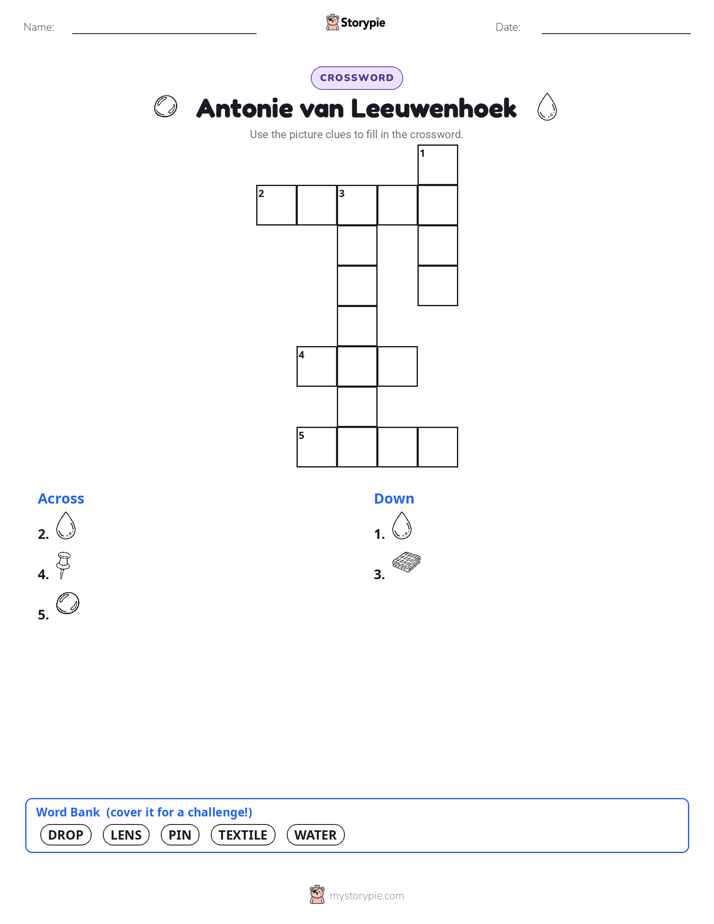
One day in 1674, my secret hobby led to the most exciting discovery of my life. I decided to examine a single drop of water I had collected from a nearby lake. I carefully placed the water on the pin of one of my best microscopes and peered through the lens. What I saw left me in a state of utter astonishment. The tiny, clear drop of water was not empty at all. It was a bustling, hidden world teeming with thousands of microscopic creatures. They were swimming, spinning, and darting about in every direction. I had never seen anything like it, and I knew no one else had either. I called these tiny living things 'animalcules,' which simply means 'little animals.' This was the first time in history that a human being had ever seen bacteria and other microorganisms. My curiosity didn't stop there. I scraped a bit of plaque from between my own teeth, placed it under my lens, and found even more of these tiny, living creatures. An invisible world was all around us, and I was the first person to see it.
I knew I had to share what I had found, but as a simple draper, I had to find a way to reach the great scientific minds of my time. I began writing long, detailed letters to a very famous group of scientists in England called the Royal Society of London. In these letters, I described everything I saw through my lenses, from the 'animalcules' in water to the fibers in a muscle. In all, I sent over one hundred letters. At first, around 1676, the learned men of the society were skeptical. They found it hard to believe that a world of tiny creatures, invisible to the naked eye, could possibly exist. My claims were so extraordinary that they sent a team of respected scientists all the way to Delft just to verify my work. When they looked through my microscopes and saw the teeming world I had described, they were completely amazed. My discoveries were confirmed, and in 1680, the Royal Society gave me a great honor by electing me as a member. It was a remarkable achievement for a man like me, with no university degrees or formal scientific training.
I continued my observations for nearly 50 years, always driven by an insatiable curiosity to see what others could not. My work was my greatest joy. I lived a very long and full life and reached the age of 90 years old. Today, I am remembered as the 'Father of Microbiology.' My simple, homemade lenses unlocked a secret of nature and opened the door to a whole new branch of science. By proving that a vast, invisible world of life exists all around us and even inside us, my discoveries forever changed how we understand health, disease, and the very nature of life itself. My story shows that with curiosity and determination, anyone can uncover the wonders of the world.
Wow facts
About
A Dutch scientist and businessman, known as the "Father of Microbiology," who was the first to observe and describe single-celled organisms, which he referred to as "little animals" in Dutch.
Take a Quiz
Question 1 of 5
What does the word 'animalcules' mean, and how did Antonie van Leeuwenhoek show his astonishment when he discovered them?
Explore next




Want to do even more?
Go beyond exploring. Unlock tools that turn every story into real learning.

Storypie Plus for families
Full stories, quizzes, and printables. Nights and car rides, sorted.
- Unlimited audio stories
- Create Mode: your child stars in the story
- Offline downloads
- Printable worksheets & coloring pages

Why Storypie for Schools
Students engaged. Prep in seconds. Evenings back to you.
- Worksheets & Quizzes
- Classroom Management
- Formative Assessment
- Custom Curriculum & Lesson Plans
- 27 Languages

Why Storypie for Homeschool
Curriculum done. They'll ask for more. Hours back in your day.
- Worksheet Generator
- First-Person Audio Stories
- Built-in Comprehension Quizzes
- Custom Curriculum & Lesson Plans
- Print & Go Activities