English

Arthur Eddington
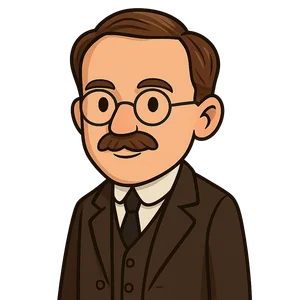
Sir Arthur Eddington was a British astronomer, physicist…
Reads at Grades 6–8 Listens at Grades 4–8
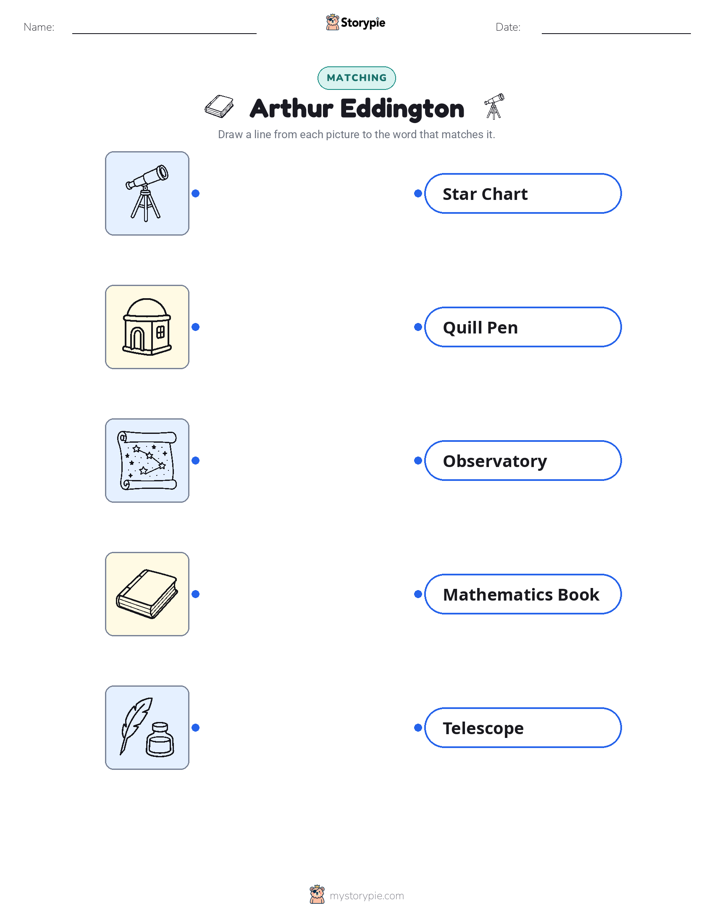
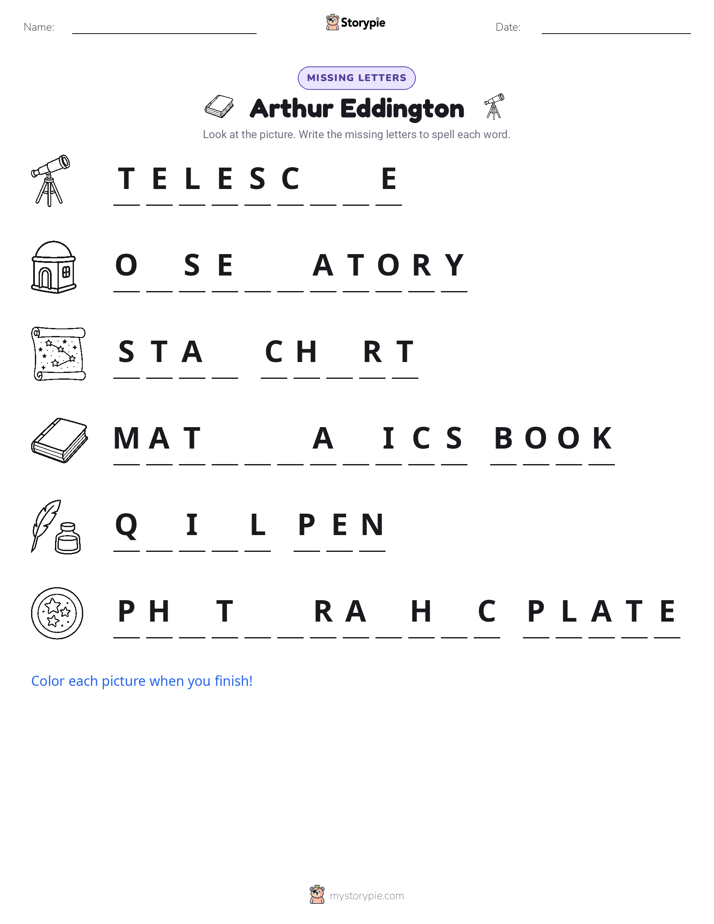
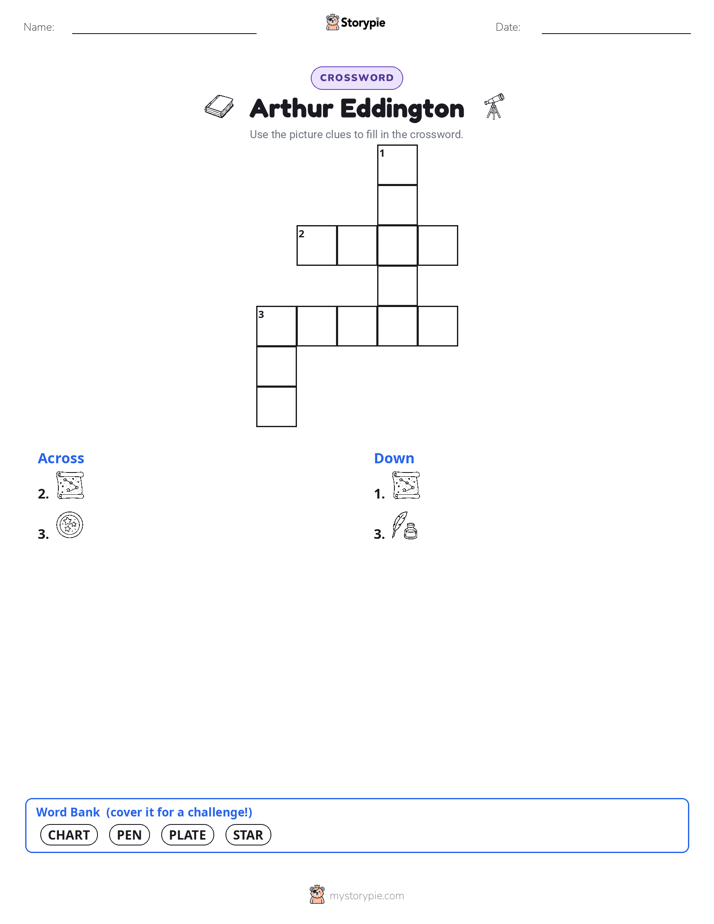
Print & create
Answer keys·No prep·Free with an account
28 worksheets · answer keys · full story · quiz · Ages 10-12 · CEFR B2
Plus adds 244,000+ more stories in 27 languages, audio for every one, and printables for all of them.
Just want Arthur Eddington?
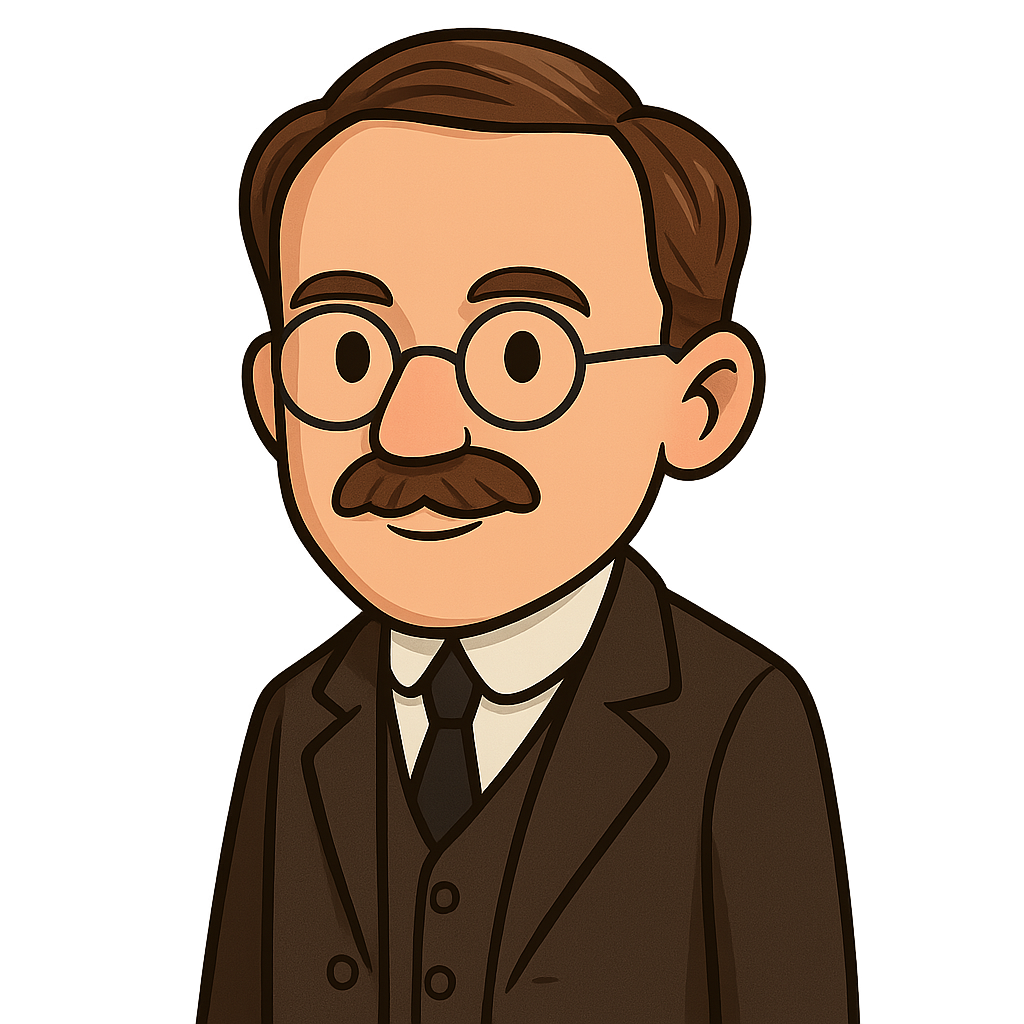
Hello, my name is Sir Arthur Eddington, and I'd like to tell you about my journey exploring the biggest secrets of the universe. I was born on December 28th, 1882, in a small town called Kendal in England. Even as a young boy, I was fascinated by two things: the endless night sky filled with twinkling stars and the beautiful logic of mathematics. After my father passed away when I was very young, my mother and I moved, and I threw myself into my studies. I loved solving puzzles and learning how the world worked. In 1902, I graduated from Owens College and then went to the famous University of Cambridge. There, in 1905, I managed to become the first student in their second year to earn the top honor in mathematics, which was quite a surprise to everyone!
After Cambridge, I began my career as an astronomer, and in 1906 I started working at the Royal Observatory in Greenwich. My job was to map the stars, but my mind was always wondering about the 'why' behind them. During the difficult time of World War I, it was hard for British scientists like me to get news from German scientists. But in 1916, a strange and wonderful paper made its way to me. It was from a man named Albert Einstein, and it described his theory of general relativity. It was a completely new way of thinking about gravity! He said that gravity wasn't a force pulling us down, but rather a curve in space and time itself, created by massive objects like the Sun. Imagine placing a heavy ball on a rubber sheet—it creates a dip, and smaller marbles rolling by will curve toward it. That, he said, is why planets orbit the Sun.
Sir Arthur Eddington: The Man Who Weighed the Stars
Hello, my name is Sir Arthur Eddington, and I'd like to tell you about my journey exploring the biggest secrets of the universe. I was born on December 28th, 1882, in a small town called Kendal in England. Even as a young boy, I was fascinated by two things: the endless night sky filled with twinkling stars and the beautiful logic of mathematics. After my father passed away when I was very young, my mother and I moved, and I threw myself into my studies. I loved solving puzzles and learning how the world worked. In 1902, I graduated from Owens College and then went to the famous University of Cambridge. There, in 1905, I managed to become the first student in their second year to earn the top honor in mathematics, which was quite a surprise to everyone!
After Cambridge, I began my career as an astronomer, and in 1906 I started working at the Royal Observatory in Greenwich. My job was to map the stars, but my mind was always wondering about the 'why' behind them. During the difficult time of World War I, it was hard for British scientists like me to get news from German scientists. But in 1916, a strange and wonderful paper made its way to me. It was from a man named Albert Einstein, and it described his theory of general relativity. It was a completely new way of thinking about gravity! He said that gravity wasn't a force pulling us down, but rather a curve in space and time itself, created by massive objects like the Sun. Imagine placing a heavy ball on a rubber sheet—it creates a dip, and smaller marbles rolling by will curve toward it. That, he said, is why planets orbit the Sun.
I was fascinated by Einstein's idea, but a scientific theory needs proof. His theory made a very specific prediction: if space itself is curved by the Sun, then the light from distant stars should bend as it passes by the Sun on its way to Earth. The only problem was that you can't see stars during the day because the Sun is too bright. The only time it would be possible to test this was during a total solar eclipse, when the Moon perfectly blocks the Sun's light. A perfect opportunity was coming up on May 29th, 1919. So, I organized two teams of scientists. I led one team to the island of Príncipe off the coast of Africa, while another team went to Sobral, Brazil. During the precious few minutes of total darkness, we took photographs of the stars near the Sun. Months later, back in England, we carefully measured the positions of the stars on our photographic plates. They had moved, just as Einstein predicted! Our discovery was announced in November 1919 and made headlines around the world, proving Einstein's theory and changing our understanding of the universe forever.
After the excitement of the eclipse, I turned my attention back to the stars themselves. I wanted to know what they were made of and what made them shine so brightly for billions of years. In 1920, I proposed a very bold idea. I suggested that the centers of stars were incredibly hot and dense, and that they were powered by turning hydrogen into helium. This process, which we now call nuclear fusion, releases a tremendous amount of energy—the very energy that makes stars shine. Many scientists at the time thought my idea was just speculation, but it turned out to be the correct answer to one of astronomy's biggest mysteries. I also loved to share my passion for the cosmos, so I wrote many books for the public, explaining these amazing ideas in ways everyone could understand.
I spent the rest of my career at Cambridge, always asking new questions about the universe. For my work, I was made a knight by the king in 1930. I lived to be 61 years old, continuing my research until I passed away in 1944. Today, I am remembered as one of the founders of modern astrophysics. People remember me for providing the first proof of Einstein's theory of general relativity and for being the first to understand that the stars are powered by nuclear energy. My work helped us see the universe not just as a collection of lights in the sky, but as a place full of incredible physics waiting to be discovered.
Wow facts
About
Sir Arthur Eddington was a British astronomer, physicist, and mathematician famous for his work on the theory of relativity and for proposing that stars get their energy from a process called nuclear fusion. He led the 1919 eclipse expedition that provided the first confirmation of Einstein's theory of general relativity.
Take a Quiz
Question 1 of 5
What was the main problem I faced when trying to prove Einstein's theory, and how did I solve it?
Explore next





Want to do even more?
Go beyond exploring. Unlock tools that turn every story into real learning.

Storypie Plus for families
Full stories, quizzes, and printables. Nights and car rides, sorted.
- Unlimited audio stories
- Create Mode: your child stars in the story
- Offline downloads
- Printable worksheets & coloring pages

Why Storypie for Schools
Students engaged. Prep in seconds. Evenings back to you.
- Worksheets & Quizzes
- Classroom Management
- Formative Assessment
- Custom Curriculum & Lesson Plans
- 27 Languages

Why Storypie for Homeschool
Curriculum done. They'll ask for more. Hours back in your day.
- Worksheet Generator
- First-Person Audio Stories
- Built-in Comprehension Quizzes
- Custom Curriculum & Lesson Plans
- Print & Go Activities