English

Arthur Eddington
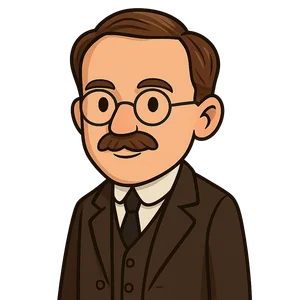
Sir Arthur Eddington was a British astronomer, physicist…
Reads at Grades K-2 Listens at K–3
Print & create
Answer keys·No prep·Free with an account
28 worksheets · answer keys · full story · quiz · Ages 6-8 · CEFR A2
Plus adds 244,000+ more stories in 27 languages, audio for every one, and printables for all of them.
Just want Arthur Eddington?
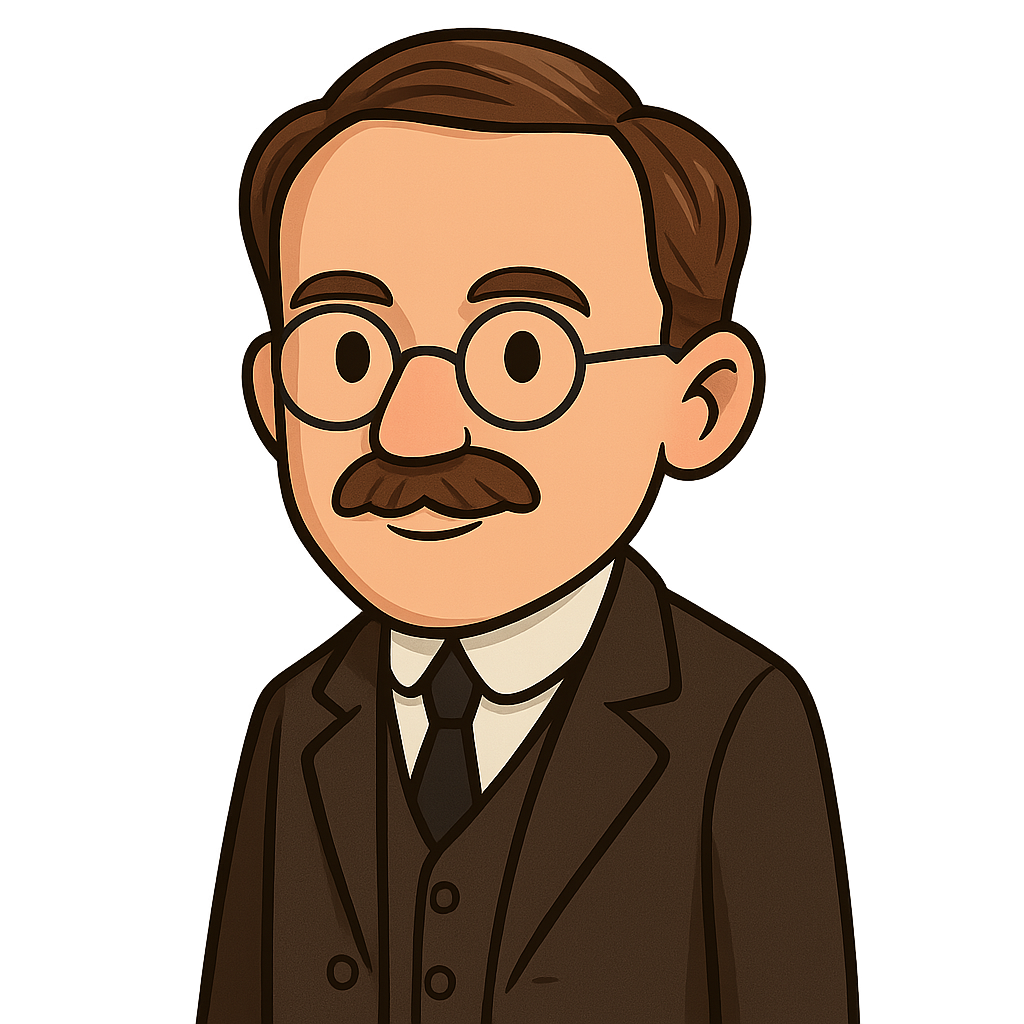
Hello, I'm Arthur Eddington. I was born in a town called Kendal in England, on December 28th, 1882. When I was a boy, I loved gazing at the night sky more than anything. The twinkling stars seemed like a giant puzzle waiting to be solved. I also enjoyed playing with numbers and finding out how things worked. All of this made me dream of one day becoming an astronomer, a person who could spend their life learning about the secrets of the stars.
An astronomer is a special kind of scientist who studies everything in outer space, like planets, stars, and galaxies. In my work, I heard about a brilliant idea from another scientist named Albert Einstein. In 1915, he shared his General Theory of Relativity. It sounds complicated, but his idea was like a science-fiction story come to life. He thought that something really, really big, like our sun, had so much gravity that it could actually bend the light from stars that were far, far behind it. Imagine placing a heavy bowling ball on a stretchy sheet—it creates a dip. That’s what the sun does to space, and starlight follows that curve.
I thought this idea was amazing, and I wanted to see if it was true. But there was a problem. You can’t see the stars near the sun during the daytime because the sun is just too bright. The only time you can is during a total solar eclipse, which is when the moon moves perfectly in front of the sun and makes the sky dark for a few minutes. So, I made a plan for a great adventure. In the year 1919, my team and I sailed to a small island called Príncipe, off the coast of Africa. We set up our cameras and telescopes. On May 29th, we waited with excitement. As the moon covered the sun, the world went dark, and we began taking pictures of the stars that appeared in the dim light.
Arthur Eddington: The Star Detective
Hello, I'm Arthur Eddington. I was born in a town called Kendal in England, on December 28th, 1882. When I was a boy, I loved gazing at the night sky more than anything. The twinkling stars seemed like a giant puzzle waiting to be solved. I also enjoyed playing with numbers and finding out how things worked. All of this made me dream of one day becoming an astronomer, a person who could spend their life learning about the secrets of the stars.
An astronomer is a special kind of scientist who studies everything in outer space, like planets, stars, and galaxies. In my work, I heard about a brilliant idea from another scientist named Albert Einstein. In 1915, he shared his General Theory of Relativity. It sounds complicated, but his idea was like a science-fiction story come to life. He thought that something really, really big, like our sun, had so much gravity that it could actually bend the light from stars that were far, far behind it. Imagine placing a heavy bowling ball on a stretchy sheet—it creates a dip. That’s what the sun does to space, and starlight follows that curve.
I thought this idea was amazing, and I wanted to see if it was true. But there was a problem. You can’t see the stars near the sun during the daytime because the sun is just too bright. The only time you can is during a total solar eclipse, which is when the moon moves perfectly in front of the sun and makes the sky dark for a few minutes. So, I made a plan for a great adventure. In the year 1919, my team and I sailed to a small island called Príncipe, off the coast of Africa. We set up our cameras and telescopes. On May 29th, we waited with excitement. As the moon covered the sun, the world went dark, and we began taking pictures of the stars that appeared in the dim light.
After the eclipse was over, we carefully packed up our photographic plates and traveled home. I could hardly wait to develop them in my darkroom. When I finally saw the pictures, my heart beat with excitement. I compared them to pictures of the same stars taken at a different time of year. Just as Albert Einstein had predicted, the stars in my eclipse photos seemed to be in a slightly different spot. This was the proof we needed. Their light had bent as it passed by the sun's powerful gravity. Our discovery showed that Einstein’s amazing idea was correct, and it changed how all scientists understood the universe from that day on.
I spent the rest of my life studying the stars and unlocking their mysteries. I lived to be 61 years old. I am remembered for helping prove a whole new way of looking at our universe. I hope my story encourages you to look up at the night sky, ask big questions, and always stay curious about the wonderful world around you.
Wow facts
About
Sir Arthur Eddington was a British astronomer, physicist, and mathematician famous for his work on the theory of relativity and for proposing that stars get their energy from a process called nuclear fusion. He led the 1919 eclipse expedition that provided the first confirmation of Einstein's theory of general relativity.
Take a Quiz
Question 1 of 4
Why did I need a solar eclipse to test Albert Einstein's idea?
Explore next






Want to do even more?
Go beyond exploring. Unlock tools that turn every story into real learning.

Storypie Plus for families
Full stories, quizzes, and printables. Nights and car rides, sorted.
- Unlimited audio stories
- Create Mode: your child stars in the story
- Offline downloads
- Printable worksheets & coloring pages

Why Storypie for Schools
Students engaged. Prep in seconds. Evenings back to you.
- Worksheets & Quizzes
- Classroom Management
- Formative Assessment
- Custom Curriculum & Lesson Plans
- 27 Languages

Why Storypie for Homeschool
Curriculum done. They'll ask for more. Hours back in your day.
- Worksheet Generator
- First-Person Audio Stories
- Built-in Comprehension Quizzes
- Custom Curriculum & Lesson Plans
- Print & Go Activities