English

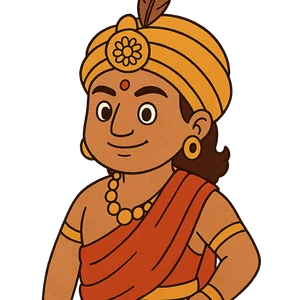
Ashoka the Great
Ashoka the Great was the third emperor of the Mauryan Empire in ancient India who…
Reads at Grades 6–8 Listens at Grades 4–8
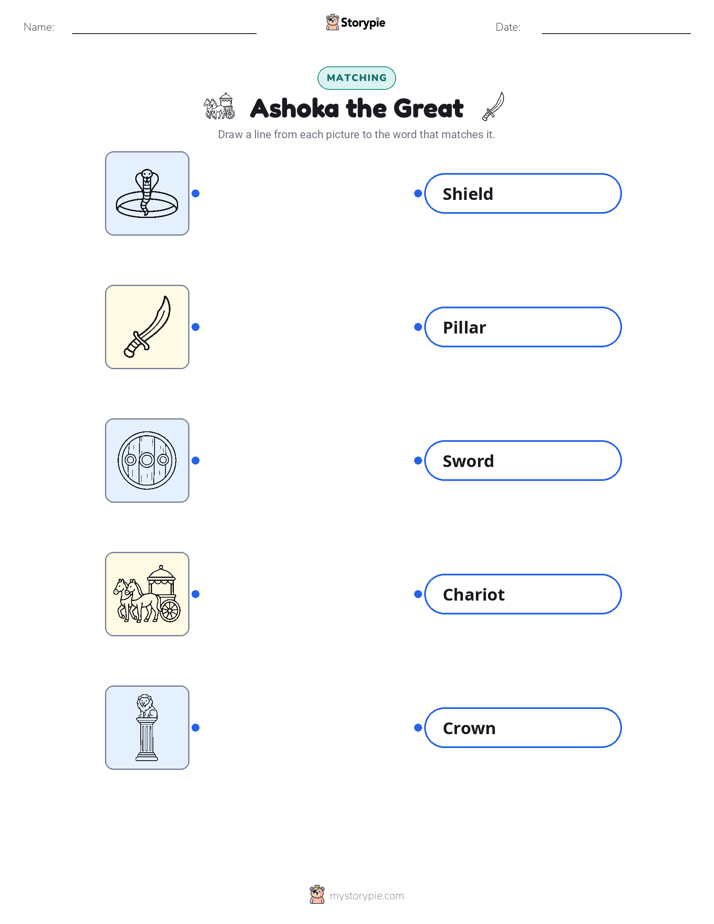
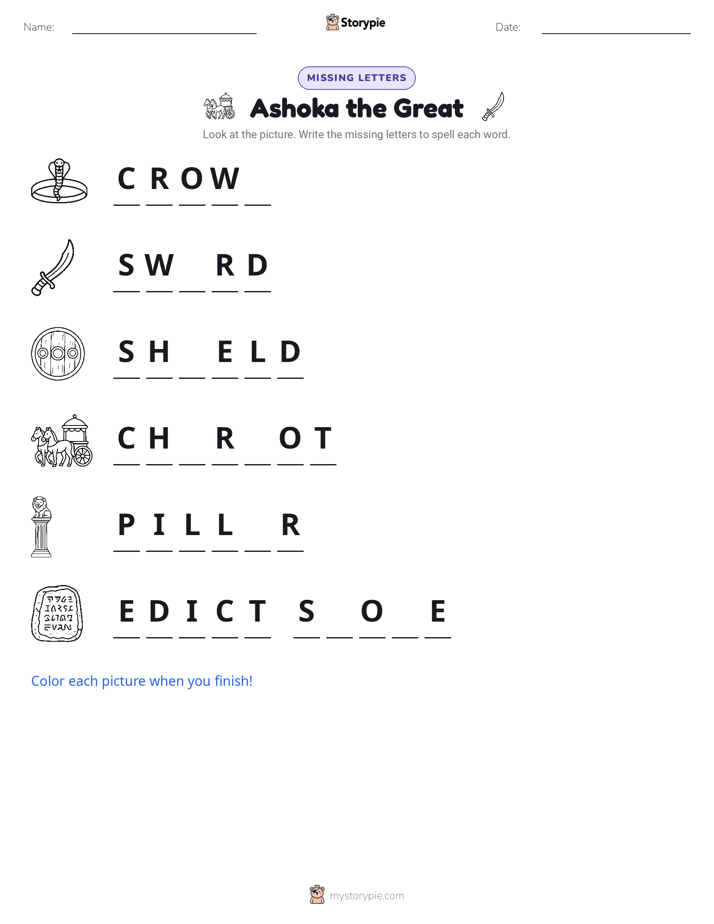
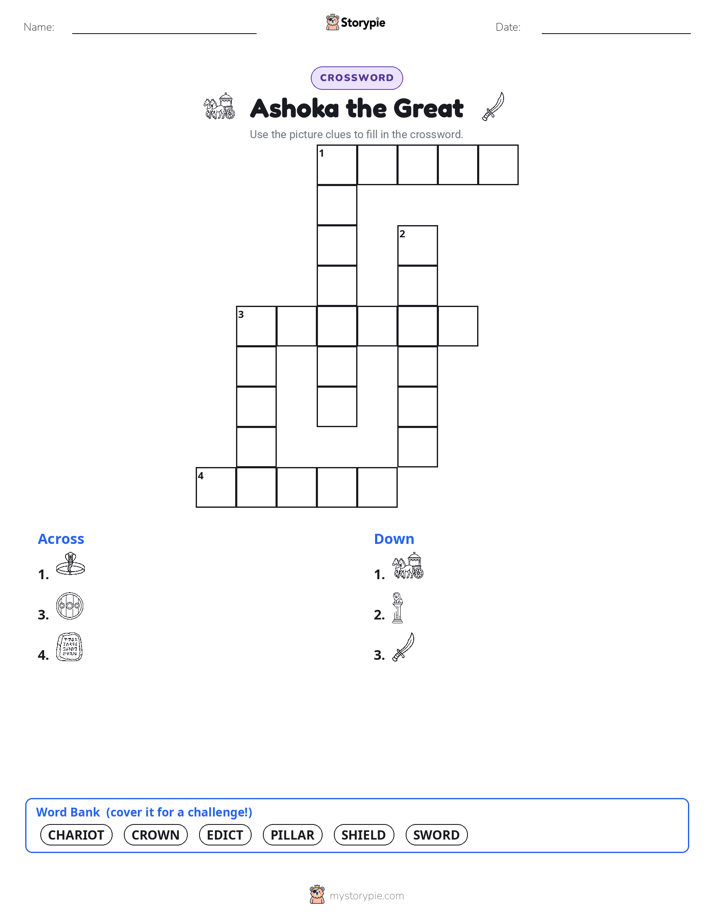
Print & create
Answer keys·No prep·Free with an account
28 worksheets · answer keys · full story · quiz · Ages 10-12 · CEFR B2
Plus adds 102,000+ more stories in 27 languages, audio for every one, and printables for all of them.
Just want Ashoka the Great?
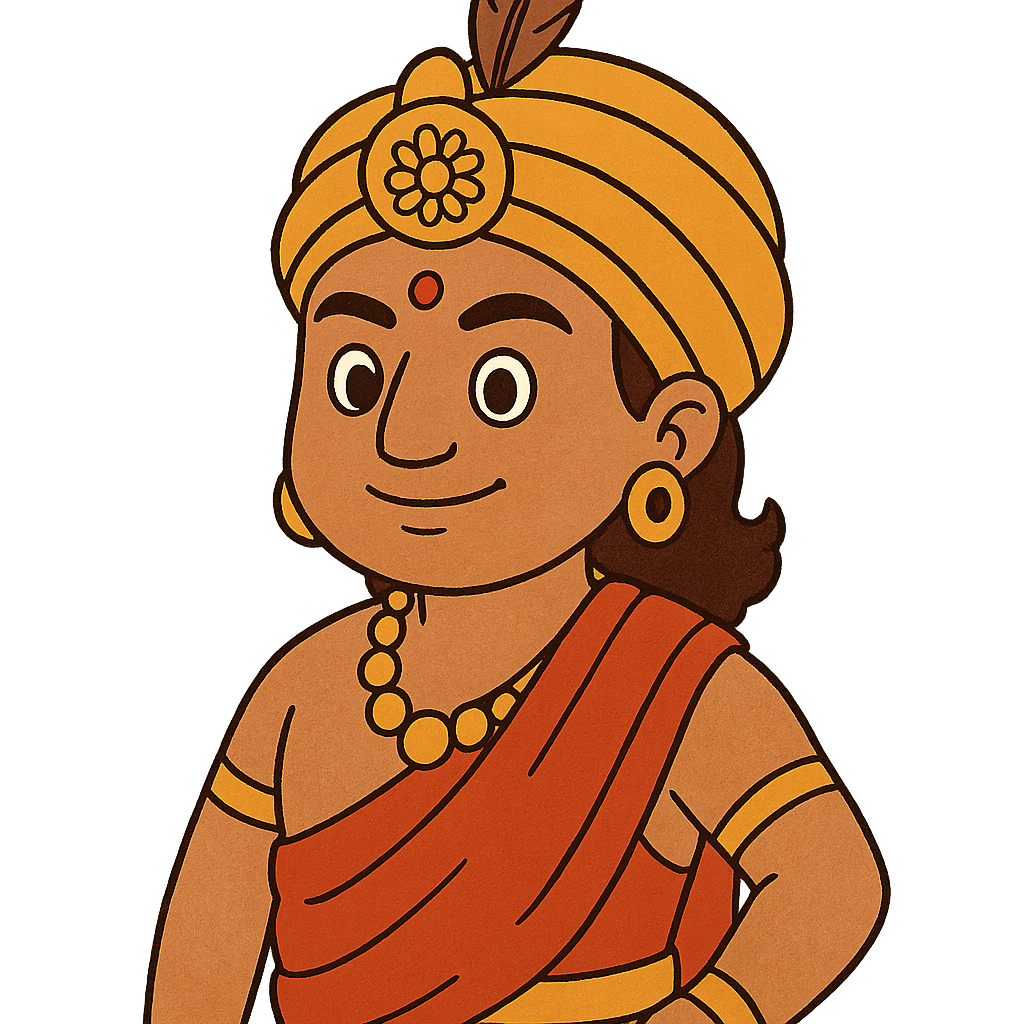
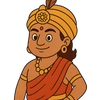
Hello, my name is Ashoka, and I was once the emperor of the great Mauryan Empire in ancient India. I was born around the year 304 BCE in the capital city of Pataliputra. My grandfather was the famous Chandragupta Maurya, who founded our empire, and my father was Emperor Bindusara. Growing up as a prince was an adventure; I learned the arts of war, how to command armies, and how to govern people. I was known for being a skilled warrior and hunter, and some people even found me a bit fierce. My father saw my potential and sent me to govern faraway provinces, which taught me a great deal about the vast lands and diverse people of our empire. I dreamed of making our empire even bigger and more powerful than it already was.
When my father passed away around 272 BCE, the path to the throne was not simple. I had several brothers, and there was a struggle to see who would become the next emperor. After a few years, I emerged as the ruler of the Mauryan Empire, and my official coronation took place around 268 BCE. In my first years as emperor, I continued to be the ambitious and fierce leader I had been as a prince. People called me 'Chandashoka,' which means 'Ashoka the Fierce,' because I was determined to expand my empire through military might. I believed that a great ruler was one who conquered his enemies and commanded a vast territory.
About eight years into my reign, around 261 BCE, I decided to conquer the kingdom of Kalinga, which was on the east coast of India. It was the only major kingdom that was not yet part of my empire, and I was determined to win it. The battle was incredibly difficult, and the army of Kalinga fought bravely. In the end, my army was victorious, but the cost was terrible. When I walked through the battlefield and the conquered city, I saw the devastation my ambition had caused. So many people had lost their lives, and so many more had lost their homes and families. The victory felt empty and horrible. For the first time, I felt deep remorse for my actions. The war in Kalinga was a turning point in my life. I realized that conquering lands and people through violence was not true victory.
The Story of Ashoka the Great
Hello, my name is Ashoka, and I was once the emperor of the great Mauryan Empire in ancient India. I was born around the year 304 BCE in the capital city of Pataliputra. My grandfather was the famous Chandragupta Maurya, who founded our empire, and my father was Emperor Bindusara. Growing up as a prince was an adventure; I learned the arts of war, how to command armies, and how to govern people. I was known for being a skilled warrior and hunter, and some people even found me a bit fierce. My father saw my potential and sent me to govern faraway provinces, which taught me a great deal about the vast lands and diverse people of our empire. I dreamed of making our empire even bigger and more powerful than it already was.
When my father passed away around 272 BCE, the path to the throne was not simple. I had several brothers, and there was a struggle to see who would become the next emperor. After a few years, I emerged as the ruler of the Mauryan Empire, and my official coronation took place around 268 BCE. In my first years as emperor, I continued to be the ambitious and fierce leader I had been as a prince. People called me 'Chandashoka,' which means 'Ashoka the Fierce,' because I was determined to expand my empire through military might. I believed that a great ruler was one who conquered his enemies and commanded a vast territory.
About eight years into my reign, around 261 BCE, I decided to conquer the kingdom of Kalinga, which was on the east coast of India. It was the only major kingdom that was not yet part of my empire, and I was determined to win it. The battle was incredibly difficult, and the army of Kalinga fought bravely. In the end, my army was victorious, but the cost was terrible. When I walked through the battlefield and the conquered city, I saw the devastation my ambition had caused. So many people had lost their lives, and so many more had lost their homes and families. The victory felt empty and horrible. For the first time, I felt deep remorse for my actions. The war in Kalinga was a turning point in my life. I realized that conquering lands and people through violence was not true victory.
Haunted by the suffering I had caused, I decided to change my ways completely. I began to study the teachings of Buddhism, which spoke of non-violence, compassion, and peace. I embraced this new path and decided to rule not by the sword, but by 'Dharma'—a principle of right conduct, morality, and duty. I gave up military conquest forever. Instead of spending money on armies, I used the empire's wealth to improve the lives of my people. I had hospitals built for both people and animals. I ordered wells to be dug and shady trees to be planted along roads for travelers. To make sure everyone knew about my new philosophy, I had my teachings carved onto great stone pillars and rocks throughout the empire. These messages, known today as the Edicts of Ashoka, encouraged everyone to be kind to one another, to respect their elders, to be generous, and to tolerate all religions.
I believed the message of Dharma was so important that it should be shared not just within my empire, but with the whole world. I sent missionaries to other kingdoms, like Greece, Egypt, and Southeast Asia, to spread the teachings of peace and compassion. I even sent my own son, Mahinda, and my daughter, Sanghamitta, to the island of Sri Lanka, where they helped establish Buddhism as a major religion. It was my hope that by sharing these ideas, I could help create a more peaceful world where rulers cared for their people instead of conquering them.
I ruled for many years, trying my best to be a just and kind emperor. My life came to an end around 232 BCE, and I was remembered not for the wars I won in my youth, but for the peace I tried to build. My legacy lives on in India today. The symbol at the center of the Indian flag is a wheel called the Ashoka Chakra, taken from the pillars I built. It represents the eternal wheel of Dharma. I hope my story shows that anyone can change, and that true strength is found not in power and conquest, but in compassion and kindness.
Wow facts
About
Ashoka the Great was the third emperor of the Mauryan Empire in ancient India who, after a big war called the Kalinga War, became more devoted to Buddhism and ruled with principles of non-violence and compassion.
Take a Quiz
Question 1 of 5
Which event was the major turning point in Ashoka's life that changed him from a fierce warrior to a peaceful ruler?
Explore next





Want to do even more?
Go beyond exploring. Unlock tools that turn every story into real learning.

Storypie Plus for families
Full stories, quizzes, and printables. Nights and car rides, sorted.
- Unlimited audio stories
- Create Mode: your child stars in the story
- Offline downloads
- Printable worksheets & coloring pages

Why Storypie for Schools
Students engaged. Prep in seconds. Evenings back to you.
- Worksheets & Quizzes
- Classroom Management
- Formative Assessment
- Custom Curriculum & Lesson Plans
- 27 Languages

Why Storypie for Homeschool
Curriculum done. They'll ask for more. Hours back in your day.
- Worksheet Generator
- First-Person Audio Stories
- Built-in Comprehension Quizzes
- Custom Curriculum & Lesson Plans
- Print & Go Activities