English


B. R. Ambedkar
Bhimrao Ramji Ambedkar was an Indian jurist, economist, social reformer…
Reads at Grades 6–8 Listens at Grades 4–8
Print & create
Answer keys·No prep·Free with an account
28 worksheets · answer keys · full story · quiz · Ages 10-12 · CEFR B2
Plus adds 280,000+ more stories in 27 languages, audio for every one, and printables for all of them.
Just want B. R. Ambedkar?

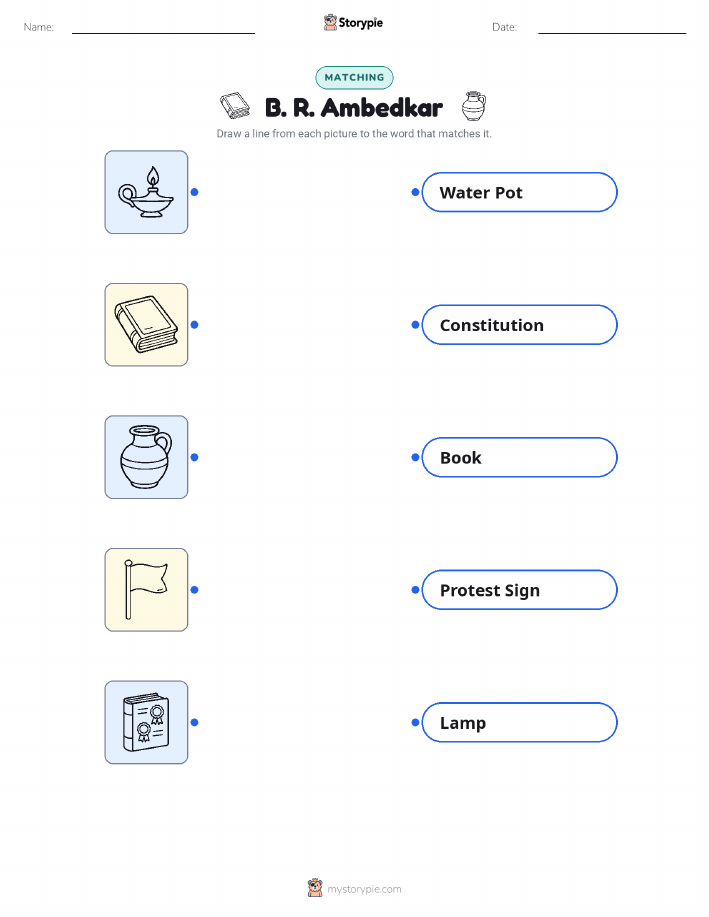
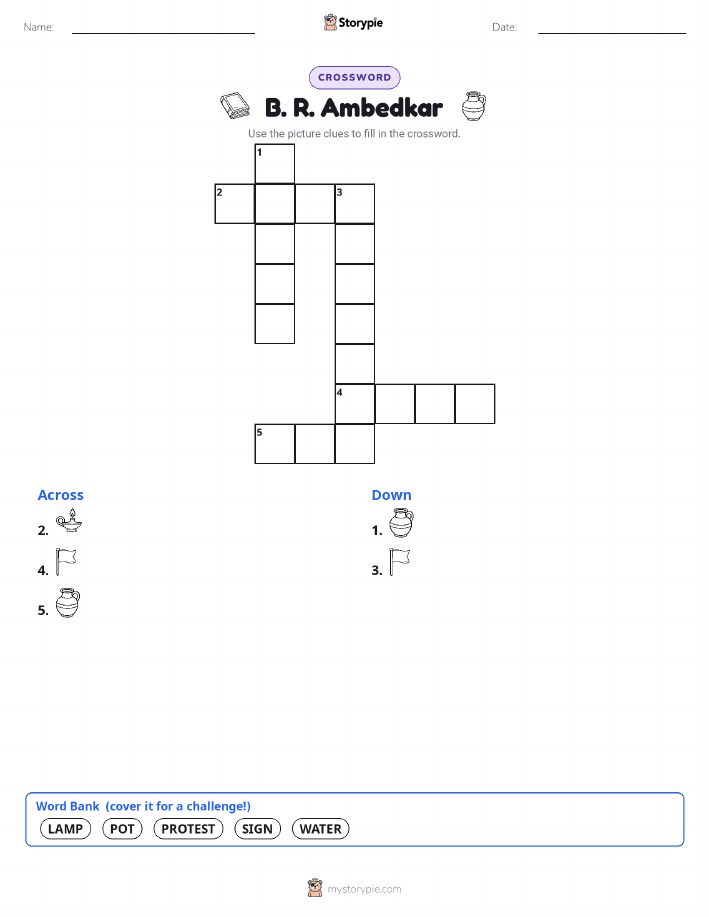
Hello, my name is Bhimrao Ramji Ambedkar, but many people affectionately called me Babasaheb, which means 'respected father.' I was born on April 14th, 1891, in a small town in India called Mhow. My family belonged to the Mahar caste, a community that was unfairly treated and labeled as 'untouchable.' This meant we had to follow many rules that separated us from others. For instance, in school, I was not allowed to sit inside the classroom with the other children, and I could not drink water from the same pot they used. These experiences were deeply painful, but they ignited a fire within me. I became determined to change this unjust system, not just for myself, but for the millions of people who suffered the same discrimination.
My father firmly believed that education was the most powerful tool for breaking free from oppression, and I took his words to heart. I dedicated myself to my studies, often reading by the light of a small lamp late into the night. In 1907, I achieved a major milestone by passing my high school examinations, a feat that was very rare for someone from my community at that time. I continued my education and graduated from Elphinstone College in Mumbai in 1912. A life-changing opportunity arose in 1913 when I was awarded a scholarship to study at Columbia University in New York City. Living in America, I experienced a world without the oppressive caste system, where I felt truly free and equal for the first time. My thirst for knowledge was unending. In 1916, I went on to study at the London School of Economics. I earned several advanced degrees because I was certain that knowledge would be my strongest weapon in the fight for justice and equality for my people.
B. R. Ambedkar: The Father of the Indian Constitution
Hello, my name is Bhimrao Ramji Ambedkar, but many people affectionately called me Babasaheb, which means 'respected father.' I was born on April 14th, 1891, in a small town in India called Mhow. My family belonged to the Mahar caste, a community that was unfairly treated and labeled as 'untouchable.' This meant we had to follow many rules that separated us from others. For instance, in school, I was not allowed to sit inside the classroom with the other children, and I could not drink water from the same pot they used. These experiences were deeply painful, but they ignited a fire within me. I became determined to change this unjust system, not just for myself, but for the millions of people who suffered the same discrimination.
My father firmly believed that education was the most powerful tool for breaking free from oppression, and I took his words to heart. I dedicated myself to my studies, often reading by the light of a small lamp late into the night. In 1907, I achieved a major milestone by passing my high school examinations, a feat that was very rare for someone from my community at that time. I continued my education and graduated from Elphinstone College in Mumbai in 1912. A life-changing opportunity arose in 1913 when I was awarded a scholarship to study at Columbia University in New York City. Living in America, I experienced a world without the oppressive caste system, where I felt truly free and equal for the first time. My thirst for knowledge was unending. In 1916, I went on to study at the London School of Economics. I earned several advanced degrees because I was certain that knowledge would be my strongest weapon in the fight for justice and equality for my people.
After returning to India with my powerful education, I was fully prepared to challenge the deeply rooted system of caste discrimination. To give a voice to those who had been silenced for centuries, I started a newspaper in 1920 called 'Mooknayak,' which translates to 'Leader of the Silent.' Through my writing, I exposed the injustices faced by the so-called 'untouchables.' I also knew that action was necessary. In 1927, I led a peaceful protest known as the Mahad Satyagraha, where we marched to a public water tank to assert our right to drink from it, a right that had been denied to us for generations. I understood that true, lasting change required political power. I tirelessly argued in government conferences and meetings for the rights and political representation of my people, often finding my views in conflict with those of other prominent leaders of the Indian independence movement.
In 1947, a historic moment arrived as India finally gained its independence from British rule. This new beginning for our nation brought with it a monumental task: creating a framework of laws to govern our new democracy. I was given the immense responsibility of leading this effort. On August 29th, 1947, I was appointed Chairman of the Drafting Committee for the Constitution of India. For nearly three years, my team and I worked tirelessly to craft a document that would serve as the foundation of modern India. I made it my personal mission to ensure that the Constitution guaranteed fundamental rights like freedom, equality, and justice for every single citizen, regardless of their caste, religion, or background. Most importantly, we included a crucial law that officially made the practice of 'untouchability' illegal. When the Constitution of India was officially adopted on November 26th, 1949, it was one of the proudest and most fulfilling moments of my entire life.
As I grew older, I sought a spiritual path that embraced the principles of equality I had fought for my entire life. On October 14th, 1956, I made the decision to convert to Buddhism, a faith founded on the ideals of compassion and equality for all beings. In a historic ceremony, hundreds of thousands of my supporters followed me, embracing this new path. I lived to be 65 years old. My life was a long and difficult struggle, but it was dedicated to a cause I believed in with my entire being: the creation of a society where every person is treated with dignity and respect. Today, I am remembered as the 'Father of the Indian Constitution,' and I hope my story continues to inspire people in India and all over the world to stand up against injustice and fight for a more equal society for everyone.
Wow facts
About
Bhimrao Ramji Ambedkar was an Indian jurist, economist, social reformer, and politician who is best known as the chief architect of the Constitution of India. He fought tirelessly against social discrimination and for the rights of the Dalit community.
Take a Quiz
Question 1 of 5
What was the main problem I faced as a child, and how did my work on the Constitution help solve it for future generations?
Explore next





Want to do even more?
Go beyond exploring. Unlock tools that turn every story into real learning.

Storypie Plus for families
Full stories, quizzes, and printables. Nights and car rides, sorted.
- Unlimited audio stories
- Create Mode: your child stars in the story
- Offline downloads
- Printable worksheets & coloring pages

Why Storypie for Schools
Students engaged. Prep in seconds. Evenings back to you.
- Worksheets & Quizzes
- Classroom Management
- Formative Assessment
- Custom Curriculum & Lesson Plans
- 27 Languages

Why Storypie for Homeschool
Curriculum done. They'll ask for more. Hours back in your day.
- Worksheet Generator
- First-Person Audio Stories
- Built-in Comprehension Quizzes
- Custom Curriculum & Lesson Plans
- Print & Go Activities