English

B. R. Ambedkar
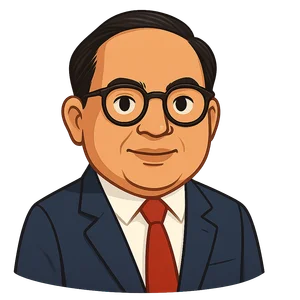
Bhimrao Ramji Ambedkar was an Indian jurist, economist, social reformer…
Reads at Grades 3–5 Listens at Grades 1–5
Print & create
Answer keys·No prep·Free with an account
28 worksheets · answer keys · full story · quiz · Ages 8-10 · CEFR B1
Plus adds 280,000+ more stories in 27 languages, audio for every one, and printables for all of them.
Just want B. R. Ambedkar?

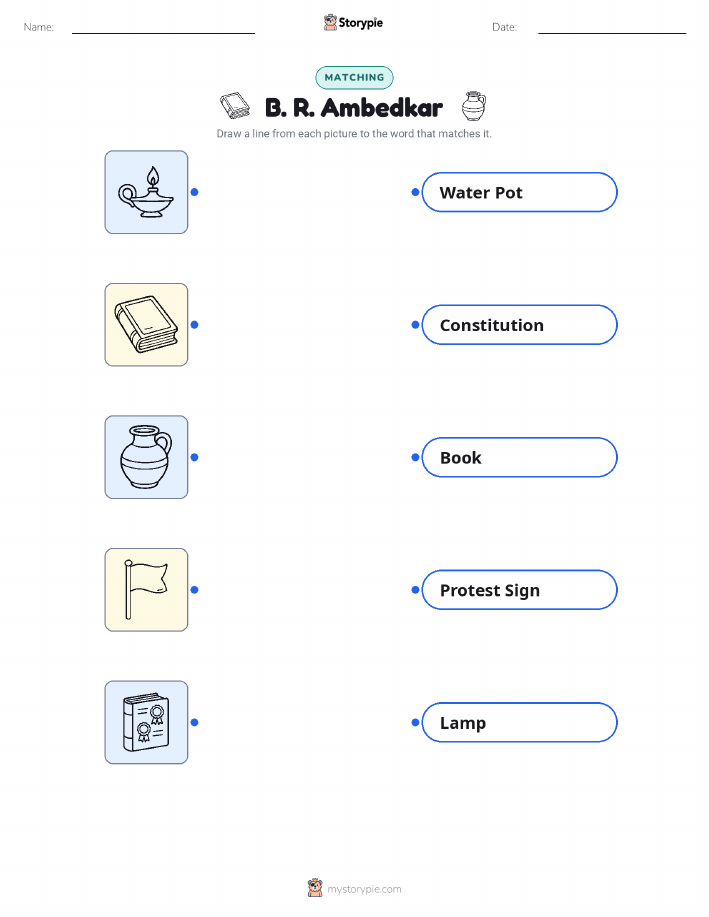
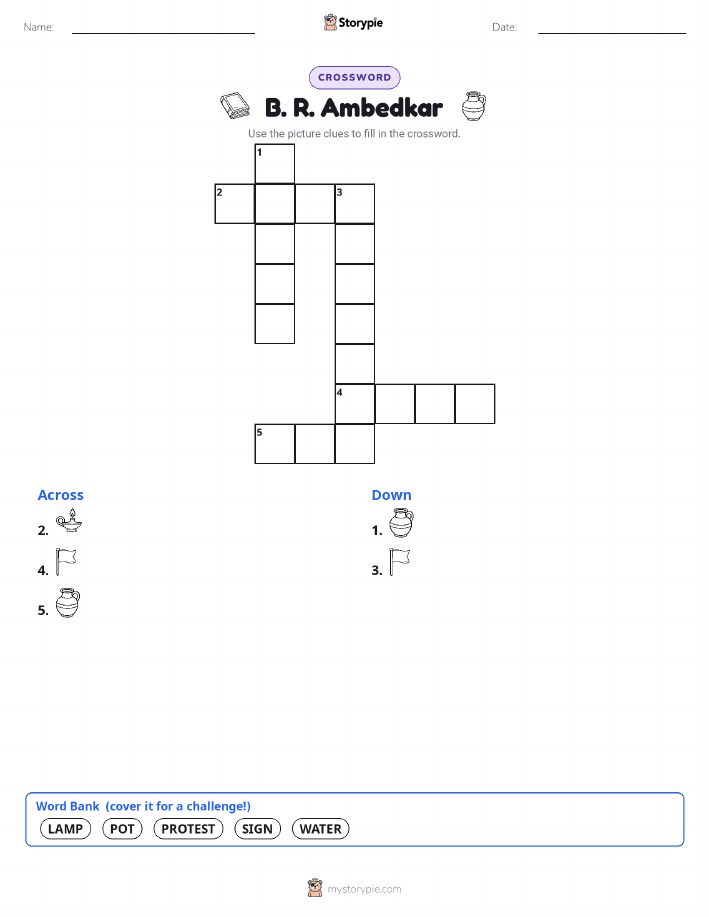
Hello! My name is Bhimrao Ramji Ambedkar, but many people called me Babasaheb, which means 'respected father.' I was born on April 14th, 1891, in a town called Mhow in India. My family belonged to a community called the Mahars. In those days, society was divided into groups called castes, and ours was considered an 'untouchable' caste. This meant that many people treated us unfairly just because of who we were. I remember being in school and not being allowed to sit inside the classroom with the other children. I had to sit outside, away from everyone else. I couldn't even drink water from the same pot as the other students. It was confusing and hurtful, but it filled me with a strong determination to learn as much as I possibly could.
Reading and studying became my greatest passions. I believed that knowledge was the key to changing my life and helping others. I was lucky to have a kind teacher who saw my potential. He cared for me so much that he even gave me his own last name, Ambedkar, which I used for the rest of my life. I studied very hard, and in 1907, I became one of the first students from my community to finish high school, which was a very proud moment. My love for learning took me on a great journey far from home. In 1913, I traveled all the way to America to study at Columbia University in New York City! I later went on to study in London as well. I knew that education was the most powerful tool I had to help change the world for people like me.
When I returned to India with my degrees, I used my education to fight for justice. My main goal was to end the practice of 'untouchability' and make sure every person was treated with dignity and respect. I started newspapers to share my ideas and help people understand the need for change. I also organized people to stand up for their rights in a peaceful way. One of the most important events I led was in 1927, called the Mahad Satyagraha. My people were forbidden from using the public water tank in the town of Mahad. I led a peaceful march to that tank, and we all drank water from it together. By doing this, we showed everyone that water, and all of India's resources, belonged to every single person equally.
B. R. Ambedkar: Father of the Indian Constitution
Hello! My name is Bhimrao Ramji Ambedkar, but many people called me Babasaheb, which means 'respected father.' I was born on April 14th, 1891, in a town called Mhow in India. My family belonged to a community called the Mahars. In those days, society was divided into groups called castes, and ours was considered an 'untouchable' caste. This meant that many people treated us unfairly just because of who we were. I remember being in school and not being allowed to sit inside the classroom with the other children. I had to sit outside, away from everyone else. I couldn't even drink water from the same pot as the other students. It was confusing and hurtful, but it filled me with a strong determination to learn as much as I possibly could.
Reading and studying became my greatest passions. I believed that knowledge was the key to changing my life and helping others. I was lucky to have a kind teacher who saw my potential. He cared for me so much that he even gave me his own last name, Ambedkar, which I used for the rest of my life. I studied very hard, and in 1907, I became one of the first students from my community to finish high school, which was a very proud moment. My love for learning took me on a great journey far from home. In 1913, I traveled all the way to America to study at Columbia University in New York City! I later went on to study in London as well. I knew that education was the most powerful tool I had to help change the world for people like me.
When I returned to India with my degrees, I used my education to fight for justice. My main goal was to end the practice of 'untouchability' and make sure every person was treated with dignity and respect. I started newspapers to share my ideas and help people understand the need for change. I also organized people to stand up for their rights in a peaceful way. One of the most important events I led was in 1927, called the Mahad Satyagraha. My people were forbidden from using the public water tank in the town of Mahad. I led a peaceful march to that tank, and we all drank water from it together. By doing this, we showed everyone that water, and all of India's resources, belonged to every single person equally.
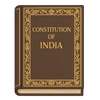
In 1947, India became an independent country, free from British rule. It was a very exciting and hopeful time for everyone! Because of my work and my knowledge of law, I was given a very important job. I was chosen to be the chairman of the committee that would write the Constitution of India. The constitution is like a big rulebook for the entire country that explains everyone's rights and responsibilities. I worked very hard to make sure it included laws that promised freedom, equality, and justice for all citizens. I wanted to create a document that would ensure no child would ever have to face the unfairness that I did. The Constitution of India was officially adopted on January 26th, 1950, a day India now celebrates as Republic Day.
Later in my life, in 1956, I chose to embrace Buddhism, a path that I believed taught true equality for all people. I lived to be 65 years old, and I spent my whole life working to build a better, fairer India for everyone. Today, I am often called the 'Father of the Indian Constitution' because of the leading role I played in creating it. My work helped to outlaw untouchability and give rights and hope to millions of people. People in India and around the world remember my fight for social justice, and my birthday is celebrated as a day to remember the importance of equality for all.
Wow facts
About
Bhimrao Ramji Ambedkar was an Indian jurist, economist, social reformer, and politician who is best known as the chief architect of the Constitution of India. He fought tirelessly against social discrimination and for the rights of the Dalit community.
Take a Quiz
Question 1 of 5
In the story, what did it mean for my caste to be considered 'untouchable'?
Explore next





Want to do even more?
Go beyond exploring. Unlock tools that turn every story into real learning.

Storypie Plus for families
Full stories, quizzes, and printables. Nights and car rides, sorted.
- Unlimited audio stories
- Create Mode: your child stars in the story
- Offline downloads
- Printable worksheets & coloring pages

Why Storypie for Schools
Students engaged. Prep in seconds. Evenings back to you.
- Worksheets & Quizzes
- Classroom Management
- Formative Assessment
- Custom Curriculum & Lesson Plans
- 27 Languages

Why Storypie for Homeschool
Curriculum done. They'll ask for more. Hours back in your day.
- Worksheet Generator
- First-Person Audio Stories
- Built-in Comprehension Quizzes
- Custom Curriculum & Lesson Plans
- Print & Go Activities