English

Belva Lockwood
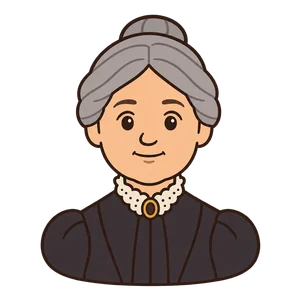
Belva Lockwood was a pioneering American attorney, politician, educator…
Reads at Grades 6–8 Listens at Grades 4–8
Print & create
Answer keys·No prep·Free with an account
28 worksheets · answer keys · full story · quiz · Ages 10-12 · CEFR B2
Plus adds 290,000+ more stories in 27 languages, audio for every one, and printables for all of them.
Just want Belva Lockwood?
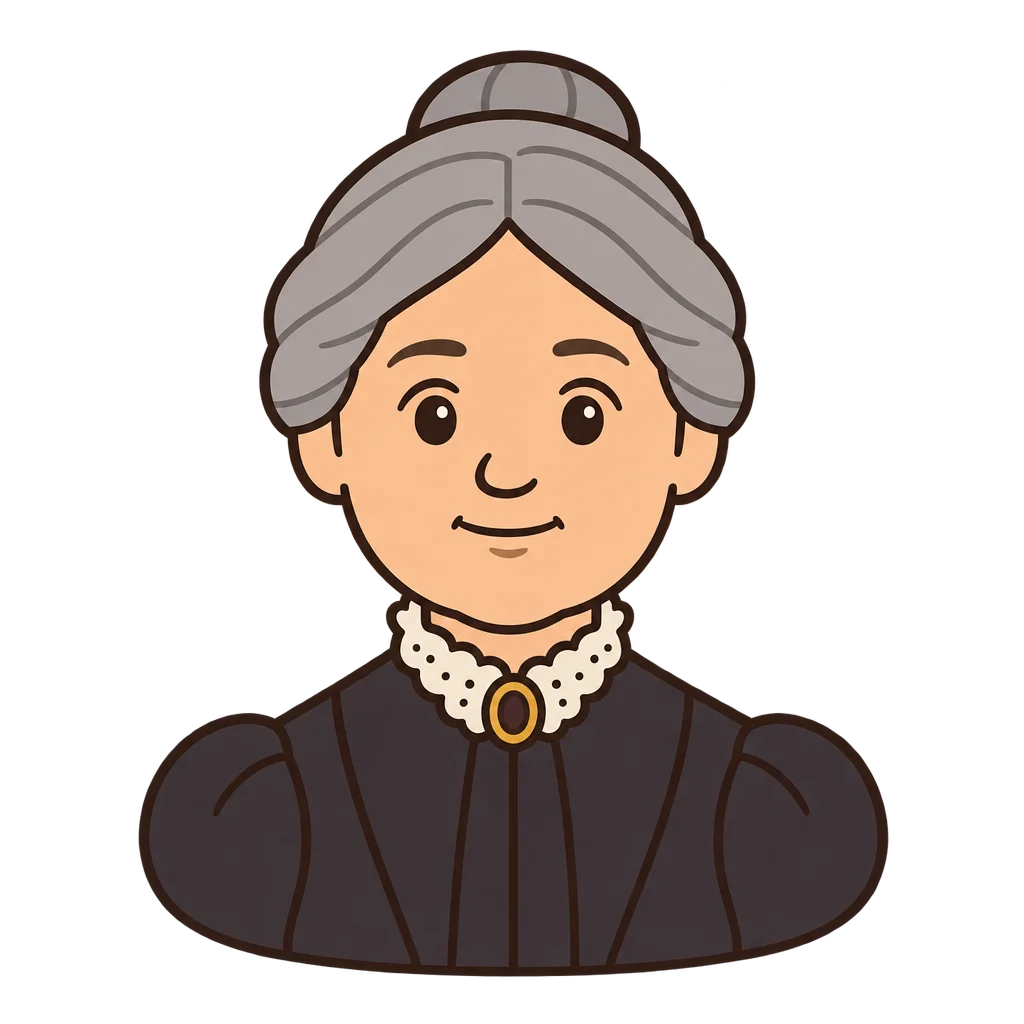
Hello, my name is Belva Lockwood. I would like to tell you my story. I was born on a farm in Royalton, New York, on October 24th, 1830. Growing up, I had a deep love for learning, but I quickly discovered that the world seemed to have different rules for boys and girls. This became very clear to me when I started teaching at a local school at just 14 years old. I was paid less than half of what my male colleagues earned for doing the same job. This felt deeply unfair. After I married and had my daughter, Lura, my husband passed away in 1853. I was a young widow and a single mother, and I knew that the best way I could provide for us and change my circumstances was through education.
I was determined to build a better life for my daughter and me, so I pursued a college education, which was rare for women at the time. I graduated with honors from Genesee College in 1857. For several years after, I worked as a headmistress at different schools, but the unfairness I had first noticed as a young teacher continued to bother me. The unequal pay for women was a problem I saw everywhere. I began to realize that if I wanted to change these unfair rules, I first needed to understand how they were made. This realization sparked a new dream. In 1866, I moved with my daughter to Washington, D.C. I decided I would become a lawyer. However, when I tried to apply to law schools, I was told no, time and time again. One school even told me that my presence would be a 'distraction' to the male students. But I refused to let their opinions stop me.
Belva Lockwood
Hello, my name is Belva Lockwood. I would like to tell you my story. I was born on a farm in Royalton, New York, on October 24th, 1830. Growing up, I had a deep love for learning, but I quickly discovered that the world seemed to have different rules for boys and girls. This became very clear to me when I started teaching at a local school at just 14 years old. I was paid less than half of what my male colleagues earned for doing the same job. This felt deeply unfair. After I married and had my daughter, Lura, my husband passed away in 1853. I was a young widow and a single mother, and I knew that the best way I could provide for us and change my circumstances was through education.
I was determined to build a better life for my daughter and me, so I pursued a college education, which was rare for women at the time. I graduated with honors from Genesee College in 1857. For several years after, I worked as a headmistress at different schools, but the unfairness I had first noticed as a young teacher continued to bother me. The unequal pay for women was a problem I saw everywhere. I began to realize that if I wanted to change these unfair rules, I first needed to understand how they were made. This realization sparked a new dream. In 1866, I moved with my daughter to Washington, D.C. I decided I would become a lawyer. However, when I tried to apply to law schools, I was told no, time and time again. One school even told me that my presence would be a 'distraction' to the male students. But I refused to let their opinions stop me.
My persistence finally paid off. In 1871, the new National University Law School accepted me along with several other women. I dedicated myself to my studies and completed all the required courses by 1873. But when it was time for graduation, the school refused to give me my diploma. Can you imagine that? I had done all the work and earned my degree, but the school wouldn't officially recognize it simply because I was a woman. I knew this was another injustice I could not accept. I decided to take a bold step and wrote a letter directly to the President of the United States, Ulysses S. Grant. He was also the honorary president of the university, and I explained the situation to him, stating that I had earned my degree and deserved it. Just one week later, my diploma arrived in the mail. I had won my first major legal fight.
Becoming a lawyer was just the beginning of my journey. My next major goal was to argue cases before the highest court in the country: the U.S. Supreme Court. Unsurprisingly, there was a rule that prevented women from doing so. The court claimed that tradition dictated only men could practice before them. I was not willing to accept that. I spent the next three years lobbying Congress to pass a law that would allow all qualified women attorneys to practice before the nation's highest court. I drafted the bill myself and worked tirelessly to persuade politicians to support it. Finally, in 1879, my hard work succeeded when Congress passed the law, and President Rutherford B. Hayes signed it. On March 3rd, 1879, I stood before the justices and was sworn in as the first woman member of the Supreme Court bar. A year later, in 1880, I made history again as the first woman to argue a case before the Supreme Court.
I firmly believed that women were equal to men in every way and deserved to have their voices heard in government. This included not only the right to vote but also the right to hold the highest office in the nation. In 1884, a new political party called the National Equal Rights Party nominated me as their candidate for President of the United States. This was a radical idea at a time when women couldn't even vote in most elections. Many people laughed at my campaign, and newspapers published cartoons making fun of me. But I took my run seriously, focusing on a platform of equality for all people—including women, Native Americans, and immigrants. I did not win the election, and I ran again in 1888 with the same result. However, my goal was not just to win, but to show the country that a woman was just as capable of leading as any man.
I spent the rest of my years working for causes I deeply believed in, such as women's suffrage, world peace, and justice for all. I lived to be 86 years old, and my life was full of challenges that I was proud to have overcome. I passed on in 1917, just three years before the 19th Amendment was ratified, finally granting women across the United States the right to vote. I hope people remember me as someone who never took 'no' for an answer and who believed that the doors of opportunity should be open to everyone, no matter who they are.
Wow facts
About
Belva Lockwood was a pioneering American attorney, politician, educator, and author who was one of the first female lawyers in the United States. She was the first woman to argue a case before the U.S. Supreme Court and ran for President of the United States in 1884 and 1888.
Take a Quiz
Question 1 of 5
Why did Belva Lockwood decide she needed to become a lawyer?
Explore next






Want to do even more?
Go beyond exploring. Unlock tools that turn every story into real learning.

Storypie Plus for families
Full stories, quizzes, and printables. Nights and car rides, sorted.
- Unlimited audio stories
- Create Mode: your child stars in the story
- Offline downloads
- Printable worksheets & coloring pages

Why Storypie for Schools
Students engaged. Prep in seconds. Evenings back to you.
- Worksheets & Quizzes
- Classroom Management
- Formative Assessment
- Custom Curriculum & Lesson Plans
- 27 Languages

Why Storypie for Homeschool
Curriculum done. They'll ask for more. Hours back in your day.
- Worksheet Generator
- First-Person Audio Stories
- Built-in Comprehension Quizzes
- Custom Curriculum & Lesson Plans
- Print & Go Activities