English

Presidency of the United States
The office of the head of state and head of government of the United States, created by the U.S.
Reads at Grades 3–5 Listens at Grades 1–5
Print & create
Answer keys·No prep·Free with an account
28 worksheets · answer keys · full story · quiz · Ages 8-10 · CEFR B1
Plus adds 102,000+ more stories in 27 languages, audio for every one, and printables for all of them.
Just want Presidency of the United States?
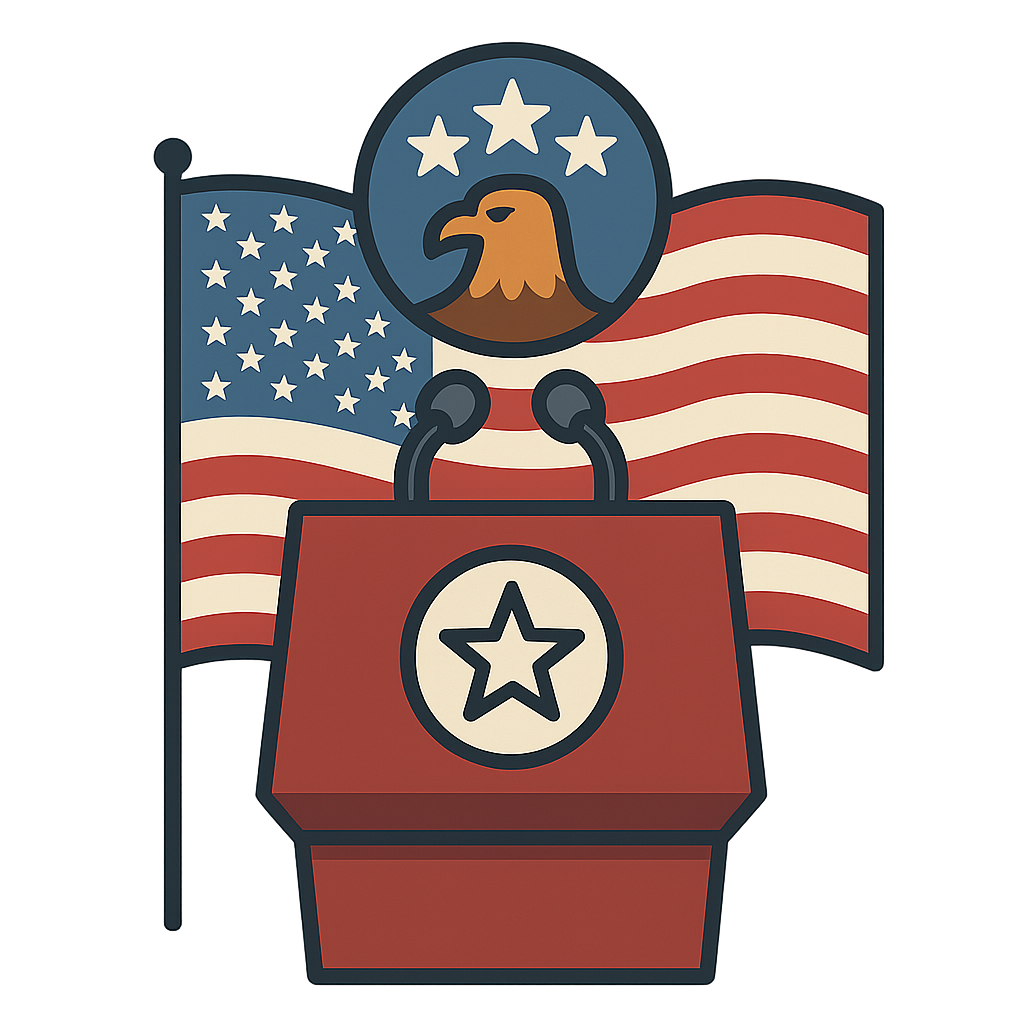
Imagine having a very, very big job. When you wake up each morning, the decisions you make can help children in schools, farmers in their fields, and even soldiers far across the ocean. You live in a famous white house where you meet with leaders from all over the world, discussing ways to make the planet a safer and better place. You are in charge of the entire army, navy, and air force, making you the commander-in-chief. Can you picture a job so important. It might sound like I am a person, like a king or a queen, but I am not. I am the Presidency of the United States. I'm not a single person, but the most powerful job in the country, a special role that one person holds for a time to lead the nation.
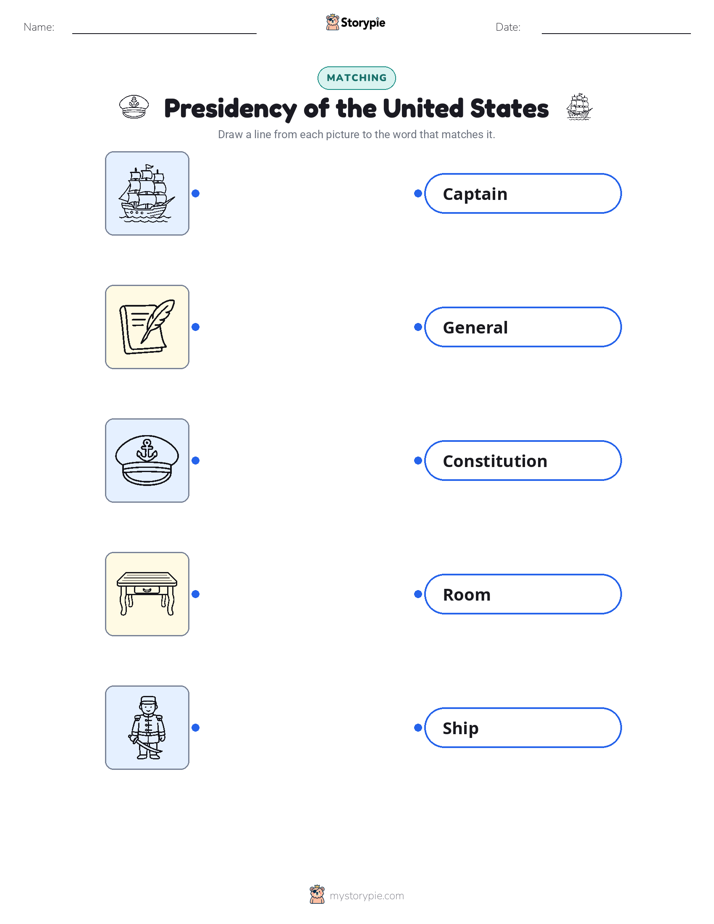
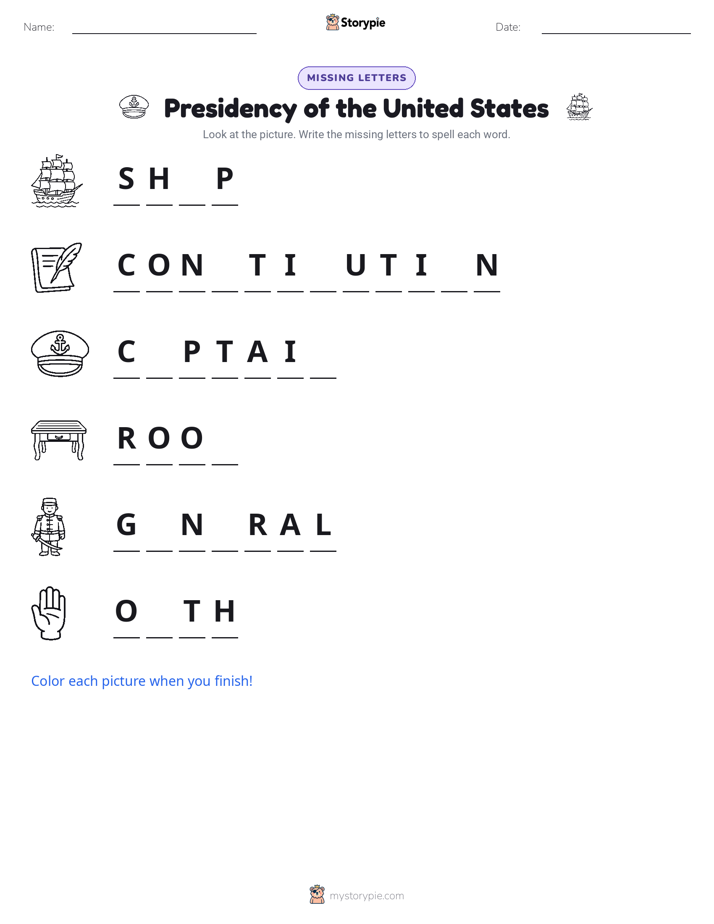
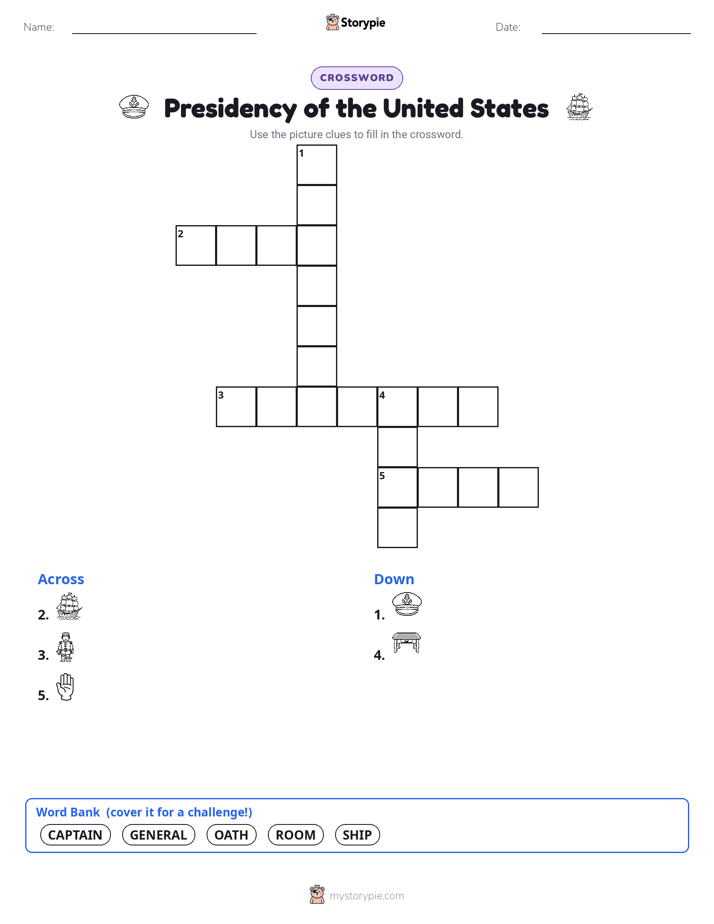
Before I existed, things were very different. After a long and difficult Revolutionary War, the United States was a brand new country. The thirteen states were joined together by a set of rules called the Articles of Confederation, but there was one big problem: there was no single leader to guide everyone. It was like a ship with thirteen different captains all trying to steer. In the hot summer of 1787, a group of very smart men, who we now call the Founding Fathers, gathered in Philadelphia for a meeting called the Constitutional Convention. They knew the country needed a strong leader to make decisions and represent the nation, but they were very worried about creating a new king. They had just fought a war to be free from one. So, they carefully designed me. They wrote down all the rules for my job in a document called the U.S. Constitution. I would be a job for one person, chosen by the people, with clear limits on my power. The very first person to hold my title was the great general, George Washington. He stood on a balcony in New York City on April 30th, 1789, and took the first oath of office, showing everyone what it meant to be the president.
The Story of the Presidency
Imagine having a very, very big job. When you wake up each morning, the decisions you make can help children in schools, farmers in their fields, and even soldiers far across the ocean. You live in a famous white house where you meet with leaders from all over the world, discussing ways to make the planet a safer and better place. You are in charge of the entire army, navy, and air force, making you the commander-in-chief. Can you picture a job so important. It might sound like I am a person, like a king or a queen, but I am not. I am the Presidency of the United States. I'm not a single person, but the most powerful job in the country, a special role that one person holds for a time to lead the nation.
Before I existed, things were very different. After a long and difficult Revolutionary War, the United States was a brand new country. The thirteen states were joined together by a set of rules called the Articles of Confederation, but there was one big problem: there was no single leader to guide everyone. It was like a ship with thirteen different captains all trying to steer. In the hot summer of 1787, a group of very smart men, who we now call the Founding Fathers, gathered in Philadelphia for a meeting called the Constitutional Convention. They knew the country needed a strong leader to make decisions and represent the nation, but they were very worried about creating a new king. They had just fought a war to be free from one. So, they carefully designed me. They wrote down all the rules for my job in a document called the U.S. Constitution. I would be a job for one person, chosen by the people, with clear limits on my power. The very first person to hold my title was the great general, George Washington. He stood on a balcony in New York City on April 30th, 1789, and took the first oath of office, showing everyone what it meant to be the president.
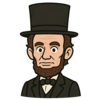
As the United States grew, so did I. My responsibilities became bigger and more complicated. The person holding my title had to face new and difficult challenges, and their actions shaped what I would become. During the terrible Civil War, from 1861 to 1865, a tall, thoughtful man named Abraham Lincoln used my power to keep the country from splitting apart. He showed that my job was to protect the entire nation, even in its darkest hour. Later, a president named Franklin D. Roosevelt had to guide the country through two enormous challenges: a time of great poverty called the Great Depression and the biggest war the world had ever seen, World War II. He used my power to create programs that helped people find jobs and feel secure, making my role a bigger part of everyday American life. As the country expanded from just thirteen states to fifty, my duties grew with it. People began to realize that my power was immense, and they decided it was important to make sure no one person could hold it for too long. So, on February 27th, 1951, a new rule called the 22nd Amendment was added to the Constitution. It declared that a person could only be elected president for two terms.
Today, I am still the job of leading the United States. The person who holds my title works in the famous Oval Office, signs laws, and speaks for the country. But I am more than just a job; I am a symbol of democracy. I represent the idea that the people have the power to choose their own leader. The president does not work for themselves, but for all Americans, helping to solve problems and create a better future. I represent the hope that one person can lead, inspire, and help a country face its biggest challenges. The person in my role works to keep you safe, protect your freedoms, and make sure the American dream is possible. And the most amazing thing is that in the United States, any child, no matter where they come from, can dream of one day stepping into my shoes and becoming the president.
Wow facts
About
The office of the head of state and head of government of the United States, created by the U.S. Constitution in 1787 to lead the executive branch.
Take a Quiz
Question 1 of 5
In the story, the Presidency is called a 'symbol of democracy.' What does the word 'symbol' mean in that sentence?
Explore next

Want to do even more?
Go beyond exploring. Unlock tools that turn every story into real learning.

Storypie Plus for families
Full stories, quizzes, and printables. Nights and car rides, sorted.
- Unlimited audio stories
- Create Mode: your child stars in the story
- Offline downloads
- Printable worksheets & coloring pages

Why Storypie for Schools
Students engaged. Prep in seconds. Evenings back to you.
- Worksheets & Quizzes
- Classroom Management
- Formative Assessment
- Custom Curriculum & Lesson Plans
- 27 Languages

Why Storypie for Homeschool
Curriculum done. They'll ask for more. Hours back in your day.
- Worksheet Generator
- First-Person Audio Stories
- Built-in Comprehension Quizzes
- Custom Curriculum & Lesson Plans
- Print & Go Activities