English

Presidency of the United States
The office of the head of state and head of government of the United States, created by the U.S.
Reads at Grades 6–8 Listens at Grades 4–8
Print & create
Answer keys·No prep·Free with an account
28 worksheets · answer keys · full story · quiz · Ages 10-12 · CEFR B2
Plus adds 102,000+ more stories in 27 languages, audio for every one, and printables for all of them.
Just want Presidency of the United States?
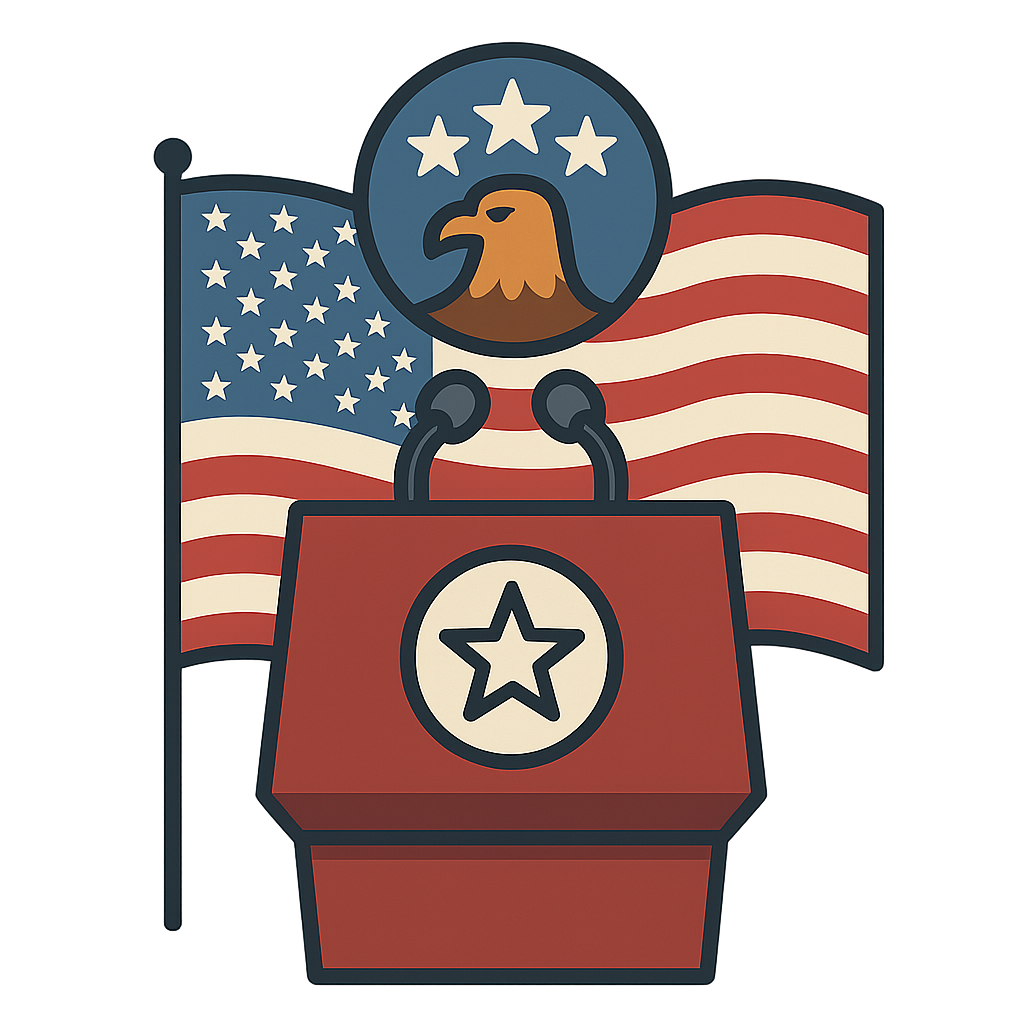
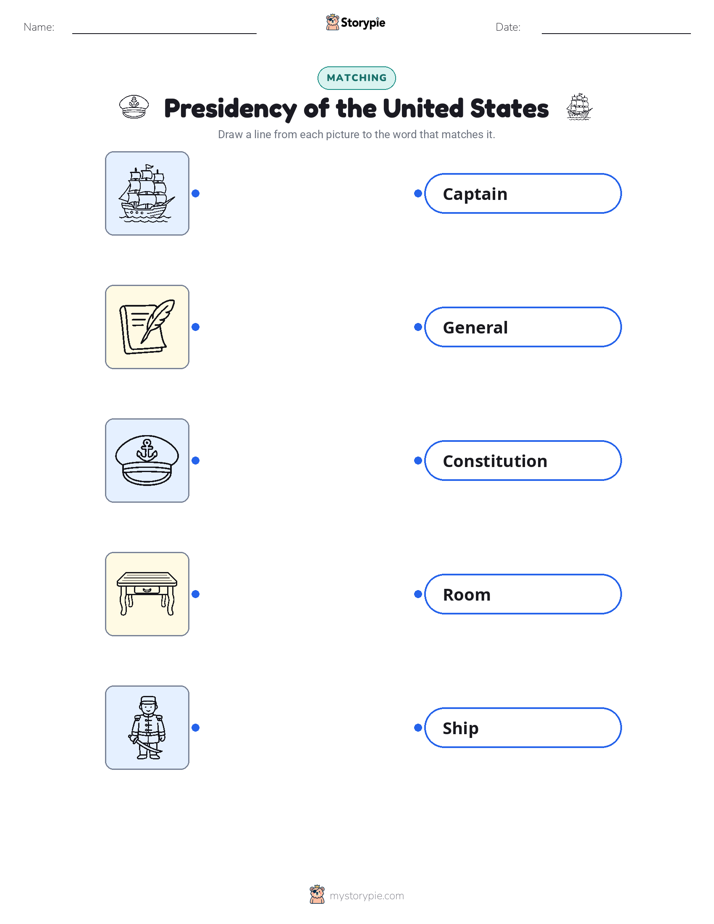
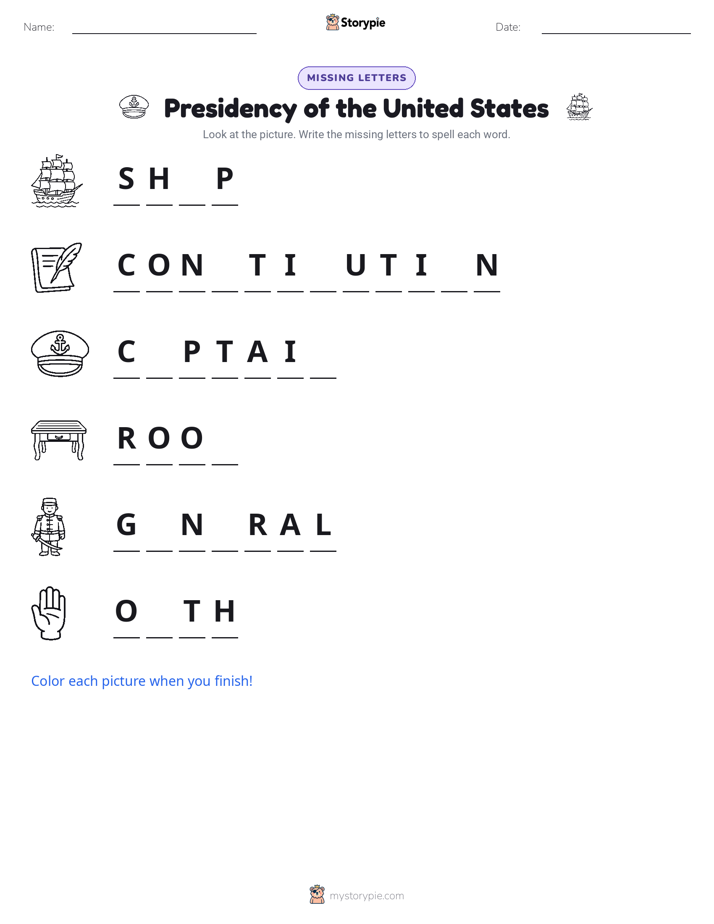
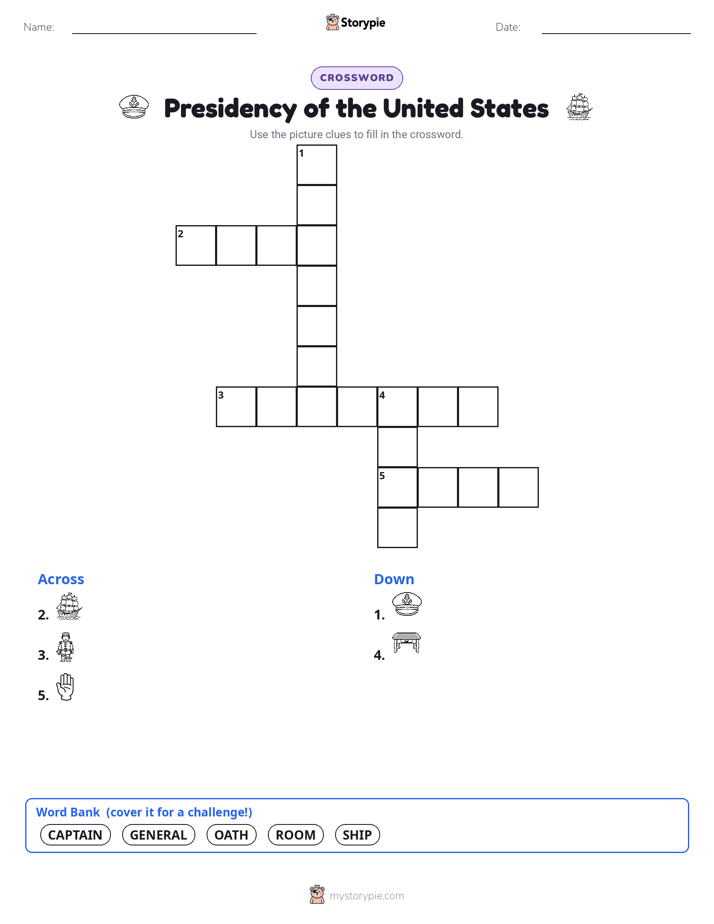
Imagine a brand-new country, like a ship setting sail on a vast ocean for the first time. The crew has a map—a set of rules called the Constitution—but they need a captain. Not a king who rules for life, but someone chosen to steer the ship for a while, to speak for everyone on board, and to make sure the journey is safe and fair. Before I had a name, I was just an idea, a question whispered in a hot room in Philadelphia during the summer of 1787: who will lead us? The people who designed this new nation, the United States, wanted a leader who was powerful enough to get things done but not so powerful that they could ignore the people. They debated for months, trying to find the right balance. They needed someone to be in charge of the military, to represent the country to the rest of the world, and to make sure the government ran smoothly. That’s the moment I was born—not as a person, but as a role, a responsibility, a promise. I am the Presidency of the United States.
My framework was carefully written down in a document called the U.S. Constitution in 1787. Article II is my instruction manual, explaining my powers and my limits. But an idea on paper is one thing; making it real is another. That’s where a quiet, respected general named George Washington came in. On April 30th, 1789, he stood on a balcony in New York City, which was the nation's capital at the time, and took an oath. It was a special promise to 'preserve, protect and defend the Constitution of the United States.' In that moment, he became the first person to hold my title. He wasn't just the first president; he was the one who showed everyone what I could be. He knew that everything he did would set an example, or a 'precedent,' for all the leaders who would come after him. He created the first group of advisors, called the Cabinet. Most importantly, he chose to step down after two terms—four years each—to show that power belonged to the people, not just one person. That tradition of a peaceful transfer of power became one of my most important features.
The President's Desk
Imagine a brand-new country, like a ship setting sail on a vast ocean for the first time. The crew has a map—a set of rules called the Constitution—but they need a captain. Not a king who rules for life, but someone chosen to steer the ship for a while, to speak for everyone on board, and to make sure the journey is safe and fair. Before I had a name, I was just an idea, a question whispered in a hot room in Philadelphia during the summer of 1787: who will lead us? The people who designed this new nation, the United States, wanted a leader who was powerful enough to get things done but not so powerful that they could ignore the people. They debated for months, trying to find the right balance. They needed someone to be in charge of the military, to represent the country to the rest of the world, and to make sure the government ran smoothly. That’s the moment I was born—not as a person, but as a role, a responsibility, a promise. I am the Presidency of the United States.
My framework was carefully written down in a document called the U.S. Constitution in 1787. Article II is my instruction manual, explaining my powers and my limits. But an idea on paper is one thing; making it real is another. That’s where a quiet, respected general named George Washington came in. On April 30th, 1789, he stood on a balcony in New York City, which was the nation's capital at the time, and took an oath. It was a special promise to 'preserve, protect and defend the Constitution of the United States.' In that moment, he became the first person to hold my title. He wasn't just the first president; he was the one who showed everyone what I could be. He knew that everything he did would set an example, or a 'precedent,' for all the leaders who would come after him. He created the first group of advisors, called the Cabinet. Most importantly, he chose to step down after two terms—four years each—to show that power belonged to the people, not just one person. That tradition of a peaceful transfer of power became one of my most important features.
Being me is like having many jobs at once. The person holding my title is the Commander-in-Chief, the head of all the military branches, from the Army to the Navy. They are also the nation’s top diplomat, meeting with leaders from other countries to build friendships and solve problems. And they are the head of the executive branch, which means they are in charge of making sure the government's day-to-day work gets done. When the legislative branch, Congress, passes a new rule, or 'bill,' it comes to my desk in a special room called the Oval Office inside my official home, the White House. I’ve lived in the White House since the year 1800, when John Adams was the first president to move in. The president can sign the bill to make it a law, or they can 'veto' it, which means they reject it. Over the years, different people have used my power to face enormous challenges. During the 1860s, Abraham Lincoln used my authority to guide the nation through the Civil War and issue the Emancipation Proclamation to end slavery. In the 1930s and 1940s, Franklin D. Roosevelt used me to help the country through the Great Depression and World War II, serving longer than any other president.
Today, I am still the same job described in the Constitution, but the world has changed so much. The president now uses technology to speak to millions of people in an instant and makes decisions that can affect the entire planet. But my core purpose remains the same: to be a leader for all Americans. I am a symbol of democracy—the idea that people can choose their own leaders. The person who holds my title might change every four or eight years through an election, but I remain, representing the hopes and challenges of the nation. I am a reminder that one person, with the trust and support of the people, can work to build a 'more perfect Union,' just as the founders dreamed. And that is a job that inspires people not just to lead, but to participate, to vote, and to help shape the future of their country.
Wow facts
About
The office of the head of state and head of government of the United States, created by the U.S. Constitution in 1787 to lead the executive branch.
Take a Quiz
Question 1 of 5
According to the story, how did George Washington's actions as the first president shape the role for the future?
Explore next


Want to do even more?
Go beyond exploring. Unlock tools that turn every story into real learning.

Storypie Plus for families
Full stories, quizzes, and printables. Nights and car rides, sorted.
- Unlimited audio stories
- Create Mode: your child stars in the story
- Offline downloads
- Printable worksheets & coloring pages

Why Storypie for Schools
Students engaged. Prep in seconds. Evenings back to you.
- Worksheets & Quizzes
- Classroom Management
- Formative Assessment
- Custom Curriculum & Lesson Plans
- 27 Languages

Why Storypie for Homeschool
Curriculum done. They'll ask for more. Hours back in your day.
- Worksheet Generator
- First-Person Audio Stories
- Built-in Comprehension Quizzes
- Custom Curriculum & Lesson Plans
- Print & Go Activities