English

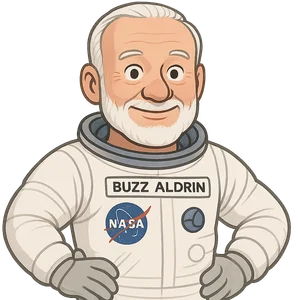
Buzz Aldrin
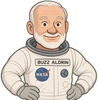
Buzz Aldrin is an American former astronaut, engineer, and fighter pilot.
Reads at Grades 6–8 Listens at Grades 4–8
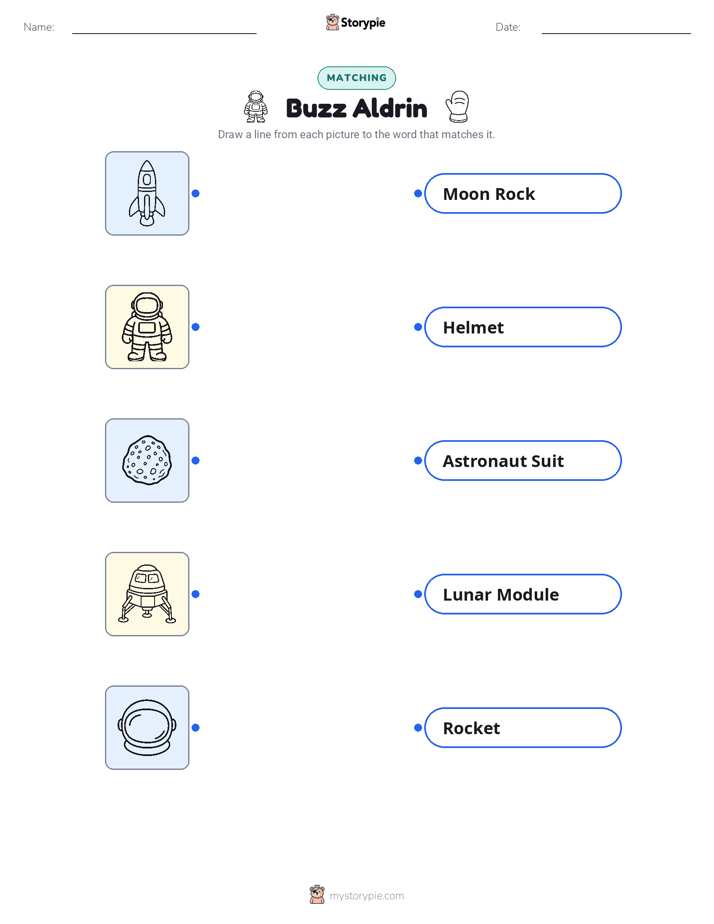
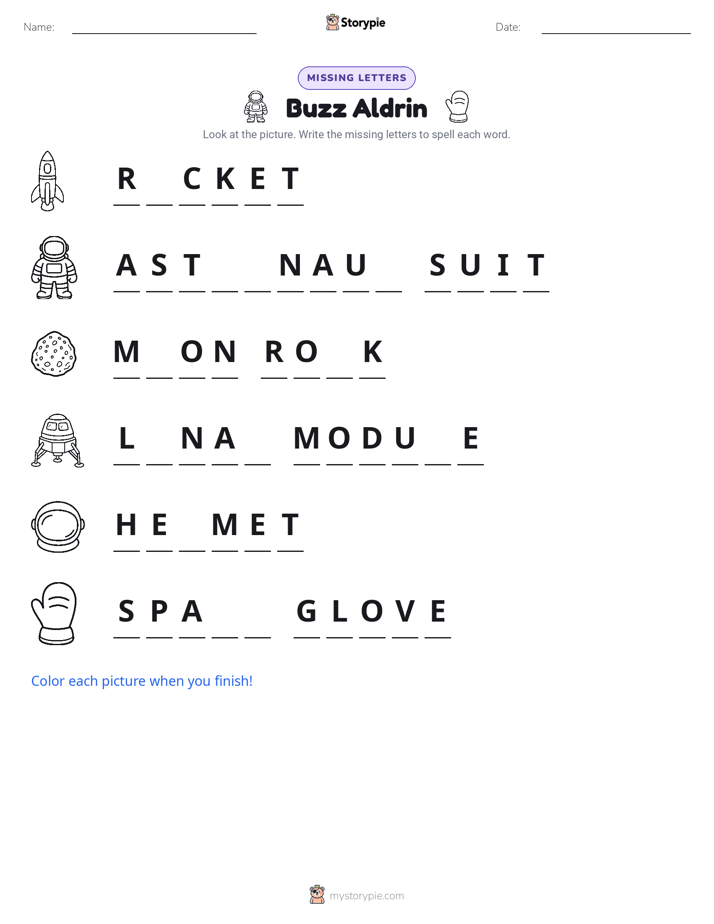
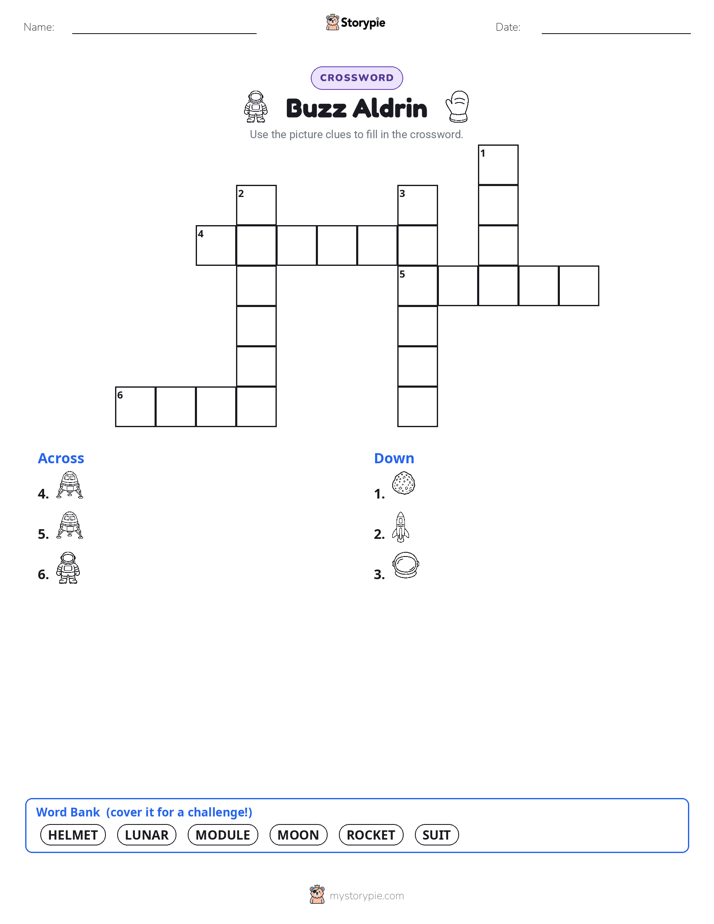
Print & create
Answer keys·No prep·Free with an account
28 worksheets · answer keys · full story · quiz · Ages 10-12 · CEFR B2
Plus adds 164,000+ more stories in 27 languages, audio for every one, and printables for all of them.
Just want Buzz Aldrin?
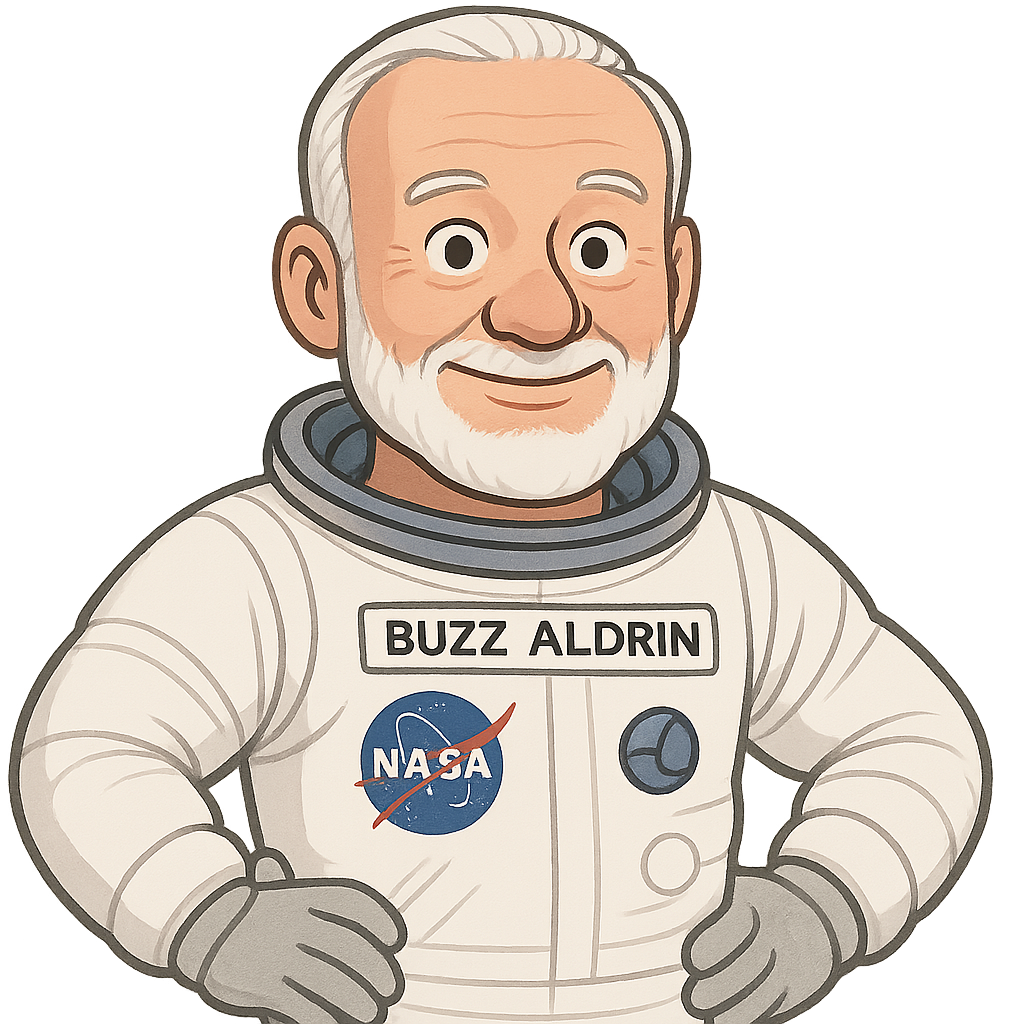
Hello. You might know me as the second person to walk on the Moon, but my story started long before that famous journey. My name is Buzz Aldrin, and I'd like to share it with you. I was born Edwin Eugene Aldrin Jr. on January 20th, 1930, in Montclair, New Jersey. My little sister had trouble saying the word “brother,” and it came out sounding like “buzzer.” Soon, everyone just called me Buzz. My father was an aviation pioneer, a true expert in the early days of flight, and from a young age, I was fascinated by the idea of soaring through the sky. That love for flying guided my path. I attended the United States Military Academy at West Point, a place that trains leaders, and I graduated with a degree in mechanical engineering in 1951. Shortly after, I became a fighter pilot in the U.S. Air Force. During the Korean War, I flew many combat missions, learning how to stay calm and focused under incredible pressure. Those experiences in the cockpit of a jet fighter were preparing me for an adventure greater than anything I could have imagined at the time.
After my service as a pilot, I knew I wanted to continue my education and push the boundaries of what was possible in the air and beyond. I enrolled at the prestigious Massachusetts Institute of Technology, or MIT, where I dedicated myself to studying astronautics—the science of space travel. In 1963, I earned my doctorate degree, and my classmates gave me a new nickname: 'Dr. Rendezvous.' This was because my special area of research was a complex but vital subject called orbital rendezvous. I developed techniques for how two spacecraft, flying at thousands of miles per hour, could meet up and connect perfectly while in orbit around the Earth. At that time, NASA was planning missions to the Moon, and they needed astronauts who understood exactly how to perform this delicate maneuver. My unique expertise was just what they were looking for. In October of 1963, I was incredibly honored to be selected as a member of NASA's third group of astronauts.
Buzz Aldrin: A Journey to the Moon and Beyond
Hello. You might know me as the second person to walk on the Moon, but my story started long before that famous journey. My name is Buzz Aldrin, and I'd like to share it with you. I was born Edwin Eugene Aldrin Jr. on January 20th, 1930, in Montclair, New Jersey. My little sister had trouble saying the word “brother,” and it came out sounding like “buzzer.” Soon, everyone just called me Buzz. My father was an aviation pioneer, a true expert in the early days of flight, and from a young age, I was fascinated by the idea of soaring through the sky. That love for flying guided my path. I attended the United States Military Academy at West Point, a place that trains leaders, and I graduated with a degree in mechanical engineering in 1951. Shortly after, I became a fighter pilot in the U.S. Air Force. During the Korean War, I flew many combat missions, learning how to stay calm and focused under incredible pressure. Those experiences in the cockpit of a jet fighter were preparing me for an adventure greater than anything I could have imagined at the time.
After my service as a pilot, I knew I wanted to continue my education and push the boundaries of what was possible in the air and beyond. I enrolled at the prestigious Massachusetts Institute of Technology, or MIT, where I dedicated myself to studying astronautics—the science of space travel. In 1963, I earned my doctorate degree, and my classmates gave me a new nickname: 'Dr. Rendezvous.' This was because my special area of research was a complex but vital subject called orbital rendezvous. I developed techniques for how two spacecraft, flying at thousands of miles per hour, could meet up and connect perfectly while in orbit around the Earth. At that time, NASA was planning missions to the Moon, and they needed astronauts who understood exactly how to perform this delicate maneuver. My unique expertise was just what they were looking for. In October of 1963, I was incredibly honored to be selected as a member of NASA's third group of astronauts.
My first journey into space came in November 1966, aboard the Gemini 12 mission. My crewmate was the experienced astronaut Jim Lovell, and our four-day mission was the last of the Gemini program, designed to test the technologies needed for the upcoming Apollo missions to the Moon. One of my most important tasks was to perform an EVA, or Extra-Vehicular Activity—what most people call a spacewalk. Floating outside our small capsule, tethered only by a cord, was an unforgettable experience. But it wasn't just for sightseeing. I had work to do. Using specially designed handholds and foot restraints on the outside of the spacecraft, I completed a series of tasks to prove that astronauts could work effectively in the weightless environment of space for extended periods. In total, I spent over five hours outside the Gemini capsule across three separate spacewalks, demonstrating that humans could handle the complex jobs that would be required to land on and explore the Moon.
Then came the mission that would change the world forever. In the summer of 1969, I was chosen as the Lunar Module Pilot for Apollo 11. My crewmates were Commander Neil Armstrong and Command Module Pilot Michael Collins. On July 16th, 1969, we sat atop the most powerful rocket ever built, the Saturn V. The launch was like a controlled earthquake, a thunderous roar that pushed us toward the heavens. After a three-day journey, Neil and I separated from Michael Collins in the Command Module and piloted our Lunar Module, which we named the Eagle, down to the Moon's surface. The landing on July 20th, 1969, was one of the most intense moments of my life, as Neil carefully guided us over craters and boulders to find a safe spot. A few hours later, I followed him down the ladder and stepped onto the lunar surface. The dust was fine, like powder. I looked around at what I called 'magnificent desolation'—a beautiful, silent, and empty landscape. Looking up, I saw our home, the Earth, a brilliant blue and white marble hanging in the vast blackness of space. It was a moment of pure awe.
Returning to Earth as a hero was an overwhelming experience. The world celebrated our achievement, but for me, the journey was far from over. I retired from NASA in 1971, but I never stopped looking toward the stars. My experiences in space gave me a unique perspective on humanity's potential, and I have dedicated my life to advocating for the future of space exploration. I believe that the Apollo 11 mission was not an end but a beginning. It proved what we can accomplish when we work together with courage and ingenuity. For decades, I have been a passionate supporter of sending humans to Mars. I believe our destiny lies in becoming a multi-planetary species. I continue to write, speak, and develop plans to inspire a new generation of explorers to take that next giant leap. It is my deepest hope that you will be the ones to continue the journey, to keep pushing the boundaries of what is possible, and to always look forward with curiosity and determination.
Wow facts
About
Buzz Aldrin is an American former astronaut, engineer, and fighter pilot. He was the second person to walk on the Moon during the Apollo 11 mission in 1969.
Take a Quiz
Question 1 of 5
What was Buzz Aldrin's special area of study at MIT that made him so valuable to NASA?
Explore next

Want to do even more?
Go beyond exploring. Unlock tools that turn every story into real learning.

Storypie Plus for families
Full stories, quizzes, and printables. Nights and car rides, sorted.
- Unlimited audio stories
- Create Mode: your child stars in the story
- Offline downloads
- Printable worksheets & coloring pages

Why Storypie for Schools
Students engaged. Prep in seconds. Evenings back to you.
- Worksheets & Quizzes
- Classroom Management
- Formative Assessment
- Custom Curriculum & Lesson Plans
- 27 Languages

Why Storypie for Homeschool
Curriculum done. They'll ask for more. Hours back in your day.
- Worksheet Generator
- First-Person Audio Stories
- Built-in Comprehension Quizzes
- Custom Curriculum & Lesson Plans
- Print & Go Activities