English

Carl Wilhelm Scheele
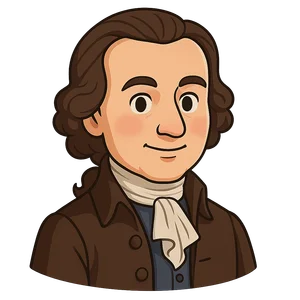
Carl Wilhelm Scheele was a German-Swedish pharmaceutical chemist who is credited with independently…
Reads at Grades 6–8 Listens at Grades 4–8
Print & create
Answer keys·No prep·Free with an account
28 worksheets · answer keys · full story · quiz · Ages 10-12 · CEFR B2
Plus adds 244,000+ more stories in 27 languages, audio for every one, and printables for all of them.
Just want Carl Wilhelm Scheele?
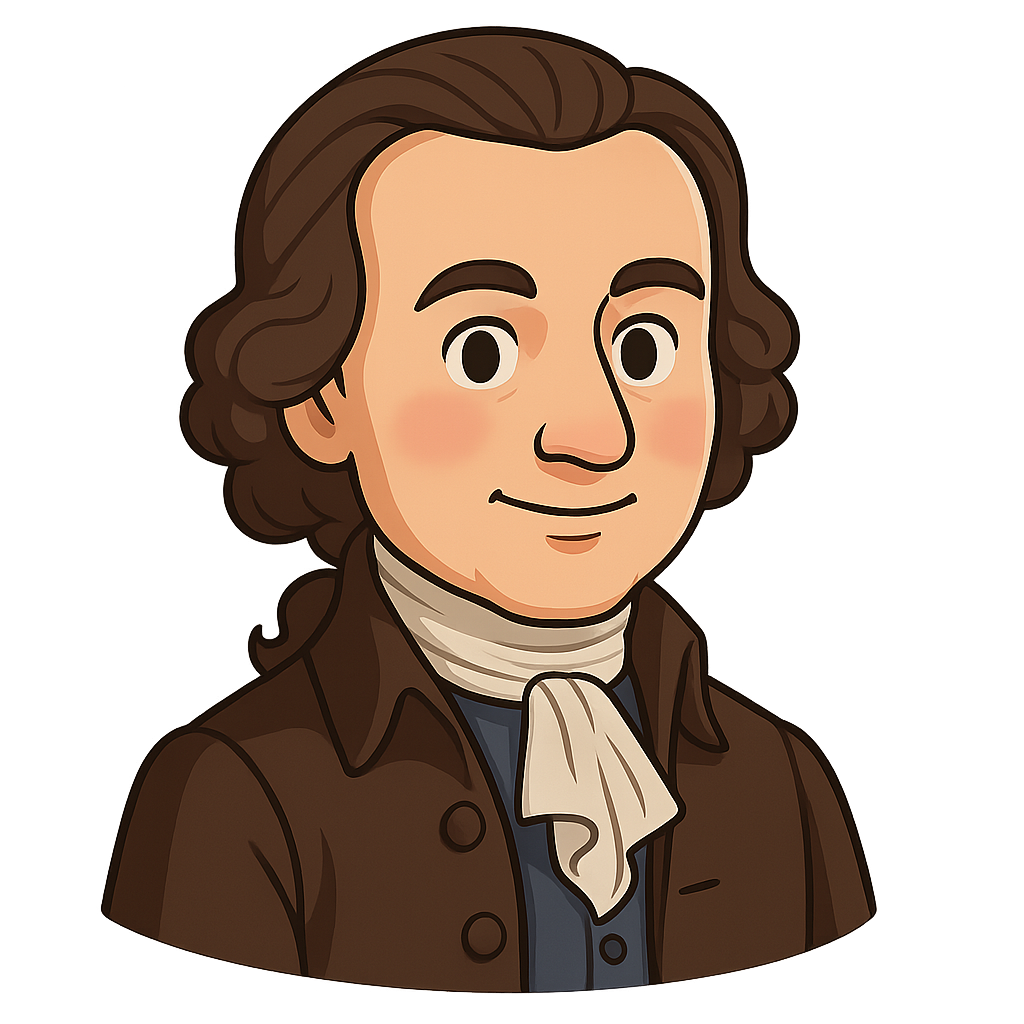
Hello! My name is Carl Wilhelm Scheele, and I want to tell you the story of my life filled with experiments and amazing discoveries. I was born on December 9th, 1742, in a town called Stralsund, which was then part of Swedish Pomerania. My father was a merchant, and I grew up in a busy household with ten brothers and sisters. From a young age, I was more interested in learning than in playing games. I especially loved the apothecary shop, which is what we called a pharmacy back then. The rows of mysterious jars, the strange smells, and the way the pharmacists mixed powders and liquids to make medicines fascinated me. When I was just 14 years old, in 1757, I left home to become an apprentice to an apothecary in Gothenburg, Sweden. This was the beginning of my true education and the start of my lifelong passion for chemistry.
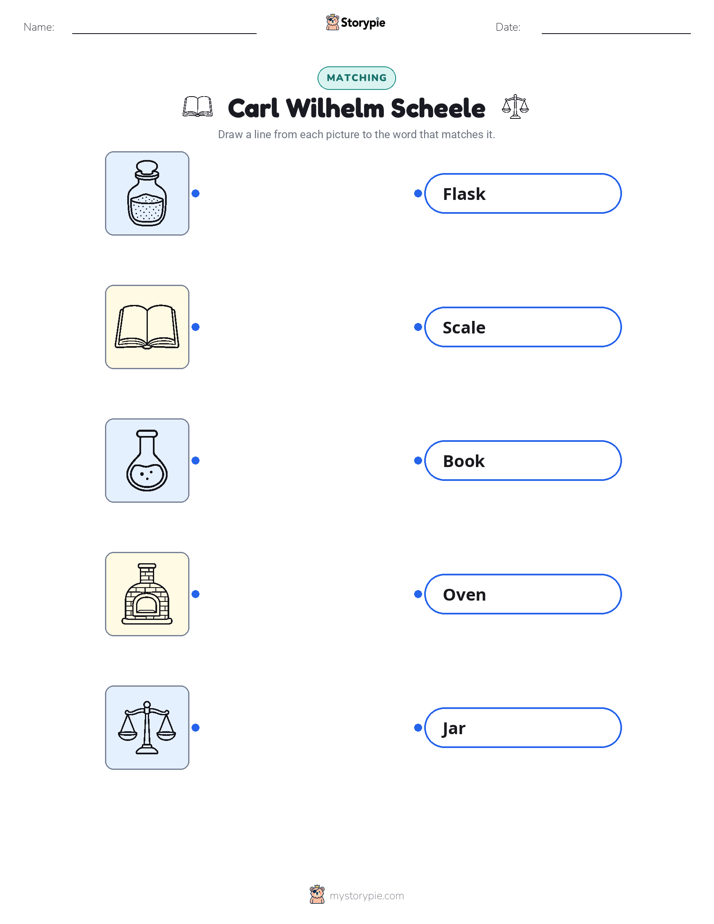
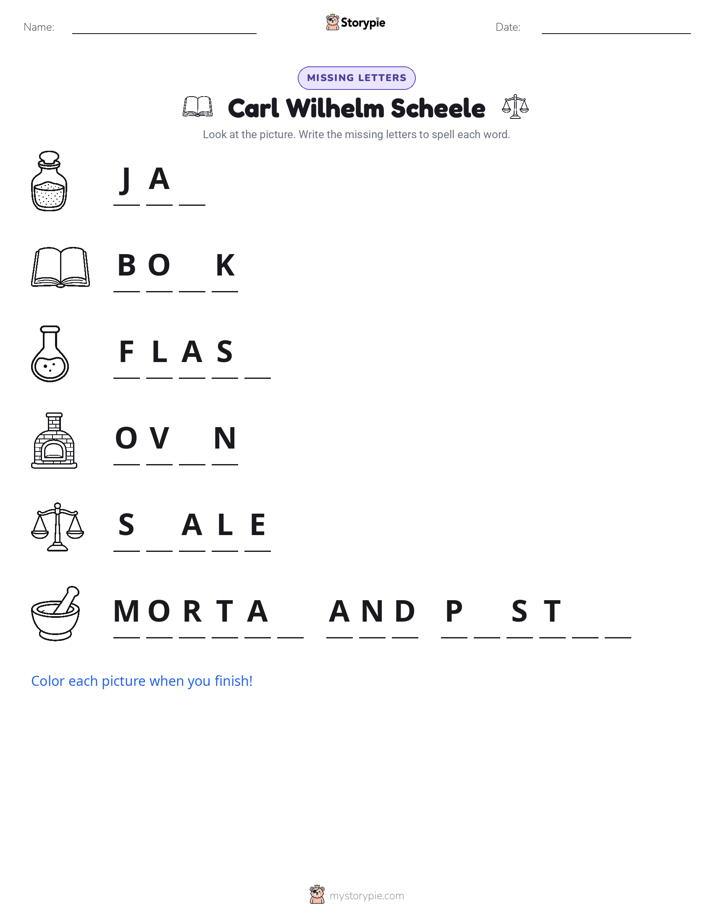
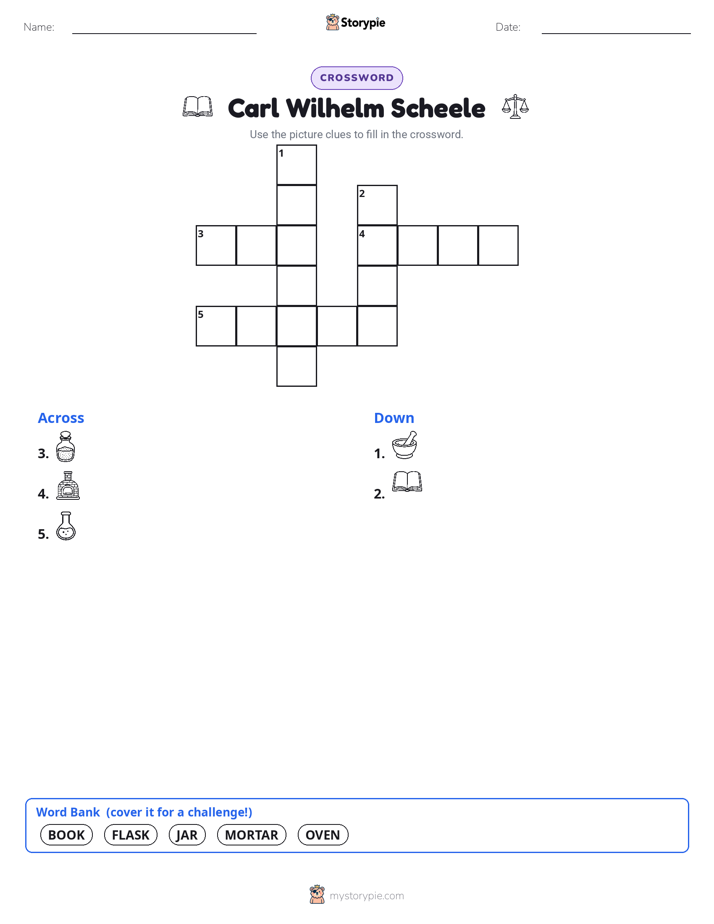
Working in the pharmacy was the best school I could have imagined. My boss gave me access to his library, and I would stay up late at night, reading every chemistry book I could find. During the day, I learned the practical skills of a pharmacist, but my real work began after hours. I set up my own small laboratory and used the chemicals in the shop to repeat the experiments I read about. I didn't have fancy equipment; I used simple glass bottles, ovens, and whatever I could find. I learned by doing, testing, and observing. It was during this time, throughout the 1760s, that I developed my skills. I learned to be patient and to look very closely at what happened when I mixed different substances. I moved to different pharmacies in Malmö and Stockholm, and in 1770, I settled in the great university city of Uppsala. There, I had access to a better laboratory and could finally dedicate more time to my own research.
The Story of Carl Wilhelm Scheele
Hello! My name is Carl Wilhelm Scheele, and I want to tell you the story of my life filled with experiments and amazing discoveries. I was born on December 9th, 1742, in a town called Stralsund, which was then part of Swedish Pomerania. My father was a merchant, and I grew up in a busy household with ten brothers and sisters. From a young age, I was more interested in learning than in playing games. I especially loved the apothecary shop, which is what we called a pharmacy back then. The rows of mysterious jars, the strange smells, and the way the pharmacists mixed powders and liquids to make medicines fascinated me. When I was just 14 years old, in 1757, I left home to become an apprentice to an apothecary in Gothenburg, Sweden. This was the beginning of my true education and the start of my lifelong passion for chemistry.
Working in the pharmacy was the best school I could have imagined. My boss gave me access to his library, and I would stay up late at night, reading every chemistry book I could find. During the day, I learned the practical skills of a pharmacist, but my real work began after hours. I set up my own small laboratory and used the chemicals in the shop to repeat the experiments I read about. I didn't have fancy equipment; I used simple glass bottles, ovens, and whatever I could find. I learned by doing, testing, and observing. It was during this time, throughout the 1760s, that I developed my skills. I learned to be patient and to look very closely at what happened when I mixed different substances. I moved to different pharmacies in Malmö and Stockholm, and in 1770, I settled in the great university city of Uppsala. There, I had access to a better laboratory and could finally dedicate more time to my own research.
My time in Uppsala was incredibly exciting. It felt like I was unlocking secrets of the natural world that no one had ever seen before. One of my first major discoveries was an acid found in sour milk, which we now call lactic acid. I went on to find many other new substances. In 1774, I was working with a mineral called pyrolusite when I discovered a greenish-yellow gas with a very strong smell. This was a brand-new element, which is now called chlorine. I also found other elements like manganese, molybdenum, and tungsten, often with the help of other scientists. I even discovered glycerin, a sweet substance from fats, and several new acids from fruits and other plants. My method was simple: I was curious about everything. I would heat things, mix them, and sometimes even taste them—a very dangerous habit that chemists today know not to do! But in the 1700s, it was one of the few ways we had to identify new chemicals.
Perhaps my most important discovery was something all around us: a part of the air itself. By 1772, through a series of careful experiments where I heated different substances, I managed to produce a gas that made candles burn brighter and mice more active. I called it 'fire air' because of its role in burning. I realized it was the part of the air that is necessary for breathing and combustion. Today, you know this gas as oxygen. I wrote down all my findings in a book called Chemical Treatise on Air and Fire. Unfortunately, my publisher was very slow, and the book wasn't printed until 1777. In the meantime, two other brilliant scientists, Joseph Priestley and Antoine Lavoisier, made similar discoveries and published their work before mine appeared. Because of this delay, they often received the credit, but I know that I was the very first person to isolate this essential element.
I continued my work in a small town called Köping, where I bought my own pharmacy in 1775. My work with so many chemicals, including dangerous ones like arsenic and lead, eventually took a toll on my health. I lived to be 43 years old, passing away in 1786. Though I didn't always get the fame or credit during my lifetime, my work laid the foundation for modern chemistry. I am remembered for discovering more elements than almost any other single person. My story teaches us that curiosity and hard work are the most important tools a scientist can have, and that the joy of discovery is its own greatest reward.
Wow facts
About
Carl Wilhelm Scheele was a German-Swedish pharmaceutical chemist who is credited with independently discovering oxygen and several other chemical elements and compounds in the 18th century. However, Joseph Priestley published his findings first.
Take a Quiz
Question 1 of 5
What is the main lesson Carl Wilhelm Scheele's story teaches about science?
Explore next




Want to do even more?
Go beyond exploring. Unlock tools that turn every story into real learning.

Storypie Plus for families
Full stories, quizzes, and printables. Nights and car rides, sorted.
- Unlimited audio stories
- Create Mode: your child stars in the story
- Offline downloads
- Printable worksheets & coloring pages

Why Storypie for Schools
Students engaged. Prep in seconds. Evenings back to you.
- Worksheets & Quizzes
- Classroom Management
- Formative Assessment
- Custom Curriculum & Lesson Plans
- 27 Languages

Why Storypie for Homeschool
Curriculum done. They'll ask for more. Hours back in your day.
- Worksheet Generator
- First-Person Audio Stories
- Built-in Comprehension Quizzes
- Custom Curriculum & Lesson Plans
- Print & Go Activities