English

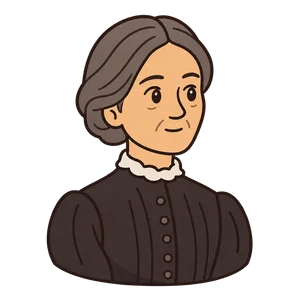
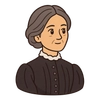
Caroline Herschel
Caroline Herschel was a pioneering German-British astronomer who was the first woman to discover a comet…
Reads at Grades 6–8 Listens at Grades 4–8
Print & create
Answer keys·No prep·Free with an account
28 worksheets · answer keys · full story · quiz · Ages 10-12 · CEFR B2
Plus adds 290,000+ more stories in 27 languages, audio for every one, and printables for all of them.
Just want Caroline Herschel?
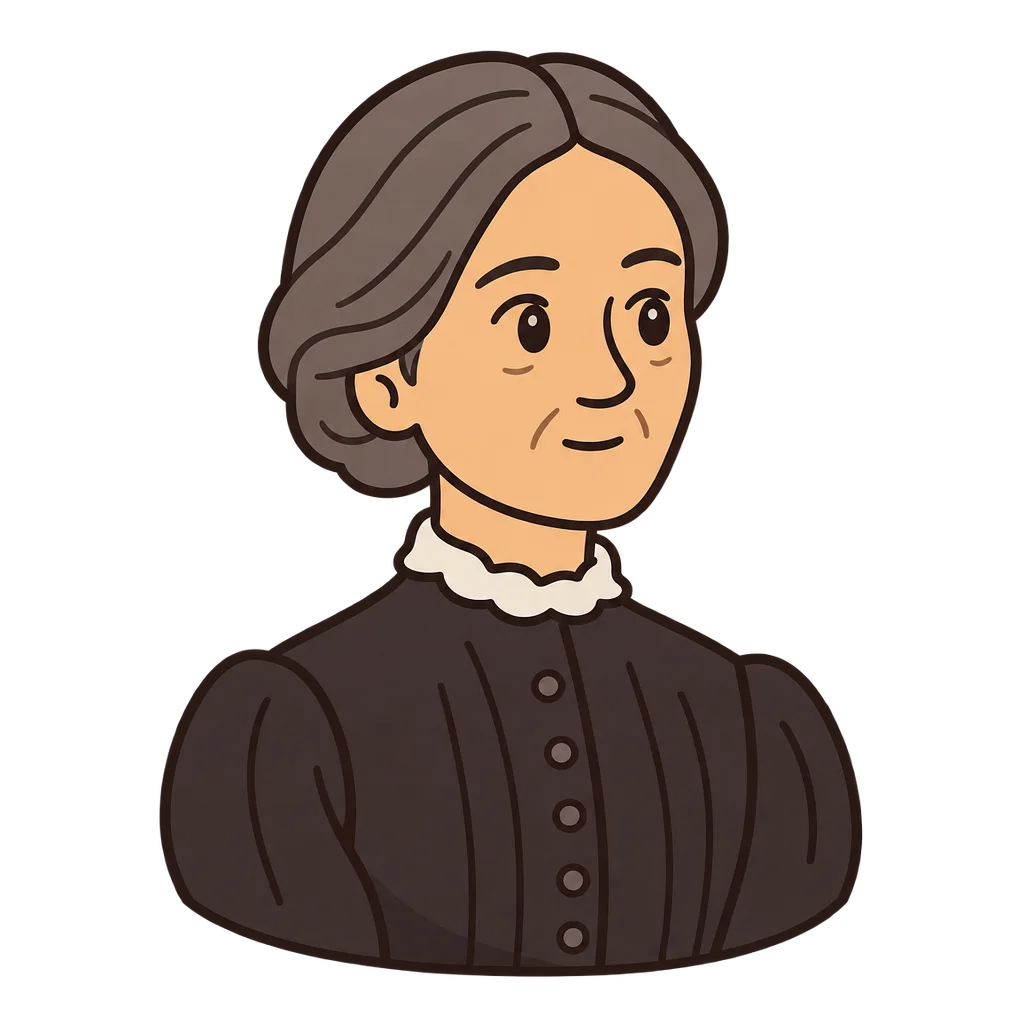
Hello. My name is Caroline Herschel, and I spent my life looking up at the stars. I was born on March 16th, 1750, in a town called Hanover, which was then part of Germany. When I was a young girl, several illnesses stopped me from growing very tall, and my mother believed my small size meant my future was limited to managing a household. She thought learning to cook and clean was all I needed. But my father, Isaac, saw a spark of curiosity in me. In secret, he taught me things my mother didn't approve of for a girl. We studied music and mathematics, and he would take me out into the quiet night to gaze at the constellations. He pointed out the planets and distant stars, and those secret lessons lit a fire in my mind that would guide the rest of my life.
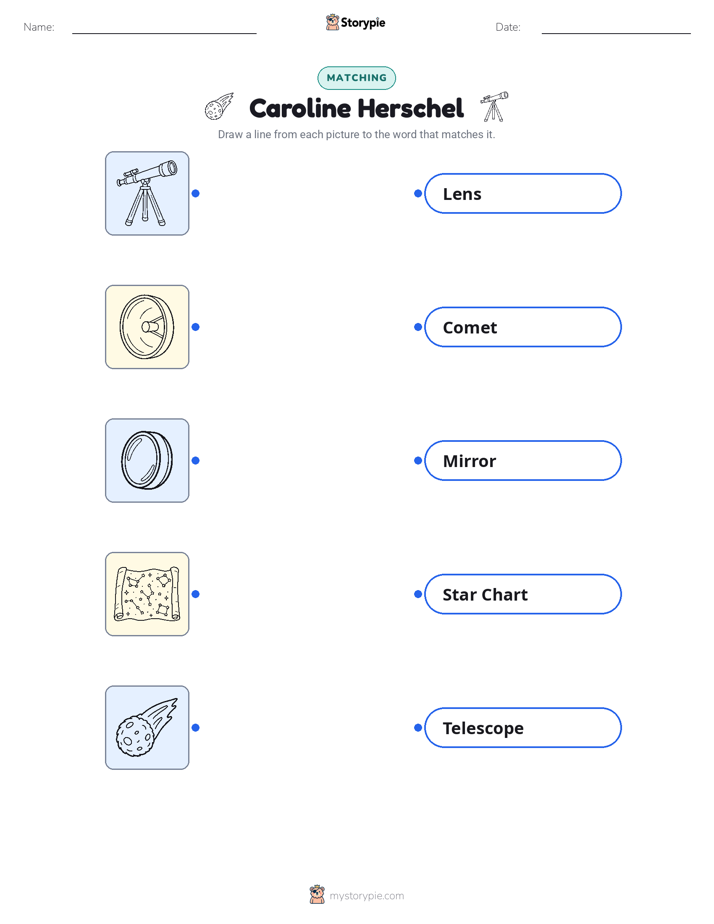
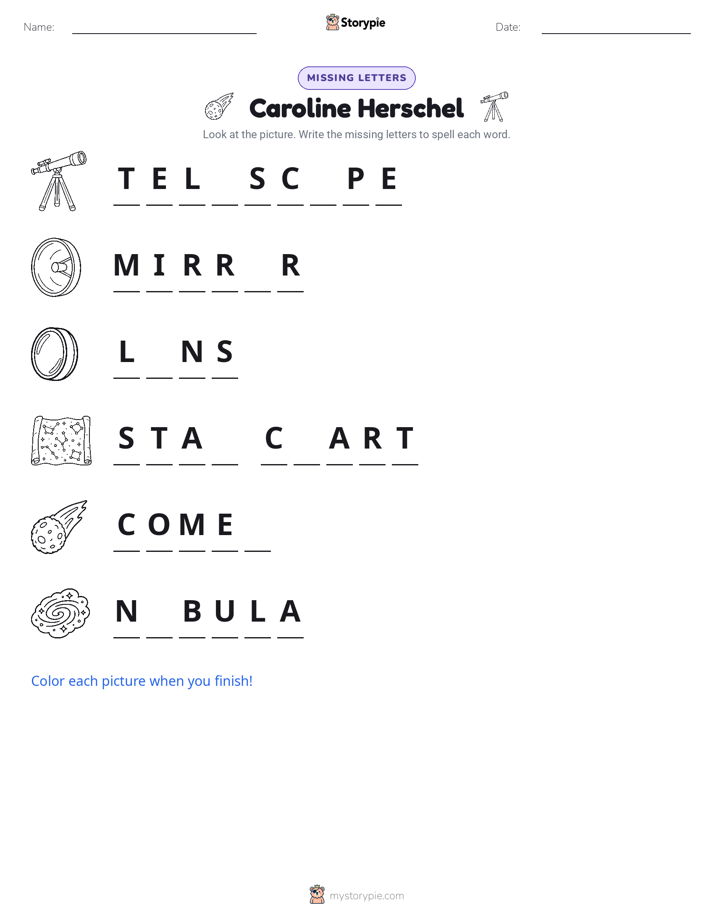
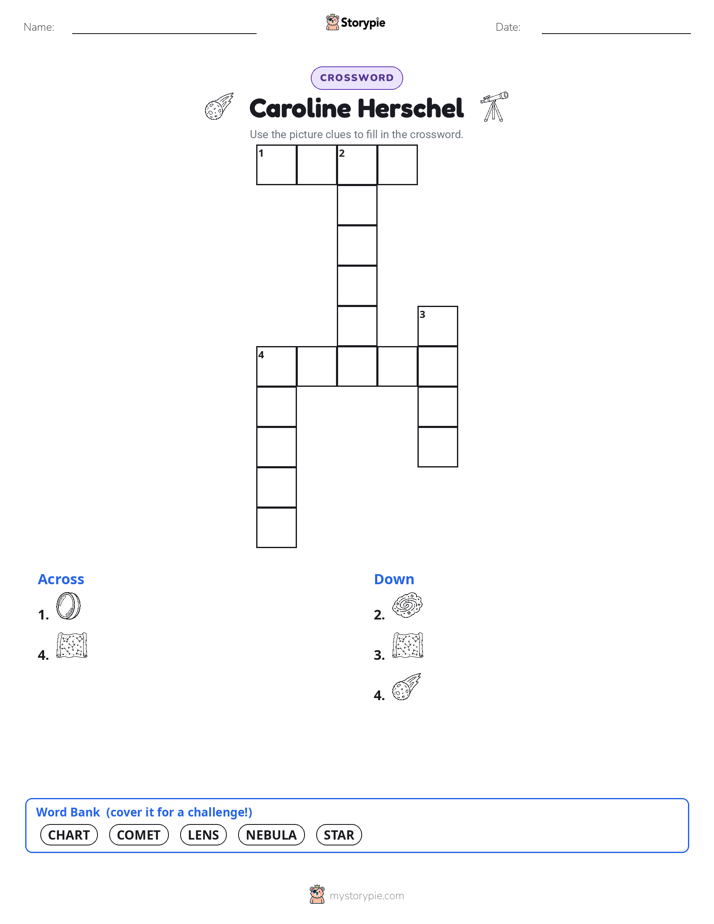
My world changed completely in 1772. My older brother, William, who was a talented musician, invited me to leave Hanover and join him in the beautiful city of Bath, England. I was 22 years old and eager for a new beginning. In England, I trained hard and became a professional singer, and I felt great joy performing for audiences. But William had another passion that soon began to fill every corner of our home: astronomy. He was fascinated by the night sky and was determined to build telescopes more powerful than any that existed. Soon, our house was less of a music studio and more of a workshop, cluttered with lenses that needed grinding, large mirrors waiting to be polished, and star charts spread across every table. I saw his excitement and soon found myself drawn into his world of stars.
Caroline Herschel: A Comet of Her Own
Hello. My name is Caroline Herschel, and I spent my life looking up at the stars. I was born on March 16th, 1750, in a town called Hanover, which was then part of Germany. When I was a young girl, several illnesses stopped me from growing very tall, and my mother believed my small size meant my future was limited to managing a household. She thought learning to cook and clean was all I needed. But my father, Isaac, saw a spark of curiosity in me. In secret, he taught me things my mother didn't approve of for a girl. We studied music and mathematics, and he would take me out into the quiet night to gaze at the constellations. He pointed out the planets and distant stars, and those secret lessons lit a fire in my mind that would guide the rest of my life.
My world changed completely in 1772. My older brother, William, who was a talented musician, invited me to leave Hanover and join him in the beautiful city of Bath, England. I was 22 years old and eager for a new beginning. In England, I trained hard and became a professional singer, and I felt great joy performing for audiences. But William had another passion that soon began to fill every corner of our home: astronomy. He was fascinated by the night sky and was determined to build telescopes more powerful than any that existed. Soon, our house was less of a music studio and more of a workshop, cluttered with lenses that needed grinding, large mirrors waiting to be polished, and star charts spread across every table. I saw his excitement and soon found myself drawn into his world of stars.
My career as a singer began to fade into the background as I became William's apprentice in astronomy. It was difficult, demanding work. Together, we spent countless hours grinding and polishing huge metal mirrors to catch the faint light of distant stars. Making a perfect mirror could take months of patient labor. While William designed the telescopes, I learned the complex mathematics required to calculate the positions of celestial objects and predict their movements across the sky. I became his faithful assistant during long, cold nights of observation. He would be high up on a ladder peering through the eyepiece of his giant telescope, and he would call out his observations to me below. I sat at a desk nearby, carefully writing down every detail, every measurement, every faint smudge of light he described. It was my job to make sure no discovery was ever lost.
After years of assisting William, I began to search the skies on my own with a smaller telescope. Then, on the night of August 1st, 1786, something incredible happened. I spotted a faint, fuzzy object moving slowly against the background of stars. I had discovered my very first comet! The feeling was thrilling; I had found something new in the vast universe all by myself. My discovery brought me recognition, and in 1787, King George III granted me an annual salary to officially serve as my brother's assistant. This was a historic moment, as I became the first woman in England to be paid for her contributions to science. That first comet was just the beginning. In the years that followed, I would go on to discover seven more comets and identify many new nebulae, which are beautiful, cloud-like objects deep in space.
Discovering new things in the sky was exciting, but the work of a scientist also requires careful organization. An observation is only useful if it is recorded accurately and shared with others. I took on the enormous task of reorganizing the existing star catalogues. One famous catalogue, created by a previous astronomer, was filled with errors and was difficult to use. I spent years carefully checking calculations, correcting mistakes, and adding hundreds of stars that had been missed. After my brother William passed away in 1822, this work became even more important. I created a new, organized catalogue of nebulae that my brilliant nephew, John Herschel, could use to continue our family's work of mapping the heavens. My goal was to create a clear and reliable map for future generations of astronomers.
After William's passing, I returned to my childhood home of Hanover to live out my remaining years. Even though I was no longer actively observing the sky every night, my work was not forgotten. In 1828, I received the Gold Medal from the Royal Astronomical Society. I was the very first woman to be honored in this way, and it was a moment of immense pride. I lived to be 97 years old, and when I looked back on my life, I saw a journey I could never have imagined as that small girl in Hanover. My work, alongside my brother's, helped create a new and far more detailed map of the universe. I hope my story reminds you that no matter the obstacles you face or how small you may feel, a curious mind and a determined spirit can help you reach for the stars.
Wow facts
About
Caroline Herschel was a pioneering German-British astronomer who was the first woman to discover a comet, the first woman to be paid for her scientific work, and the first woman to be awarded the Gold Medal of the Royal Astronomical Society.
Take a Quiz
Question 1 of 5
Based on the story, what was the main conflict Caroline faced in her childhood and how was it resolved?
Explore next



Want to do even more?
Go beyond exploring. Unlock tools that turn every story into real learning.

Storypie Plus for families
Full stories, quizzes, and printables. Nights and car rides, sorted.
- Unlimited audio stories
- Create Mode: your child stars in the story
- Offline downloads
- Printable worksheets & coloring pages

Why Storypie for Schools
Students engaged. Prep in seconds. Evenings back to you.
- Worksheets & Quizzes
- Classroom Management
- Formative Assessment
- Custom Curriculum & Lesson Plans
- 27 Languages

Why Storypie for Homeschool
Curriculum done. They'll ask for more. Hours back in your day.
- Worksheet Generator
- First-Person Audio Stories
- Built-in Comprehension Quizzes
- Custom Curriculum & Lesson Plans
- Print & Go Activities