English

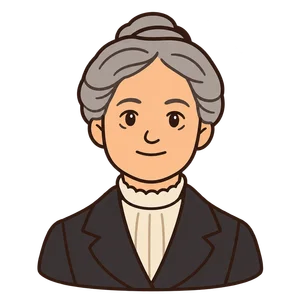
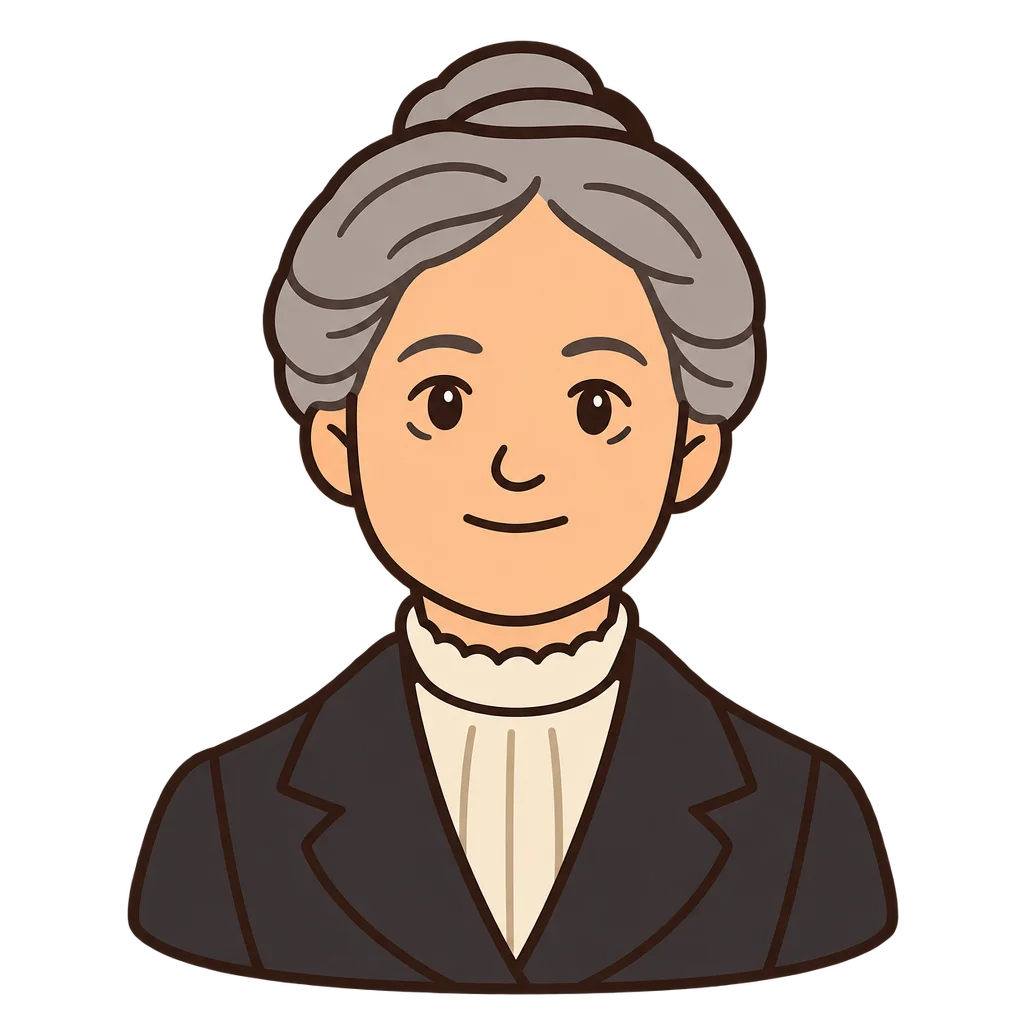
Carrie Chapman Catt
Carrie Chapman Catt was a key American women's suffrage leader who campaigned for the Nineteenth Amendment to…
Reads at Grades 6–8 Listens at Grades 4–8
Print & create
Answer keys·No prep·Free with an account
28 worksheets · answer keys · full story · quiz · Ages 10-12 · CEFR B2
Plus adds 290,000+ more stories in 27 languages, audio for every one, and printables for all of them.
Just want Carrie Chapman Catt?
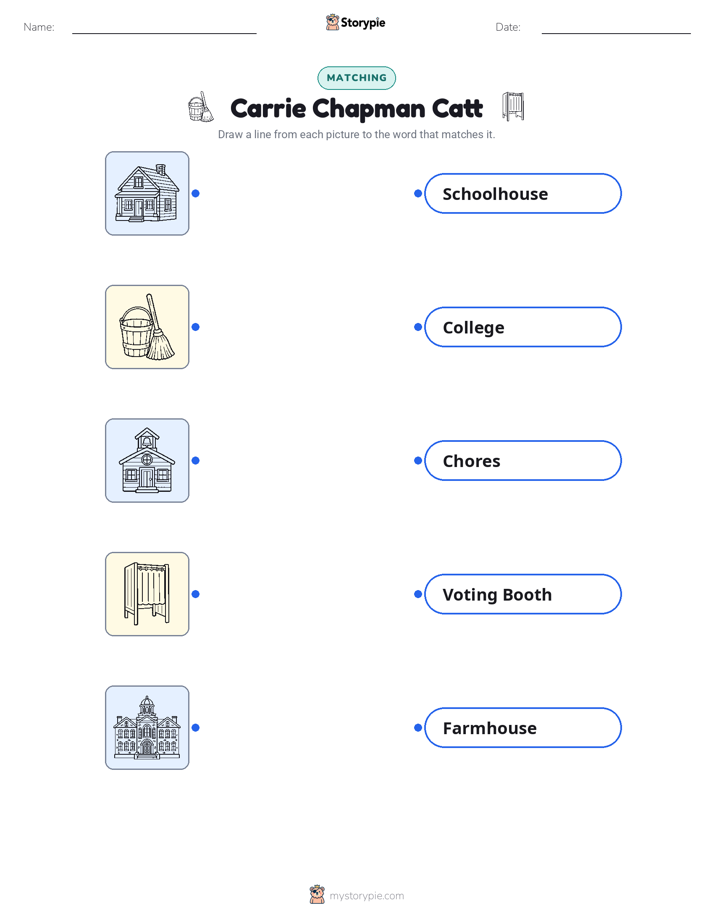
Hello, my name is Carrie Chapman Catt, and I believe that a single question can change the world. I was born on a chilly winter day, January 9th, 1859, and spent my girlhood on a farm in Iowa. Life was full of chores and schoolwork, but it was a political event that truly shaped my future. The year was 1872, and a presidential election was happening. I was 13 years old and brimming with excitement. I watched as my father prepared to go into town to vote, and I naturally assumed my mother would be going with him. When I saw that she was staying home, I was confused. I asked her why she wasn't going, and the answer shocked me: women were not allowed to vote. It simply didn't make sense. My mother was just as intelligent and hardworking as my father, so why didn't her voice count? That question echoed in my mind for years. It planted a seed of determination in me to fight for equality and justice. In those days, many people believed a girl’s education wasn't as important as a boy’s, but that question about the vote fueled my desire to learn everything I could about the world and how to change it.
My passion for education became my first tool for independence. I was determined to go to college, so I worked as a teacher to save up the money I needed. It was hard work, but it paid off. I enrolled at Iowa Agricultural College, which is now Iowa State University. It wasn't easy being one of the only young women there, but I focused on my studies and, in 1880, I graduated as the only woman in my class. After college, I returned to teaching and eventually became one of the country's first female school superintendents, which meant I was in charge of several schools. During this time, I married a newspaper editor named Leo Chapman. Tragically, he passed away not long after we were married, and I had to find a new way to support myself. I began working as a journalist. These experiences—making my own way, leading schools, and observing the world as a reporter—strengthened my conviction. I saw over and over how laws made by men affected women's lives. I knew it was time to do more than just ask questions. In 1887, I joined the Iowa Woman Suffrage Association, and my official journey as an activist began.
Carrie Chapman Catt: A Voice for a Vote
Hello, my name is Carrie Chapman Catt, and I believe that a single question can change the world. I was born on a chilly winter day, January 9th, 1859, and spent my girlhood on a farm in Iowa. Life was full of chores and schoolwork, but it was a political event that truly shaped my future. The year was 1872, and a presidential election was happening. I was 13 years old and brimming with excitement. I watched as my father prepared to go into town to vote, and I naturally assumed my mother would be going with him. When I saw that she was staying home, I was confused. I asked her why she wasn't going, and the answer shocked me: women were not allowed to vote. It simply didn't make sense. My mother was just as intelligent and hardworking as my father, so why didn't her voice count? That question echoed in my mind for years. It planted a seed of determination in me to fight for equality and justice. In those days, many people believed a girl’s education wasn't as important as a boy’s, but that question about the vote fueled my desire to learn everything I could about the world and how to change it.
My passion for education became my first tool for independence. I was determined to go to college, so I worked as a teacher to save up the money I needed. It was hard work, but it paid off. I enrolled at Iowa Agricultural College, which is now Iowa State University. It wasn't easy being one of the only young women there, but I focused on my studies and, in 1880, I graduated as the only woman in my class. After college, I returned to teaching and eventually became one of the country's first female school superintendents, which meant I was in charge of several schools. During this time, I married a newspaper editor named Leo Chapman. Tragically, he passed away not long after we were married, and I had to find a new way to support myself. I began working as a journalist. These experiences—making my own way, leading schools, and observing the world as a reporter—strengthened my conviction. I saw over and over how laws made by men affected women's lives. I knew it was time to do more than just ask questions. In 1887, I joined the Iowa Woman Suffrage Association, and my official journey as an activist began.
Joining the suffrage movement felt like coming home. I poured all my energy into organizing and speaking, determined to help women gain the right to vote. In 1890, I married George Catt, a wonderful man who deeply believed in my work and supported me completely. His encouragement gave me the freedom to travel and dedicate myself to the cause. I soon began working on a national level with the National American Woman Suffrage Association, also known as NAWSA. It was there that I had the great honor of working alongside one of the founders of the movement, the incredible Susan B. Anthony. Learning from her was like learning from a living legend. In 1900, she passed the torch to me, and I became the president of NAWSA. I had to step down in 1904 for a time to care for my husband, but I never stopped working. I traveled the world, helping women in other countries organize their own suffrage campaigns. I returned to the presidency of NAWSA in 1915, at a critical moment. The movement needed a new direction. So, I developed what became known as the 'Winning Plan.' It was a strategy to fight for the vote on two fronts at once: we would pressure individual states to change their laws while also pushing for an amendment to the U.S. Constitution. This plan brought new energy and a clear focus to our fight.
The final years of our struggle were intense. The world was thrown into chaos with the start of World War I, and some people felt we should put our cause on hold. But we argued that women's contributions to the war effort—working in factories, serving as nurses, and holding the country together—were proof that we were deserving of full citizenship. We kept up the pressure with marches, speeches, and tireless lobbying. Finally, our moment came. On August 18th, 1920, the 19th Amendment to the Constitution was ratified. After decades of struggle, women in the United States had finally won the right to vote. It was a day of incredible joy and triumph for millions. But I knew our work wasn't finished. Winning the vote was one thing, but using it wisely was another. That same year, in 1920, I founded the League of Women Voters. Its purpose was to help the 20 million newly enfranchised women understand politics and become educated, active voters who could use their new power to improve their communities.
Looking back on the long road to victory, I am filled with pride for what we accomplished together. It was a struggle that required the courage and dedication of thousands of people, all united by a simple, powerful idea of fairness. I lived a long and fulfilling life, reaching the age of 88. Today, I am remembered as a determined leader and a strategist who helped millions of American women win their fundamental right to participate in democracy. My story is a reminder that one person with a question—like that 13-year-old girl on a farm in Iowa—can indeed start a movement. The important work of making our world a more just and fair place belongs to every single one of us.
Wow facts
About
Carrie Chapman Catt was a key American women's suffrage leader who campaigned for the Nineteenth Amendment to the United States Constitution, which gave U.S. women the right to vote in 1920.
Take a Quiz
Question 1 of 5
In your own words, retell the main events of Carrie Chapman Catt's journey to win the right to vote.
Explore next






Want to do even more?
Go beyond exploring. Unlock tools that turn every story into real learning.

Storypie Plus for families
Full stories, quizzes, and printables. Nights and car rides, sorted.
- Unlimited audio stories
- Create Mode: your child stars in the story
- Offline downloads
- Printable worksheets & coloring pages

Why Storypie for Schools
Students engaged. Prep in seconds. Evenings back to you.
- Worksheets & Quizzes
- Classroom Management
- Formative Assessment
- Custom Curriculum & Lesson Plans
- 27 Languages

Why Storypie for Homeschool
Curriculum done. They'll ask for more. Hours back in your day.
- Worksheet Generator
- First-Person Audio Stories
- Built-in Comprehension Quizzes
- Custom Curriculum & Lesson Plans
- Print & Go Activities