English

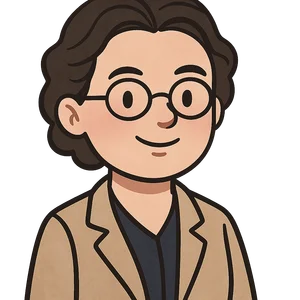
Cecilia Payne-Gaposchkin
A British-American astronomer and astrophysicist who, in her 1925 doctoral thesis…
Reads at Grades K-2 Listens at K–3
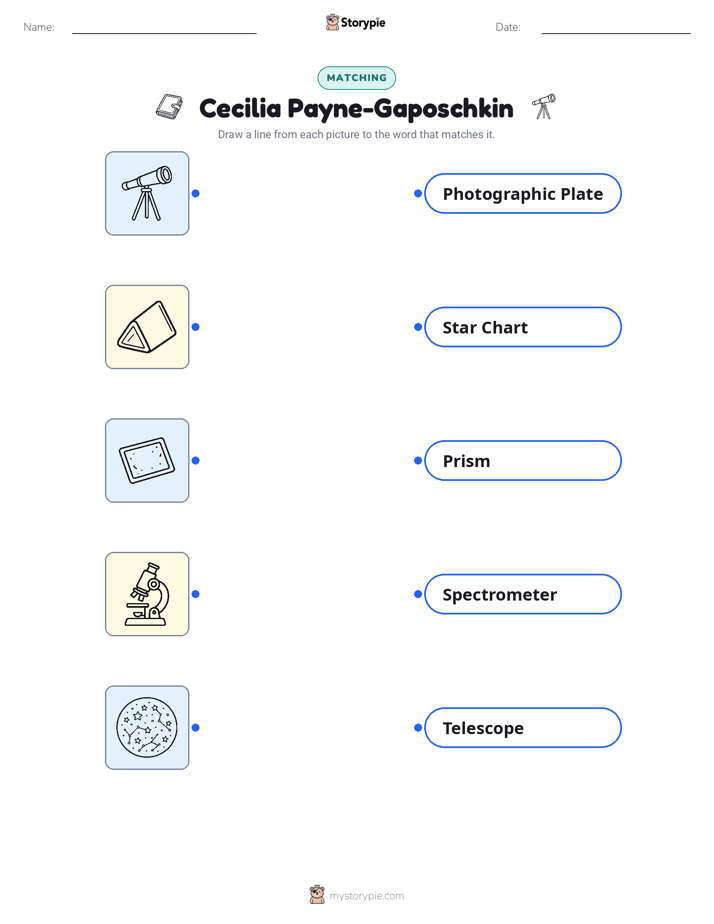
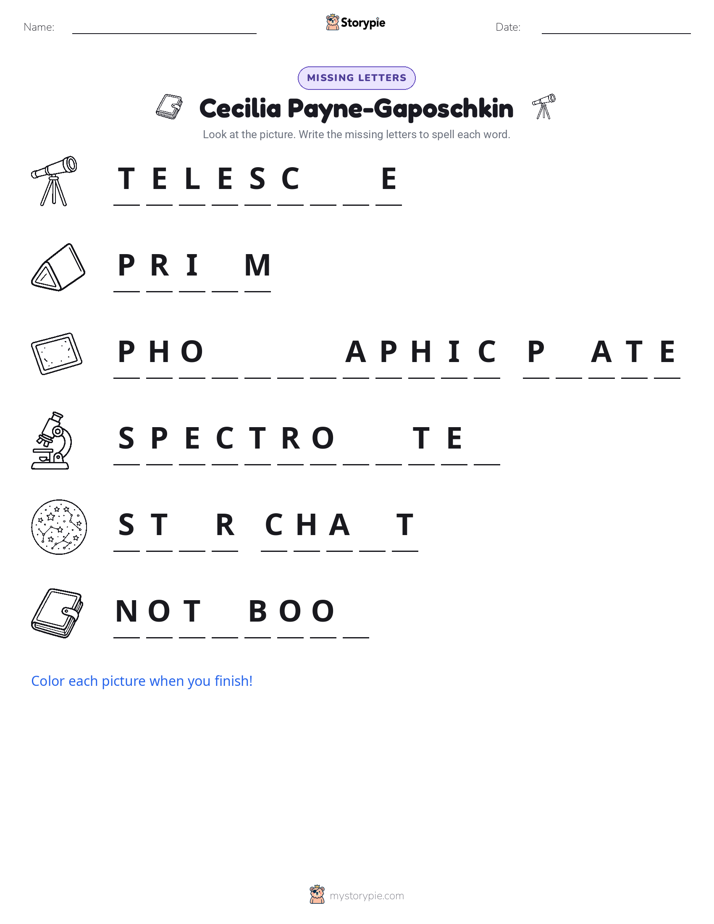
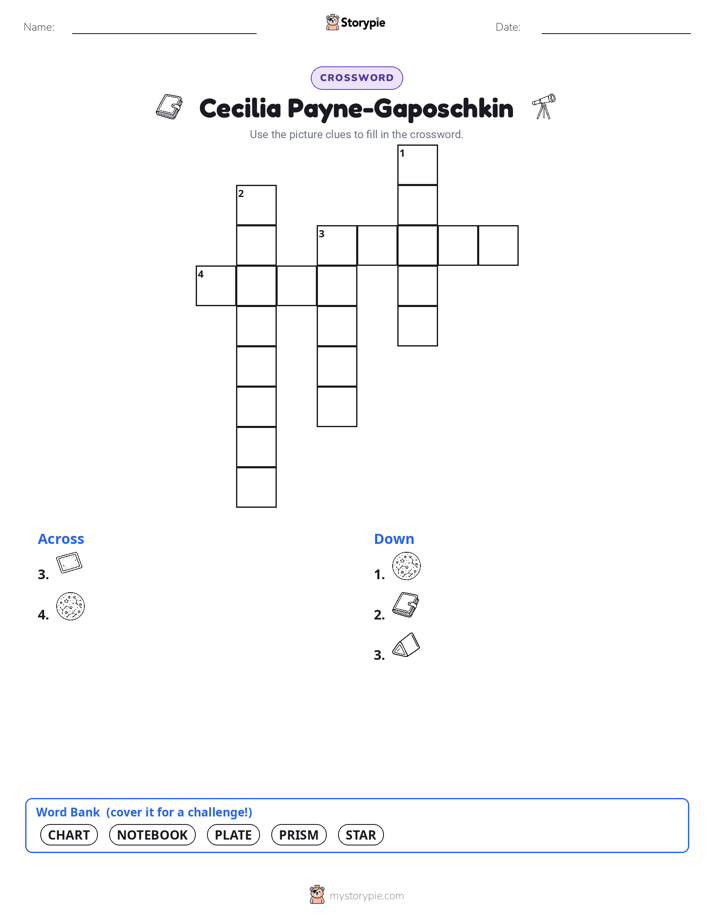
Print & create
Answer keys·No prep·Free with an account
28 worksheets · answer keys · full story · quiz · Ages 6-8 · CEFR A2
Plus adds 208,000+ more stories in 27 languages, audio for every one, and printables for all of them.
Just want Cecilia Payne-Gaposchkin?
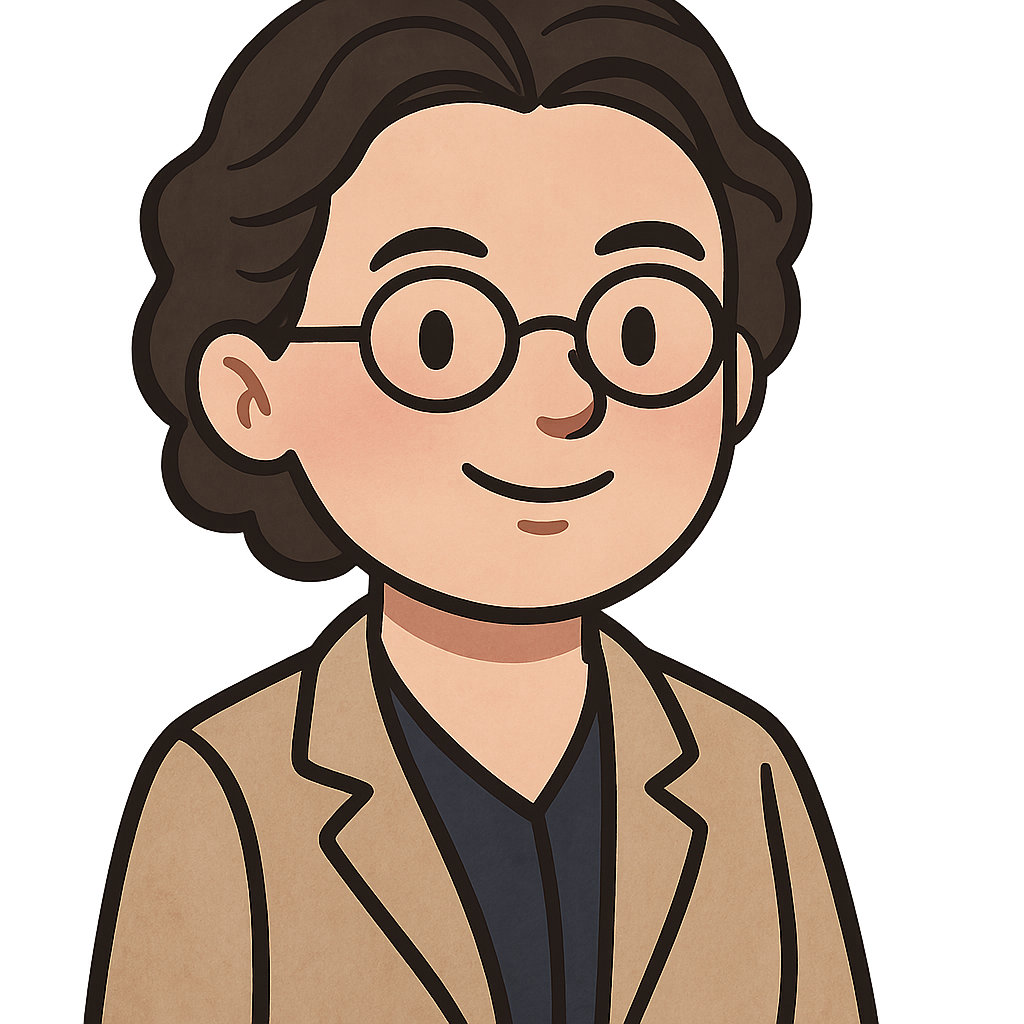
Hello! My name is Cecilia Payne-Gaposchkin, and I am an astronomer, which is a scientist who studies stars. When I was a little girl, born in England on May 10th, 1900, I loved science and asking lots of questions. I would look up at the beautiful night sky and wonder, 'What are those twinkling stars made of?'. I always knew I wanted to learn more about the universe. In 1919, I saw a very special event called a solar eclipse. That's when the moon passes in front of the sun and makes the daytime dark for a few minutes. Seeing that amazing sight made me want to study the stars more than anything else in the world.
I was so excited to learn that I went to a big school called Cambridge University. But back then, around the year 1923, they did not give official degrees to women, no matter how hard they worked. I knew I had to be a real astronomer, so I made a big decision. I sailed all the way across the ocean to America to study at a school called Harvard University. There, I could really focus on my work. I spent all my time looking at pictures of stars and studying the light they made. In 1925, I wrote down my big idea. I figured out that stars, including our very own sun, weren't made of the same stuff as Earth. My studies showed they were made almost entirely of two super-light gases called hydrogen and helium!
At first, some important scientists didn't believe me. It was a brand new idea, and it was different from what everyone had thought for a long time. One famous astronomer told me I was probably mistaken. That was a little discouraging, but I trusted my science and knew my work was correct. I just had to be patient. A few years later, that same astronomer did his own studies and realized that I had been right all along! I was so happy that my discovery was finally accepted. I stayed at Harvard for my whole life, studying the beautiful, bright stars. I even became the very first woman to become a full professor and the head of a department there in 1956, which was a very proud day for me.
Cecilia Payne-Gaposchkin
Hello! My name is Cecilia Payne-Gaposchkin, and I am an astronomer, which is a scientist who studies stars. When I was a little girl, born in England on May 10th, 1900, I loved science and asking lots of questions. I would look up at the beautiful night sky and wonder, 'What are those twinkling stars made of?'. I always knew I wanted to learn more about the universe. In 1919, I saw a very special event called a solar eclipse. That's when the moon passes in front of the sun and makes the daytime dark for a few minutes. Seeing that amazing sight made me want to study the stars more than anything else in the world.
I was so excited to learn that I went to a big school called Cambridge University. But back then, around the year 1923, they did not give official degrees to women, no matter how hard they worked. I knew I had to be a real astronomer, so I made a big decision. I sailed all the way across the ocean to America to study at a school called Harvard University. There, I could really focus on my work. I spent all my time looking at pictures of stars and studying the light they made. In 1925, I wrote down my big idea. I figured out that stars, including our very own sun, weren't made of the same stuff as Earth. My studies showed they were made almost entirely of two super-light gases called hydrogen and helium!
At first, some important scientists didn't believe me. It was a brand new idea, and it was different from what everyone had thought for a long time. One famous astronomer told me I was probably mistaken. That was a little discouraging, but I trusted my science and knew my work was correct. I just had to be patient. A few years later, that same astronomer did his own studies and realized that I had been right all along! I was so happy that my discovery was finally accepted. I stayed at Harvard for my whole life, studying the beautiful, bright stars. I even became the very first woman to become a full professor and the head of a department there in 1956, which was a very proud day for me.
I lived to be 79 years old, spending my life looking up at the universe and trying to understand its secrets. Today, my discovery that stars are made mostly of hydrogen is one of the very first things you learn in astronomy. I am happy that I could help solve one of the sky's biggest puzzles and show everyone that women can be amazing scientists, too. I hope you'll look up at the stars tonight and keep asking big questions, just like I did.
Wow facts
About
A British-American astronomer and astrophysicist who, in her 1925 doctoral thesis, proposed that stars were composed primarily of hydrogen and helium, a foundational discovery in astrophysics.
Take a Quiz
Question 1 of 4
Why did Cecilia move from England to America?
Explore next




Want to do even more?
Go beyond exploring. Unlock tools that turn every story into real learning.

Storypie Plus for families
Full stories, quizzes, and printables. Nights and car rides, sorted.
- Unlimited audio stories
- Create Mode: your child stars in the story
- Offline downloads
- Printable worksheets & coloring pages

Why Storypie for Schools
Students engaged. Prep in seconds. Evenings back to you.
- Worksheets & Quizzes
- Classroom Management
- Formative Assessment
- Custom Curriculum & Lesson Plans
- 27 Languages

Why Storypie for Homeschool
Curriculum done. They'll ask for more. Hours back in your day.
- Worksheet Generator
- First-Person Audio Stories
- Built-in Comprehension Quizzes
- Custom Curriculum & Lesson Plans
- Print & Go Activities